

Fast, Reliable Storm & Disaster Restoration Across Stillwater
Storm damage in Stillwater moves fast, and so do we. Wade Ferris answers his own phone at (888) 690-6095 day or night, and he can have a crew on the road to your Stillwater home or business within the hour. Water from the St. Croix, wind off the bluffs, ice dams on a Victorian roof, a tree limb through a 1905 kitchen window. We’ve seen all of it. Call us the moment damage happens, and we’ll start extraction, board-up, or tarping before the damage spreads another inch.
Our Storm & Disaster Restoration team knows Stillwater’s buildings the way a neighbor should. The flooding here is different from anywhere else in the metro. The houses are older, the brick is softer, and the river doesn’t follow a calendar.
Why Wade’s Restoration of Minneapolis Is Stillwater’s Preferred Storm & Disaster Restoration Company
Stillwater homeowners tend to be careful about who they let through the front door. Wade understands that. His name, address, and license number are published, and he’ll hand you his cell number the first time he walks in. You’ll see him again at the hardware store, at the farmers market on a Saturday, at a school event. That’s the accountability model, and it’s worked in Stillwater since 2007.
People here remember the spring the river came up fast and some out-of-town crew quote one number on the phone and another one standing in the basement. Wade doesn’t work that way. He puts a written scope and price in front of you before work starts, and he stands behind every water, fire, and mold restoration job with a 90-Day Done Right Promise in writing. If it’s not done right, he makes it right. One call brings Wade back himself.
Response time to Stillwater matters more here than most places because the housing stock is old and the river doesn’t wait. We serve Stillwater from our metro dispatch office, and our crews are on local roads daily. A live person answers our phone 24/7, and Wade himself often takes the call. You won’t get a queue or a voicemail tree at 2 a.m. when the sump pump fails on a hillside home off Olive Street.
Our Storm & Disaster Restoration Services in Stillwater
Flood Damage Restoration
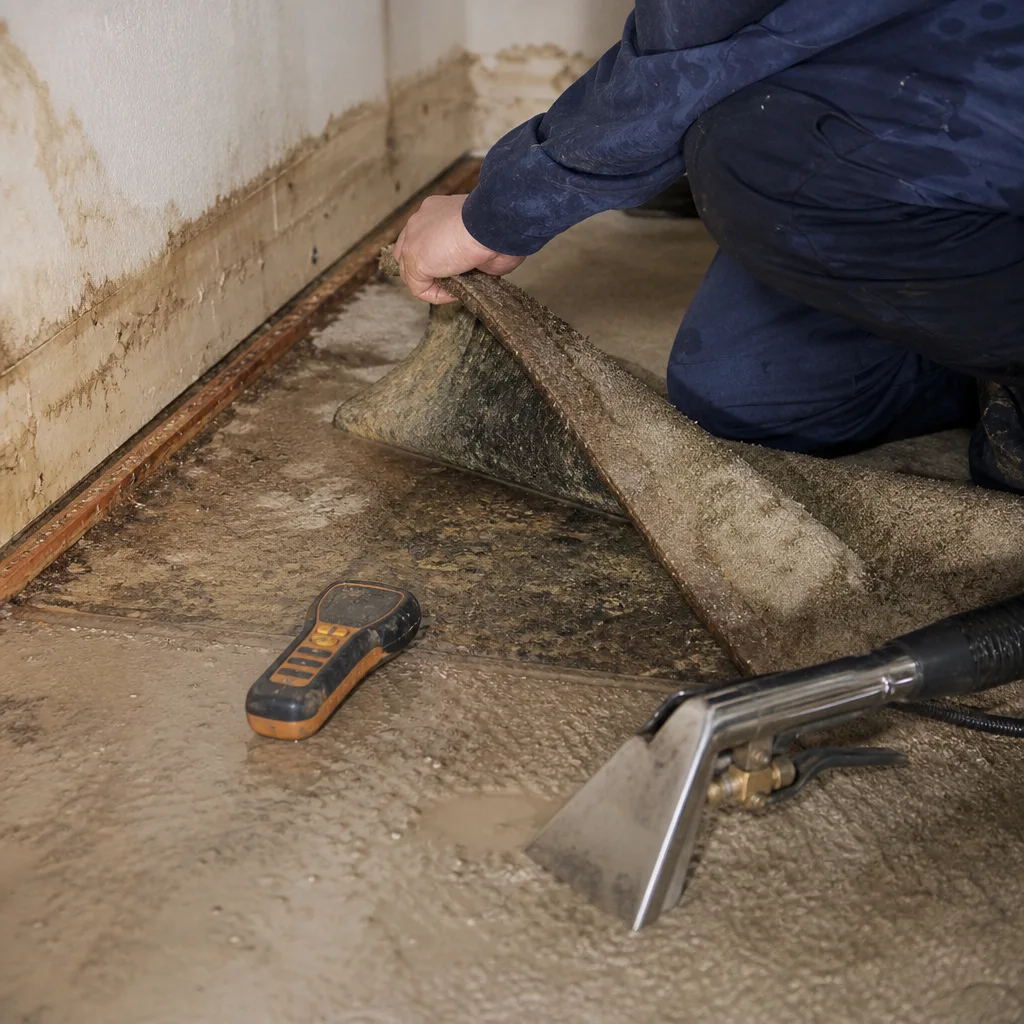
Stillwater’s lower riverfront along Water Street sits in a documented St. Croix River flood zone, and spring ice jams push water into 19th-century brick buildings and older homes in ways no suburban subdivision ever sees. Those structures were built with lime mortar, horsehair plaster, and old-growth balloon framing that absorbs water deep and releases it slowly. Our crews pull standing water within the first hour, then set up Dri-Eaz dehumidifiers and Phoenix air movers at reduced airflow rates specific to old masonry, so we don’t spall the brick face while the interior moisture is still working its way out. We take moisture readings every single day and hand you the full log when the job’s done. Nobody else in the trade does that.
Storm Damage Cleanup
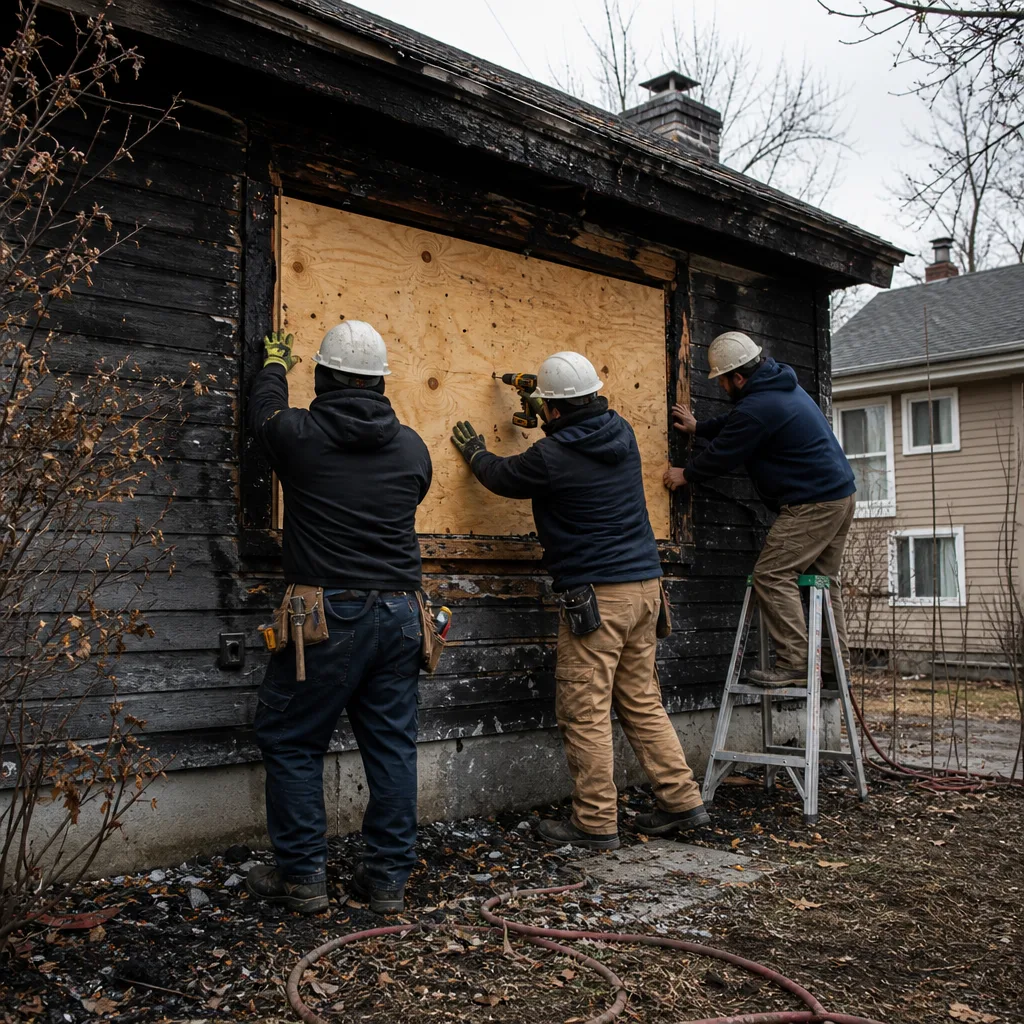
Wind off the St. Croix bluffs and heavy summer thunderstorms knock limbs onto Stillwater roofs, punch holes through porch awnings, and drive rain into window wells across the hillside neighborhoods. After a storm passes, we clear fallen debris, remove water-damaged materials, and stabilize the structure so the next rain doesn’t make it worse. For older homes with original cedar shake or slate roofs, storm cleanup often reveals damage that needs a careful touch. We document everything with photos, including what we remove and what we salvage, so your insurance adjuster sees the full picture without you having to relay messages back and forth.
Emergency Board-Up
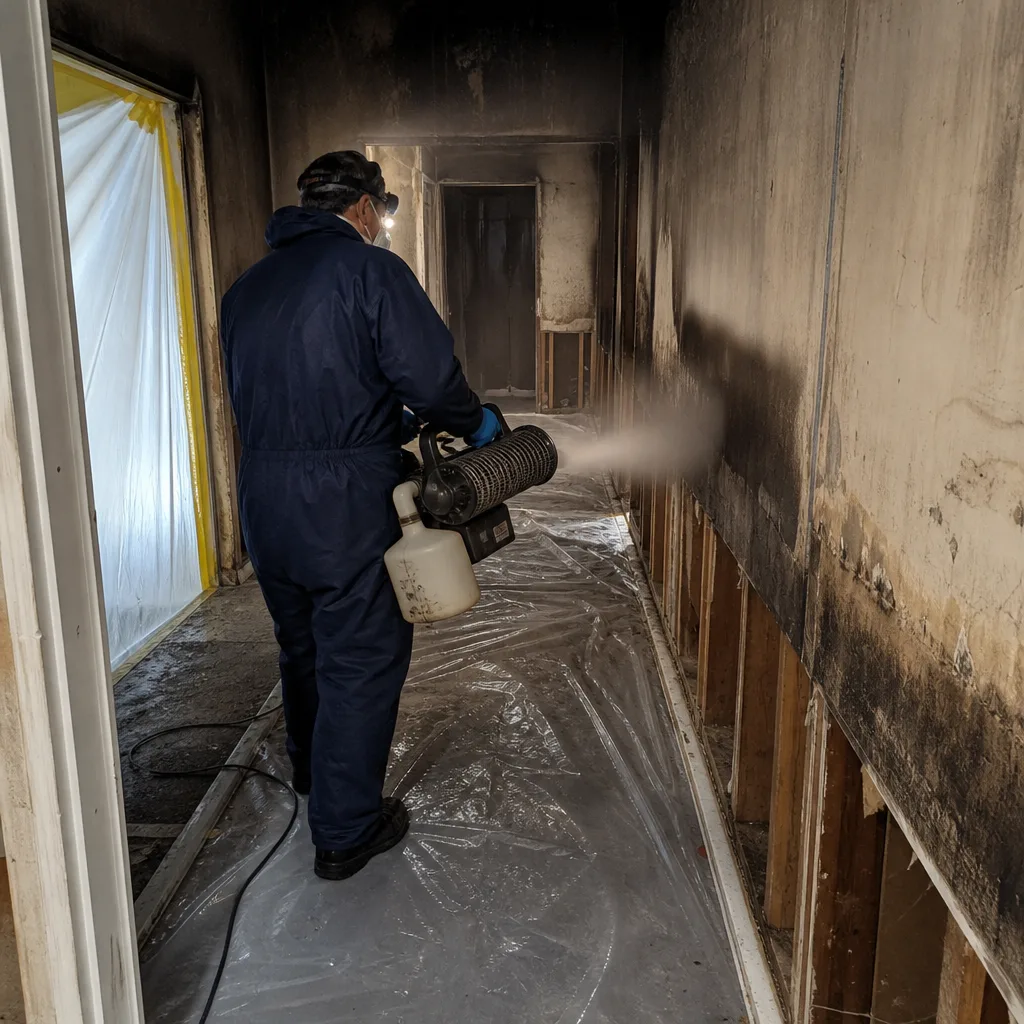
When a storm blows out a second-story window on a 1880s Victorian or a tree limb crashes through a back door along the north hill, the first priority is securing the opening. Wade’s crew gets temporary board-up in place fast, using careful installation methods that don’t damage original trim, brick lintels, or decorative millwork. For Stillwater’s historic commercial blocks downtown, this matters. A handyman with a nail gun can do more damage to 1870s window casings in ten minutes than the storm did all night. We board up in a way that holds and that can be removed without destroying what’s underneath.
Roof Tarping
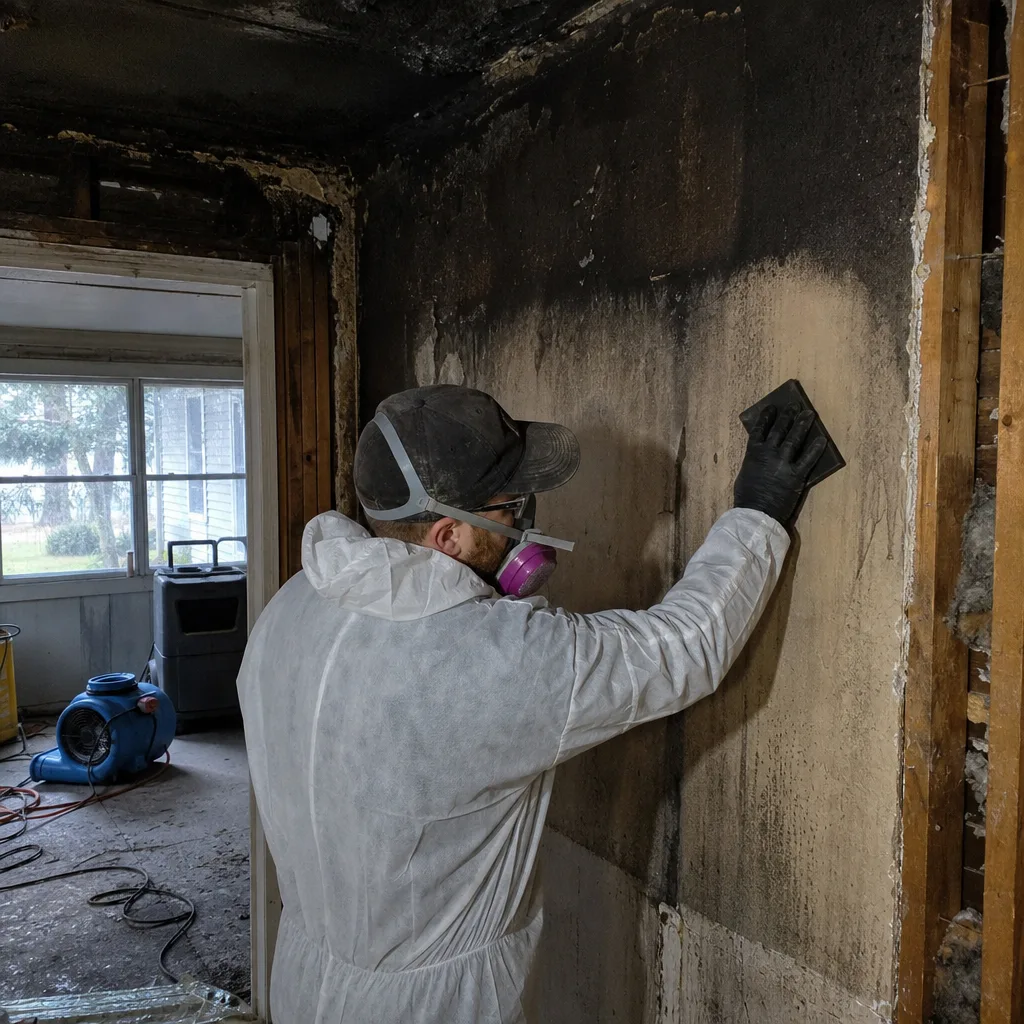
Stillwater’s bluff homes take wind differently than houses on flat ground. Gusts coming up the river valley catch roof edges and lift shingles, especially on the steep-pitch roofs common on older hillside houses. We tarp damaged roofs quickly, securing the tarp against the next rain and the next wind event. Temporary tarps have to hold on roofs where the pitch is steep and the exposure is full south or west. We use professional-grade XPOWER and B-Air equipment on interior water removal while the tarp keeps more water from coming in. If the roof damage was caused by a tree limb or wind-blown debris, we photograph the tarp installation and the interior damage for your claim.
What happens when you call
- 1
A real person answersNo phone trees - you reach a local pro.
- 2
You get an upfront price rangeHonest numbers before anyone is dispatched.
- 3
A background-checked tech heads outLicensed & insured, dispatched right away.
- 4
You approve before work beginsNothing starts until you say go.
Trusted Brands We Service in Stillwater
We run professional-grade restoration equipment from Dri-Eaz, Phoenix, and Injectidry, and we stock the parts and accessories our Stillwater jobs need most. When a flooded basement off Myrtle Street needs an additional dehumidifier or a hardwood floor drying system on a home near Pioneer Park, we don’t wait on a parts shipment from another state. We keep equipment staged in the metro and we move it to Stillwater fast. For homeowners with older systems, we also work on legacy equipment when it makes sense, and we’ll tell you honestly when a repair is throwing good money after bad.
Common Storm & Disaster Restoration Problems We See in Stillwater Homes
- Hidden water behind horsehair plaster. Original plaster walls in Stillwater’s 1870s-1910s homes hold moisture differently than drywall, and standard moisture meters often misread lime-based materials. Water can sit behind a plaster wall for days before you see any stain, and by then mold has already started in the balloon-framed cavity.
- Spalled brick from aggressive drying. The 1880s common brick used in many downtown Stillwater buildings absorbs water deep and re-releases it slowly. Run a standard aggressive drying schedule on it and the brick face can crack or flake off before the wall is actually dry. You need a slower, longer drying protocol, and not every restoration company knows that.
- Secondary flooding from bluff runoff. Days after the river crests, many Stillwater hillside homes see water push into foundation window wells and basement stairwells from rain and snowmelt funneling down the steep slopes. It’s a second flood event that never shows up on the river gauge, and it catches people off guard.
- Roof damage on steep bluff pitches. Strong wind coming up the river valley catches roof edges on older hillside homes differently than on flat lots. Shingles lift, flashing separates, and water gets under the roof deck quickly. By the time you see a ceiling stain, the decking and insulation above it are already soaked.
Pricing for Storm & Disaster Restoration in Stillwater, MN
Storm and flood restoration pricing in Stillwater runs a little higher than the flat-land suburbs, mostly because the buildings are older and the work takes longer to do right. Here’s what you’re looking at, based on jobs we’ve done in the 55082 and 55083 zip codes:
- Emergency water extraction: $450-$900 for a typical Stillwater basement with standing water up to 4 inches, depending on square footage and how much furniture needs to be moved. Add $200-$400 if it’s an 1800s limestone or brick basement with slow-draining original floor drains.
- Storm debris removal and cleanup: $500-$1,500 depending on tree debris volume and access. A single downed limb across a backyard fence is on the low end. A snapped oak across a hillside driveway is higher.
- Emergency board-up: $300-$700 per opening, more if the opening is a second-story dormer or a large commercial storefront on Water Street requiring lifts.
- Roof tarping: $500-$1,200 for most Stillwater residential roofs, with steep-pitch bluff homes and hard-to-access areas on the upper end. We’ll give you a written number before we put a ladder up.
- Full flood restoration with drying: $3,500-$12,000+ depending on how much water, how long it sat, and whether you have original plaster or modern drywall. An 1885 home with lime-mortar walls and horsehair plaster will take longer and cost more to dry properly than a 1990s split-level off McKusick Road.
Wade gives free estimates, and a free second opinion on any written estimate you’ve gotten from another company. If you’re in our county, there’s no trip charge for us to come look. Seniors and veterans always get 10% off. Call (888) 690-6095 and Wade will walk the property with you himself.
We Also Serve Cities Near Stillwater
Our crews work throughout the St. Croix Valley and the eastern metro. Besides Stillwater, we regularly serve homeowners in Mahtomedi, Lake Elmo, North Saint Paul, and Oakdale. If you live in one of those communities and you’ve had storm damage or flooding, call the same number: (888) 690-6095. Wade will come take a look, no charge for the trip.
Serving Stillwater, MN - Our Local Coverage Area
We’re based in the Stillwater area and know this community well. Use the map below to see our service coverage - if you’re nearby, we can almost certainly help.
FAQs - Storm & Disaster Restoration in Stillwater
It takes longer because the 1880s common brick used in many downtown Stillwater buildings absorbs water deep into the masonry and releases it slowly. Modern drywall and OSB dry out under aggressive airflow in three to five days. Old brick, lime mortar, and horsehair plaster need lower airflow and extended drying timelines, often three to six weeks, or the brick face will spall and crack while the interior is still wet. Call (888) 690-6095 and Wade will explain what a proper drying schedule looks like for your specific building.
We treat horsehair plaster as a salvageable material, not something to tear out and replace by default. We open walls in stages, use Injectidry systems to pull moisture from behind lime-mortar joints, and run dehumidifiers at reduced airflow to protect the original plaster. Standard moisture meters often misread old plaster, so we use our daily readings and visual inspection together, and we keep monitoring until the masonry and framing stop releasing moisture. If you’ve got a flooded Victorian in Stillwater, call us before you let anyone start cutting into plaster walls.
Shut off the power if water is near outlets or the panel, then call Wade at (888) 690-6095 right away. Floodwater from the St. Croix carries contaminants, and old common-brick walls start absorbing that water within the first hour. The faster we get extraction running and dehumidifiers placed, the less of that water works its way deep into the masonry. Don’t try to dry it out with box fans and open windows. That’s how brick spalls and hidden mold gets a head start.
Yes, we tarp roofs on homes all over Stillwater, including the steep-pitch bluff properties where wind damage is most common. We secure the tarp with the right materials for the roof type and slope, and we photograph everything for your insurance claim. For steep roofs or those exposed to valley wind, we schedule tarping fast because the next rain will find any gap. Call (888) 690-6095 and Wade will send a crew out, day or night.
Yes, it absolutely can if the drying is done wrong. Balloon-framed walls in Stillwater’s pre-1900 homes have continuous stud cavities running from basement to attic, so water that enters at the bottom can wick upward several feet and sit behind horsehair plaster where you can’t see it. Aggressive drying that seals surfaces before the interior is dry traps that moisture and mold colonizes inside the wall. Our daily moisture logs and extended monitoring are designed specifically to catch that before it happens. If you’re worried your flood restoration was done too fast, call us for a free second opinion.
Call Wade’s Restoration for Storm & Disaster Restoration in Stillwater, MN
Storm damage and flooding don’t wait for business hours, and neither does Wade. If water is coming in, if a tree just came through the roof, if the river is rising toward your foundation, call (888) 690-6095 now. Wade answers his own phone. He’ll tell you what to do in the next ten minutes, then he’ll get a crew on the road to Stillwater. Free estimates, no trip charge in our county, and a 90-Day Done Right Promise in writing on every restoration job. This is the kind of work where you want the owner on site, not a crew you’ve never met. To wade is what you do through a flooded basement at two in the morning, and it happens to be his name.
Written by Wade Ferris, Owner at Wade’s Restoration of Minneapolis, serving Stillwater since 2007.