
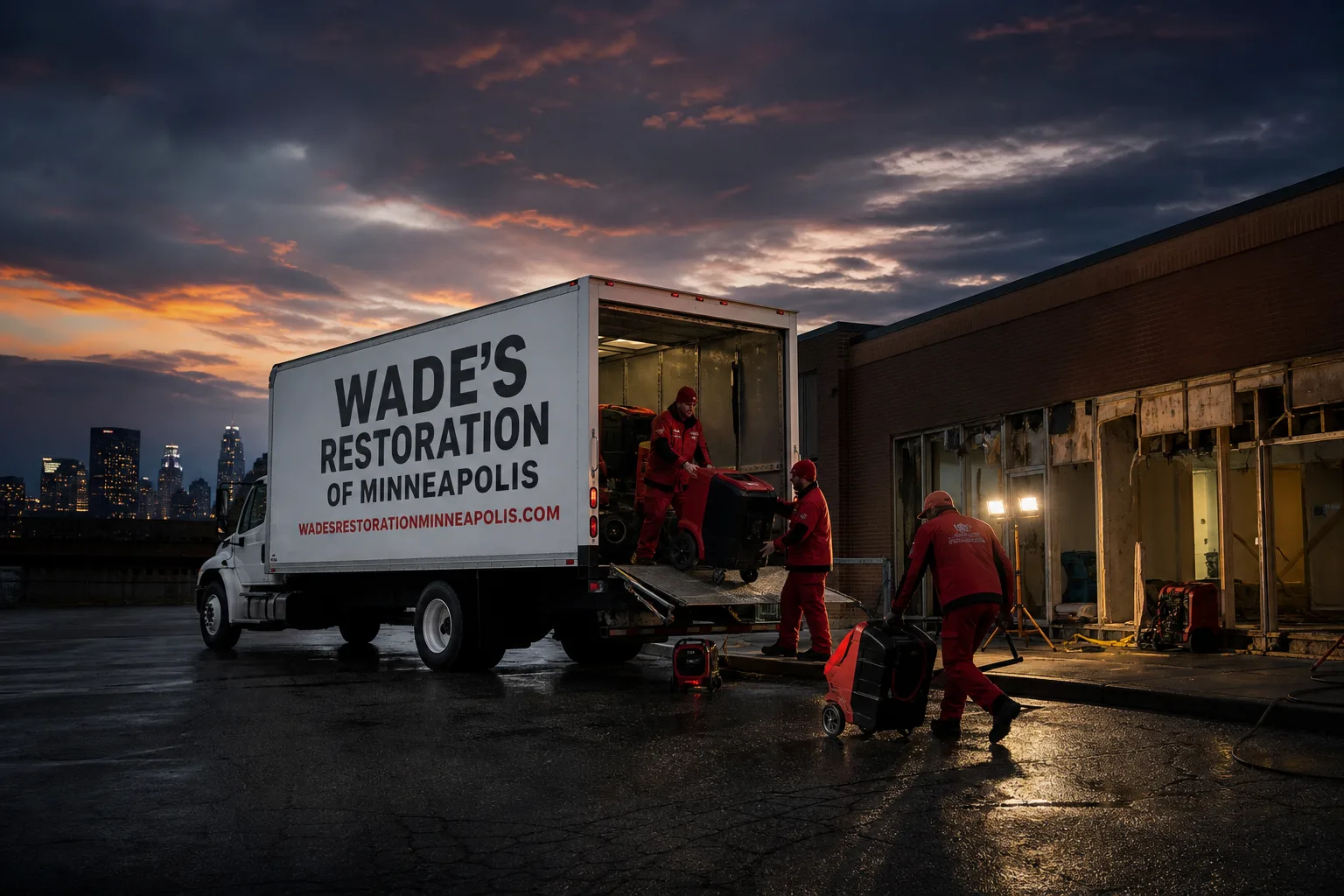
Fast, Reliable Storm & Disaster Restoration Across North Saint Paul
Storm damage in North Saint Paul rarely announces itself politely. It arrives as a January thaw that sends meltwater through your ceiling, or a spring snowmelt that backs up the storm sewer and pushes groundwater into your basement. When it happens, you need someone who answers the phone, gets a crew moving, and knows exactly what a 1952 cape cod on Margaret Street does when water gets behind the plaster. That’s what we do. Call (888) 690-6095 and you’ll reach a live person, any hour, any day. Wade Ferris owns this company, answers that phone, and heads to North Saint Paul himself when the job calls for it.
Why Homeowners in North Saint Paul Call Wade’s Restoration First
North Saint Paul isn’t Maplewood. It isn’t White Bear Lake. It’s a tight two-square-mile grid of 1950s construction where nearly every house shares the same failure points. We’ve worked enough of them to know what we’re walking into before we open the front door. When a homeowner on 7th Avenue calls with water running down an interior wall in February, we already know it’s likely an ice dam feeding an uninsulated knee-wall attic, not a roof leak from shingle failure. That local knowledge changes the scope of the job and the size of the bill.
We’re part of Storm & Disaster Restoration for the whole metro, but the work in North Saint Paul has its own character. The homes are smaller, the blocks are dense, and the storm sewer system is older than most of the people living here. Wade’s Restoration of Minneapolis has been handling water, wind, and storm damage in this city long enough that we keep specific drying plans for the cape cod wall assemblies and rambler basements we see over and over. Wade publishes his name and license number. He’s the man you’ll run into at the hardware store on a Saturday. That’s the accountability model we operate under.
Our Storm & Disaster Restoration Services in North Saint Paul
Storm Damage Cleanup
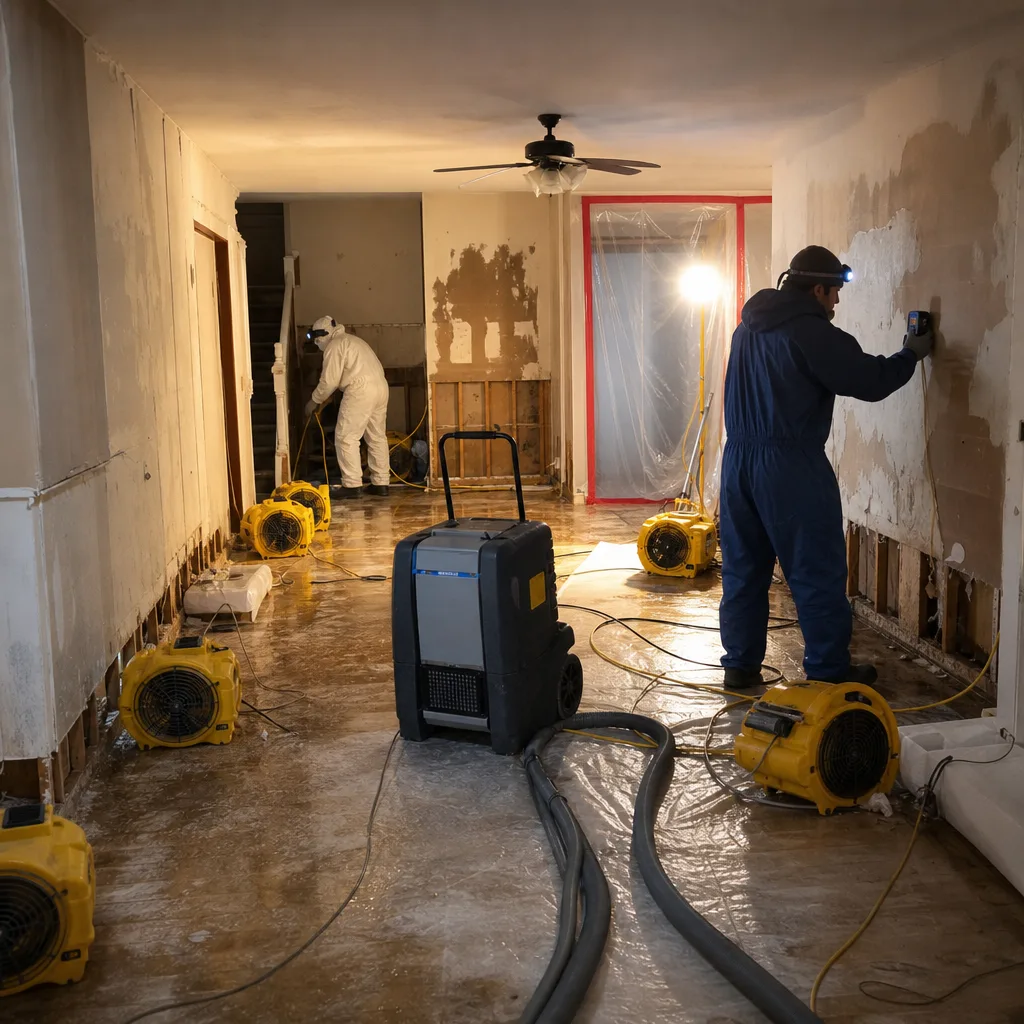
When a north metro storm knocks trees onto roofs, tears off shingles, or drives rain through punctured siding, North Saint Paul’s older homes show their age fast. Original plaster ceilings hold water longer than drywall, and once saturated, they sag and crack. We get tarps up, water extracted, and drying equipment running the same day you call. Our crews carry the equipment for plaster-in-place drying because in this city, most homes still have the original walls.
Flood Damage Restoration
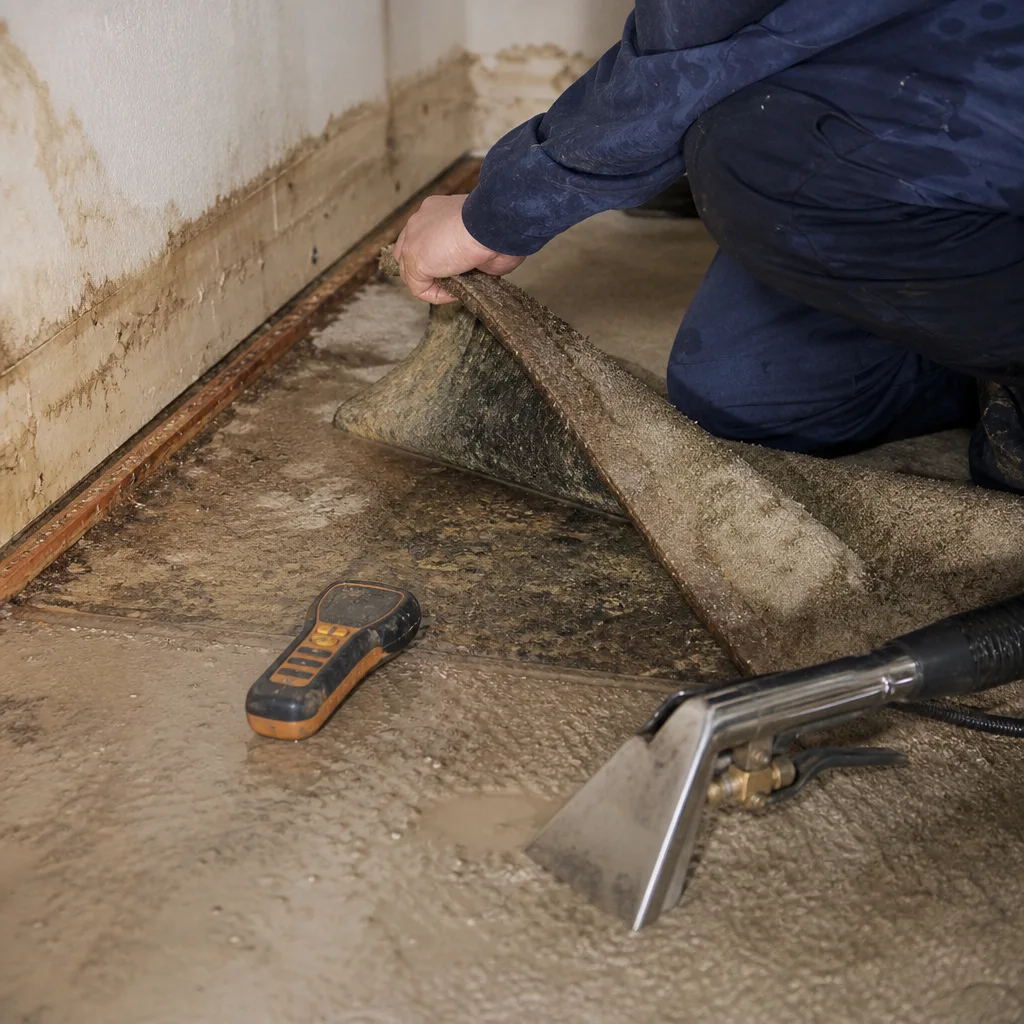
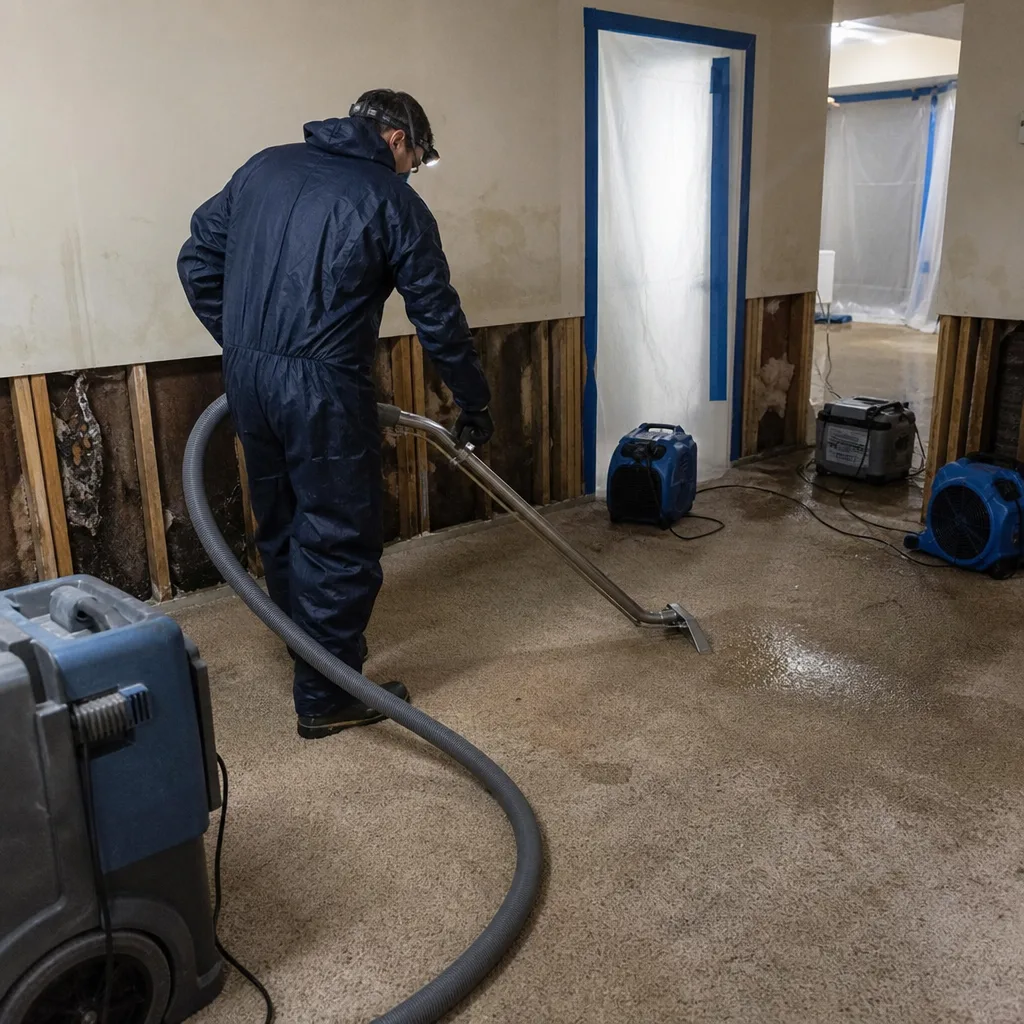
Basement flooding in the 55083 ZIP code is a spring ritual. Aging storm sewers overflow, sump pumps quit, and water finds its way through 70-year-old foundation walls. By the time you notice the water, it’s already soaked into carpet, baseboard, and whatever was stored on the floor. In North Saint Paul’s 1945-1968 housing stock, we routinely encounter asbestos-containing vinyl floor tiles under that old carpet, which changes how we handle removal. We document everything for your insurance company, handle the abatement properly, and dry the structure completely before anything gets rebuilt.
Emergency Board-Up
Broken windows and torn-open doors after a storm leave a house open to weather, animals, and trespassers. We board up openings with plywood cut to fit and secured properly, usually within hours of your call. For North Saint Paul homeowners dealing with storm damage, getting the house sealed is the first step before insurance adjusters arrive and before any temporary repairs can hold. We’ll handle it all, including the photos your adjuster needs.
Roof Tarping
North Saint Paul’s low-pitched roofs are magnets for wind damage. When shingles rip off on a 1958 rambler on Oakwood Avenue, exposure starts immediately. We tarp damaged roof sections the same day, secured against the next wind gust with proper anchoring. Getting that tarp nailed down fast keeps the damage from spreading into the attic insulation and down into the plaster walls where it gets expensive. A quick tarp is the difference between a contained claim and a full ceiling replacement.
What happens when you call
- 1
A real person answersNo phone trees - you reach a local pro.
- 2
You get an upfront price rangeHonest numbers before anyone is dispatched.
- 3
A background-checked tech heads outLicensed & insured, dispatched right away.
- 4
You approve before work beginsNothing starts until you say go.
Trusted Brands We Service in North Saint Paul
Wade’s team works on all the brands and equipment types common in North Saint Paul homes, and we keep the parts and drying technology stocked locally so your job doesn’t sit waiting on a truck from a warehouse across town. Our crews set up Dri-Eaz LGR 7000 dehumidifiers on flooded basements, run Injectidry vacuum panels to dry plaster wall cavities without tearing them apart, and use B-Air air movers to dry the tight, compartmentalized spaces in older homes. Every one of them runs under IICRC standards, and Wade holds RIA affiliations that keep our documentation acceptable to insurance carriers without a fight. For a storm-damaged cape cod in North Saint Paul, having the right equipment and the right protocol matters more than how many trucks show up.
Common Storm & Disaster Restoration Problems We See in North Saint Paul Homes
- Ice dams on low-slope roofs channeling water into walls: The 1945-1968 construction here used minimal attic insulation and shallow roof pitches, so warm attic air melts snow at the peak, the water refreezes at the cold eaves, and it backs up under shingles and into wall cavities. The damage is almost never on the ceiling alone, the walls take water too.
- Knee-wall attics on cape cods causing repeat water intrusion: The classic North Saint Paul cape cod has a half-story upstairs with an uninsulated or poorly baffled knee-wall space, a direct thermal bridge at the eave. Meltwater gets channeled straight into exterior walls, soaking plaster and lath from the eave down to the baseboard.
- Plaster-over-wood-lath interiors that demand special drying: Most of these homes still have their original plaster. When it gets wet, standard drywall tear-out is the wrong move. We use Injectidry panels to dry plaster in place, saving the original material and avoiding the mess and cost of a full replacement.
- Spring snowmelt overwhelming North Saint Paul’s aging storm sewers: The city’s stormwater infrastructure dates to the same era as the houses, and when the snow goes fast, the sewers can’t keep up. That sends water into basements across entire blocks at once, which is why our crews often work multiple homes on the same street in the same week.
Pricing for Storm & Disaster Restoration in North Saint Paul, MN
Storm damage restoration in North Saint Paul runs on a range, and you deserve real numbers before anyone shows up. Emergency roof tarping typically runs $350-$700 depending on roof size and pitch. Storm damage cleanup, including water extraction and debris removal from a flooded basement, lands between $1,200 and $3,800. Full flood damage restoration with drying, antimicrobial treatment, and controlled removal of asbestos-containing flooring runs $4,000-$9,500 for a typical North Saint Paul rambler basement. Ice dam water intrusion into walls, with plaster-in-place drying, runs $2,800-$7,000 depending on how many wall cavities and rooms are involved. Every job gets a written scope before work starts. Estimates are free. Call (888) 690-6095 and we’ll come out, look at the actual damage, and write it up plainly.
We Also Serve Cities Near North Saint Paul
We regularly work in Oakdale, Stillwater, Mahtomedi, and Lake Elmo. Each city has its own housing patterns, but the storm damage problems are familiar: ice dams on older roofs, flooded basements, and wind-torn shingles. Our Storm & Disaster Restoration crew covers the whole east metro corridor, so when your neighbors in Oakdale or Lake Elmo ask who to call after a storm, you know the answer.
Serving North Saint Paul, MN - Our Local Coverage Area
We’re based in the North Saint Paul area and know this community well. Use the map below to see our service coverage - if you’re nearby, we can almost certainly help.
FAQs - Storm & Disaster Restoration in North Saint Paul
Ice dams form because the attics in these homes are underinsulated and the roof pitches are low, so heat escapes from the living space, melts snow at the ridge, and the meltwater refreezes at the cold eaves. In North Saint Paul specifically, the knee-wall attics in cape cods make this worse because the uninsulated knee walls create direct thermal bridges at the eave line. That means the restoration scope isn’t just a ceiling patch, it’s drying wall cavities down to the baseboard, treating plaster and lath, and often re-insulating the knee wall so the same dam doesn’t form again next winter. Call (888) 690-6095 and we’ll figure out exactly what your house needs.
We dry the plaster in place using Injectidry vacuum panels that pull moisture out through the surface without demolition. North Saint Paul’s 1945-1968 homes still mostly have original plaster, and tearing it out and hanging drywall is the wrong approach for a house of this vintage. Our techs set up Dri-Eaz dehumidifiers, take moisture readings every single day, and hand you the full log when the job’s done. Plaster dried properly can be saved, painted, and put back into service for another 70 years. It costs less than a full gut and keeps the character of your house intact.
Call us at (888) 690-6095 within the hour. Water running down an interior wall in North Saint Paul means meltwater has already saturated the plaster and is working its way down to the baseboard and floor. Don’t wait until the ceiling falls. While you’re waiting, move furniture away from the wall, put a bucket under any visible drips, and if you can safely reach the attic, look for obvious standing water. Do not puncture the wall to “let the water out” - that can damage original plaster beyond repair and spread asbestos fibers if older insulation is present. Let us assess it properly.
It depends on the extent of the damage and the condition of the roof decking, but for most North Saint Paul cape cods with original roofs, a leak has usually been forming for years before it shows up inside. A targeted repair makes sense if the decking is sound and the damage is isolated to one section. If the freeze-thaw cycle has delaminated the plywood or the roof has had multiple ice dam events, a full replacement with proper ice-and-water shield and improved attic ventilation stops the recurring damage. Call (888) 690-6095 for an honest assessment, we’ll show you what we see and write up your options with real numbers.
North Saint Paul’s storm sewer system was built for a smaller, drier city than the one that exists today. When the snowpack melts fast, the pipes can’t carry the water away, and it backs up into basements through floor drains and foundation walls. That’s why we often get calls from five or six homes on the same four-block stretch within the same 24 hours. It also means schedule your emergency call early, because our crews prioritize the worst flooding first, then work down the list by severity. If your basement has standing water, call (888) 690-6095 immediately, and we’ll give you an honest arrival window.
Written by Wade Ferris, Owner at Wade’s Restoration of Minneapolis, serving North Saint Paul and the east metro since 2007.