
Fast, Reliable Storm & Disaster Restoration Across North Branch
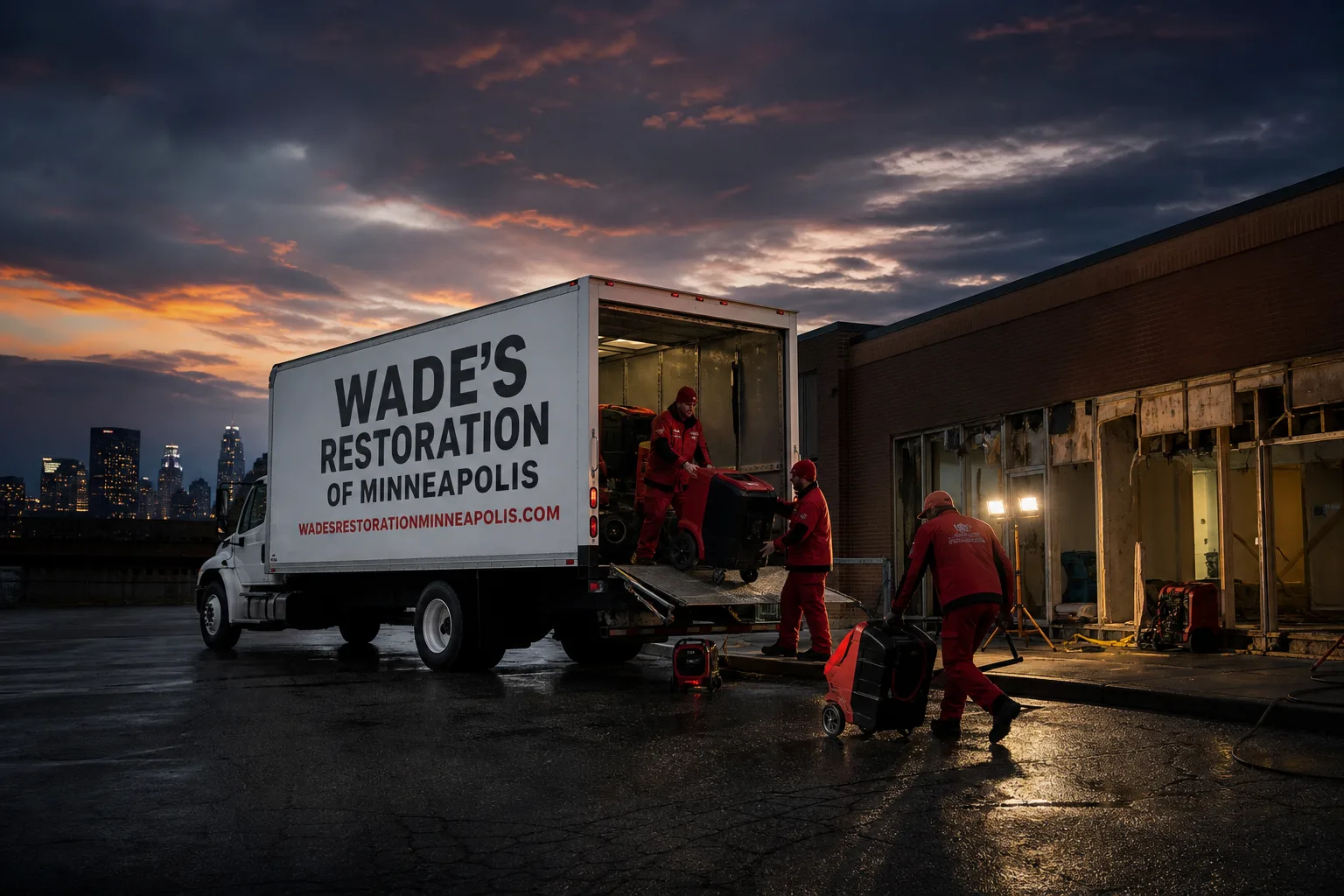
Storm damage in North Branch moves fast. A torn shingle at 10 p.m. becomes a soaked ceiling by morning, and an ice dam that lets go on a March afternoon sends meltwater into wall cavities before you finish dinner. Our Storm & Disaster Restoration team heads out to North Branch the moment you call, with a live person answering the phone 24/7 and equipment staged for a same-day response. The crew arrives with roof tarps, board-up materials, pumps, and drying equipment, not with a clipboard and a sales pitch. That’s the difference. Call (888) 690-6095 and you’ll get Wade or one of his people, not a call center.
Why Wade’s Restoration of Minneapolis Is North Branch’s Preferred Storm & Disaster Restoration Company
Wade Ferris founded Wade’s Restoration in 2007, and he’s the one whose name is on the truck. He publishes his address and license number, he answers his own phone, and when a North Branch homeowner calls about a tree limb through a roof or groundwater pushing up through a slab, Wade heads out himself. That’s how a local company should work. Not a franchise with a different crew every time. Not a 1-800 number that routes to whoever’s closest. The same guy, the same crew, the same standards.
Our reputation in North Branch comes from the neighborhoods themselves. Homeowners along Flink Avenue, in the subdivisions off 400th Street, and up near the Sunrise River corridor have called us back a second and third time when storms hit. They know our trucks. They know our people. And because we serve North Branch regularly, we know the terrain: the low-slope suburban rooflines that ice dams love, the tight lot setbacks along I-35 frontage roads, the wet spring seasons when the water table climbs and slabs get damp. That local knowledge means we arrive already knowing what we’re likely to find.
When North Branch gets hit with a derecho, a flash flood, or a February ice storm, the response time matters. We can typically have a crew on site in North Branch within 60 to 90 minutes for emergency board-up, tarping, or extraction. That’s not a promise we make lightly. It’s the reality of having equipment staged, crews on rotating standby, and Wade living close enough to answer the phone at 2 a.m. and head north himself.
What North Branch Homeowners Tell Us
The feedback we hear most from North Branch customers comes down to a few things. Wade shows up when he says he will. The price quoted on the phone matches the price on the work order. The moisture log arrives at the end of the job, not because anyone asked for it but because Wade takes readings every single day and hands over the full log. Homeowners also mention that Wade deals with the insurance adjuster directly. When a storm puts a hole in your roof and your adjuster in St. Paul keeps rescheduling, that matters. You’re not stuck relaying messages between two parties. Wade’s on the phone with the adjuster, walking them through the scope, the readings, and the photos. That’s how claims get approved faster.
Our Storm & Disaster Restoration Services in North Branch
Storm Damage Cleanup
Wind, hail, and falling limbs do more than dent siding. In North Branch, where the dominant housing stock is 1990s and early 2000s vinyl-sided construction, hail can shatter vinyl panels and leave the OSB sheathing underneath exposed to rain and snowmelt. Our crews remove damaged building materials, document everything with photos for your adjuster, and stabilize the affected area so secondary water damage doesn’t spread while you wait for rebuild. We haul debris, tarp openings, and set drying equipment the same day. You get a written scope before any work starts, so you know exactly what’s happening and what it costs.
Flood Damage Restoration
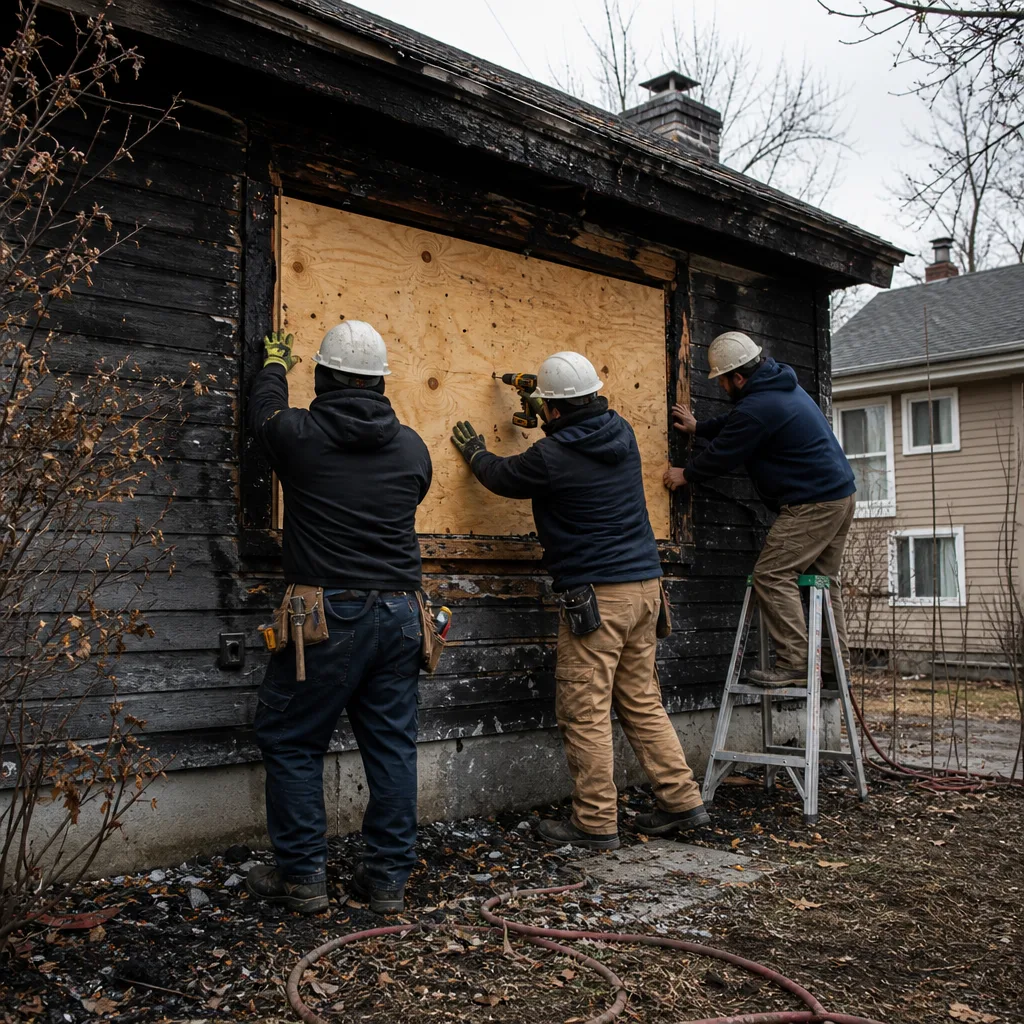
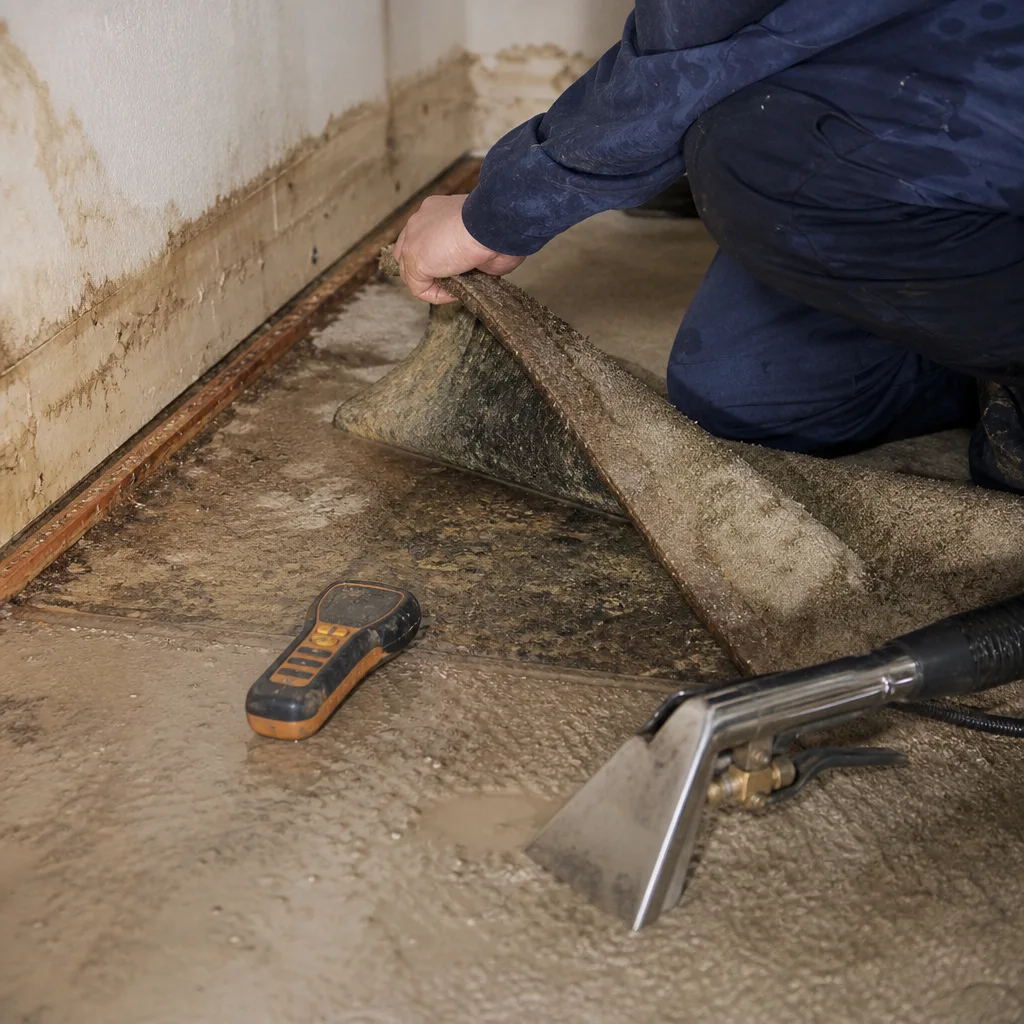
North Branch sits along the Sunrise River corridor, and when spring snowmelt is heavy or a summer storm drops four inches of rain overnight, the water table climbs and basements and slabs get wet. Flood water is never clean water. It carries silt, bacteria from saturated soils, and whatever else was in its path. Our flood restoration in North Branch starts with extraction using professional-grade pumps and truck-mounted extractors, followed by drying with Dri-Eaz dehumidifiers and XPOWER air movers. Wade takes moisture readings daily and gives you the full log at the end. If groundwater is pushing through a cove joint, surface drying won’t fix it. We address the hydrostatic pressure, not just the puddle.
Emergency Board-Up
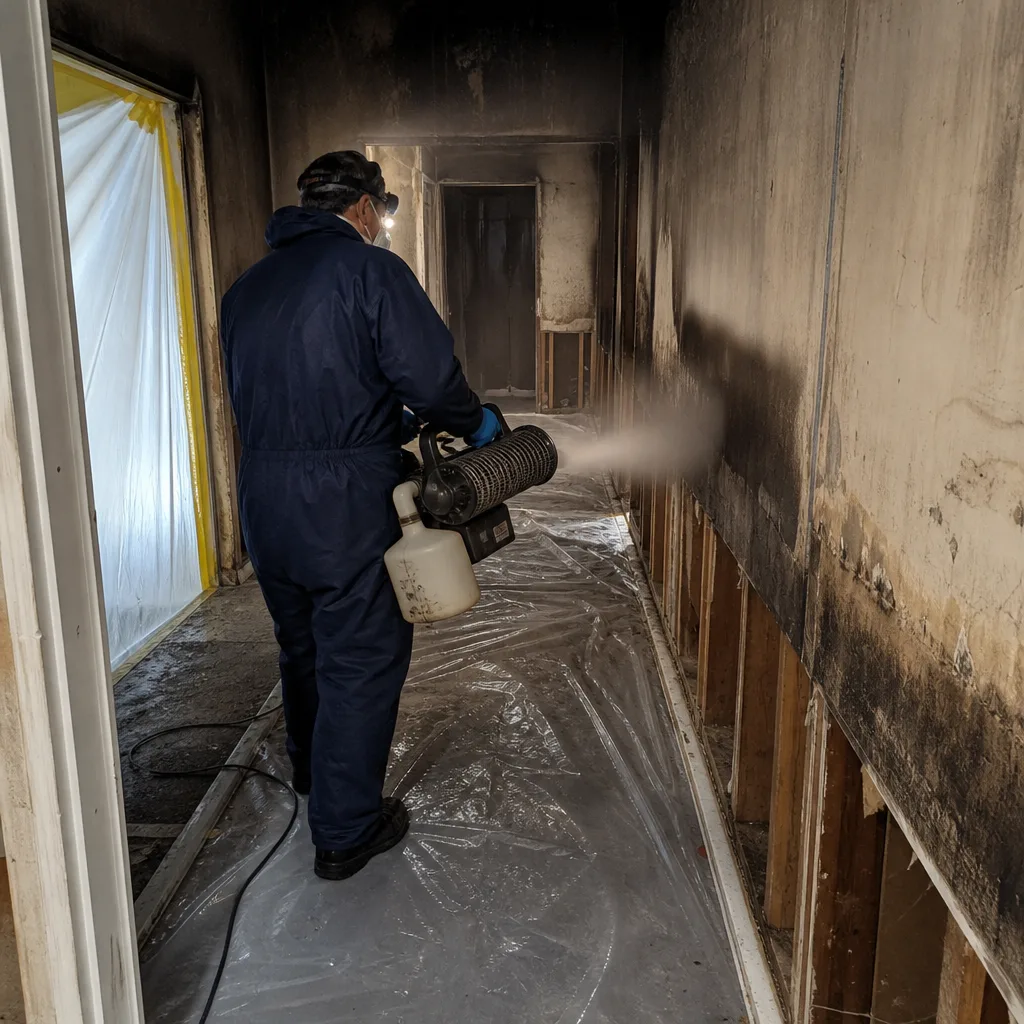
When wind takes out a window or a tree limb punctures a wall in North Branch, the opening needs to be secured before anyone gets inside or before rain does more damage. We board up openings with plywood, seal gaps, and document everything for insurance. In North Branch’s I-35 frontage subdivisions, where lots are tighter and driveways are shared, our crews pre-plan where to stage materials so a board-up doesn’t block a neighbor’s access. That matters when you’re living in a townhome or a zero-lot-line property.
Roof Tarping
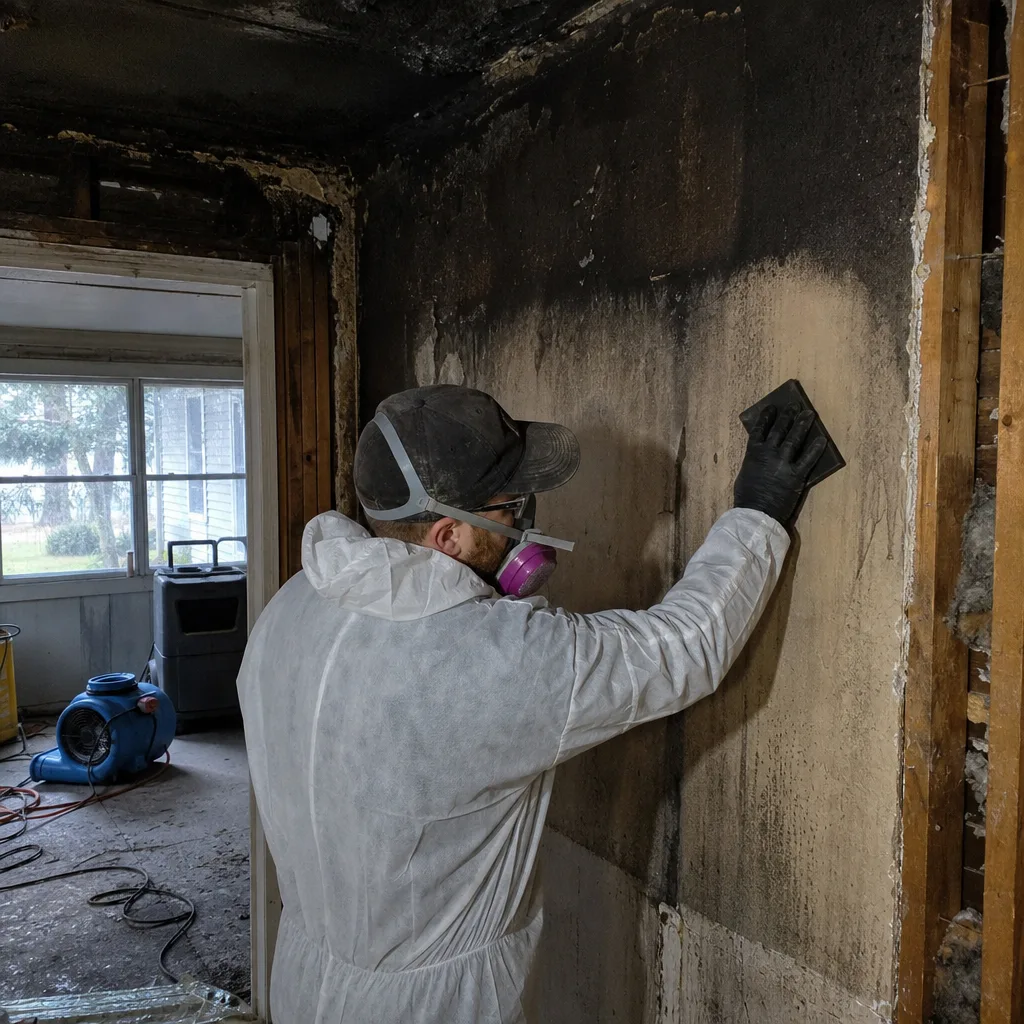
Low-slope suburban rooflines in North Branch hold snow longer, which means ice dams form faster and persist longer through the freeze-thaw cycling that runs from November into March. When an ice dam rips shingles loose or a wind event opens a section of decking, roof tarping keeps the water out until a permanent repair is scheduled and approved by insurance. We tarp to the ridge, not just over the damaged area, because water travels. A partial tarp on a North Branch roofline will fail at the first thaw. We secure tarps with furring strips, not just staples, so the next wind event doesn’t tear it off and re-expose the house.
What happens when you call
- 1
A real person answersNo phone trees - you reach a local pro.
- 2
You get an upfront price rangeHonest numbers before anyone is dispatched.
- 3
A background-checked tech heads outLicensed & insured, dispatched right away.
- 4
You approve before work beginsNothing starts until you say go.
Trusted Brands We Service in North Branch
The equipment matters when you’re drying a North Branch slab foundation with water table pressure behind it. We run Dri-Eaz dehumidifiers, XPOWER air movers, B-Air pumps, and Injectidry drying systems on jobs throughout the 55056 zip code. These aren’t rental-center machines. They’re professional-grade, serviced, and maintained. We keep backup units staged so a compressor failure doesn’t stall your drying job for three days while a part ships. And because we serve North Branch regularly, we stock common parts and materials locally, which means faster turnarounds when a job needs a replacement hose, fitting, or tarp mid-project. Our crew holds IICRC certifications, and the work reflects it. Call (888) 690-6095 and we’ll tell you exactly what equipment we’d use on your situation.
Common Storm & Disaster Restoration Problems We See in North Branch Homes
North Branch’s housing stock has a specific set of failure modes. Here’s what we see most often, and none of it is generic:
- Untaped housewrap at window rough openings. In the late-1990s and early-2000s tract homes along the I-35 frontage roads, original builders often stapled housewrap but never taped it at window openings. When ice-dam meltwater gets behind the cladding, it travels silently down the wall cavity to the bottom plate before any interior staining appears. By the time you see a wet spot, the actual damage footprint is larger than the visible stain suggests. And crews that only dry the patch you can see leave hidden moisture behind.
- Ice dams on low-slope suburban rooflines. North Branch averages over 50 inches of snowfall annually, and the hard freeze-thaw cycling from November through March is brutal on shallow-pitch roofs. Ice dams form at the eave line, water backs up under the shingles, and it enters the wall assembly. Most North Branch homes we see in winter have some degree of ice-dam water intrusion by February, even if the homeowners don’t know it yet.
- Groundwater pressure on slab-on-grade foundations. Spring snowmelt along the Sunrise River corridor and the surrounding Chisago County wetlands raises the local water table. In lower-lying subdivisions, that water pushes against slab foundations and enters through the cove joint where the slab meets the foundation wall. Surface drying helps, but if the hydrostatic pressure isn’t addressed, the water comes back in the next wet season.
- Tight staging constraints in I-35 frontage subdivisions. Lots are small, driveways are shared, and there’s often no good place to stage drying equipment or park a service truck without blocking a neighbor. A restoration crew that shows up without a plan for equipment placement loses an hour fighting parking and hose routing. We pre-plan staging on every North Branch job before the crew rolls out.
On a 2001 two-story off Flink Avenue in the 55056 zip
We got called after spring snowmelt triggered a slow roof leak. The homeowner had a damp patch near a master bedroom window, but no visible staining on the interior drywall. When we pulled back the vinyl siding, we found moisture had wicked behind the cladding along the entire window opening. The original housewrap was stapled but never taped at the rough opening, exactly the boom-era shortcut we see all over North Branch. We removed the cladding, dried the OSB sheathing and bottom plate with Dri-Eaz dehumidifiers and XPOWER air movers, then re-flashed and taped the opening before re-installing the siding. The homeowner avoided mold and saved the original drywall below the window. If we’d only dried the visible patch, the framing would have rotted out behind that wall within a few years.
That’s the North Branch pattern. The true damage footprint is almost always larger than the first visible wet spot suggests. And that’s exactly why we scope jobs the way we do, with moisture readings, thermal imaging, and a written plan before work starts. The shortcut approach, the dry-the-patch-and-leave approach, is how you get a callback for mold six months later. Wade’s Restoration doesn’t do that. We have a 90-Day Done Right Promise in writing on every water, fire, and mold restoration job. If it’s not done right, Wade makes it right. That’s the whole point of the promise.
Pricing for Storm & Disaster Restoration in North Branch, MN
What does storm restoration actually cost in North Branch? Here are the honest ranges, based on what we’ve done recently in the 55056 zip:
- Roof tarping: $400-$900 for a standard suburban home, depending on roof pitch, number of tarps, and how much ridge line needs coverage.
- Emergency board-up: $250-$600 per opening, including materials and same-day response.
- Storm damage cleanup: $800-$2,500 for typical wind/hail damage, including debris removal, material disposal, and site stabilization.
- Flood damage extraction and drying: $1,500-$4,500 for a basement or slab-level flood, including extraction, drying equipment, daily moisture readings, and a full log at job’s end.
- Full storm restoration with rebuild: $5,000-$25,000+ depending on scope. This is scoped and priced in writing like a remodel, never same-day.
These are honest North Branch market numbers, not a StarTribune estimate. What affects cost is the size of the water footprint, the age of the home and the building materials involved, whether we’re dealing with the untaped-housewrap problem behind the cladding, and how much structural drying is required. We offer a free estimate on any job, and if you have a written estimate from another restoration company, Wade will give you a free second opinion. No trip charge inside our own county. Senior and Veteran discount: 10%, always. Call (888) 690-6095 for numbers specific to your house and your damage.
We Also Serve Cities Near North Branch
Our Storm & Disaster Restoration team serves North Branch and the surrounding Chisago County communities. If you’re in Wyoming, Isanti, Forest Lake, or East Bethel and storm damage has your roof open or your basement wet, call the same number: (888) 690-6095. Same response standards, same crew, same written scope before work starts. North Branch is our regular service area, and the neighboring towns get the same treatment.
Serving North Branch, MN - Our Local Coverage Area
We’re based in the North Branch area and know this community well. Use the map below to see our service coverage - if you’re nearby, we can almost certainly help.
FAQs - Storm & Disaster Restoration in North Branch
Because in the boom-era construction along the I-35 frontage roads, housewrap was commonly stapled but never taped at window rough openings. Ice-dam meltwater and wind-driven rain get behind the cladding and travel silently inside the wall cavity down to the bottom plate before any interior staining appears. By the time you see a damp patch on the drywall, the framing behind it has often been wet for weeks. If you suspect hidden water damage in a North Branch home from that era, call (888) 690-6095. We’ll pull back the siding the right way and find the actual extent before it becomes mold.
The Sunrise River corridor and surrounding wetlands raise the local water table during spring snowmelt and after heavy rains. In lower-lying North Branch subdivisions, that groundwater pushes against slab-on-grade foundations and enters through the cove joint where the slab meets the foundation wall. Drying the surface only treats the symptom. The hydrostatic pressure has to be addressed or the water returns next spring. Wade’s Restoration scopes slab flooding with the water table in mind, not just the puddle in front of us.
Low-slope roofs hold snow and ice longer, which means ice dams form faster and meltwater backs up under shingles more readily. A partial tarp that covers only the damaged area will fail at the first thaw. On North Branch’s low-slope rooflines, the tarp has to run to the ridge and be secured with furring strips, not staples, so the next wind event doesn’t rip it off. We tarp North Branch roofs the way a roofer would, not the way a rental-counters guy would.
Yes. North Branch’s I-35 frontage subdivisions have tight lot setbacks and shared driveways, and we pre-plan equipment placement before the crew rolls out. We’ve run drying jobs in zero-lot-line townhomes off 400th Street and in the subdivisions along Flink Avenue without blocking a single neighbor. The equipment is staged on the property, hoses are routed along the structure, not across shared access, and everything is consolidated where it won’t interfere. If you’re worried about tight access, tell us on the call and we’ll walk through the staging plan before we show up.
Because North Branch gets over 50 inches of snow annually, and the freeze-thaw cycling lasts from November through March. An ice dam can form, back water up under the shingles, and saturate the wall cavity for weeks before the interior drywall shows any staining. And because many North Branch homeowners commute daily to the Twin Cities metro, slow-developing water intrusion goes unnoticed until a weekend when someone finally sees the damp patch or smells the musty air. By that time, the damage footprint is larger than it needed to be. That’s why we emphasize daily moisture readings and full documentation. Call (888) 690-6095 the moment you suspect something, even if you’re not sure.
Storm Damage in North Branch? Call Now
When a storm puts a hole in your roof or groundwater is pushing through your slab in North Branch, waiting makes everything worse. The water spreads. The framing soaks. The mold clock starts. Call (888) 690-6095 and you’ll reach a live person, any hour of the day or night. We’ll tell you what we’d do, what it would cost, and whether you need us there tonight or it can wait until morning. Estimates are free. No trip charge inside our own county. And if you’ve got a written estimate from another company, bring it over. Wade will give you a straight second opinion, no games.
Written by Wade Ferris, Owner at Wade’s Restoration of Minneapolis. Serving North Branch with storm and disaster restoration since 2007.