

Fast, Reliable Storm & Disaster Restoration Across Wyoming
Storm damage in Wyoming usually means groundwater, not just rain. Our crews have spent enough time in 55092 to know that when a spring storm rolls through, the real fight starts under the slab. We answer the phone at (888) 690-6095, and Wade’s team can be at your door off Kettle River Blvd or near the I-35 corridor inside the hour when water is moving. This is our Storm & Disaster Restoration work, and we’re local enough to know exactly what Wyoming’s water table does to a 1990s rambler.
Wade’s Restoration has run on one rule since 2007: show up, tell the truth, and put it in writing. That’s why the 90-Day Done Right Promise comes stamped on every flood and storm job we do in Wyoming. If it’s not done right, Wade makes it right. No fine print.
Why Wade’s Restoration of Minneapolis Is Wyoming’s Preferred Storm & Disaster Restoration Company
Wade Ferris is the owner, and he still answers his own phone. When you call about a flooded walkout in Wyoming, you’re not getting a call center in another state. You’re getting a man who has crawled through more Chisago County basements than most folks have driven past. Ask anyone on your street. They’ll tell you the same thing: Wade shows up, he documents everything, and he hands you the moisture log at the end of the job. Almost nobody else does that.
Our Wyoming customers found us the way neighbors do: word of mouth after a storm. The reviews mention the same things: a live person answered at 2 a.m., the crew showed up in uniform, background-checked, and the price didn’t change once the door opened. That last part matters in Wyoming, where too many national outfits quote one number on the phone and another standing in your kitchen. We don’t work that way. You get a written scope before the first fan goes down.
We serve Wyoming directly from our Minneapolis-St Paul office, with crews dispatched to your neighborhood, not from three states away. That’s why we can have extraction running inside the hour when a sump pump gives out during a March thaw. Wade deals with the insurance adjuster directly, so you’re never the one stuck relaying information between two sides. That’s non-negotiable on our storm and flood jobs.
Our Storm & Disaster Restoration Services in Wyoming
Storm Damage Cleanup
Wind rips branches down, sends them through windows, and scatters debris across Wyoming yards from the wetland buffers to the cul-de-sacs off 55092. We cut, clear, and haul, but we also look for what the wind started: water finding its way into the gaps. A tarp over a hole is the first step. Finding the moisture that drove through the sheathing is the second. We bring professional-grade XPOWER air movers and B-Air units to dry the framing before mold gets a foothold.
Flood Damage Restoration
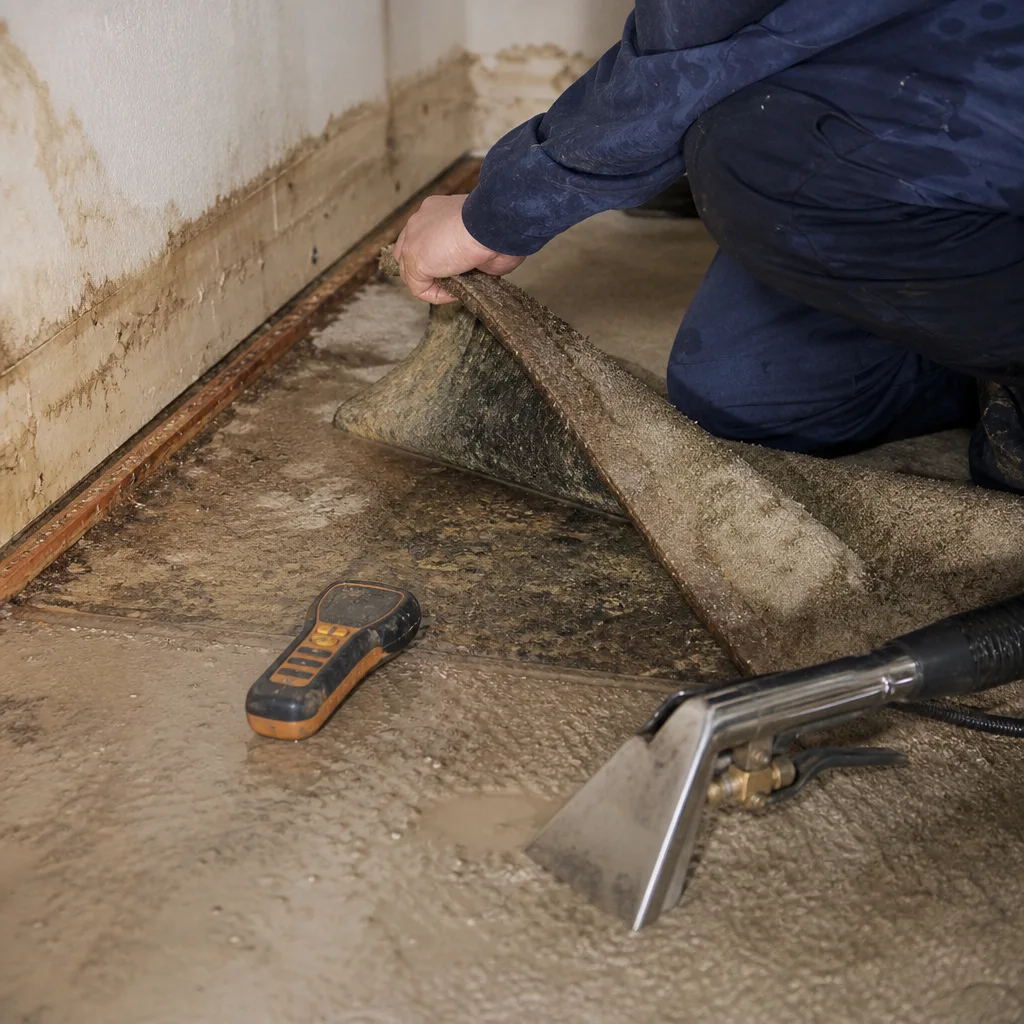
Flood damage in Wyoming is different from North Branch or Hugo. Here, it’s the seasonal water table doing the damage. Snowmelt drains through those low-lying wetlands, saturates the glacial soil, and pushes water up through floor slabs and against basement walls. We’ve pulled water from more Wyoming walkouts in April than any other month of the year. The key is drying fast and drying deep, which is why our Injectidry system gets into wall cavities and under slab edges where standard air movers can’t reach.
Emergency Board-Up
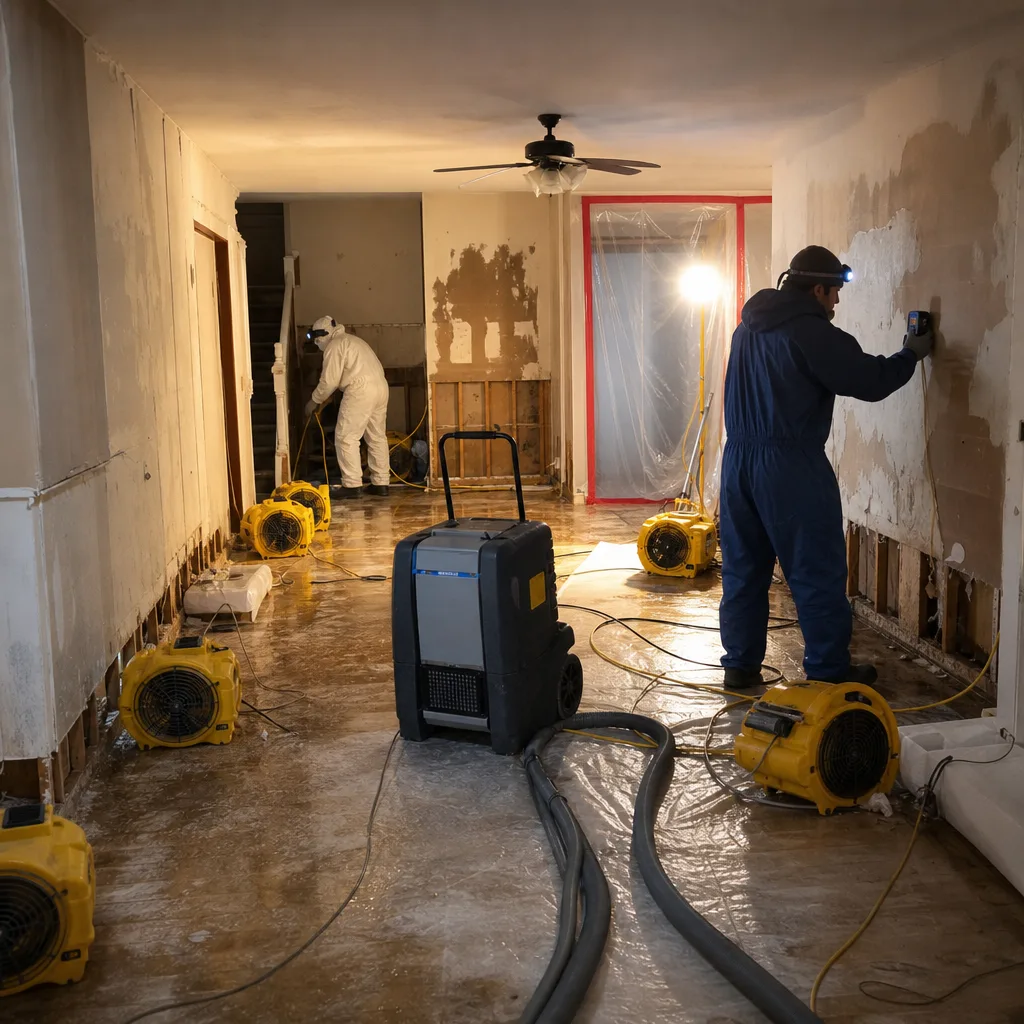
When a windstorm blows out a patio door or drops a tree limb through a window in Wyoming, the hole becomes an open invitation for rain, critters, and looters. We board up same day, sometimes within two hours, using pressure-treated lumber and proper fasteners, not flimsy plywood and a few nails. The goal is to secure the house until proper repairs can be scoped and scheduled. Wind damage doesn’t wait, and neither do we.
Roof Tarping
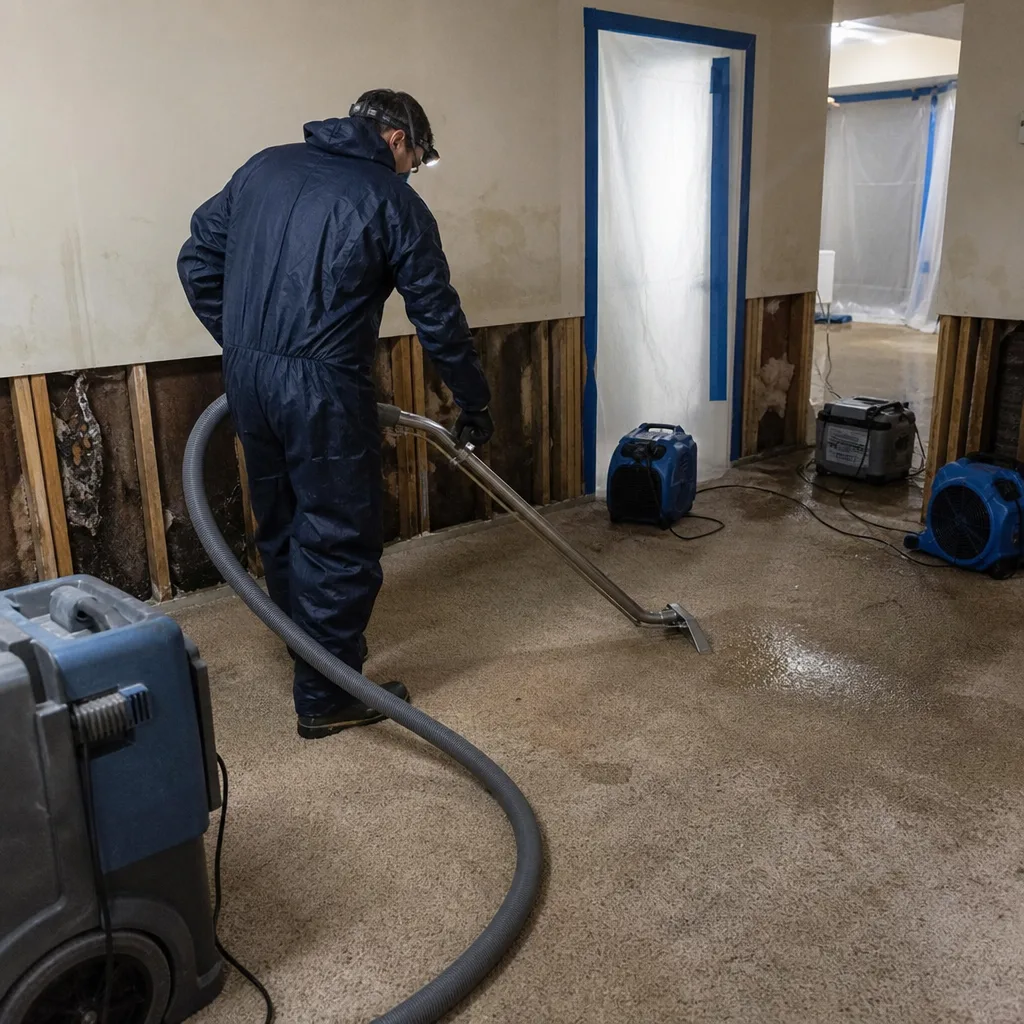
Wyoming’s freeze-thaw cycles do a number on rooflines. Ice dams form in March, water backs up under shingles, and by the time you see the ceiling stain, the damage has been going for weeks. We tarp damaged sections fast, even in snow, to stop the bleeding before interior drying even starts. Then we document everything for your adjuster. Wade has stood on enough Wyoming roofs to know which pitches hold snow and which ones channel water straight into the attic.
What happens when you call
- 1
A real person answersNo phone trees - you reach a local pro.
- 2
You get an upfront price rangeHonest numbers before anyone is dispatched.
- 3
A background-checked tech heads outLicensed & insured, dispatched right away.
- 4
You approve before work beginsNothing starts until you say go.
Trusted Brands We Service in Wyoming
Wade’s crew doesn’t show up with rental equipment that’s been beaten up by a dozen companies before us. We run our own professional-grade gear: XPOWER for air flow, B-Air for heavy drying, Injectidry for deep cavity work, plus Dri-Eaz and Phoenix where conditions call for it. If your Wyoming home already has restoration equipment installed from a previous event, we service it too. We stock parts for the brands we use, which means a broken fan or a rotted hose doesn’t stall your drying job while we wait on shipping. Fast turnaround matters when mold starts colonizing OSB sheathing inside 48 hours.
Common Storm & Disaster Restoration Problems We See in Wyoming Homes
- April seepage that gets misdiagnosed as plumbing. Walkout basements backing to wetland buffers show efflorescence and active water every year, and homeowners assume a pipe burst. By the time they call, mold has been growing behind the drywall for weeks.
- Ice dams on 1990s-era suburban rooflines. Wyoming’s large-footprint homes built during the exurban build-out hold snow differently than older farmhouses. March freeze-thaw cycles push water up under shingles where it saturates attic sheathing before anyone notices.
- Engineered lumber swelling past the point of no return. OSB sheathing and laminated framing absorb moisture fast and delaminate under sustained exposure. A groundwater intrusion that sits for three days becomes a structural repair, not just a drying job.
- Pre-1960 farmhouse foundations with no waterproofing membrane. Wyoming still has a share of older stone and concrete-block foundations. Those walls didn’t have modern waterproofing when they were built, so they seep through the masonry itself, and drying them takes a different approach than slab-on-grade new construction.
Pricing for Storm & Disaster Restoration in Wyoming, MN
Here are real numbers for Wyoming, not a national average. Emergency board-up runs $250-$550 for a standard window or door opening, depending on size and access. Roof tarping runs $350-$800 for a typical damaged section, more if we’re working in snow or on a steep pitch. Flood water extraction and drying in a Wyoming basement starts around $1,200 and runs up to $4,500 depending on square footage, how long the water sat, and whether we’re pulling behind finished walls. Deep cavity drying with Injectidry on an engineered-lumber walkout can add $800-$1,600 to the job, and it’s worth every dollar when the alternative is tearing out the whole finished basement. Storm debris cleanup typically runs $300-$900 for tree limbs, shattered glass, and yard damage. We offer a free second opinion on any written estimate, no trip charge inside our county, and a permanent 10% discount for seniors and veterans. Call (888) 690-6095 and we’ll put the exact number in writing.
Here’s the one thing that separates us: Wyoming’s spring groundwater table doesn’t just cause flooding. It causes hidden flooding. A homeowner sees a damp carpet and thinks plumbing. But when snowmelt drains through Chisago County’s glacial wetlands and saturates the ground around your foundation, the water comes up from below, through the slab, wicking into the walls. Neighboring towns like North Branch and Forest Lake see more surface flooding. Wyoming’s problem is groundwater, and it’s harder to spot because the source is invisible. That’s the core of what we do differently on storm restoration here. We trace the water back to where it’s actually coming from before we start drying, because if you dry the wrong source, you just created a mold farm behind the drywall.
Why Wyoming’s Spring Groundwater Is the Real Threat
Wyoming sits in the lake-dotted glacial terrain of Chisago County, where a high seasonal water table has been part of the landscape since long before the first rambler went up. Every spring, snowmelt drains through low-lying wetlands and saturates the ground around foundations. In newer slab-on-grade homes, that water pushes up against the slab itself. In older farmhouses with poured concrete or stone foundations, it seeps through the masonry. The result looks like a plumbing leak, smells like wet basement, and gets worse the longer it sits.
The 1990s and 2000s homes that make up most of Wyoming’s housing stock are especially vulnerable because of what they’re built with: OSB sheathing and engineered lumber. Those materials are strong and cheap to build with, but they absorb water fast and lose structural integrity quickly. Within 48 to 72 hours of sustained moisture, OSB starts to swell, delaminate, and support mold colonization. In many cases, the water is moving through the slab and into the wall cavity before any visible puddle appears on the floor. By the time it’s noticed, the damage is already in the framing, not just the carpet.
On a walkout rambler backing to a wetland buffer off Kettle River Blvd, our crew found efflorescence and active seepage behind the finished basement wall every April. The homeowner had assumed a plumbing leak and delayed the call. We traced the source to groundwater wicking through the slab-on-grade, then used our Injectidry system to dry the engineered-lumber framing before mold could colonize the OSB sheathing. That’s the work we do in Wyoming all spring, and it’s why IICRC-certified drying protocols matter as much as any piece of equipment.
We Also Serve Cities Near Wyoming
We handle storm and disaster restoration throughout this corner of Chisago County. Beyond Wyoming, our crews regularly work in Forest Lake, Hugo, North Branch, and East Bethel, responding to the same spring groundwater issues, wind damage, and ice dam problems that hit this whole stretch of the I-35 corridor.
Serving Wyoming, MN - Our Local Coverage Area
We’re based in the Wyoming area and know this community well. Use the map below to see our service coverage - if you’re nearby, we can almost certainly help.
FAQs - Storm & Disaster Restoration in Wyoming
It’s the groundwater table, not the weather. Snowmelt runs down through Chisago County’s glacial terrain, saturating the soil around your foundation. With nowhere else to go, that water pushes up through the floor slab and into the walls of your walkout. This happens every spring in Wyoming regardless of rainfall, and we fix it by tracing the water source and drying below grade, not just surface water. If you’re seeing this every April, call (888) 690-6095 and we’ll figure out exactly where the water’s coming from.
Within 48 to 72 hours. OSB sheathing and engineered lumber absorb water quickly and give mold everything it needs: moisture, cellulose, and the right temperature. In a slab-on-grade Wyoming rambler, especially one backing up to a wetland, mold can colonize behind finished walls before the water ever shows on the floor. That’s why we get extraction running inside the hour and put drying equipment on every job. The faster the water comes out, the less mold takes root.
Board-up can’t wait. Every open window or hole in the exterior is an invitation for the next rain, not to mention animals and the cold. In Wyoming, where a windstorm is often followed by snowmelt and more wet weather, postponing board-up by even a day can turn a straightforward repair into a full water intrusion. We board up same day, usually within two hours, and we do it right: pressure-treated lumber, proper fasteners, and a job that stands up to whatever March throws at it. Call us before the hole in the wall becomes a problem in the basement.
The difference is the wall itself. Older Wyoming farmhouses have stone or concrete block foundations with no modern waterproofing membrane. Water comes through the masonry, not the slab joint, and it’s usually been doing it for decades by the time we get called. Newer ramblers are the opposite: the slab is the weak point, and the engineered lumber framing above is what takes the damage. We dry both, but a stone farmhouse needs slower, deeper drying with lower heat, while a 1990s slab-on-grade needs aggressive extraction and cavity drying to protect the OSB. We’ve done both across Wyoming and know which approach fits which house.
Usually, yes, if we get there early enough. We use Injectidry systems that create negative pressure inside wall cavities, pulling moisture out through small access points without ripping down whole sections of drywall. On Wyoming ramblers with finished basements, this often means the difference between a drying bill and a full rebuild. The catch is time. Once mold has colonized the OSB and the drywall itself is saturated, there’s no way to dry it back to health. If you’ve got water in a slab-on-grade basement, call (888) 690-6095 today. We’ll tell you honestly what can be saved and what can’t.
Call Wade’s Restoration for Storm & Disaster Restoration in Wyoming
If you’ve got water moving through your Wyoming basement, an ice dam leaking into your attic, or wind damage that’s letting the next storm in, call (888) 690-6095. Wade answers. We’ll have a crew heading your way fast, we’ll put the scope in writing before work starts, and every storm and flood job is covered by the 90-Day Done Right Promise. No answering service, no national call center, no runaround. Just a local owner who stands behind his work and will see you again at the hardware store.
Written by Wade Ferris, Owner at Wade’s Restoration of Minneapolis, serving Wyoming and the surrounding Chisago County communities since 2007.