
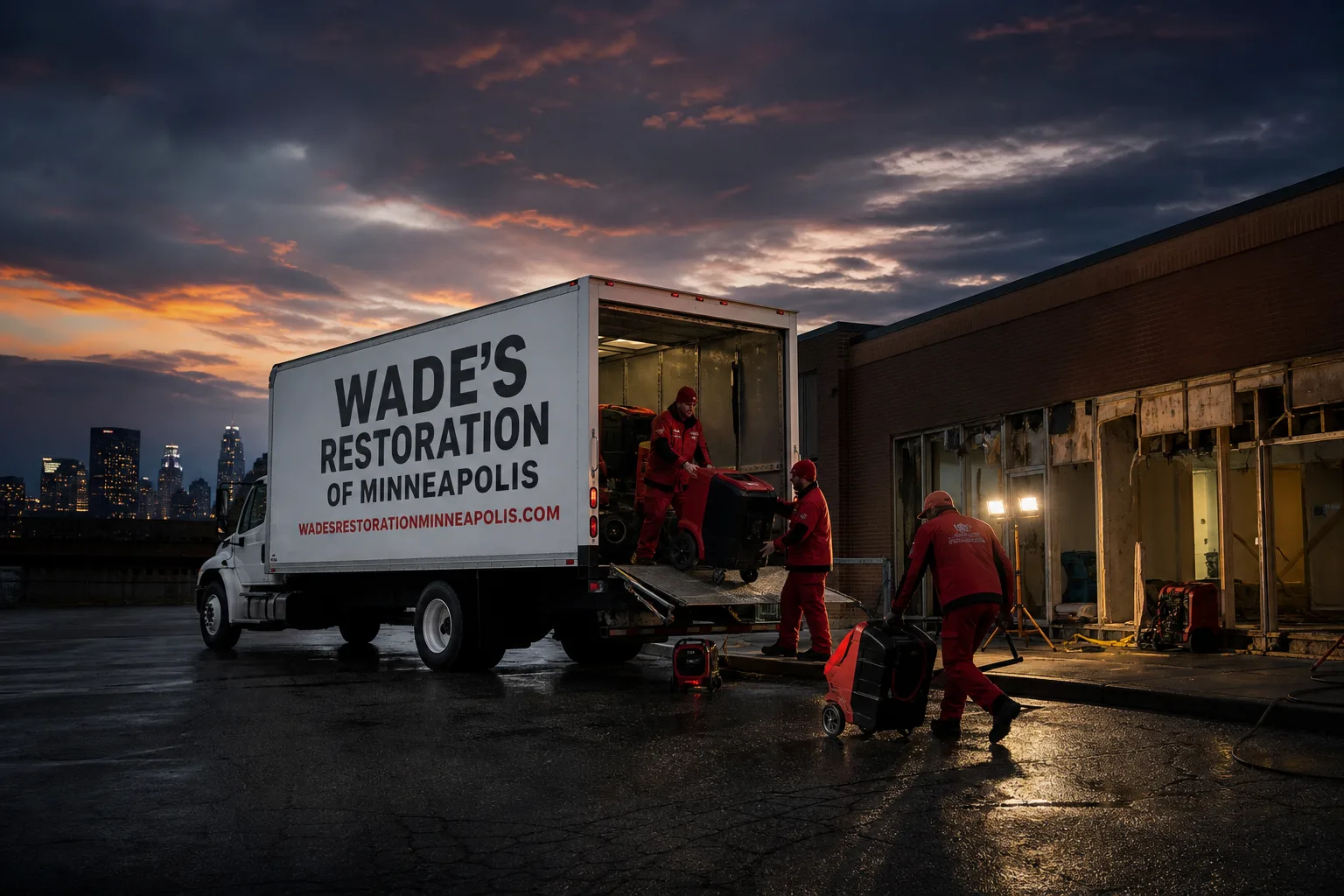
Fast, Reliable Storm & Disaster Restoration Across Hopkins
Storm and disaster restoration in Hopkins usually starts with a phone call at a bad hour. A limb through the roof on a July night. A sump pump that quit during spring snowmelt. An ice dam that finally let go and soaked the plaster in your front bedroom. Our Storm & Disaster Restoration crew gets to Hopkins fast, and we know this city’s homes well enough to skip the guesswork. If your basement is taking on water or your roof is open to the sky, call (888) 690-6095. Wade Ferris answers his own phone, and he can have extraction running inside the hour.
Why Wade’s Restoration of Minneapolis Is Hopkins’s Preferred Storm & Disaster Restoration Company
We’ve worked a lot of homes in Hopkins, and a lot of those homes are the same post-WWII bungalows and ramblers you’ll find from 1st Street N down to the neighborhoods near Shady Oak Lake. That matters because those houses don’t dry like new construction. Plaster-and-lath walls hold water longer. Clay soils heave. Minnehaha Creek runs through the middle of town and makes itself known every few springs. A national franchise that flies in a crew from forty miles away won’t know any of that. We already do.
Wade is the person you’ll meet when the truck pulls up. Not a rotating cast of subcontractors. He publishes his name, his address, and his license number, because he plans to run into you at the hardware store on a Saturday. The crew that works in Hopkins is background-checked, uniformed, and IICRC-certified. They run professional-grade equipment from Dri-Eaz, XPOWER, and Injectidry, and they log moisture readings every single day until the job is done. You get that log. Nobody else in town hands it over.
We answer the phone live, 24 hours a day. Not a voicemail tree, not an answering service. When a storm hits Hopkins and you need board-up before the next system rolls through, that matters. Call (888) 690-6095 and you’ll hear a person.
Our Storm & Disaster Restoration Services in Hopkins
Flood Damage Restoration
Flooding in Hopkins isn’t always from the creek. A lot of it is groundwater. The clay soils under this city don’t drain well, and when the water table rises in spring, older footer drains and sump pits get overwhelmed. We handle basement pump failures, sewer backups, and creek overflow along the Minnehaha Creek corridor. Extraction goes first, then Dri-Eaz LGR dehumidifiers and XPOWER air movers running on a schedule built for your home’s materials, not a generic 72-hour clock. Homes in the 55305 and 55343 ZIP codes with original plaster walls simply need longer to dry, and we plan for that from day one.
Storm Damage Cleanup
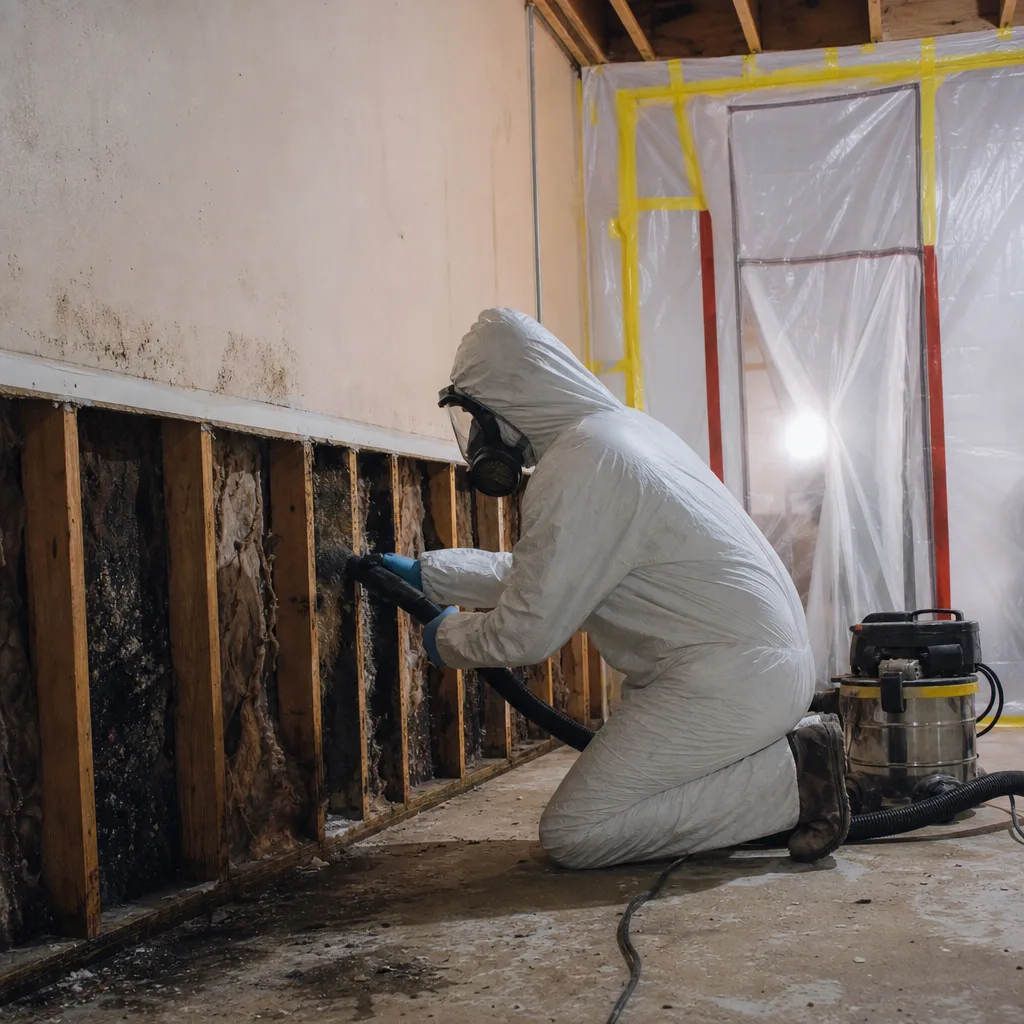
After a windstorm or hail event in Hopkins, we handle structural debris, fallen tree limbs, and waterlogged drywall and insulation. Debris removal in this city sometimes runs into floodplain rules, especially near the creek. We check FEMA flood maps before we start demo, because the wrong move can void an NFIP claim. That’s the kind of thing a generic cleanup crew doesn’t think about until it’s too late. We think about it before the first tarp goes up.
Roof Tarping
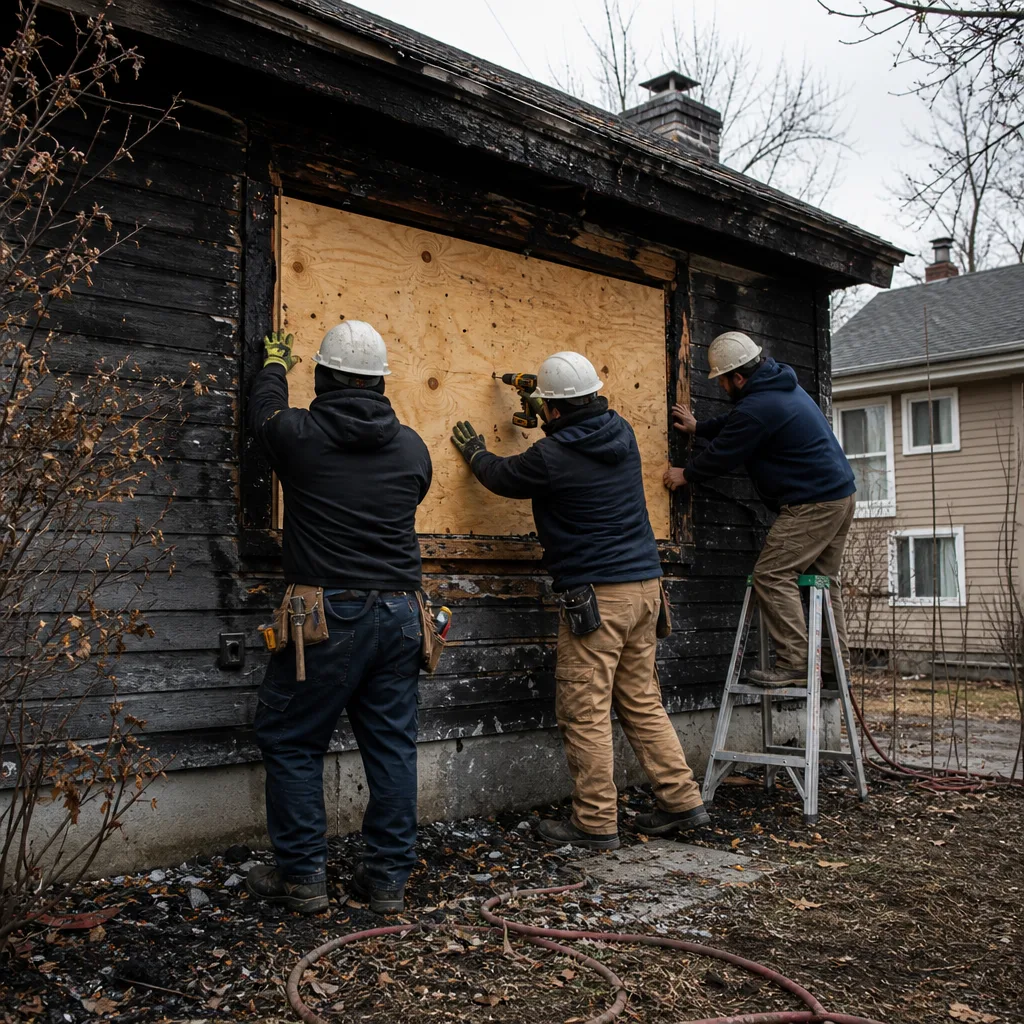
Roof tarping in Hopkins is a race against the next front. We show up, secure the damaged area, and stop the water from coming in. For the 1940s and 1950s homes that dominate this city’s core, the stakes are higher than a simple leak. Low attic R-values in these older bungalows mean ice dams form easily in winter, and once meltwater gets under the shingles, it saturates plaster ceilings before you see a stain. A tarp buys time to do the real repair right, without a panic demo that destroys original trim or spreads wet debris through the house.
Emergency Board-Up
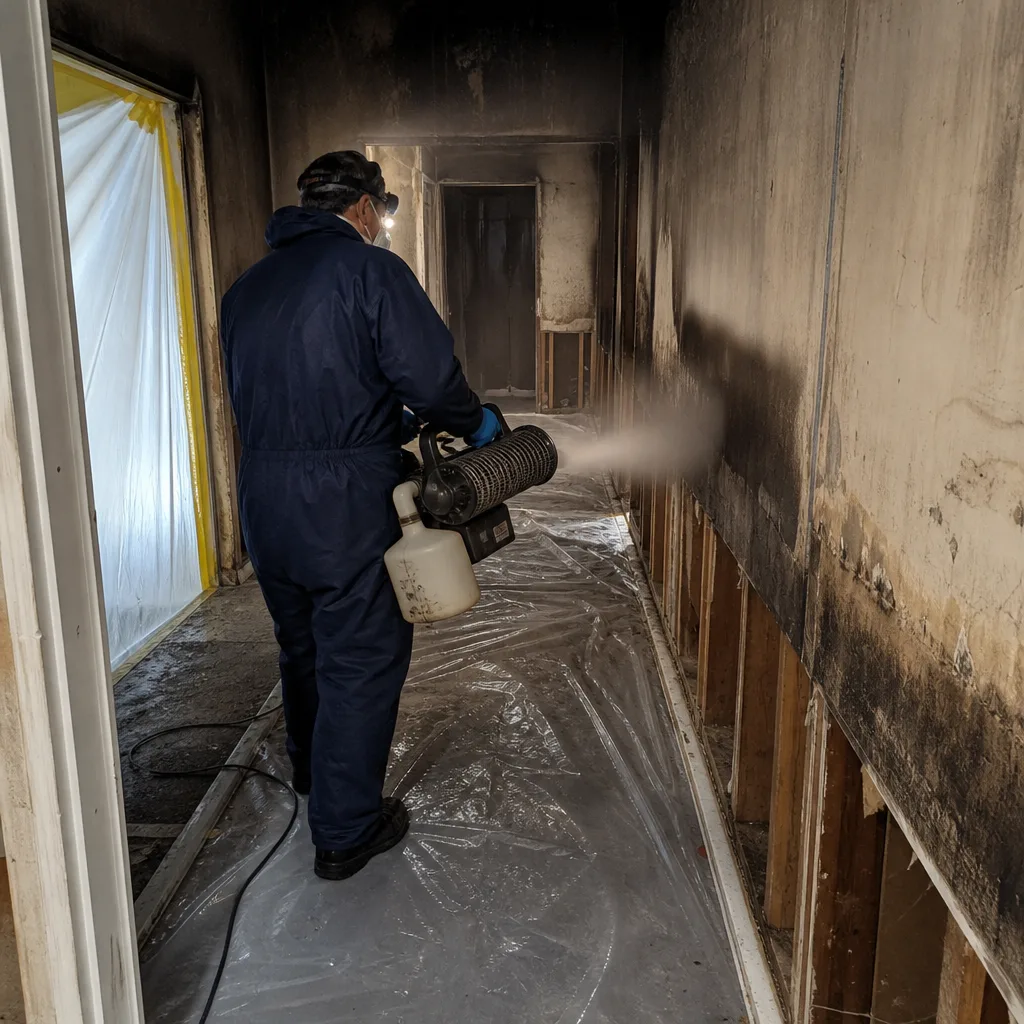
When a storm puts a window through or tears off a section of siding, Hopkins homeowners need the opening sealed before a second storm or a raccoon finds it. We board up with materials that hold through Minnesota wind, and we photograph everything before we touch it. That photo documentation goes straight to your adjuster. We deal with the insurance company directly, so you’re not stuck relaying information between two sides. If you’re in a floodplain-designated area near Minnehaha Creek, we’ll flag that before any board-up or demo work begins.
What happens when you call
- 1
A real person answersNo phone trees - you reach a local pro.
- 2
You get an upfront price rangeHonest numbers before anyone is dispatched.
- 3
A background-checked tech heads outLicensed & insured, dispatched right away.
- 4
You approve before work beginsNothing starts until you say go.
Trusted Brands We Service in Hopkins
We don’t sell equipment, but we work around it every day, and Hopkins homeowners sometimes ask which gear holds up. Our crews run Dri-Eaz LGR dehumidifiers, XPOWER air movers, and B-Air filtration on storm and flood jobs throughout the city. When we need specialty drying for a plaster wall or a tight crawlspace, Injectidry mats and panel systems do the work. A lot of our Hopkins customers have equipment sitting in their basements from a previous disaster, and we’ll work alongside whatever you already own. More importantly, our techs are IICRC-certified, which is the credential that actually matters when someone is running drying equipment in your home.
Common Storm & Disaster Restoration Problems We See in Hopkins Homes
- Plaster walls that hide water for weeks. Original lime plaster from the 1940s and 1950s absorbs moisture slowly and releases it even slower. By the time you see a stain on a Hopkins bungalow ceiling, the water has usually been inside the cavity for days, and the lath behind it is soaked. Rushing that dry-out spreads mold spores behind the wall and ruins the original plaster. We run longer dry times and monitor with thermal imaging before any rebuild.
- Repeat basement flooding from clay soil heave. Hopkins sits on dense clay that expands and contracts through Minnesota’s freeze-thaw cycle. Older concrete block foundations shift every winter, and the cracks that open up let groundwater in during spring snowmelt. Patching the crack cosmetically without addressing drainage just guarantees another flooded basement next March. We scope the drainage before we dry the basement.
- Ice dams on under-insulated roofs. The mid-century homes throughout Hopkins were built when attic insulation was an afterthought. Low R-values mean heat escapes, snow melts, and water backs up under the shingles. The result is repeated winter water damage in the same rooms, usually the upper corners of bedrooms and hallways. We see it every year, and we scope for it even on jobs that started as a summer storm.
- Pre-existing flood damage that never got documented. Homes near Minnehaha Creek often have water intrusion histories buried under layers of past repairs. When we pull up carpet or open a wall, we frequently find old flood staining or unremediated mold from prior high-water events. That discovery changes the scope, and it changes the insurance conversation. We document everything with photos and moisture logs before we finalize any estimate. It’s the only way to protect a Hopkins homeowner from being blamed for damage that predates the current storm.
Pricing for Storm & Disaster Restoration in Hopkins, MN
Emergency board-up and roof tarping in Hopkins typically runs $400-$900 for a standard single-opening job. Full storm damage cleanup with debris removal on a basement flood usually lands between $1,800 and $5,200, depending on square footage and how long the water sat. Flood damage restoration with extraction, drying, and sanitizing in a Hopkins 1940s home averages $4,500-$12,000, with plaster-wall jobs at the higher end because of the longer dry times. Every estimate is free and in writing before we start. We also offer a free second opinion on any written estimate from another company, and there’s no trip charge inside our own county. Call (888) 690-6095 and Wade will walk you through what your specific job should cost.
We Also Serve Cities Near Hopkins
If you’re in Hopkins or just across the border, we cover the surrounding area too. That includes Minnetonka Mills, Minnetonka, Saint Louis Park, and Eden Prairie. Each of those cities has its own housing stock and drainage quirks, but the same crew shows up and the same 90-Day Done Right Promise applies. If you’re unsure whether we cover your street, call and ask. If we don’t, we’ll tell you who to call instead of wasting your time.
Serving Hopkins, MN - Our Local Coverage Area
We’re based in the Hopkins area and know this community well. Use the map below to see our service coverage - if you’re nearby, we can almost certainly help.
FAQs - Storm & Disaster Restoration in Hopkins
Living near Minnehaha Creek changes the estimate because we have to verify FEMA flood-map status before we finalize anything. Homes in or near the mapped floodplain fall under different local ordinances for demo and rebuild, and the wrong scope can void an NFIP claim. We pull the flood map, check the prior water history, and write the estimate accordingly. If you’re in a creek-corridor home with a previous high-water event, we build that documentation into the scope before the first wall comes open. Call (888) 690-6095 to have us check your property’s map status.
Because plaster-and-lath walls hold moisture roughly 40% longer than modern drywall, which means equipment in a 1950s Hopkins home runs longer for good reason. Cutting into lath too early releases hidden moisture into the wall cavity and spreads mold spores behind the lime plaster. We use Dri-Eaz LGR dehumidifiers and thermal imaging to confirm the wall is actually dry before we close it up, which takes the time it takes. That’s the right way to do it, and it’s why we don’t promise 72-hour dry-out on these homes.
You don’t need NFIP flood insurance if you’re outside the mapped Minnehaha Creek floodplain, but standard homeowner policies usually won’t cover groundwater seepage or sewer backup without a specific rider. In Hopkins, the clay soils make basement seepage common even blocks away from the creek, and most of those claims get denied without the right endorsement. We can document the source of the water and work directly with your adjuster to build a claim that stands up. It costs nothing to have us look before you file.
Because ice dams form from attic heat, not from roof leaks, and most 1950s Hopkins ramblers have low attic R-values that let that heat escape. Snow melts on the warm roof, refreezes at the cold eaves, and water backs up under the shingles. It saturates the plaster ceiling before you ever see a stain. The fix is insulation and ventilation work, not just replacing shingles, and we can scope that while we repair the ceiling damage the ice dam already caused.
We photograph every layer as we remove it and log moisture readings before, during, and after extraction. If we find old flood staining or prior mold behind paneling or under carpet in a Hopkins basement, we document it with photos, note it in the file, and send that directly to your adjuster. That protects you from having a past event blamed on the current storm. Then we hand you the full moisture log at the end of the job, which almost nobody else does. It’s the same reason we write the 90-Day Done Right Promise onto every contract: if it’s not done right, we make it right, in writing.
If your Hopkins home just took a hit and you need someone who actually knows this city’s houses, call (888) 690-6095. Free estimates, a live person on the line, and a crew that answers to the name on the truck.
Written by Wade Ferris, Owner at Wade’s Restoration of Minneapolis, serving Hopkins and the surrounding communities since 2007.