
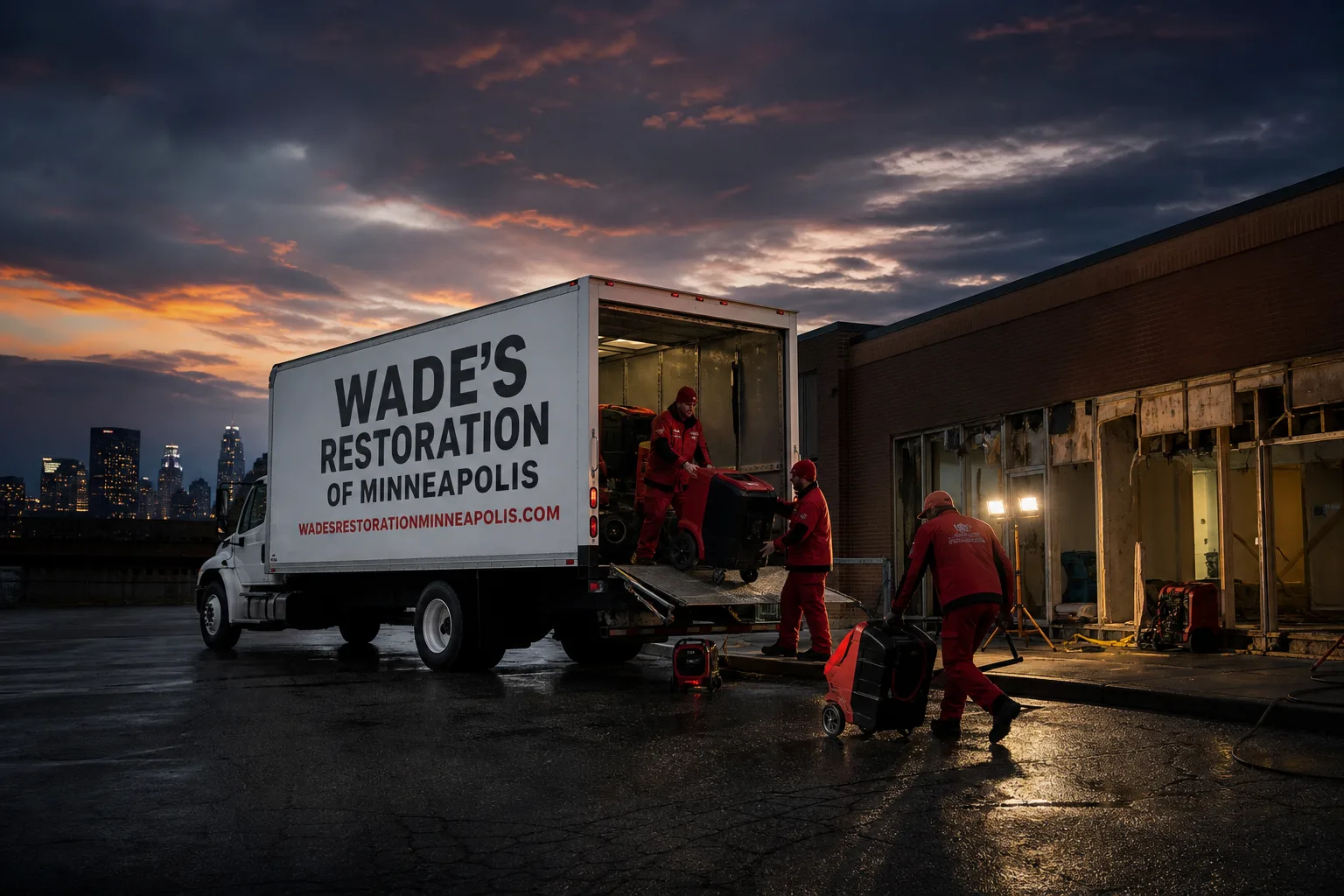
Fast, Reliable Storm & Disaster Restoration Across South Saint Paul
Storm damage in South Saint Paul rarely waits for business hours. When a March ice jam sends Mississippi River water into basements along the low-lying blocks near the old stockyards, or an April thunderstorm rips shingles off a 1930s bungalow on 3rd Avenue, you need someone who knows these streets and shows up fast. Storm & Disaster Restoration in South Saint Paul means water extraction running within the hour, emergency board-up before nightfall, and a written scope before any tear-out starts. Call Wade at (888) 690-6095 and he’ll answer himself, any hour of the day or night.
Key takeaways:
- Emergency response to South Saint Paul’s riverside blocks, typically inside the hour
- Complete storm cleanup, flood restoration, board-up, and roof tarping from one crew
- Wade deals with your insurance adjuster directly and documents everything with photos and moisture logs
- 90-Day Done Right Promise in writing on every storm and flood job
Why Wade’s Restoration Is South Saint Paul’s Preferred Storm & Disaster Restoration Company
Wade Ferris has been answering his own phone since 2007, and South Saint Paul homeowners have come to expect that. Not an answering service. Not a national call center. When a storm hits and the Mississippi starts backing up into basements near 55075, Wade picks up and says he’ll be there himself. Ask anyone off 3rd Avenue or down near Concord Street. They’ll tell you the same thing. The owner’s name is on the truck, his address is published, and he’s going to run into you again at the hardware store. That’s the oldest accountability mechanism there is, and it works.
Our Storm & Disaster Restoration team brings professional-grade drying equipment: Dri-Eaz LGR dehumidifiers, Phoenix AirMax fans, and XPOWER air movers. Every crew member is background-checked and uniformed. But what sets us apart in South Saint Paul is the documentation. Wade takes moisture readings every single day and hands you the full log when the job is done. Almost nobody in this trade does that. Insurance adjusters notice. Homeowners notice too.
Our Storm & Disaster Restoration Services in South Saint Paul
Flood Damage Restoration
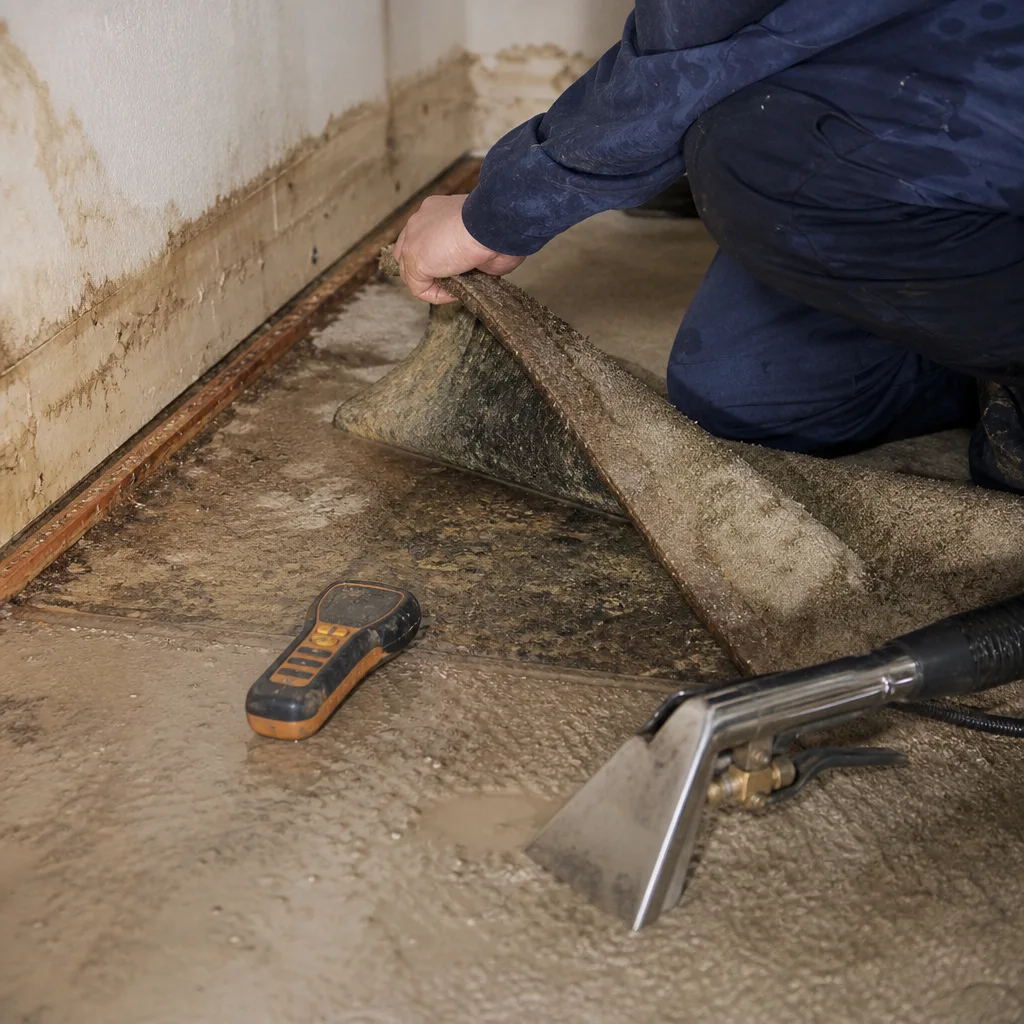
Flooding in South Saint Paul is different from flooding in West Saint Paul or Maplewood. You’re not just dealing with rain. You’re dealing with river water, ice-jam surges, and sometimes sewage backing up through floor drains when the Mississippi rises. We extract the water, map the moisture, and dry the structure using equipment sized for the legacy plaster and wood framing in the city’s 1920s-1950s worker homes. River-water jobs in the lower blocks nearly always require full demo of original rock-lath plaster, because that substrate holds moisture for weeks longer than modern drywall. We plan for that from day one.
Storm Damage Cleanup
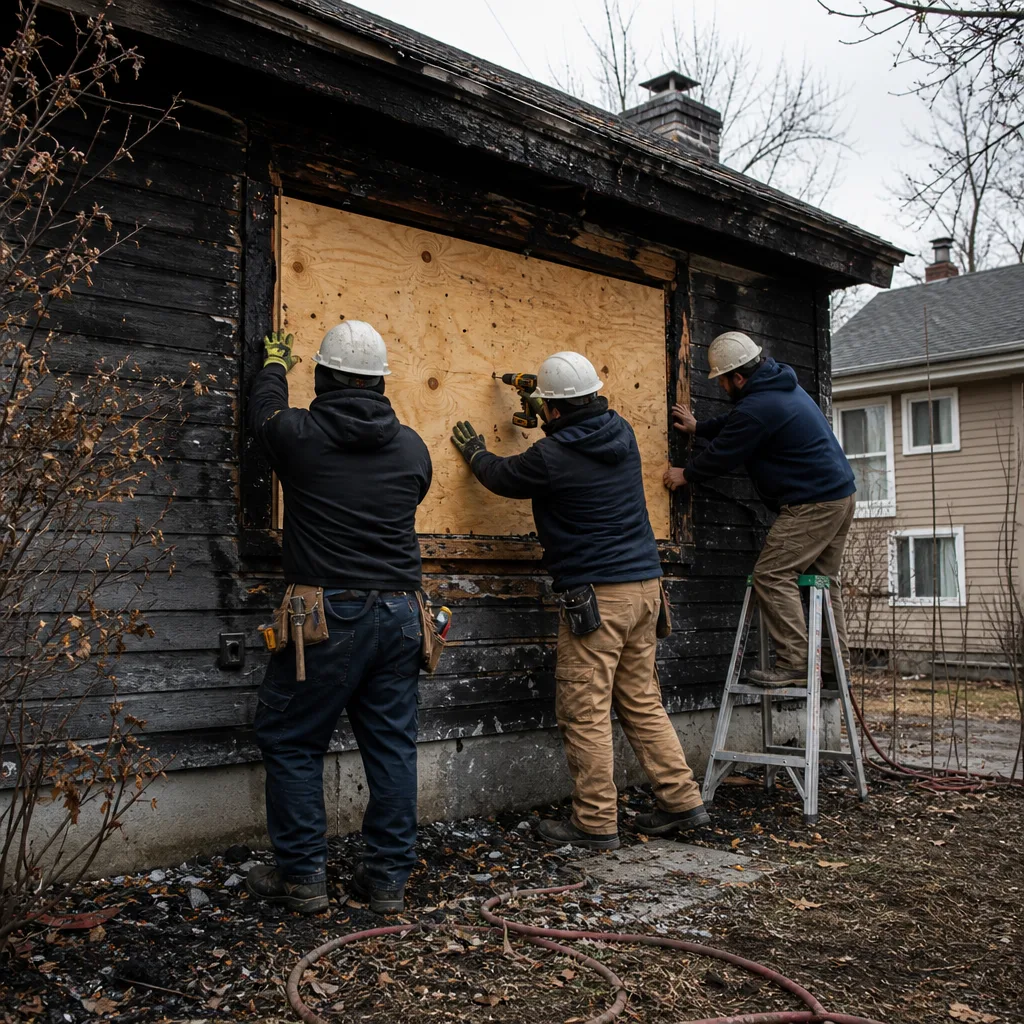
Whether it’s a July microburst ripping through South Saint Paul or a January ice storm taking down limbs onto roofs, we handle debris removal, structural drying, and full restoration. The bulk of housing here was built to house meatpacking and stockyard labor, with original plaster walls and older mechanical systems. We know which houses on which blocks are likely to have asbestos-containing floor tile or knob-and-tube wiring, and we sequence the work accordingly. Cleanup isn’t just hauling branches. It’s stabilizing your home so the next storm doesn’t finish what the first one started.
Emergency Board-Up
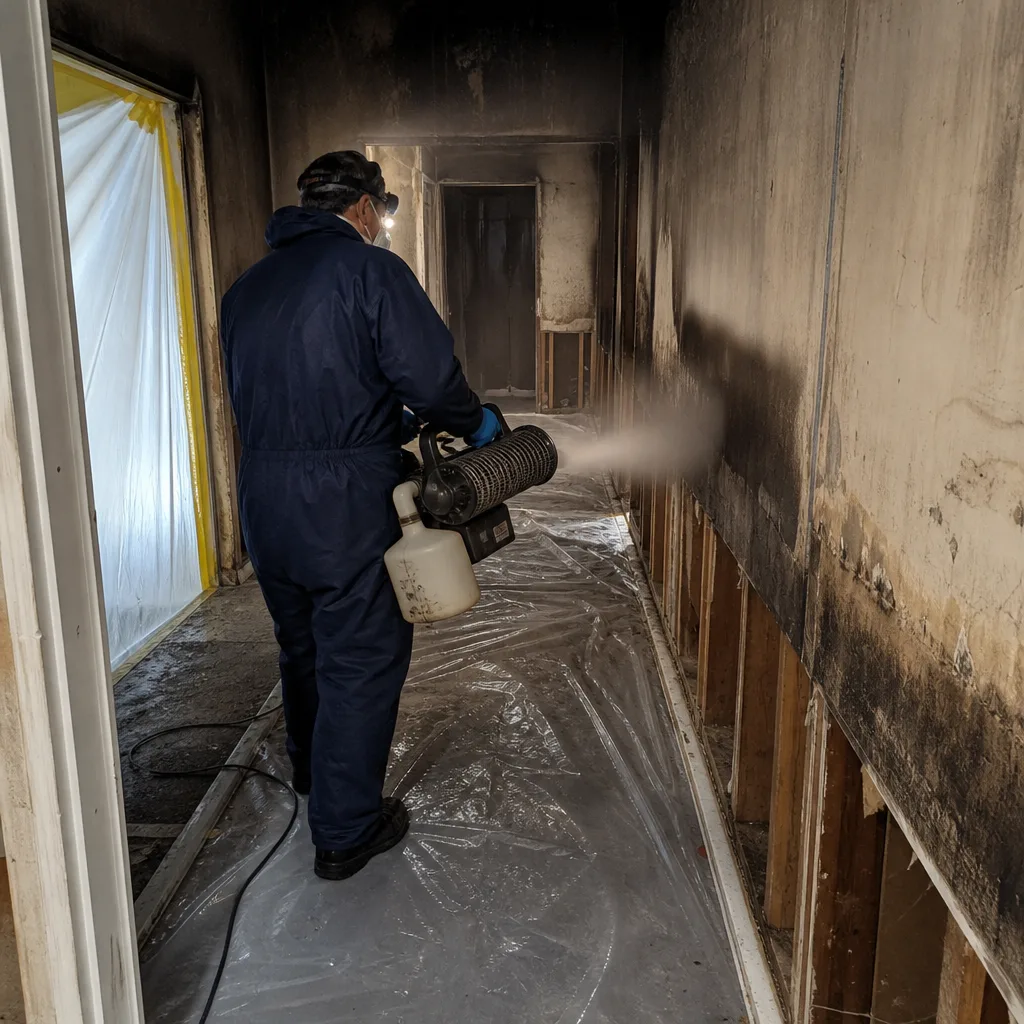
When wind blows out a window or a tree limb punches through a roof in South Saint Paul, you need that opening secured before it rains again. Our emergency board-up service uses plywood and vapor barriers to keep water and pests out. We’ve been called to homes along 6th Avenue and up near the South St. Paul Public Schools where a single broken window left overnight turned a $400 repair into a full wall-gutting. Don’t wait. Board-up is quick, cheap insurance compared to what wet plaster and soaked insulation will cost you.
Roof Tarping
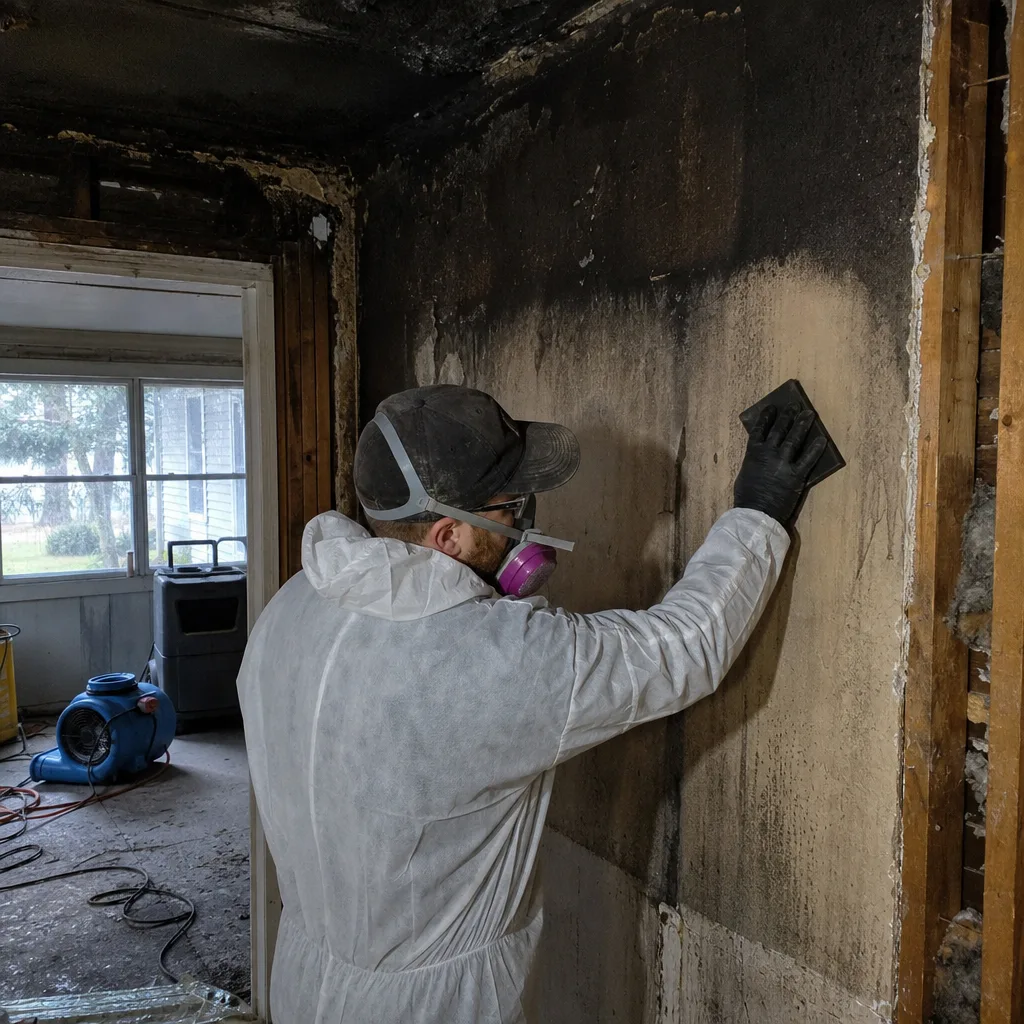
Winter storms in South Saint Paul can strip entire roof sections off the older bungalows and two-story workers’ homes. A properly secured tarp from our crew stops rain and snowmelt from pouring into original plaster walls, which means the difference between dry-in-place drying and full demo. We use heavy-duty poly tarps and screw them down along the eaves, not just nail them to shingles. On jobs near the river, we account for wind exposure and ice accumulation so the tarp holds through the next storm, not just until morning.
What happens when you call
- 1
A real person answersNo phone trees - you reach a local pro.
- 2
You get an upfront price rangeHonest numbers before anyone is dispatched.
- 3
A background-checked tech heads outLicensed & insured, dispatched right away.
- 4
You approve before work beginsNothing starts until you say go.
Trusted Brands We Service in South Saint Paul
We run XPOWER air movers and B-Air fans on water jobs, plus Dri-Eaz and Phoenix drying equipment. Wade Ferris is IICRC-certified, and his crews train on the equipment they use in your home, not something they read about in a manual. When you see us pull up to a South Saint Paul address, you’ll see commercial dehumidifiers and extraction units loaded and ready, not rental-shop leftovers. For homeowners in 55075, that gear usually means a faster dry-down and fewer days of displacement. We stock the parts and hoses we need, and if a unit fails, we swap it out the same day, not next week.
Common Storm & Disaster Restoration Problems We See in South Saint Paul Homes
- Ice-jam flooding backs water into basements blocks inland. The Mississippi doesn’t just flood the houses on the riverbank. Ice jams can push water up through storm drains and floor drains blocks away within hours, and no amount of sandbagging at the front door stops it.
- Original 1920s-1950s plaster walls hold moisture for weeks. Rock-lath plaster wicks water upward and traps it behind the finish. Modern drywall can be dried in place. In South Saint Paul’s older homes, full demo is usually the only safe option, and that changes scope and cost.
- Asbestos-containing materials hide in floor and ceiling finishes. The old tile and some insulation in these worker homes can contain asbestos. If you tear out without testing, the job can get shut down by the state and you’ll need abatement anyway. We test first, then demo.
- Galvanized pipes and knob-and-tube wiring complicate post-storm repairs. Water damage in older South Saint Paul homes often exposes aging electrical and plumbing that’s reached the end of its life. Rebuilding after a flood means dealing with those systems to current code, not just patching drywall.
Pricing for Storm & Disaster Restoration in South Saint Paul, MN
Storm cleanup after a wind event in South Saint Paul typically runs $800-$2,500, depending on debris volume and roof damage. Emergency board-up for a single window or door opening averages $250-$600, with same-day response. Roof tarping usually falls between $400 and $1,200, priced by roof size and pitch. Flood damage restoration is the big variable: a clean water basement extraction in a 1950s bungalow might cost $3,000-$7,000, but ice-jam river water that soaks rock-lath plaster and requires asbestos abatement can push scope to $12,000-$25,000 or more. The honest answer is that South Saint Paul’s older housing stock and river-flood exposure drive costs higher than in newer suburbs. Wade will give you a written scope before any work starts, with no trip charge in our own county. Call (888) 690-6095 for a free estimate.
We Also Serve Cities Near South Saint Paul
Our crews work throughout the southeast metro, including South Saint Paul, West Saint Paul, Maplewood, Inver Grove Heights, and Saint Paul Park. If you’re on high ground in one of those neighboring cities and a storm just rearranged your roof, call the same number: (888) 690-6095. Wade answers.
South Saint Paul’s Rivers vs. the Rest of the Metro: Why Local Expertise Matters
South Saint Paul’s riverside blocks face a threat that doesn’t exist in West Saint Paul or Maplewood: ice-jam flooding on the Mississippi. A rapid spring thaw can send river water and ice chunks surging into the lower-elevation neighborhoods near the old stockyards, backing water into basements blocks inland within hours. When that happens, Wade gets calls from all over 55075 at once. The houses in those lower blocks were built between the 1920s and 1950s to house stockyard workers, and they weren’t designed for modern floodwaters. Original rock-lath plaster, galvanized pipes, and asbestos-containing tile all interact with floodwater in ways that newer construction doesn’t. Our crews know which blocks flood first, which basements have had water before, and which houses need asbestos testing before a single piece of drywall or plaster comes out. That sequence isn’t optional. It’s the difference between a job that finishes in three weeks and one that stalls for two months.
After a rapid spring thaw sent Mississippi overflow into the lower blocks near the old stockyards, our crew was called to a 1940s bungalow off 3rd Avenue where water had wicked into original rock-lath plaster. We ran Dri-Eaz LGR 7000XLi dehumidifiers and Phoenix AirMax fans for over a week, but the plaster held moisture and required full demo, a scope we see repeatedly in South Saint Paul’s 1920s-1950s worker homes. During tear-out we found asbestos-containing floor tile and coordinated with a licensed abatement contractor before continuing, keeping the family informed and the job on track. That’s how these jobs go in South Saint Paul. Not because contractors are careless, but because the water and the materials in these homes don’t cooperate with shortcuts.
Serving South Saint Paul, MN - Our Local Coverage Area
We’re based in the South Saint Paul area and know this community well. Use the map below to see our service coverage - if you’re nearby, we can almost certainly help.
FAQs - Storm & Disaster Restoration in South Saint Paul
A replacement exterior door in South Saint Paul should carry a wind rating of at least 90 mph, which exceeds Minnesota’s standard building code requirement of 90 mph for the Twin Cities metro. Wind-driven rain from a severe storm can blow water through an unrated door and into your home in minutes, eventually spreading across floors, into floor vents, and down to the basement. Insurance adjusters almost always ask what rating the door carried if they’re denying a claim. They’ll ask whether the water came in through a failure in the door assembly, or through a flood. Put a wind-rated door in now. It’s cheaper than a mold claim later.
Mississippi River ice-jam flooding can back water into South Saint Paul basements blocks inland within hours, even on streets far from the riverbank. The water doesn’t come overland; it rises through storm drains and floor drains when the river backs up. That’s why homeowners in the lower-elevation blocks near the old stockyards and the river’s oxbows get hit harder and faster than homes on higher ground. Once the water’s in, it saturates the original rock-lath plaster and wood framing for weeks. A standard sump pump and a wet/dry vac won’t fix it. You need commercial extraction, daily moisture readings, and likely full demo of the affected plaster. Call Wade’s Restoration at (888) 690-6095 for emergency extraction before the water does more damage.
Yes, if your home was built before 1978 and a storm has soaked or damaged original floor tile, ceiling texture, or plaster, in South Saint Paul you need asbestos testing before any demolition starts. The city’s 1920s-1950s worker housing commonly contains asbestos in floor tile, ceiling and wall texture, and some insulation materials. Cutting into those materials without testing can trigger state abatement requirements and halt the job. Our crews test first, and we coordinate with licensed abatement contractors when tests come back positive. It adds a day or two to the timeline, but it keeps you and our crew safe and keeps the job legal.
Call Wade’s Restoration at (888) 690-6095 and get emergency board-up or tarping scheduled in the next few hours. While you wait, shut off electricity at the breaker if water is coming in, and move furniture and electronics away from the damage. Cover the opening with plywood or plastic if you can do so safely from the inside, but don’t get on the roof. A blown-out window in a South Saint Paul home can turn a small repair into a full wall replacement if it rains before you seal it. Board-up is cheap compared to what wet plaster and soaked insulation will cost.
Because the houses in South Saint Paul’s river-adjacent blocks are older, built with materials that hold water, and the water itself is river water, not clean rain. Original rock-lath plaster from the 1930s wicks floodwater upward and holds it for weeks, unlike modern drywall, which dries in days. Asbestos-containing floor tile and old galvanized pipes complicate demolition and rebuilding. A flood job in a 1950s bungalow in South Saint Paul can run $12,000-$25,000, where the same square footage in a newer Maplewood home might run $5,000-$10,000. It’s not contractor markup. It’s the house. Call (888) 690-6095 for an exact quote, estimates are free.
Contact Wade’s Restoration for Storm & Disaster Restoration in South Saint Paul
Storm damage doesn’t wait, and neither do we. If you’re in South Saint Paul and you’ve got water in the basement, a tree on the roof, or a door that won’t hold after a wind event, call Wade directly at (888) 690-6095. He answers his own phone, 24 hours a day, seven days a week. Every storm and flood job is covered by the 90-Day Done Right Promise in writing, and seniors and veterans always get 10% off. Free estimates, no trip charge inside the county, and a second opinion on any written estimate if you’re not sure. To wade is what you do through a flooded basement at two in the morning, and it happens to be his name.
Written by Wade Ferris, Owner at Wade’s Restoration, serving South Saint Paul and the southeast metro since 2007.