
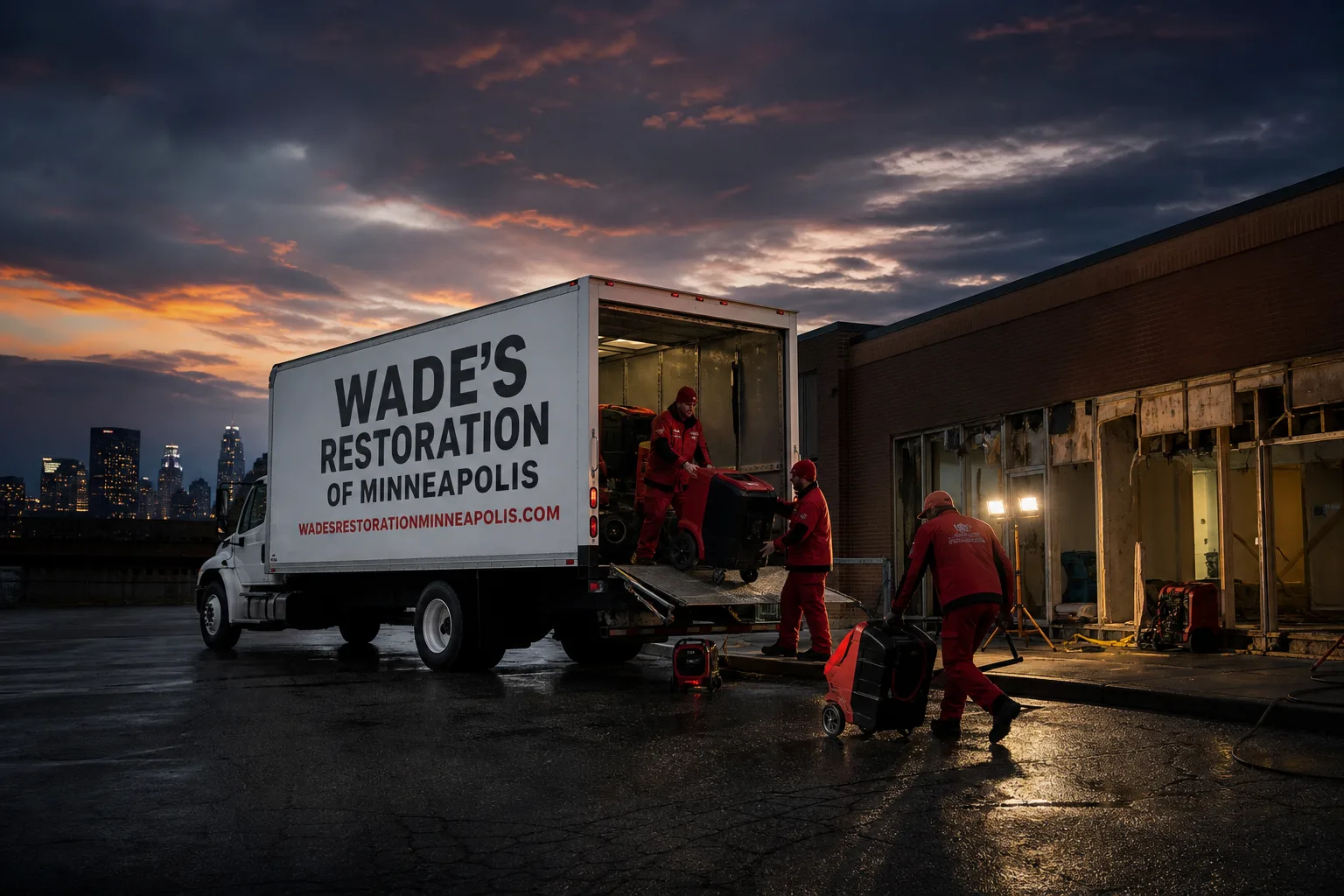
Fast, Reliable Storm & Disaster Restoration Across Saint Francis
Storm damage in Saint Francis usually means one of three things: a flooded basement from a failed sump pump, water pushing in from the Rum River during spring thaw, or ice dams tearing into a low-pitched roof. Our Storm & Disaster Restoration team handles all of it, and we get to Saint Francis fast. When your finished basement has three inches of water at 2 a.m., you don’t need a call center. You need someone on the road. Call (888) 690-6095 and Wade Ferris himself will answer.
We’ve worked along the Rum River corridor long enough to know exactly what Saint Francis homes go through. The clay-heavy soils left from converted farmland saturate fast. The 2000s-era tract homes with finished basements and single sump pumps fail the same way every spring. And the low-pitched roofs that were standard during the 1990s and 2000s buildout here ice-dam like clockwork. None of this surprises us anymore, and that’s the point. You want a crew that’s seen your exact problem before.
Why Wade’s Restoration of Minneapolis Is Saint Francis’s Preferred Storm & Disaster Restoration Company
Wade Ferris founded this company in 2007 and put his name on the truck. That’s not marketing. His address is published, his license number is on every contract, and he answers his own phone at midnight. In Saint Francis, where word travels fast along 237th Avenue and down Rum River Boulevard, that kind of accountability matters. You’ll run into Wade again at the hardware store. That’s the oldest quality guarantee there is.
Our crew is background-checked, uniformed, and IICRC-certified. We run professional-grade equipment from Dri-Eaz, XPOWER, and B-Air, not rental-shop gear. And every water, fire, and mold restoration job in Saint Francis comes with our 90-Day Done Right Promise in writing. If it’s not done right, Wade makes it right. One call brings him back.
When Saint Francis homeowners call us after a spring storm, they’re not asking for a sales pitch. They’re asking how fast we can get there and whether insurance will cover the damage. We answer both questions directly. Wade heads out immediately, often with extraction running within the hour for homes in the 55070 zip code. And he deals with your insurance adjuster directly, so you never have to relay information between two sides. That’s the part Saint Francis homeowners tell us they appreciate most.
Our Storm & Disaster Restoration Services in Saint Francis
Flood Damage Restoration
Flood damage in Saint Francis is different from flood damage in Anoka or Ramsey. Here, the Rum River is the wildcard. Spring snowmelt pushes the river over its banks in low-lying sections, and the groundwater table rises fast. Basements that stayed dry all winter suddenly have water seeping through floor cracks and cove joints. We extract the water, set up commercial dehumidification, and document moisture readings every single day until the structure is dry. You get the full moisture log at the end of the job. Almost nobody else in this trade hands that over.
Storm Damage Cleanup
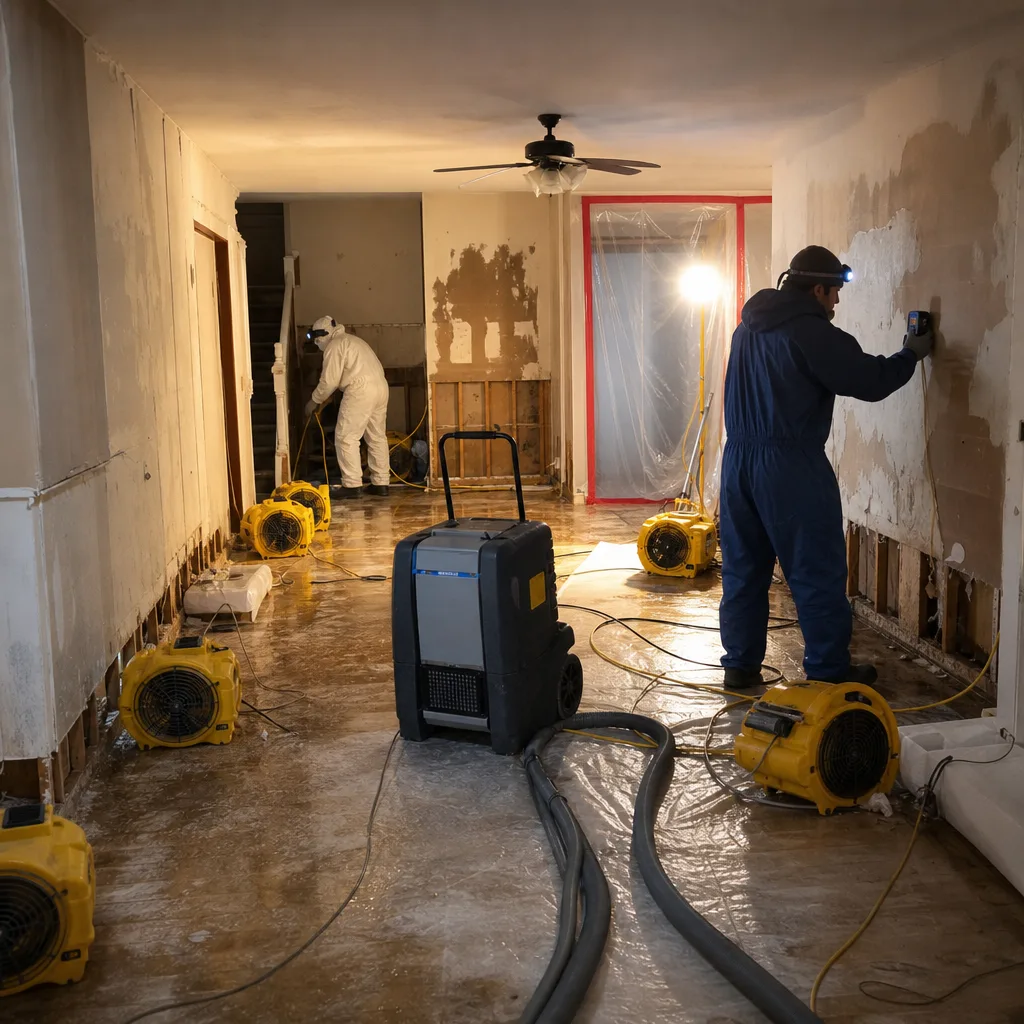
Straight-line winds and spring thunderstorms tear through Saint Francis differently than they do in denser suburbs. The rural and semi-rural lots here mean more trees, and more trees mean more branches through windows and across driveways. We handle debris removal, structural stabilization, and interior water cleanup from wind-driven rain. Our Saint Francis team carries the right equipment for both the cleanup and the restoration that follows.
Emergency Board-Up
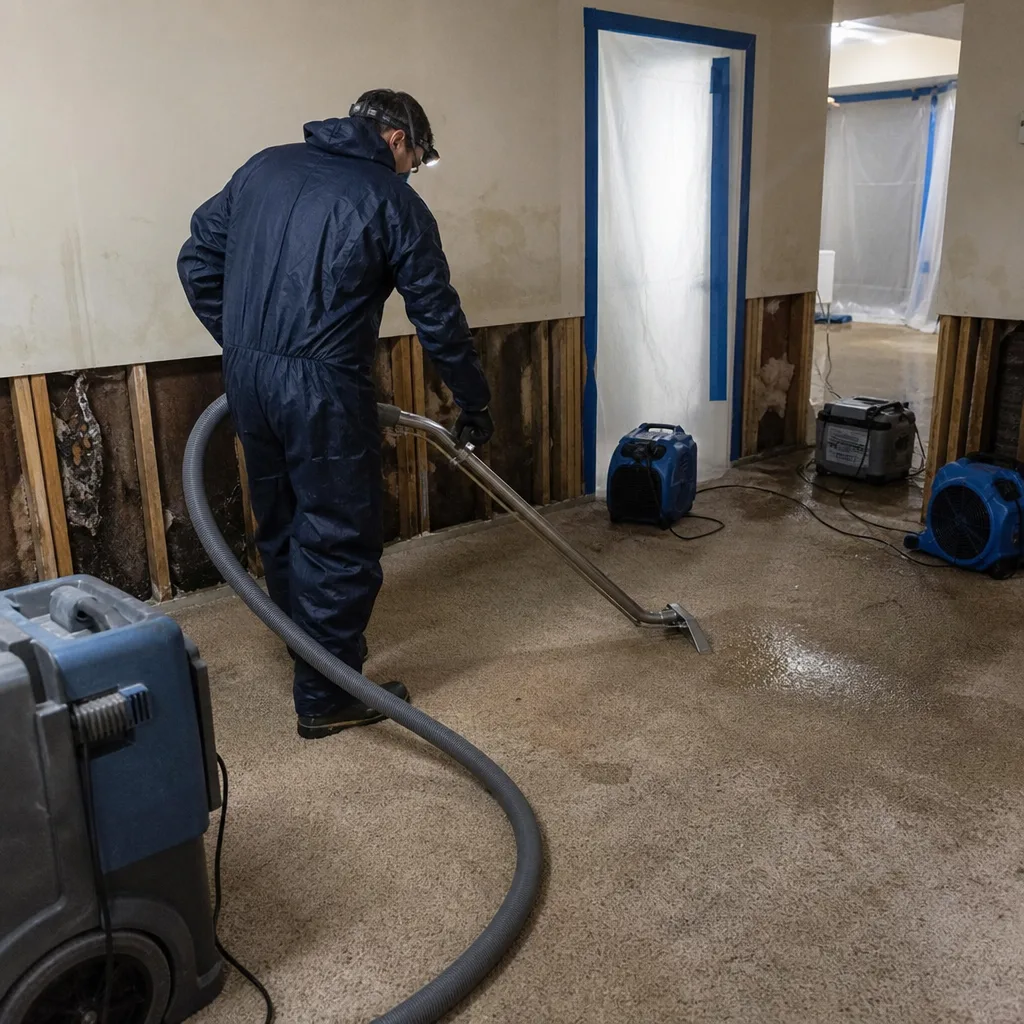
When a tree limb goes through a picture window on 229th Avenue during a thunderstorm, the damage doesn’t stop when the rain stops. An open home invites more water, animals, and trouble. We board up the opening the same day, tarp what needs tarping, and get your home secure before nightfall. Saint Francis has plenty of acreage properties with detached workshops and outbuildings, and we secure those too. A broken window on a detached garage is still a liability.
Roof Tarping
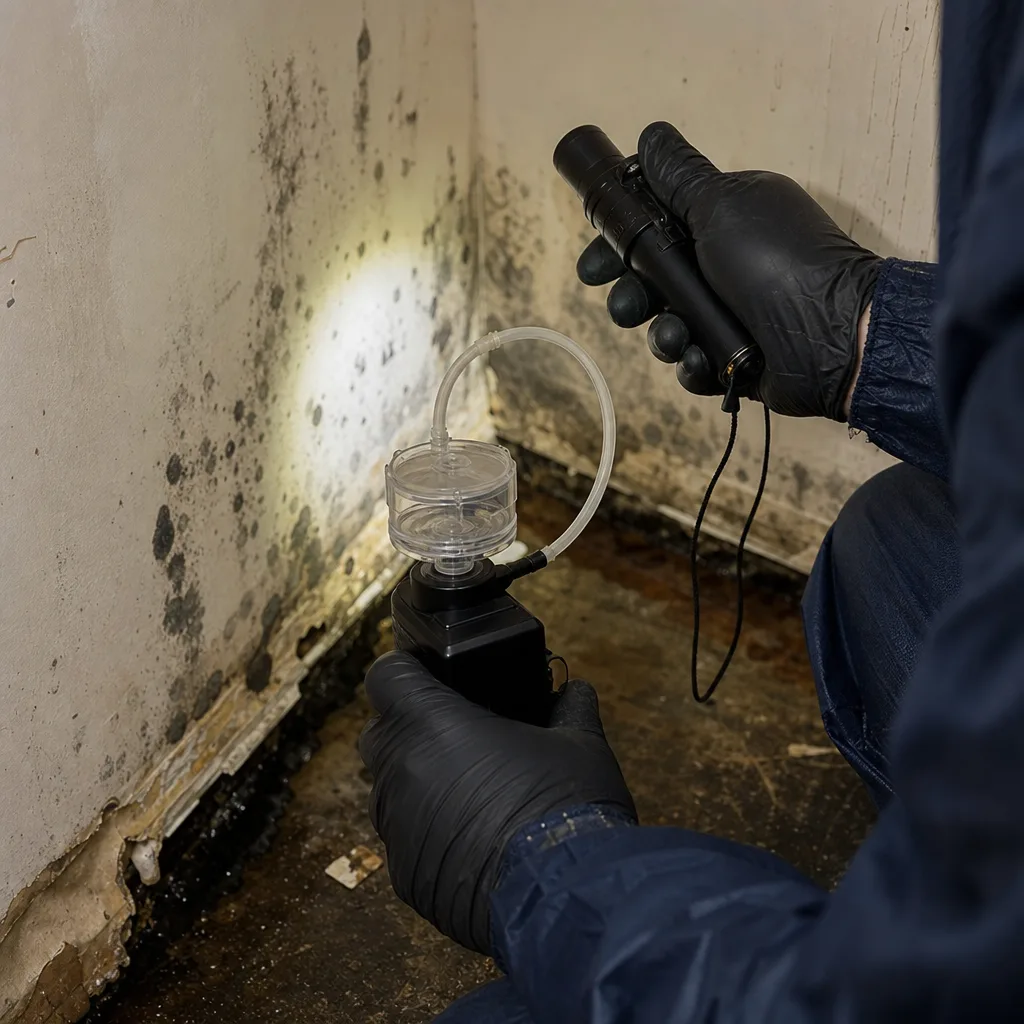
Roof tarping in Saint Francis is a spring ritual. The low-pitched rooflines common in 2000s-era tract construction hold snow longer, and once ice dams form, water backs up under the shingles and into the OSB sheathing. The damage is often invisible until it’s too late. We tarp the affected sections immediately to stop active water intrusion, then document everything for your insurance claim. If you need more than a tarp, we coordinate full reconstruction as a separate, written-scope job, same as any remodel.
What happens when you call
- 1
A real person answersNo phone trees - you reach a local pro.
- 2
You get an upfront price rangeHonest numbers before anyone is dispatched.
- 3
A background-checked tech heads outLicensed & insured, dispatched right away.
- 4
You approve before work beginsNothing starts until you say go.
Trusted Brands We Service in Saint Francis
We stock and service equipment from the brands restoration professionals trust: XPOWER axial fans and air movers, B-Air dryers, and Injectidry systems for hard-to-reach cavities. When a Saint Francis homeowner needs a replacement part or a second opinion on equipment after a flood, we can usually get it handled without waiting on a shipment. Our techs work with this gear daily, so they know what holds up in Minnesota’s freeze-thaw cycle and what doesn’t.
Common Storm & Disaster Restoration Problems We See in Saint Francis Homes
- Single sump pump failures during spring thaw. The clay-heavy soils from converted farmland saturate fast, and many 2000s-era homes in Saint Francis were built with only one sump and no battery backup. When a spring storm knocks out power, the pump quits, and the basement floods before the lights come back on.
- Ice dams on low-pitched tract rooflines. Saint Francis sits in the snowbelt north of the metro, and the roof pitches common in late-1990s and 2000s construction hold snow. Ice dams punch through OSB sheathing, causing attic mold that hides until the next rain.
- Rum River groundwater intrusion. Spring snowmelt raises the water table along the river corridor, and basements that were dry all year start seeping through floor cracks. This is localized to Saint Francis and the river-adjacent areas, not a metro-wide pattern.
- Delayed calls after power flickers. Homeowners sometimes wait to see if the water recedes on its own. It doesn’t. Water wicks up drywall within hours, and secondary mold growth starts within 48. The sooner you call, the less reconstruction you’re facing.
Pricing for Storm & Disaster Restoration in Saint Francis, MN
What you’ll pay depends on what happened and how far the water traveled. But here are honest numbers for the Saint Francis market. Emergency water extraction with drying equipment typically runs $1,800 to $4,200 depending on the square footage affected and how long the water sat. Roof tarping runs $350 to $800 for most single-section tarp jobs. Emergency board-up starts around $250 per opening. Debris removal after a storm runs $300 to $1,200 depending on the tree size and access. Every job gets a written scope before work starts, so there’s no surprise on the back end. Call (888) 690-6095 for a free estimate. No trip charge inside our own county, and seniors and veterans get 10% off, always.
We Also Serve Cities Near Saint Francis
Our crews regularly work in Storm & Disaster Restoration in Saint Francis and the surrounding communities. You’ll find us in Oak Grove, East Bethel, Anoka, and Ramsey, usually within the same day. If you’re just outside the 55070 zip code, call anyway. We’ll tell you straight whether we can get to you fast.
Serving Saint Francis, MN - Our Local Coverage Area
We’re based in the Saint Francis area and know this community well. Use the map below to see our service coverage - if you’re nearby, we can almost certainly help.
FAQs - Storm & Disaster Restoration in Saint Francis
Living along the Rum River means your flood damage is more likely to come from groundwater than from a burst pipe, and that changes the restoration approach. Groundwater carries silt and organics from the riverbank, so extraction is followed by antimicrobial treatment and more aggressive drying. River-adjacent basements in Saint Francis also tend to re-wet if the water table stays high, so we monitor moisture longer and document everything daily. If your basement floods every few springs, you may need drainage improvements too, and Wade will tell you that straight instead of just drying the same carpet twice. Call (888) 690-6095 for an honest assessment.
The 2000s-era tract homes in Saint Francis were often built with a single sump pump and no battery backup, on clay-heavy soils that drain poorly. When a spring thunderstorm knocks out power, the pump stops, and the water table rises fast. The basement floods within hours. It’s the single most common emergency call we answer in the 55070 zip code, and the fix involves extraction, drying, and usually a frank conversation about adding a battery backup so it doesn’t happen again next March.
Yes, and the damage is usually worse than it looks from the ground. Ice dams on the low-pitched rooflines common in Saint Francis force water under shingles and into the OSB sheathing, where it soaks the attic insulation and framing. By the time water stains show on a ceiling, mold has often already started in the attic. Professional storm restoration means finding the full extent of the wet area, drying the roof assembly from below, and treating the affected surfaces before anything gets closed back up. A tarp alone doesn’t fix what’s already soaked through.
Shut off power to the affected area if you can do it safely, move what you can out of the water, and call us at (888) 690-6095. Mold starts on wet drywall and OSB within 48 hours, so speed matters. Wade can usually have extraction running the same day. You don’t wait for the water to recede on its own in Saint Francis, because the clay-heavy ground here keeps water against your foundation longer than it would in sandier soil.
Yes, they are, and anyone who tells you otherwise hasn’t worked on both. Older Saint Francis farmsteads have stone or block foundations that breathe differently than the poured concrete in newer tract homes. Water moves through them differently, drying takes longer, and the materials need different antimicrobial treatment. Wade’s crew has worked on enough of both to know the difference, and we write the scope accordingly. A farmhouse basement from 1970 is not the same job as a 2006 split-level, and we treat them that way.
Written by Wade Ferris, Owner at Wade’s Restoration, serving Saint Francis and the surrounding communities.