

Fast, Reliable Storm & Disaster Restoration Across Hudson
Storm damage in Hudson hits differently than it does five miles inland. When wind tears through the St. Croix valley or a late-winter thaw sends snowmelt and river water into lower-elevation basements, you need someone who knows which side of town you’re on and what your house is up against. We send crews into Hudson within 60 to 90 minutes for emergencies like flooding, roof failures, and structural breaches. Call (888) 690-6095 and a live person answers, day or night.
Wade’s Restoration of Minneapolis serves Hudson from our metro office, but the crews we send know the riverfront, the historic bluff district, and the 2000s tract developments east of downtown. That matters, because a storm restoration job on First Street is a completely different animal from one in the subdivisions off Carmichael Road.
Why Wade’s Restoration of Minneapolis Is Hudson’s Preferred Storm & Disaster Restoration Company
Hudson homeowners tend to be skeptical of restoration companies. We hear it constantly: a national outfit quoted one number on the phone and another at the door, or sent a rotating cast of subcontractors who never seemed accountable to anyone. Wade Ferris built this company in 2007 to be the opposite of that. He publishes his name and license number. He answers his own phone at midnight. And if you walk into the Ace Hardware on Crest View Drive on a Saturday, you’ll likely run into him, which is the oldest accountability mechanism there is.
Our Storm & Disaster Restoration team has handled everything from St. Croix flood events to hail-and-wind tearouts along Lake Mallalieu’s north shore. What sets us apart in Hudson specifically is that we understand the Wisconsin DNR shoreland permitting layer that applies to lower riverfront properties. We don’t discover that mid-project and surprise you. We know it on day one and build it into the plan. That local knowledge has earned us a strong reputation across Hudson, and our customers tell their neighbors. Ask anyone on your street. We’ve probably been there.
Our Storm & Disaster Restoration Services in Hudson
Here’s what we actually do when Hudson gets hit, and what each service looks like for your part of town.
Flood Damage Restoration
Riverine flooding from the St. Croix is a different beast than a burst supply line. Floodwater carries silt, sewage, and fuel residue, and it doesn’t just soak your carpet. It saturates fieldstone foundations, wicks up lathe-and-plaster walls, and overloads sump systems that were never sized for a 100-year event. We extract first, then set drying equipment sized to the cubic footage of the space, and we take moisture readings every single day. At the end, you get the full log. Most companies don’t hand that over. We do it on every job.
In Hudson’s downtown bluff district, flood restoration often means dealing with stone-and-lime mortar foundations from the 1880s through the 1920s. Water pushes through those joints long after the surface looks dry, which is why our drying protocols run longer on those homes than they do in the newer developments east of Highway 35. A typical flood damage restoration in Hudson runs $120 to $210 per affected square foot of finish surface, depending on whether you’re in a carpeted 2000s basement or a gutted 1910 cellar with original framing.
Emergency Board-Up
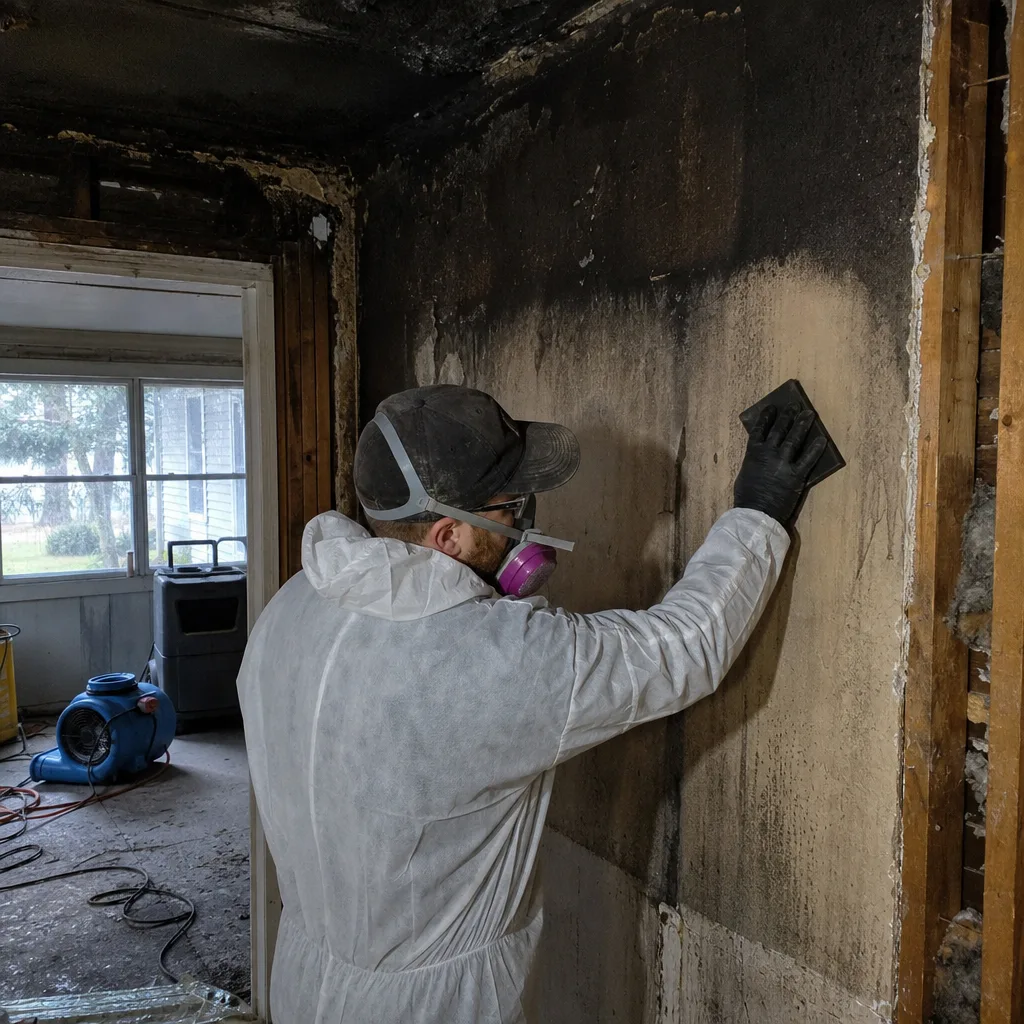
When a tree branch goes through a second-story window on Coulee Road or a tornado warning sends debris through your patio door, you need that opening sealed before the next storm arrives. Our crews in Hudson carry plywood, fasteners, and the hardware to board up any opening properly, not just nail a sheet over it and leave gaps for water and animals. Board-up in Hudson typically runs $350 to $800 for a standard window or door opening, including materials. We also document everything photographically for your claim.
Roof Tarping
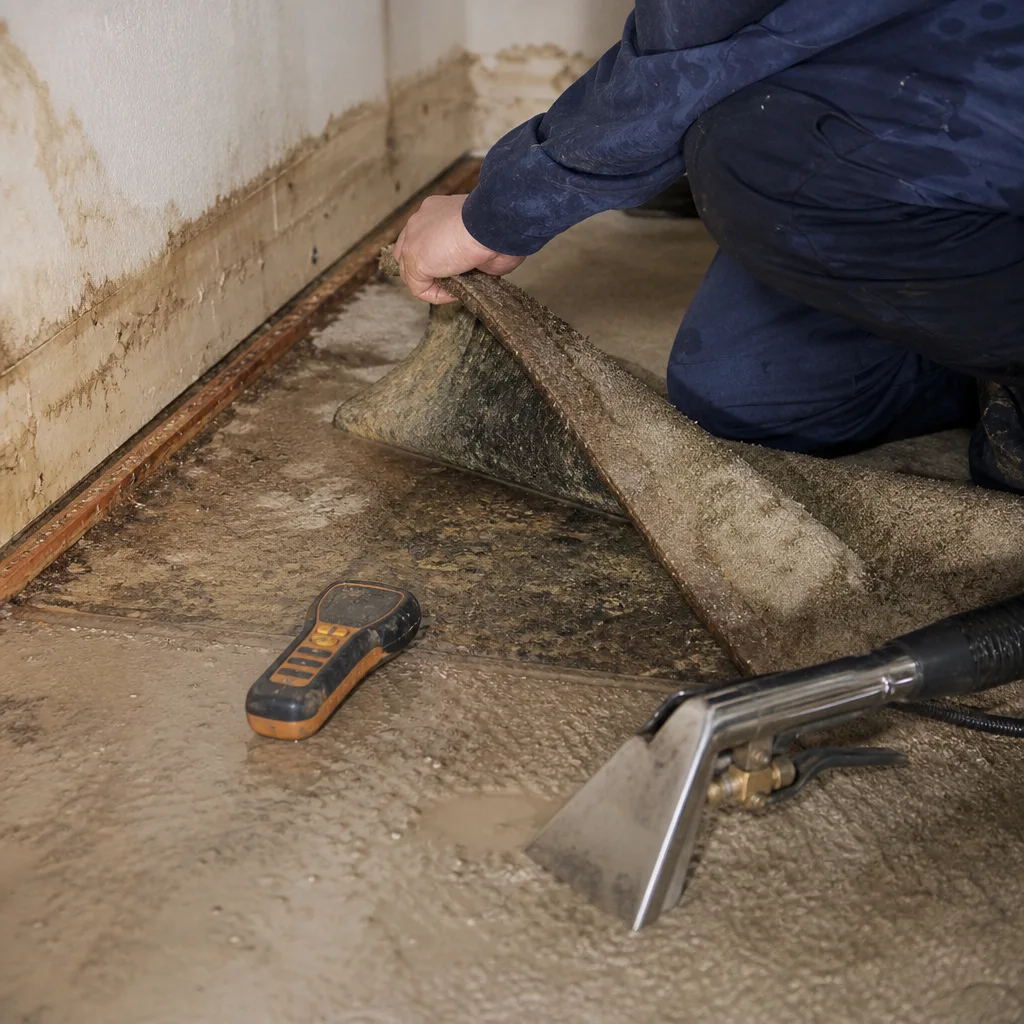
Hudson’s historic district roofs are steep-pitched, many with original architectural pattern shingles or metal that’s been there since before the Depression. When wind tears a section off or an ice dam backs water under the flashing, we tarp it fast and secure it properly. On those steep pitches, we use fall protection and roof anchors, and we don’t put a boot through your 100-year-old cedar sheathing. Tarping in Hudson runs $500 to $1,100 for a typical single-story damage zone, more for two-story or steep-pitch work. The goal is always to keep water out while you sort out insurance.
Wind Damage Repair
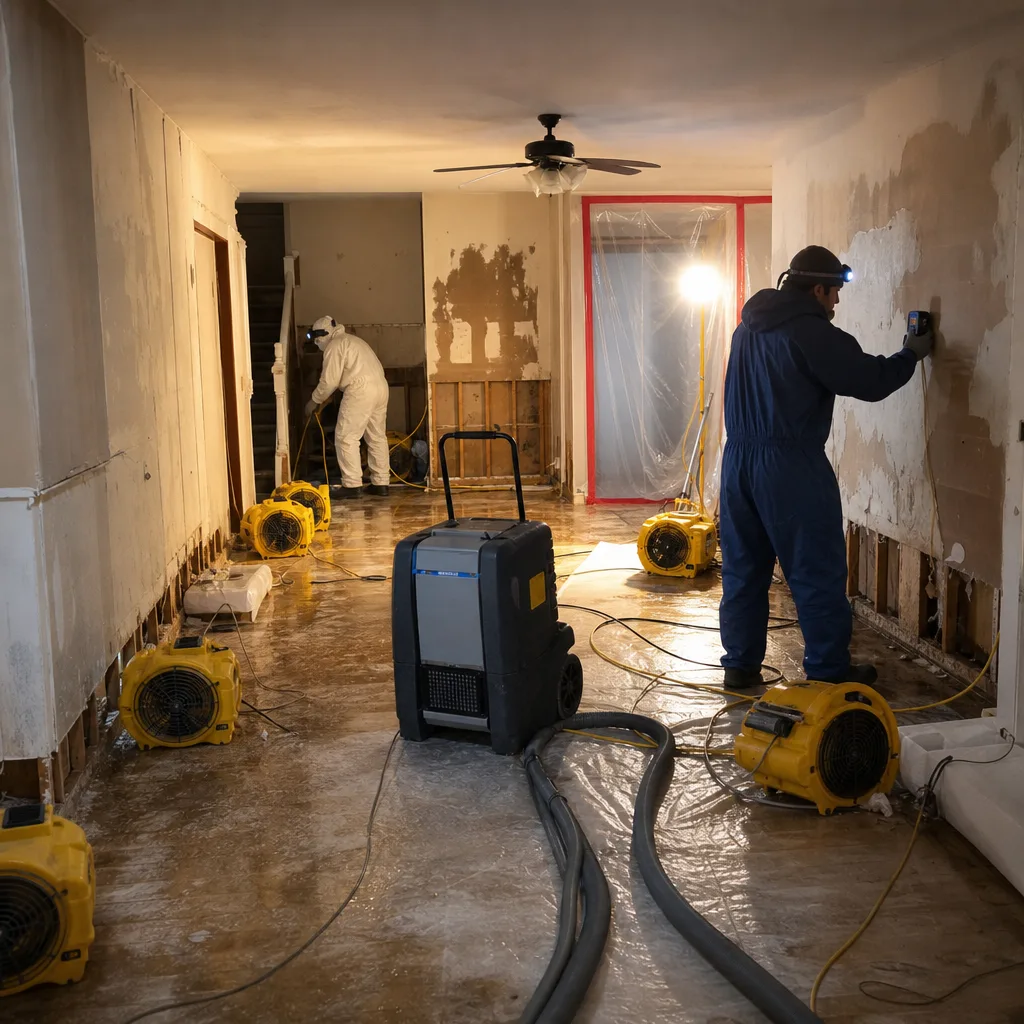
Hudson sits right in the path of the same severe weather track that runs up the St. Croix corridor. Hail hits the newer vinyl-sided tract homes east of downtown differently than it does the older homes on the bluff. What looks like a small puncture around a siding penetration can hide wall-cavity rot that’s been developing for years behind a failed moisture barrier. We don’t just patch the visible hole. We probe behind it with a moisture meter and give you a written scope before any work starts, so you know exactly what needs doing and what doesn’t. A typical hail or wind repair in Hudson runs $800 to $4,500, depending on whether we’re replacing a section of siding or tearing out hidden rot.
What happens when you call
- 1
A real person answersNo phone trees - you reach a local pro.
- 2
You get an upfront price rangeHonest numbers before anyone is dispatched.
- 3
A background-checked tech heads outLicensed & insured, dispatched right away.
- 4
You approve before work beginsNothing starts until you say go.
Trusted Brands We Service in Hudson
When your furnace, dehumidifier, or air mover gives out during a Hudson storm event, we service the brands most common in local homes. We work on Dri-Eaz dehumidifiers, Phoenix air movers, Injectidry drying systems, XPOWER fans, and B-Air equipment. We also keep common parts in our metro shop and can usually turn around a repair for a Hudson customer within 24 to 48 hours, plus road time. If you’re running a Phoenix 200 Max in your basement after a spring flood and the bearing starts squealing, we can swap it. Same for a Dri-Eaz LGR that’s throwing an error code. We don’t just install equipment. We fix it.
Common Storm & Disaster Restoration Problems We See in Hudson Homes
Here’s what actually happens in Hudson when storms roll through, and what we end up fixing most often.
- Water bypasses loose stone-and-lime mortar joints in historic bluff-district foundations. This is the most common call from downtown Hudson after a heavy rain. The ground looks fine, the sump pump never kicked on, but the basement floor is wet. Water is entering through the foundation walls themselves, not through the floor or a window. We see this on virtually every pre-1920 house on the river side of Third Street.
- Freeze-thaw on steep-pitched legacy roofs creates ice dams that rip away old metal flashing. Hudson’s position in the St. Croix valley amplifies the freeze-thaw cycle. Snow melts on the south-facing roof slope, refreezes at the eave, and the ice works its way under the original flashing. By the time a homeowner notices a stain on the ceiling, the water has been running down inside the wall for weeks. This is a chronic winter damage source in the historic district.
- Post-2000 tract homes east of downtown show premature moisture-barrier failure around vinyl siding penetrations. Homes built in the first big Hudson development wave of the 2000s are now aging into their first major exterior failures. The original housewrap or moisture barrier installed at construction is failing around window and door penetrations, which means a modest hail impact lets wind-driven rain into the wall cavity. You see a small dent. We find rot behind the sheathing.
- Spring snowmelt compounding with St. Croix river rise creates a dual flood-pressure event. Saturated ground from snowmelt plus a rising water table pushes water up through basement slabs and crawl spaces in the lower-lying parts of Hudson, especially near Lake Mallalieu and the riverfront. This doesn’t happen in inland communities like New Richmond or Baldwin. It’s a Hudson-specific problem, and the fix often requires sub-slab drainage and sump redundancy, not just a dehumidifier.
Pricing for Storm & Disaster Restoration in Hudson, MN
Storm restoration pricing in Hudson runs more than you’d pay in a town with no riverfront and no historic housing stock, and less than what a national franchise will quote you. Emergency board-up for a single opening: $350 to $800. Roof tarping for a single-story home: $500 to $1,100. Flood extraction and drying for a 500-square-foot basement: $600 to $1,500 before reconstruction. Wind damage repairs that require wall-cavity tear-out and rebuild: $800 to $4,500 depending on scope. What raises your number: steep-pitch roofs, riverfront shoreland permitting, old foundations requiring structural assessment, and hidden rot behind siding. What lowers it: a straightforward extraction, a single opening to board, a homeowner who calls before the water has time to wick into walls.
Every estimate is free. You get a written scope before any work starts. And if you’re a Hudson senior or veteran, the 10% discount applies always, no questions asked. Call (888) 690-6095.
We Also Serve Cities Near Hudson
If you’re in Lake Elmo, Stillwater, River Falls, or Oakdale, the same crew that handles storm restoration across Hudson can get to you fast. We dispatch to the western Wisconsin and eastern Minnesota corridor daily, and we know the local terrain, the local housing stock, and the local permitting offices on both sides of the river. Call us and you’ll talk to someone who knows your area without asking for your zip code twice.
Serving Hudson, MN - Our Local Coverage Area
We’re based in the Hudson area and know this community well. Use the map below to see our service coverage - if you’re nearby, we can almost certainly help.
FAQs - Storm & Disaster Restoration in Hudson
If the foundation you’re repairing sits within the St. Croix River’s shoreland zone, then yes, a Wisconsin DNR shoreland permit review is triggered whenever the repair touches soil or disturbs ground. This applies to most of the riverfront properties in the historic district, from the bluff base down to the water. The review can add two to four weeks to the timeline, and it’s a step most out-of-town crews don’t know about until a stop-work order arrives. We identify the permit boundary during our first visit, handle the documentation, and keep the project moving while the review runs. Call (888) 690-6095 and we’ll tell you right now whether your address falls inside the zone.
We document everything photographically, inventory every affected material, and work directly with your flood insurance adjuster, so you don’t spend hours on the phone relaying information between us and them. NFIP claims have specific documentation requirements, including proof of loss deadlines and replacement cost details, and we know how to produce the paper trail that matches those requirements. Wade Ferris talks to the adjuster himself when the claim is denied or lowballed. You’re never the one stuck in the middle.
Most likely both. The snowmelt is the storm event that triggers it, but the underlying cause is a fieldstone or rubble foundation with failed mortar joints that let water in every spring, regardless of how much snow fell. If this is a recurring annual problem, it’s a chronic foundation issue that needs sealing, drainage correction, or both. If it only happens after a major storm or an unusual thaw, it may be event-driven and covered by a claim. We’ll do the moisture mapping and tell you which one you’re dealing with, in writing. Call (888) 690-6095 for a free assessment.
Yes. Our crews carry roof anchors and fall protection for steep-pitch work, and we regularly tarp 10/12 and 12/12 pitches in the historic district during winter conditions. The bigger hazard on Hudson’s older homes isn’t the pitch. It’s the condition of the decking underneath. We check before stepping. A tarp job on these roofs runs $500 to $1,100, and we secure it with battens, not just weight bags, so it holds through a Minnesota/Wisconsin freeze-thaw cycle. Call (888) 690-6095 and we’ll head out.
Those homes were built fast during the early 2000s, and the original moisture barrier around vinyl siding penetrations is now failing on many of them. When hail or wind rips off a section of siding, water finds its way into the wall cavity and rots the sheathing, even if the interior drywall looks fine. Restoration on those homes almost always involves a controlled tear-out, drying, and replacement of the damaged sheathing and insulation, then re-side and trim. A mid-sized wall-cavity restoration east of Highway 35 typically runs $1,500 to $4,500, and it’s exactly the kind of job where our written scope protects you from overselling.
Written by Wade Ferris, Owner at Wade’s Restoration of Minneapolis. Proudly serving Hudson with storm and disaster restoration, documented moisture logs, and the 90-Day Done Right Promise on every job.