
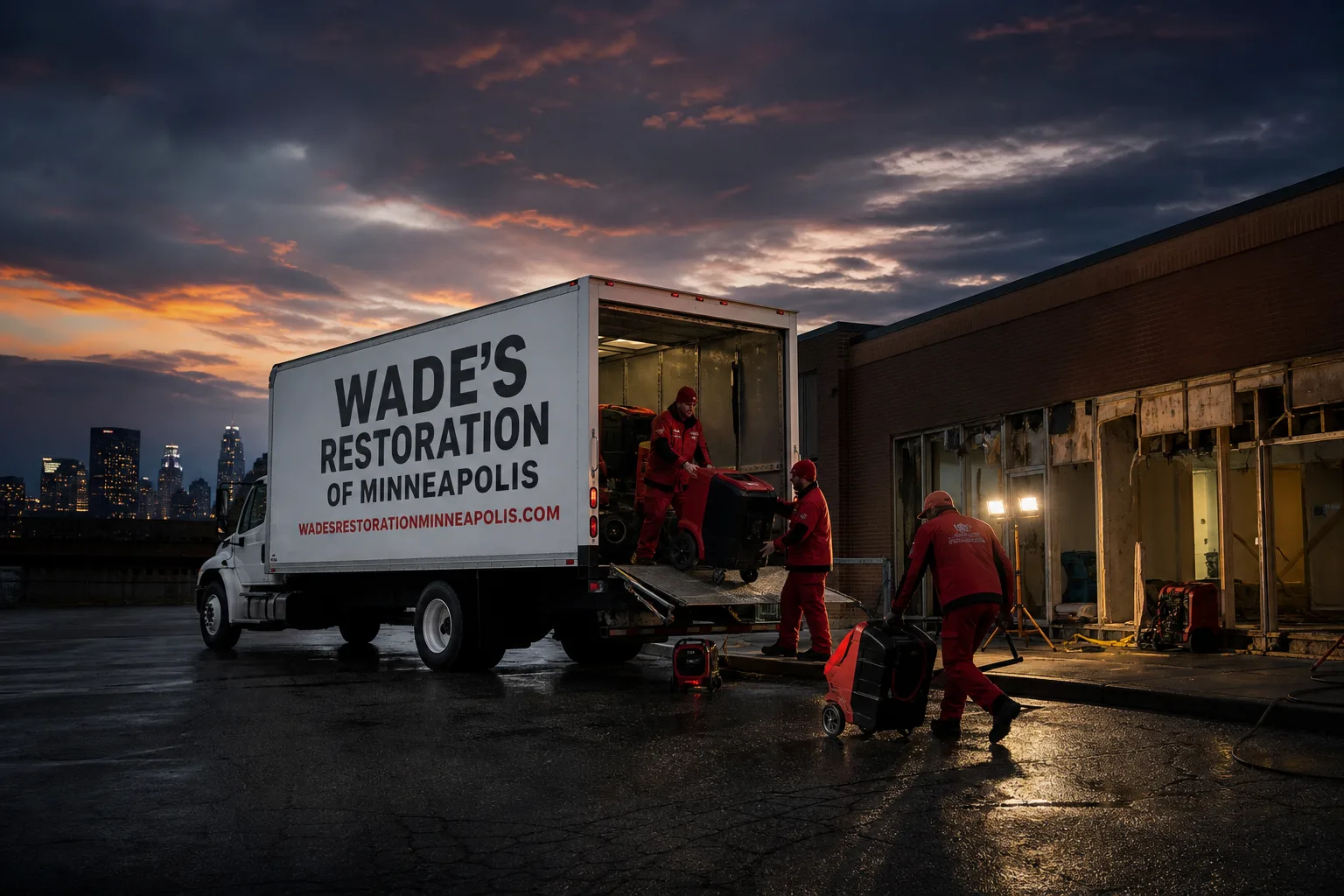
Fast, Reliable Storm & Disaster Restoration Across Brooklyn Center
Storm damage in Brooklyn Center moves fast. A tarp that isn’t secured before the next freeze-thaw cycle, a basement that sits wet through the night, a broken window letting rain into a 1960s rambler off 57th Avenue North: these are the calls we get, and we answer them live, 24/7. Wade Ferris founded Storm & Disaster Restoration in 2007 and still answers his own phone. When the Shingle Creek corridor floods or wind peels shingles off a low-pitch roof on a 1950s split-entry, you reach a person who knows Brooklyn Center’s housing stock, not a call center three states away. Call (888) 690-6095 and we’ll have a truck headed your way, usually within the hour.
Key Takeaways
- Flood damage restoration in Brooklyn Center typically runs $2,800-$7,500 depending on how long water sat against original block walls.
- Emergency board-up in Brooklyn Center runs $450-$1,200; roof tarping runs $550-$1,500 for a standard rambler or split-entry.
- Wade Ferris answers his own phone, 24/7, and can be on-site in Brooklyn Center inside the hour.
- Every storm restoration job carries the 90-Day Done Right Promise in writing.
Why Wade’s Restoration of Minneapolis Is Brooklyn Center’s Preferred Storm & Disaster Restoration Company
We’re not a franchise and we don’t run crews out of a warehouse in another county. We serve Brooklyn Center from our Minneapolis-St Paul metro office, and Wade Ferris is the owner whose name is on every contract. That matters when you’re standing in a flooded basement at 2 a.m. asking who’s actually coming. It’s Wade, or someone Wade trained and background-checked, uniformed and driving a truck with his name on the door.
Brooklyn Center homeowners have dealt with the national outfits that quote one number on the phone and another at the front door. We hear it on every third call. Our answer is a written scope before work starts, direct adjuster communication so you’re never the one relaying between two parties, and moisture readings taken every single day, handed to you at the end. Almost nobody in this trade does that last part. We do it because Brooklyn Center’s 1950s-70s homes hide moisture in original concrete block walls, and the only way to prove the job was done right is to document it.
Response time to Brooklyn Center is real, not a marketing line. Wade heads out when you call. No answering service, no voicemail, no “we’ll get back to you.” If your basement is taking on water off Brooklyn Boulevard or your roof is open to the sky near Palmer Lake, speed is the difference between a cleanup and a reconstruct in Brooklyn Center. We treat it that way.
Our Storm & Disaster Restoration Services in Brooklyn Center
Storm Damage Cleanup
Brooklyn Center’s housing stock is almost entirely ramblers and split-entries built between roughly 1950 and 1975. When wind takes down a tree limb onto a 1960s carport or hail smashes a picture window on a split-level off 57th Avenue, cleanup means more than hauling branches. It means assessing whether storm water has already found its way into wall cavities through siding that was never flashed properly. A standard storm cleanup in Brooklyn Center runs $1,200-$3,400 depending on debris volume and water intrusion. We photograph everything for your insurance file before we touch a thing, and we deal with the adjuster directly so you don’t have to.
Flood Damage Restoration
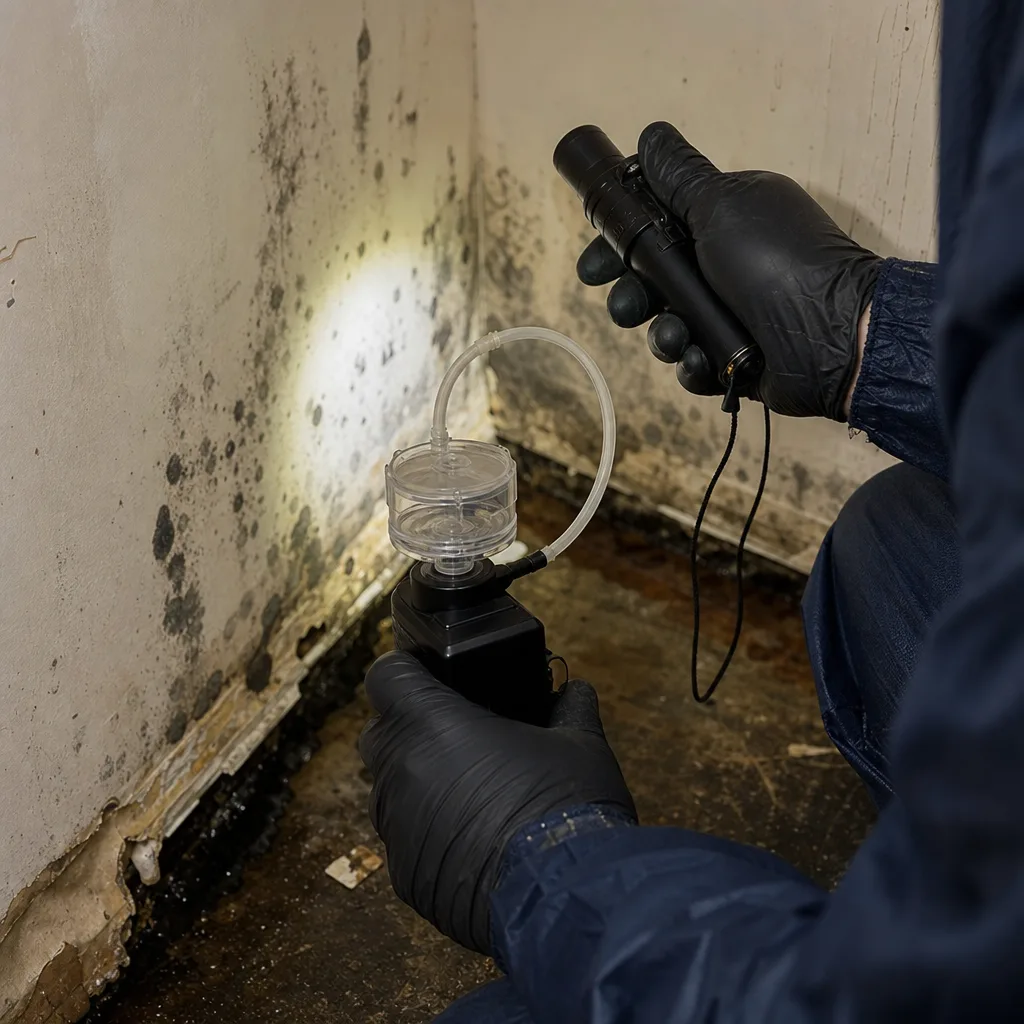
This is the service Brooklyn Center calls us about most, and there’s a specific reason. Many of the city’s 1960s ramblers still have original ceramic crock sump pits with no battery backup. A spring melt, a thunderstorm, or a single extended power outage in the 55429 zip code and a basement that stayed dry for 40 years is suddenly holding six inches of meltwater. We extract with truck-mounted equipment, inject-dry the block cavities, and replace the failed crock with a new basin and a battery-backed pump, all in one trip as part of our Water Damage Restoration in Brooklyn Center. Flood damage restoration in Brooklyn Center typically runs $2,800-$7,500. Homes near Shingle Creek’s flood zone tend to land on the higher end because water has usually been sitting longer and wicking into concrete block walls for days.
Emergency Board-Up
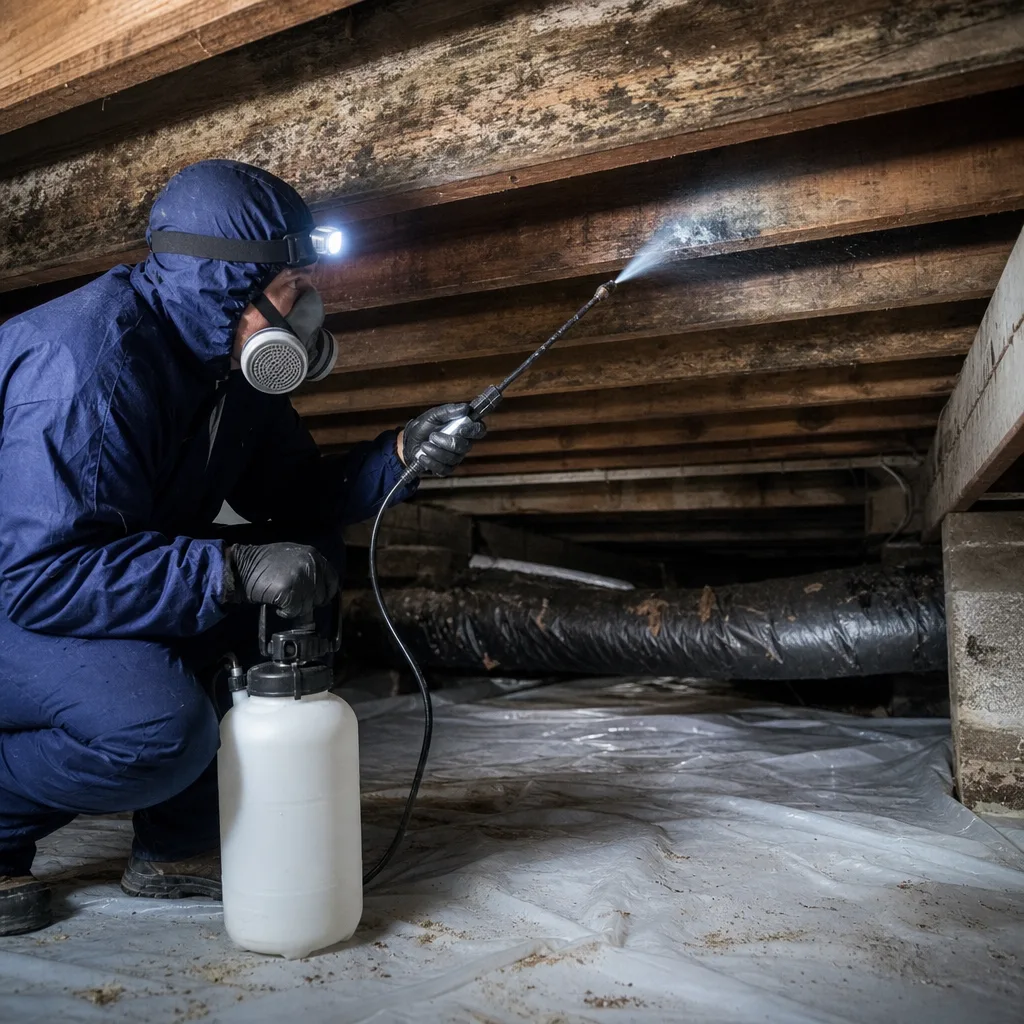
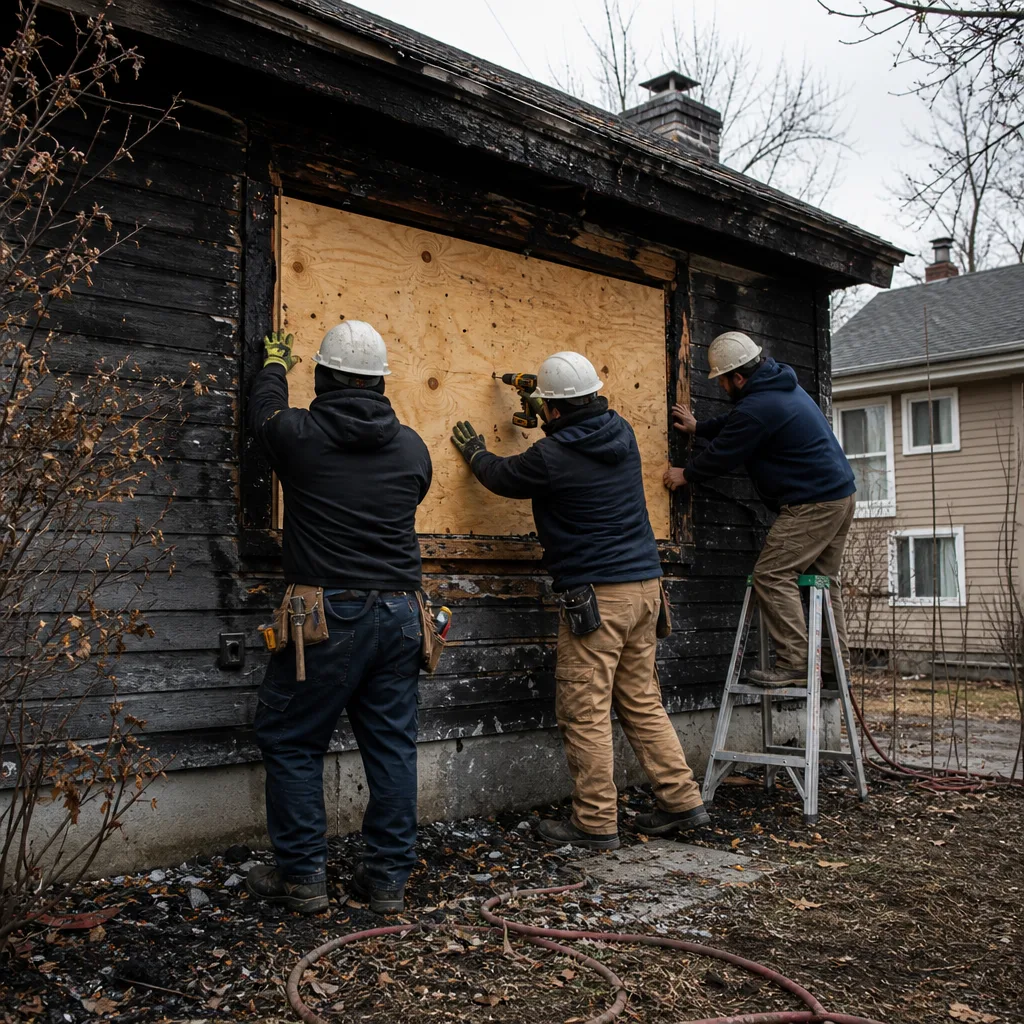
Broken windows and storm-blown doors in Brooklyn Center need board-up within hours, not days. This is a city where the next weather event is always close, and an unsecured opening on a 1950s rambler means wind-driven rain entering the home, animals getting in, and a claim that gets more complicated by the hour. We board up with plywood cut to fit and secured properly, not nailed over trim. Emergency board-up in Brooklyn Center runs $450-$1,200. We’re on-site inside the hour for most Brooklyn Center addresses, including the neighborhoods west of Highway 252 and the residential blocks running east toward Shingle Creek.
Roof Tarping
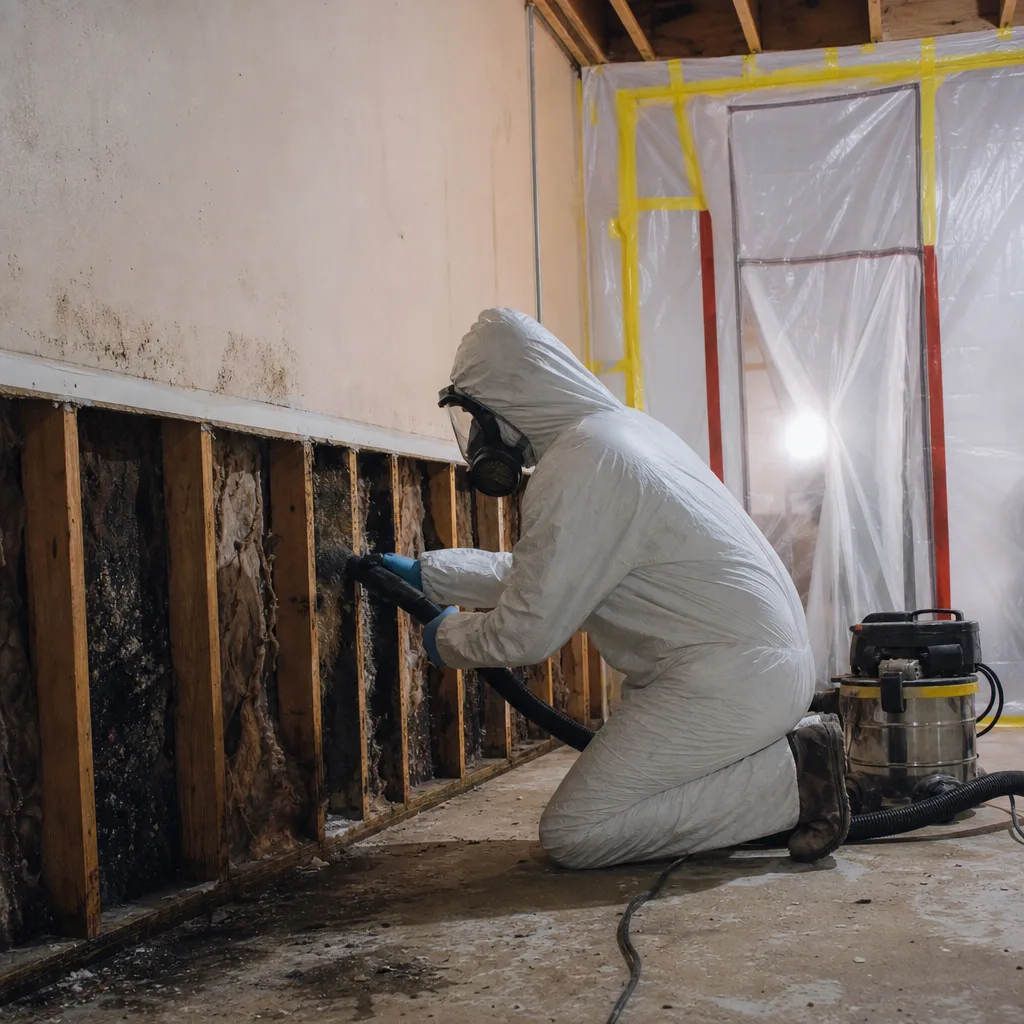
Brooklyn Center’s low-pitched roofs are standard on ranch homes built during the 1950s and 1960s, and Minnesota’s freeze-thaw cycles punish them every winter. Ice dams form, snowmelt drives under shingles, and then a spring wind storm rips the compromised sections off entirely. We tarp with heavy-duty material secured to the roof deck, not just staked over the ridge. Roof tarping in Brooklyn Center runs $550-$1,500 for a standard rambler or split-entry. A tarp installed correctly by a crew that understands ice-dam dynamics will hold through the next freeze-thaw cycle. A tarp installed by someone who doesn’t will be in your yard by March.
What happens when you call
- 1
A real person answersNo phone trees - you reach a local pro.
- 2
You get an upfront price rangeHonest numbers before anyone is dispatched.
- 3
A background-checked tech heads outLicensed & insured, dispatched right away.
- 4
You approve before work beginsNothing starts until you say go.
Trusted Brands We Service in Brooklyn Center
We stock professional-grade equipment from XPOWER, B-Air, and Injectidry, and our crews are IICRC-certified. That means when we pull up to a Brooklyn Center home off 69th Avenue with a flooded shallow basement, we’re not running fans from a big box store and hoping for the best. We’re running high-volume air movers and injection-drying systems designed for exactly the kind of concrete block wall construction this city was built with. Parts and equipment for most Brooklyn Center jobs are on the truck when we arrive. We don’t do the “we’ll have to order that” routine that leaves your basement wet for another 48 hours.
Common Storm & Disaster Restoration Problems We See in Brooklyn Center Homes
- Ceramic crock sump pit failures without battery backup. The 1960s ramblers across Brooklyn Center often still have original crock pits. When power drops during a spring melt, the pit overflows and water wicks into the original concrete block foundation walls for days before anyone notices. By then, mold is already starting behind finished paneling.
- Pinhole leaks in galvanized supply lines mistaken for storm seepage. These homes are 50-70 years old, and many still have original galvanized steel supply lines. A pinhole leak can look like storm water coming through the wall. A crew that dries the basement without finding the real source just guarantees the same call next month.
- Ice-dam water trapped in wall cavities after a hasty tarp job. Low-pitched roofs on 1950s and 1960s Brooklyn Center homes are ice-dam magnets. If the outer damage gets tarped but the water already driven into the wall cavities isn’t addressed, framing rot continues through spring. We don’t just cover the hole; we check what’s wet behind it.
- Shallow basements with hidden moisture behind glued paneling. Brooklyn Center’s split-levels and slab-on-grade ramblers often have finished lower levels where original concrete block walls are covered in paneling glued directly to the block. Water wicks upward behind that paneling. You can’t see it, but our moisture meters find it, and we document every reading daily.
Pricing for Storm & Disaster Restoration in Brooklyn Center, MN
Here are the numbers we give when a Brooklyn Center homeowner asks what this is going to cost. Storm damage cleanup runs $1,200-$3,400. Flood damage restoration runs $2,800-$7,500, with Shingle Creek-adjacent properties typically on the high end. Emergency board-up runs $450-$1,200. Roof tarping runs $550-$1,500. What moves the number: how long water sat against original block walls, whether asbestos floor tiles or pipe insulation are present (common in this housing stock and they require regulated handling), and whether the failed sump crock needs full replacement during the emergency. We give you a written scope before work starts, not after. A free estimate is a phone call away: (888) 690-6095.
One more thing. We honor a Senior & Veteran 10% discount on every job, and if another company gave you a written estimate, we’ll give you a free second opinion on it. No trip charge inside our own county. That’s Wade’s standing offer, not a limited-time promotion.
We Also Serve Cities Near Brooklyn Center
In addition to our Storm & Disaster Restoration in Brooklyn Center work, we serve New Hope, Crystal, Golden Valley, and Robbinsdale. These cities share the same 1950s-70s housing stock and the same freeze-thaw flood risks, so our crews know the territory. Call (888) 690-6095 and we’ll be on the road.
Serving Brooklyn Center, MN - Our Local Coverage Area
We’re based in the Brooklyn Center area and know this community well. Use the map below to see our service coverage - if you’re nearby, we can almost certainly help.
FAQs - Storm & Disaster Restoration in Brooklyn Center
Call us at (888) 690-6095 before you start moving furniture, because the water has likely been sitting against original concrete block walls for hours and every hour it sits, the moisture wicks higher into the wall. Shut off power to the basement if you can do so safely from the main panel. Don’t run your own fans and dehumidifiers; a flooded block wall in a Brooklyn Center rambler needs injection-drying, not surface drying. We’ll have extraction equipment running within the hour and will replace that failed ceramic crock sump pit with a battery-backed basin during the same trip, because if we don’t, the next power outage floods it again. Call (888) 690-6095 and Wade heads out.
Yes. Homes along the Shingle Creek corridor, especially the residential blocks nearest the creek and its retention areas within Brooklyn Center, have a documented history of overbank flooding. Water from creek overbank events tends to sit longer and gets into foundation block walls that have likely absorbed moisture before. That means we’re almost always looking at a full flood cut, injection drying, and antimicrobial treatment rather than a simple extraction and dry. It also means the insurance conversation is different, because many Brooklyn Center homeowners near Shingle Creek carry separate flood policies. We photograph everything, document daily moisture readings, and talk to your adjuster directly so that claim gets handled the right way.
Yes, and we routinely do exactly that. On a rambler off 57th Avenue North, our crew responded after a spring storm knocked out power overnight. The 1963 ceramic crock sump pit had no battery backup, and meltwater pushed over the basin, saturating the shallow basement’s original concrete block walls for over 48 hours before the homeowner returned. We extracted standing water with truck-mounted equipment, inject-dried the block cavities using our Injectidry system, and replaced the failed crock with a new basin and a battery-backed Dri-Eaz pump-all in one trip, so the homeowner didn’t have to manage multiple vendors. If your crock failed and your basement is wet, call (888) 690-6095. We’ll do the same for you.
Yes, if it’s installed by a crew that secures the tarp to the roof deck rather than just staking it over the ridge. Brooklyn Center’s low-pitched 1950s and 1960s roofs are especially vulnerable to ice dams, and a poorly secured tarp becomes a sail in the next wind event. We use heavy-duty tarping material and fasten it so it stays put through freeze and thaw. That said, a tarp is temporary. The real danger on these roofs is the water already driven into wall cavities before the shingles came off. We check for that when we tarp, and if we find it, we tell you and we put it in writing. Call (888) 690-6095 for an exact quote on emergency tarping in Brooklyn Center.
Because in Brooklyn Center’s shallow basements and split-level lower levels, the original concrete block walls are often covered in glued-on paneling or drywall attached directly to the block. Water wicks upward through the block and sits behind that finish material. You can’t see it, and surface drying doesn’t reach it. By the time you smell something, the mold colony has been growing behind the wall for a week or more. We use injection drying and daily moisture readings to make sure the block itself is dry before anyone talks about putting the wall back together, which is why Brooklyn Center homeowners also trust us for biohazard and crime scene cleanup where thorough decontamination matters. That’s the difference between a restoration that lasts and a callback next spring. For a free assessment, call (888) 690-6095.
Written by Wade Ferris, Owner at Wade’s Restoration of Minneapolis. Wade Ferris founded the company in 2007 and still answers his own phone, 24 hours a day, seven days a week.