
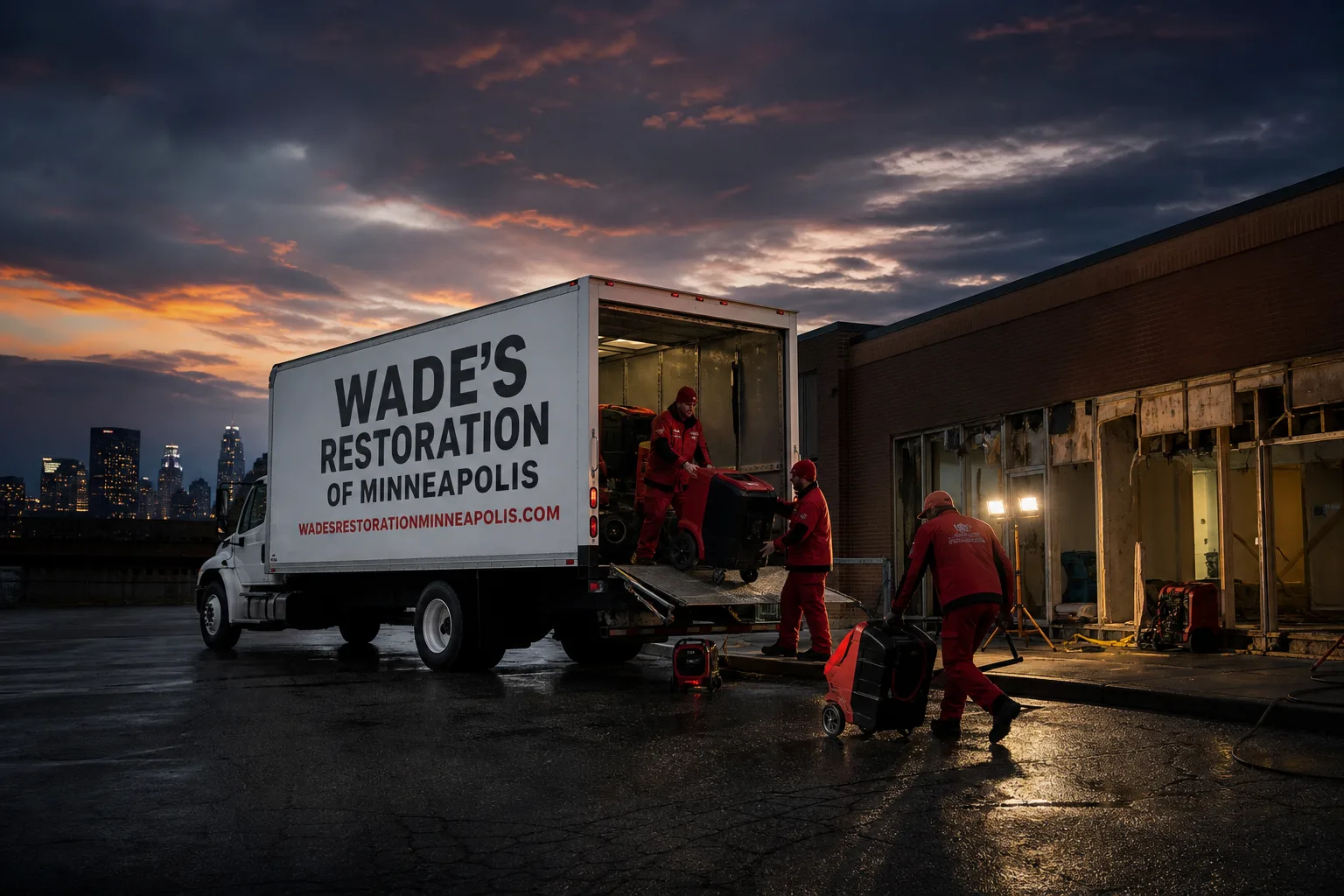
Fast, Reliable Sewage Cleanup Across Dayton
Sewage cleanup in Dayton, MN typically costs $1,400-$3,800 for a finished basement backup, with emergency extraction and sanitization usually starting the same day. A toilet overflow isolated to one bathroom runs $450-$1,200, while a full septic failure or black water extraction can reach $4,500-$9,000 depending on square footage and how far the contamination has spread. If you’ve got sewage backing up into your Dayton home right now, call Wade’s Restoration at (888) 690-6095. Wade answers his own phone, 24 hours a day, and he’s not going to route you through a call center.
We know Dayton the way the people who live here know it. The Crow River, the Mississippi, the newer subdivisions off Dayton River Road, the older farmsteads further out. That local knowledge changes how we handle a sewage backup, because what causes a backup in this town is often tied directly to where the rivers are doing upstream. More on that in a minute. First, the most important thing: get people and pets out of the affected area, shut off water fixtures, and call us.
Why Wade’s Restoration of Minneapolis Is Dayton’s Preferred Sewage Cleanup Company
Most restoration companies that show up in Dayton are chasing volume. They send a crew that’s never been here before, hand you a number, and you never see them again. Wade’s Restoration has been doing the opposite since 2007. Wade Ferris puts his name on every sewage cleanup, publishes his address and license number, and is going to run into you again at the hardware store on a Saturday. That’s not a marketing line. That’s the oldest accountability mechanism there is, and it’s why our Sewage Cleanup work in Dayton keeps coming through word of mouth.
Here’s what that looks like in practice, from our customers’ side. When a sewage backup hits a Dayton home at 2 a.m., someone from our office picks up on the first ring. Not a voicemail. Not an answering service. Wade heads out, takes moisture readings every single day while the job runs, and hands the homeowner the full moisture log when it’s done. Almost nobody in this trade does that. And when the insurance adjuster starts asking questions, Wade talks to them directly, so you’re not stuck relaying information between two sides while your basement sits wet.
Response time to Dayton is usually under an hour from the time you call. We carry the equipment that matters: Dri-Eaz HEPA air scrubbers, XPOWER axial fans, B-Air drying systems. The crew is background-checked, uniformed, and IICRC-certified. And every sewage cleanup job is backed by the 90-Day Done Right Promise in writing. If it’s not done right, Wade makes it right.
Our Sewage Cleanup Services in Dayton
Sewage Backup Cleanup
Sewage backup cleanup is what we do most often in Dayton, and the reason is specific to this town’s geography. When the Crow River and Mississippi swell at the same time, municipal sewer lines can surcharge, forcing raw sewage up through floor drains, toilets, and tubs in low-lying neighborhoods. We remove the contamination, extract standing water, cut and remove affected drywall, and sanitize every surface that came into contact. Most backup jobs in Dayton run $1,400-$3,800 for a standard finished basement.
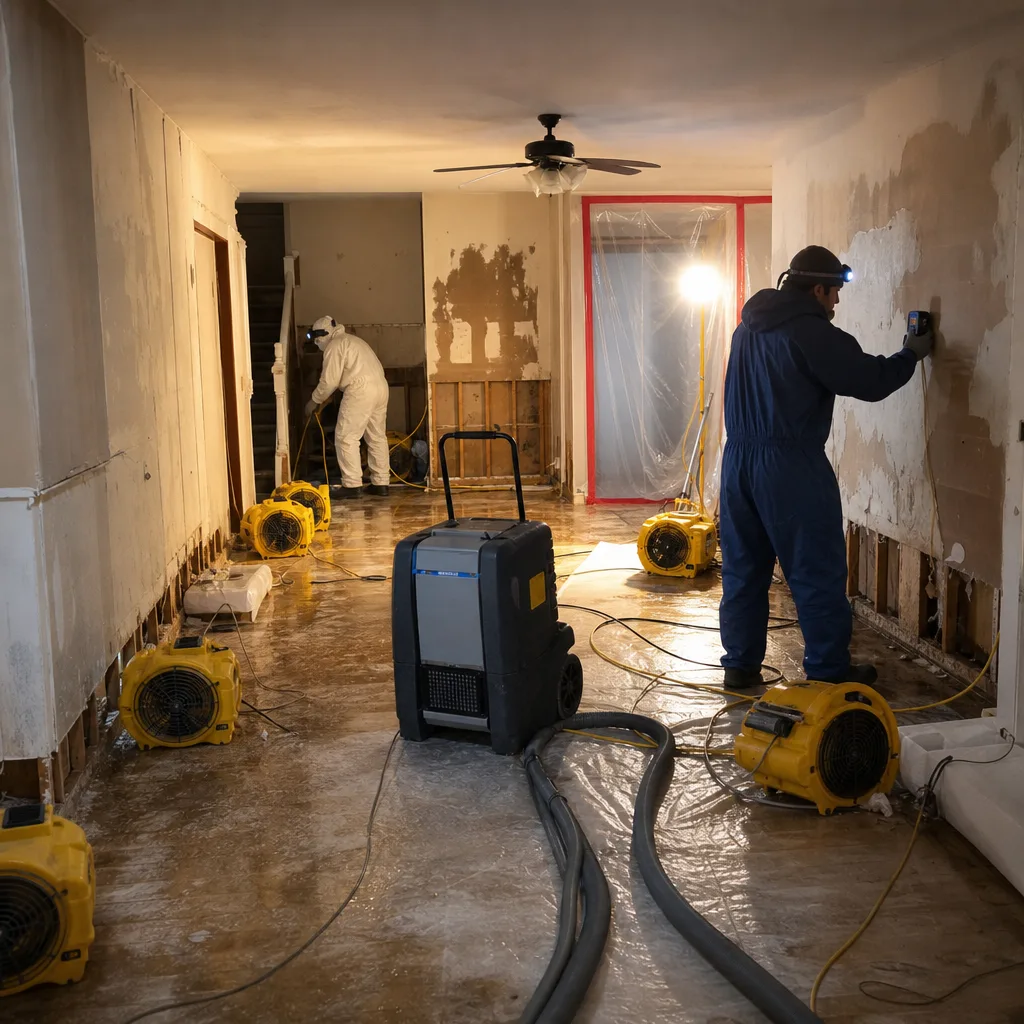
Toilet Overflow Cleanup
A toilet overflow that’s caught quickly is a smaller job, but the health risk is real. We treat it as a Category 3 water event: remove solids, extract water, remove affected flooring if needed, and apply an EPA-registered disinfectant. In newer Dayton subdivisions with finished basements, a toilet overflow often spreads across tile or laminate into baseboards and drywall, which wicks moisture fast. A single-bathroom overflow cleanup typically runs $450-$1,200.
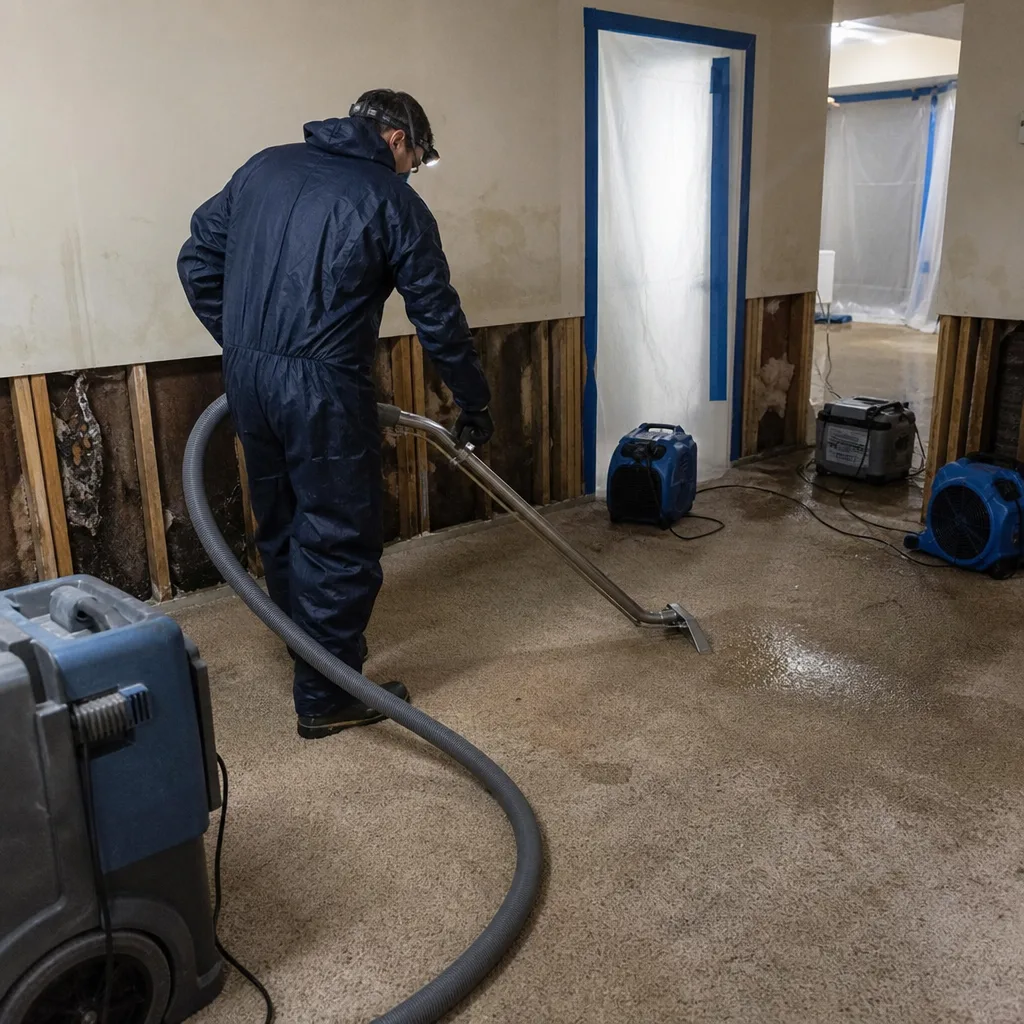
Septic Failure Cleanup
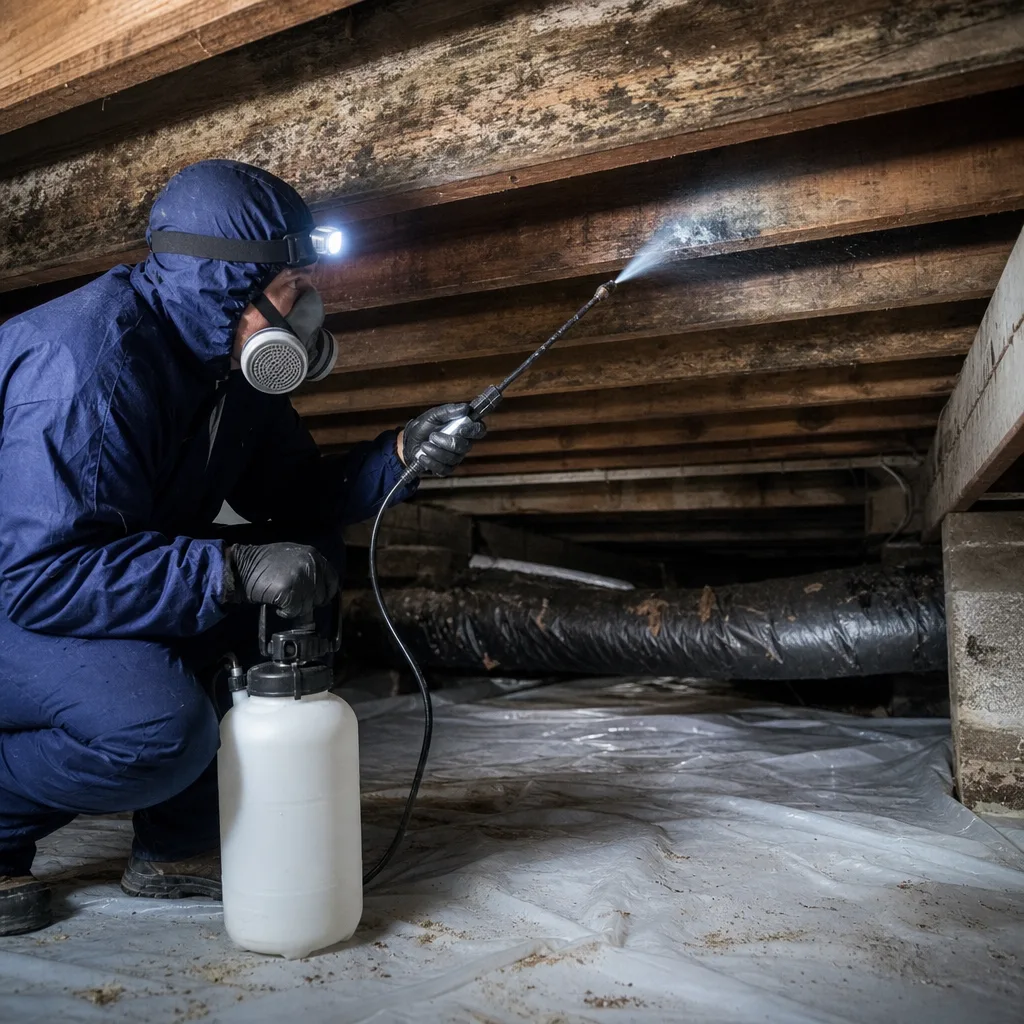
Dayton still has older rural farmsteads, and many of them run on septic systems that were installed decades ago. When a septic field fails, it doesn’t just back up a toilet. It can push sewage into crawl spaces, under slab foundations, and into stone or block foundation walls that hold moisture long after the visible mess is removed. Full septic failure cleanup runs $3,500-$9,000 depending on how far the contamination has traveled and whether structural materials need removal.
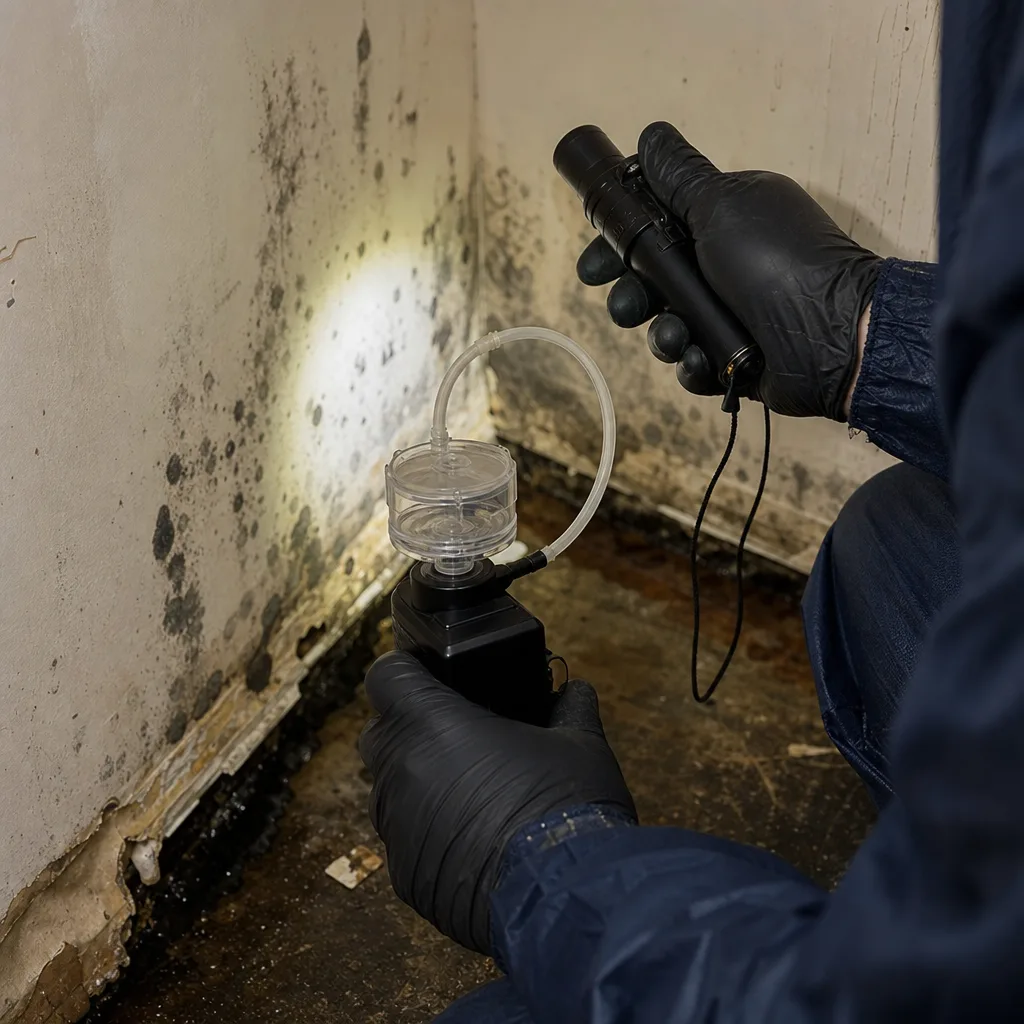
Black Water Extraction
Black water (Category 3 water, the kind that contains sewage, bacteria, and pathogens) requires extraction equipment and protocols most general contractors don’t have. We run truck-mounted extraction units to pull standing black water quickly, then use professional-grade equipment from B-Air and XPOWER to dry the structure. In Dayton homes near the Crow River backwater, black water extraction is often the first step before insurance documentation and demolition. That’s why we walk every homeowner through the FEMA flood-zone paperwork before we start cutting.
What happens when you call
- 1
A real person answersNo phone trees - you reach a local pro.
- 2
You get an upfront price rangeHonest numbers before anyone is dispatched.
- 3
A background-checked tech heads outLicensed & insured, dispatched right away.
- 4
You approve before work beginsNothing starts until you say go.
Trusted Brands We Service in Dayton
You didn’t choose your house for the plumbing fixtures, but the brands in it matter when a sewage backup hits. We work on homes outfitted with Moen, Delta, Kohler, American Standard, and Gerber plumbing fixtures, and we stock common replacement parts for the fixtures most common in Dayton’s newer subdivisions. If we need a specialty part for your home, our supply lines run through the metro, so turnaround is fast. We’ll also work directly with your insurance adjuster to document what needs replacing and why.
Common Sewage Cleanup Problems We See in Dayton Homes
- Backflow prevention valves missing in newer subdivisions. Many of Dayton’s platted developments were built before backflow prevention became standard code on sewer laterals. When the river swells, the municipal system surcharges, and sewage comes up through floor drains and tubs in finished basements. If you don’t know whether your home has one, we’ll check while we’re cleaning up.
- Cracked floor drains in older farmsteads near the Crow River. Stone and block foundations shift over decades. When high water pushes against the foundation, cracks let groundwater and sewage seep in. Homeowners often mistake the smell for simple basement dampness until black water staining appears along the baseboards.
- Drywall wicking in flood-exposed basements. After a sewage backup, water gets behind baseboards and wicks up into drywall. If that drywall isn’t removed and the area fully sanitized, the odor returns in weeks, and mold follows. We see this pattern repeatedly in homes near the Crow River backwater, where residual moisture hides behind finished walls.
- Finished basements with no flood-zone documentation. A surprising number of Dayton homeowners in newer subdivisions don’t realize their lot sits in a FEMA-mapped Special Flood Hazard Area tied to the Crow River backwater. When a backup happens, the insurance claim process stalls because the flood-zone paperwork hasn’t been prepared. We help gather that documentation before demolition starts, which moves the claim along.
Pricing for Sewage Cleanup in Dayton, MN
Here are real numbers for Dayton, not a national average. A standard sewage backup cleanup in a finished basement runs $1,400-$3,800, including extraction, drywall removal, and sanitization. Toilet overflow isolated to one bathroom: $450-$1,200. Septic failure cleanup: $3,500-$9,000 depending on square footage and crawl space access. Sanitization and disinfection only: $600-$1,800, typically included in a full cleanup. Black water extraction as a standalone emergency call: $1,200-$2,800.
What changes the price: how far the sewage traveled, whether drywall and flooring need removal, whether a crawl space is involved, and how long the backup sat before we arrived. The faster you call, the less it costs. Every estimate is free. Call (888) 690-6095 and Wade will walk through the numbers with you before any work starts.
Serving Dayton, MN - Our Local Coverage Area
We’re based in the Dayton area and know this community well. Use the map below to see our service coverage - if you’re nearby, we can almost certainly help.
FAQs - Sewage Cleanup in Dayton
Dayton’s position where the Crow River meets the Mississippi creates a compound flood risk that doesn’t exist in Champlin or Rogers. When spring snowmelt swells both rivers at once, low-lying properties take on water from two converging directions, and municipal sewer lines can surcharge. That means cleanup timelines in Dayton are sometimes longer, because the contamination source isn’t always a single backup inside the house. It can be a river-driven surcharge that keeps pressure on the sewer lateral for days. We account for that in our drying and sanitization plan, and we monitor moisture readings daily until the structure is stable. Call (888) 690-6095 for an exact timeline for your situation.
Most homes in Dayton’s newer platted subdivisions do not have backflow prevention valves on floor drains and sewer laterals. Those valves weren’t required in many of the developments built during the 2000s. If you don’t have one, a river-swell surcharge can push raw sewage up through toilets and tubs during the confluence flood crest. We’ll inspect your drains during any sewage cleanup. If you’re missing backflow prevention, we’ll recommend a licensed plumber to install one and document the current condition for your insurance file.
Check the FEMA flood map for Hennepin County using your address, or call us and we’ll walk you through it. Many Dayton homeowners in newer subdivisions near the Crow River backwater discover after a sewage backup that their lot sits in a Special Flood Hazard Area. Yes, it changes the cleanup process. The documentation requirements are different, the insurance claim moves differently, and the demolition scope sometimes changes. We prepare flood-zone documentation before starting demolition, which saves weeks of adjuster back-and-forth.
We remove standing water and solids, cut out affected drywall and baseboards, extract water from the slab and framing, then run HEPA air scrubbers (typically Dri-Eaz) and XPOWER axial fans to dry the space. All surfaces that contacted sewage get an EPA-registered disinfectant. The final step is a moisture check with a meter; we take readings daily and hand you the full log at the end. The standard sanitization process for a finished Dayton basement takes 2-5 days depending on how far the contamination spread. Call (888) 690-6095 for a site-specific estimate.
Yes, we handle septic failures regularly in Dayton’s older rural properties. Stone and block foundations trap water and make drying more difficult, and crawl spaces under those homes often hide contamination that a visual check won’t catch. We use moisture meters and daily logs to confirm the structure is actually dry, not just surface-dry. The cleanup process takes longer on these homes, but the result is the same: no residual odor, no mold, no surprises in thirty days.
If you’ve got sewage backing up in Dayton, don’t wait. The longer it sits, the more drywall gets cut out and the more the claim costs. Call (888) 690-6095 now. Wade Ferris will answer, and he’ll be on the road to your house shortly after you hang up. We’re local, we’re licensed and insured, and we stand behind every job with the 90-Day Done Right Promise, in writing.
Written by Wade Ferris, Owner at Wade’s Restoration, serving Sewage Cleanup in Dayton and surrounding communities since 2007.