
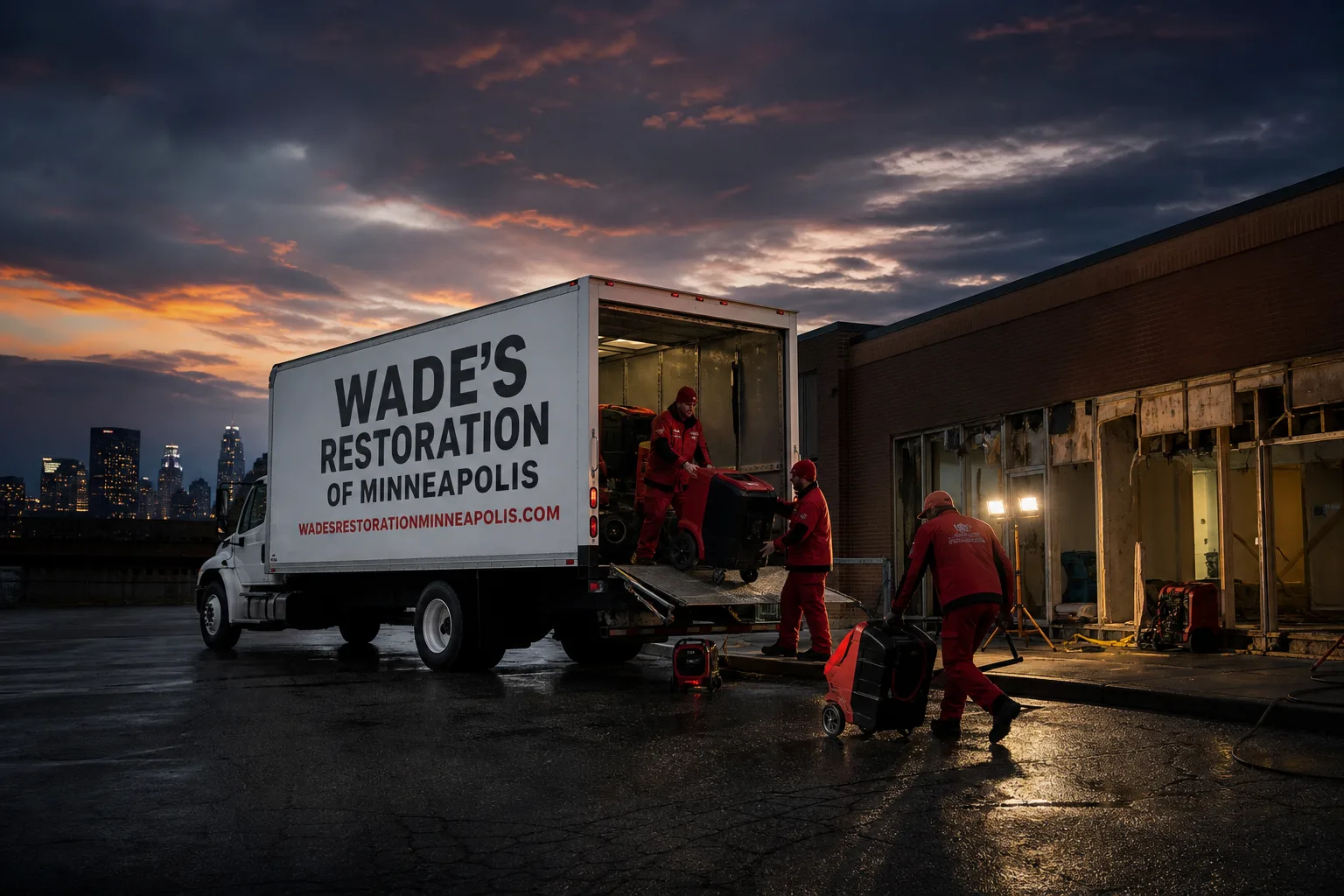
Fast, Reliable Mold Remediation Across Buffalo
Mold remediation in Buffalo, MN typically runs $1,800 to $6,500 for a full containment and removal job, and the sooner you call, the less it costs. We know that sounds blunt, but it’s the truth. Buffalo homes sitting near the lake or built during the 1990s and 2000s housing boom are particularly vulnerable, and once mold gets established behind baseboards or inside wall cavities, the scope of work grows fast. Call Wade’s Restoration at (888) 690-6095 and Wade Ferris will pick up the phone himself. He answers his own calls, day or night, and he’ll tell you straight what you’re dealing with.
Wade has worked in Buffalo long enough to know the difference between a home on Lake Boulevard and one up near the high school. That matters when you’re deciding whether mold is a cleanup or a structural problem. We’re not a national chain with a rotating crew. Wade’s name is on the truck, his address is published, and the people he sends are background-checked and uniformed, running professional-grade equipment from Dri-Eaz and XPOWER. We serve the entire 55313 ZIP and arrive ready to work, not ready to upsell.
Why Wade’s Restoration of Minneapolis Is Buffalo’s Preferred Mold Remediation Company
Buffalo homeowners keep calling us because we do what we say and we put it in writing. Wade Ferris founded this company in 2007 after years of watching national outfits quote one price on the phone and a different one at the front door. He decided to run things differently: publish his name, publish his address, publish his license number, and stand behind every mold job with a 90-Day Done Right Promise. If it’s not done right, Wade makes it right. That’s stamped on every contract, not buried in fine print.
Response time to Buffalo is real, not a call-center promise. When a homeowner near Sturges Park calls at two in the morning with a wet basement and black staining climbing the drywall, Wade’s phone rings. Not an answering service. Wade himself. He can have a crew heading toward Wright County inside the hour, because he knows that waiting until morning on a mold problem in a 1990s OSB-built home means the difference between a $2,000 cleanup and a $9,000 rebuild. Ask anyone on your street. They’ve either used us or know someone who has.
We also deal with your insurance adjuster directly. You shouldn’t be the one stuck relaying messages between your insurance company and your remediation contractor. Wade handles that communication, documents everything with photos, and hands you the moisture log at the end of the job. Almost nobody in this trade does that. It’s not a gimmick. It’s how we’ve kept our reputation in Buffalo intact for years.
Our Mold Remediation Services in Buffalo
Mold Inspection & Testing
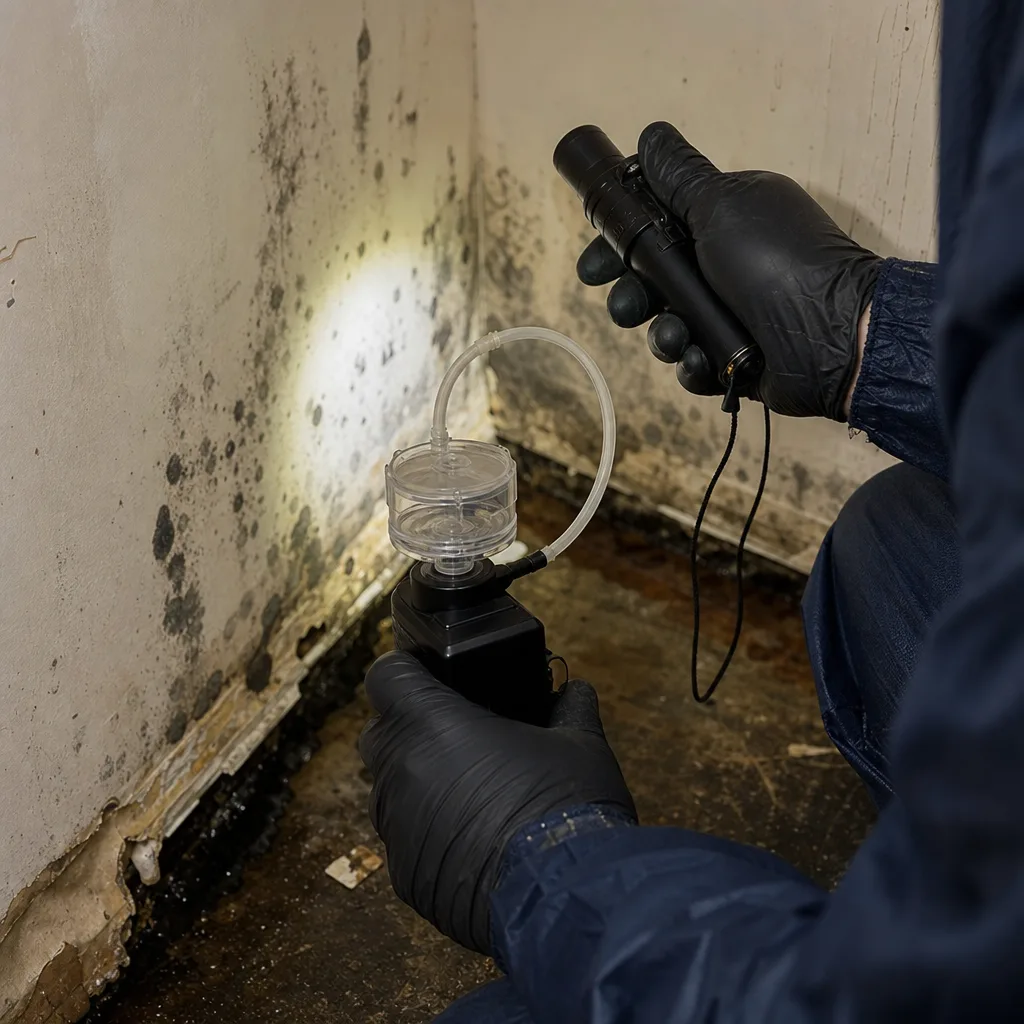
Before we remove anything, we find out what you’re actually dealing with. A mold inspection in Buffalo runs $250 to $500 for a visual assessment, and $400 to $900 if air sampling and lab analysis are included. We check the usual suspects in Buffalo homes: sill plates and rim joists in basements, the back side of drywall in finished lower levels, and the area under kitchen and bath cabinets where slow leaks hide. Our Mold Remediation team uses moisture meters and thermal imaging, not guesswork. If you’ve got a musty smell and you can’t see mold, testing tells you whether you have a problem or just a damp basement.
Mold Removal
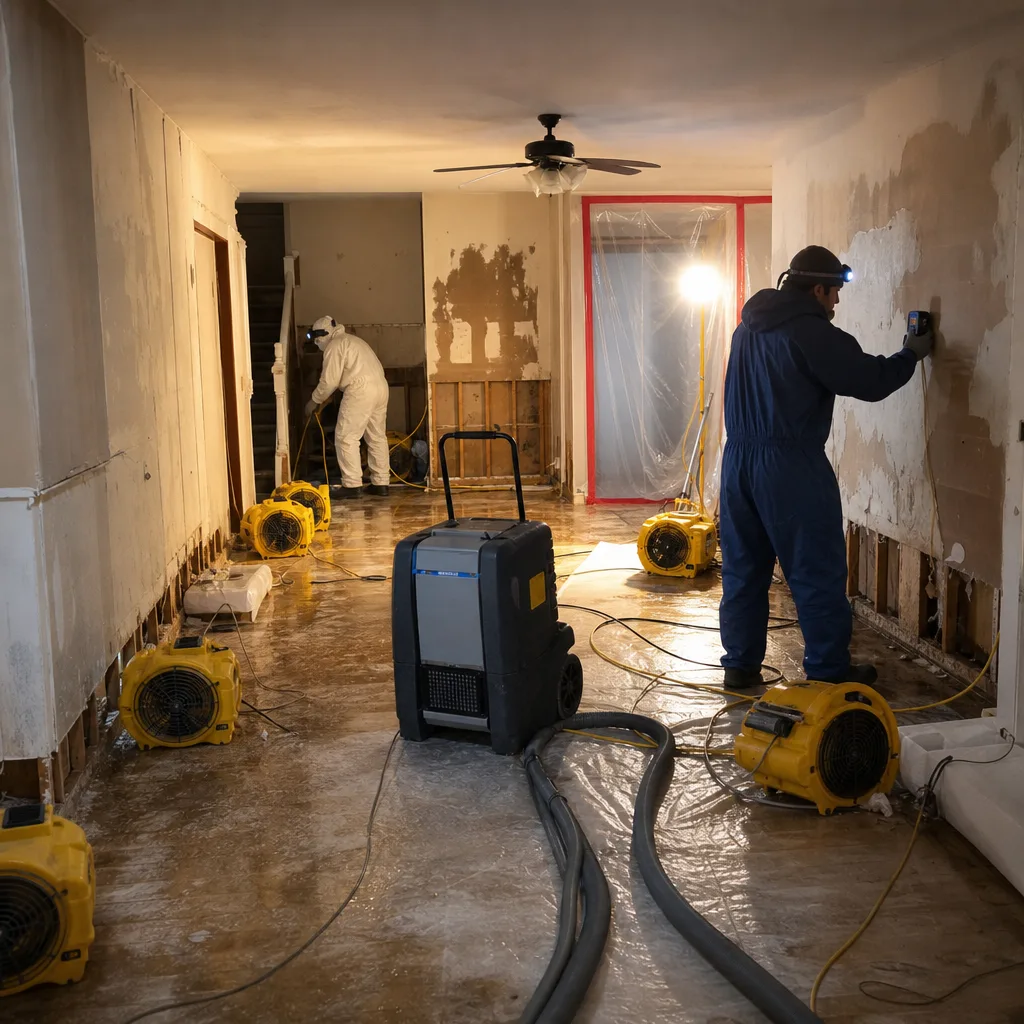
Removing mold from a Buffalo home means more than spraying bleach and wiping surfaces. We set up HEPA air scrubbers and containment barriers so we don’t cross-contaminate the rest of your house while we work. For a typical basement wall or single-room job, mold removal in Buffalo runs $1,200 to $3,500. Larger jobs involving finished basements, multiple rooms, or structural framing cost more. We cut out affected drywall, wire-brush and treat framing, and make sure the wood actually dries down to acceptable moisture levels before we put anything back. Builder-grade OSB holds water for weeks, so drying is not a step you skip.
Black Mold Remediation
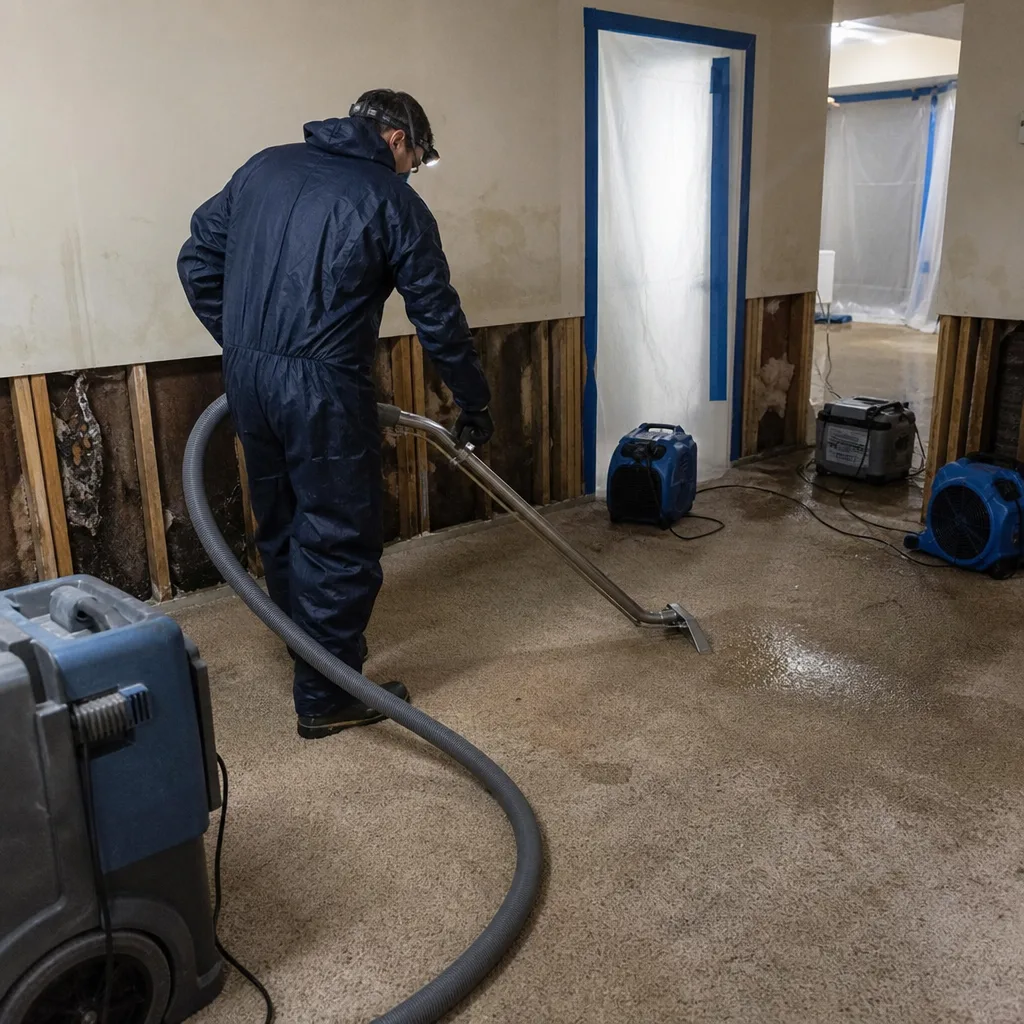
Black mold, or Stachybotrys, gets the headlines for good reason. It can cause serious respiratory problems, especially for kids, seniors, and anyone with asthma or allergies. Buffalo homes built during the late 1990s and early 2000s are especially prone because the engineered lumber and OSB subfloors used in that era absorb moisture quickly and dry slowly. Black mold remediation in Buffalo typically costs $2,500 to $7,500 depending on how far it’s spread. We remove the affected materials, treat the framing, and run HEPA filtration until air quality tests come back clean. You get the documentation showing what we did and why it won’t come back.
Air Quality Restoration
After mold removal, the air in your home still carries spores and musty odors until you address it directly. Air quality restoration in Buffalo involves running professional-grade HEPA air scrubbers and dehumidifiers, like the Dri-Eaz and B-Air units we use, until particulate counts and humidity levels return to healthy ranges. Expect to pay $500 to $1,000 for air scrubber setup and operation on top of your remediation costs. We also check your HVAC system, because mold spores love ductwork, and if your furnace has been circulating contaminated air, wiping down walls won’t fix the problem.
What happens when you call
- 1
A real person answersNo phone trees - you reach a local pro.
- 2
You get an upfront price rangeHonest numbers before anyone is dispatched.
- 3
A background-checked tech heads outLicensed & insured, dispatched right away.
- 4
You approve before work beginsNothing starts until you say go.
Trusted Brands We Service in Buffalo
Wade’s Restoration runs equipment from brands the industry actually trusts, not whatever was cheapest at the rental counter. Our dehumidifiers, air movers, and HEPA scrubbers come from Dri-Eaz, XPOWER, and B-Air, and our techs hold IICRC certification. That matters in Buffalo, where spring groundwater and winter ice dams create moisture problems that cheaper equipment can’t dry out properly. We stock replacement filters and parts for the equipment we run, so we’re not waiting on a shipment when your basement is sitting at 80% humidity. Wade uses professional-grade tools because he’s the one who has to answer for the results.
Common Mold Remediation Problems We See in Buffalo Homes
- Spring groundwater against foundations near Buffalo Lake. Every year, usually in April, lake ice-out and snowmelt combine to push groundwater against foundations while the frozen ground refuses to drain. Homes along Lake Boulevard and low streets near the lake get seepage that turns into mold within days.
- OSB subfloors and engineered lumber from the 1990s-2000s building boom. Most of Buffalo’s housing stock was built fast during the exurban growth years, with materials that absorb water like a sponge and lose structural integrity quickly. We open up walls and find swollen, delaminated OSB that’s been silently failing for months.
- DIY bleach treatments that make things worse. Bleach kills surface mold but doesn’t penetrate OSB or drywall, so the mold comes right back. By the time we arrive, homeowners have often spent money on store-bought products and wasted weeks while the mold spread behind the walls.
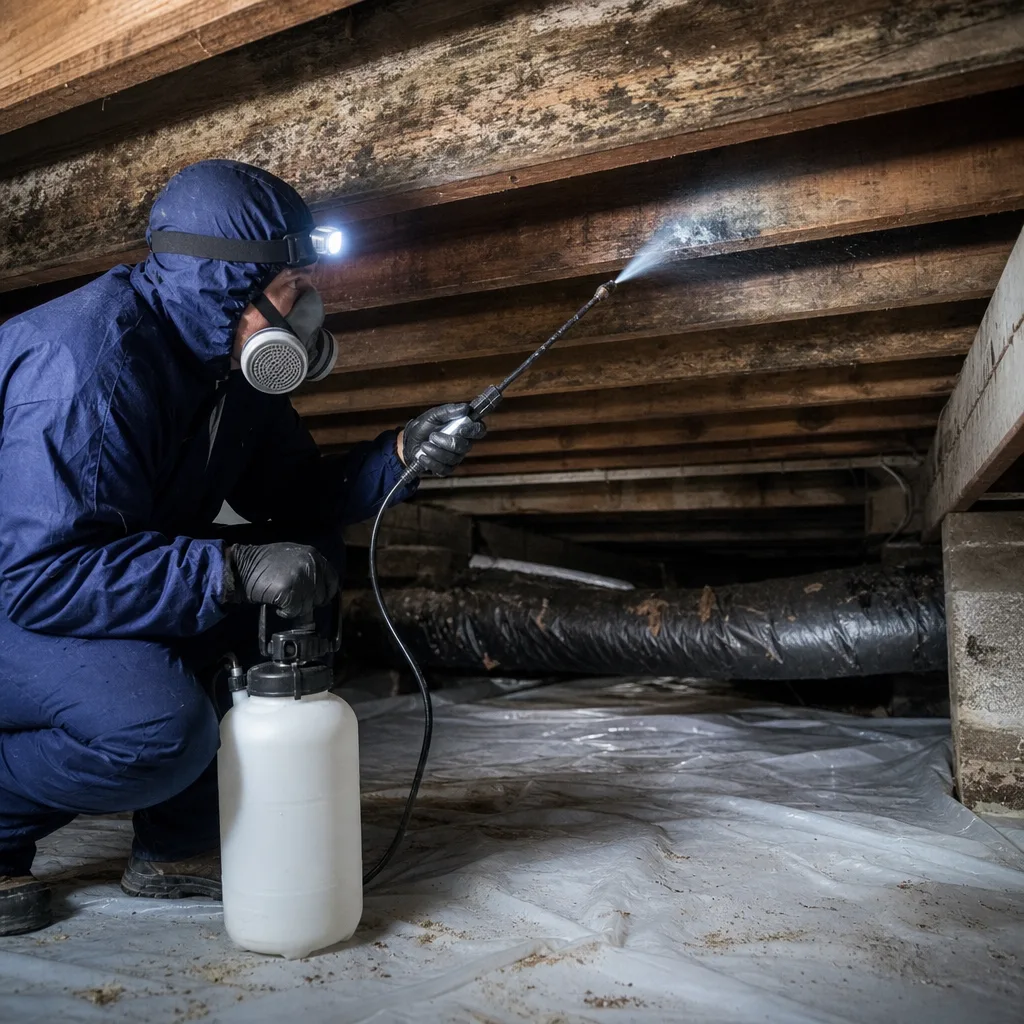
- Ignored crawl space moisture that keeps reintroducing mold. Buffalo homes with crawl spaces, especially older pre-1960s houses near downtown, have chronic humidity that feeds mold year-round. Remediating the living space without treating the crawl space is like bailing water without patching the hole.
Pricing for Mold Remediation in Buffalo, MN
Here’s what Buffalo homeowners can expect to pay. A mold inspection runs $250 to $500. Basic mold removal from a single wall or small area runs $1,200 to $2,500. Full black mold remediation with containment and air scrubbing runs $2,500 to $7,500. Crawl space treatment with vapor barrier and dehumidification runs $1,500 to $4,000. Whole-home air quality restoration, including duct cleaning and HEPA scrubbing, adds $500 to $1,000. These are real numbers from jobs we’ve done in the 55313 ZIP, not national averages that don’t apply here.
We do free estimates, and Wade offers a free second opinion on any written estimate you’ve received from another company. Bring it to us and we’ll go over it line by line. If you’re a senior or a veteran, you get a 10% discount on every job. Call (888) 690-6095 and we’ll get you on the schedule.
We Also Serve Cities Near Buffalo
Our crews work throughout Wright County, and we’re regularly in Monticello, Saint Michael, Delano, and Albertville for mold remediation jobs. If you’re in one of those communities, the same response time and the same written promise apply. Wade’s team heads out from the Minneapolis-St Paul office and serves the Buffalo area directly, so you get the same service whether you’re a mile from Buffalo Lake or a few towns over.
Serving Buffalo, MN - Our Local Coverage Area
We’re based in the Buffalo area and know this community well. Use the map below to see our service coverage - if you’re nearby, we can almost certainly help.
FAQs - Mold Remediation in Buffalo
Yes, significantly. Buffalo’s position directly on Buffalo Lake within the Crow River watershed means lakeside and low-street homes get groundwater pressure against their foundations every spring when snowmelt and lake ice-out happen simultaneously. Inland Wright County towns like St. Michael and Albertville don’t experience this same concentrated seasonal flooding. We see mold in lakeside Buffalo homes that started from basement seepage in April and went unnoticed until summer. If you live near the lake, you should check your basement baseboards every spring even if you’ve never had a problem before. Call (888) 690-6095 and we’ll help you assess your risk before it becomes a remediation job.
Because the materials used in Buffalo’s 1990s and 2000s building boom absorb moisture differently than older dimensional lumber. Builder-grade OSB subfloors, engineered I-joists, and composite sheathing hold water for weeks after a leak or flood, and once they get saturated, mold establishes itself inside the material, not just on the surface. Older homes near downtown Buffalo may have chronic moisture issues from aging foundations, but they often dry faster because solid wood doesn’t trap water the way OSB does. The worst mold infestations we see in Buffalo are almost always in homes built between roughly 1994 and 2008.
Not necessarily every spring, but if you live near Buffalo Lake or anywhere with a history of basement seepage, an annual spring check is smart. You can’t always see mold growing behind baseboards or inside wall cavities. A visual inspection with a moisture meter costs $250 to $500 and tells you whether you have a hidden problem. Air sampling costs more but gives you lab-verified results. The April groundwater surge is predictable in Buffalo, and testing right after it gives you the clearest picture of what’s happening inside your walls.
No, and waiting is the most expensive mistake Buffalo homeowners make. Mold doesn’t go dormant just because the weather improves. It keeps spreading as long as there’s moisture and organic material to feed on, and in a Buffalo home with OSB subfloors and engineered lumber, that means structural damage is happening while you wait. A $2,000 cleanup in April becomes a $9,000 rebuild by July. We’ve seen it dozens of times. The sooner you address mold, the less invasive and less expensive the work will be. Call (888) 690-6095 for a free assessment, even if you’re not sure it’s serious.
Buffalo’s lakeside crawl spaces are wetter for longer periods because of the lake’s influence on the water table and the Crow River watershed’s drainage patterns. The ground stays saturated into late spring, and the enclosed space under the house never fully dries. That means mold grows on joists, subflooring, and sill plates year-round, not just seasonally. A typical Minnesota crawl space might only need a vapor barrier and a dehumidifier. A Buffalo lakeside crawl space often needs a sump pump, drainage improvements, and continuous dehumidification just to keep mold from returning after remediation. Wade’s crew treats these spaces differently because we’ve learned what works and what doesn’t in the 55313 ZIP.
Written by Wade Ferris, Owner at Wade’s Restoration, serving Buffalo and Wright County since 2007.