
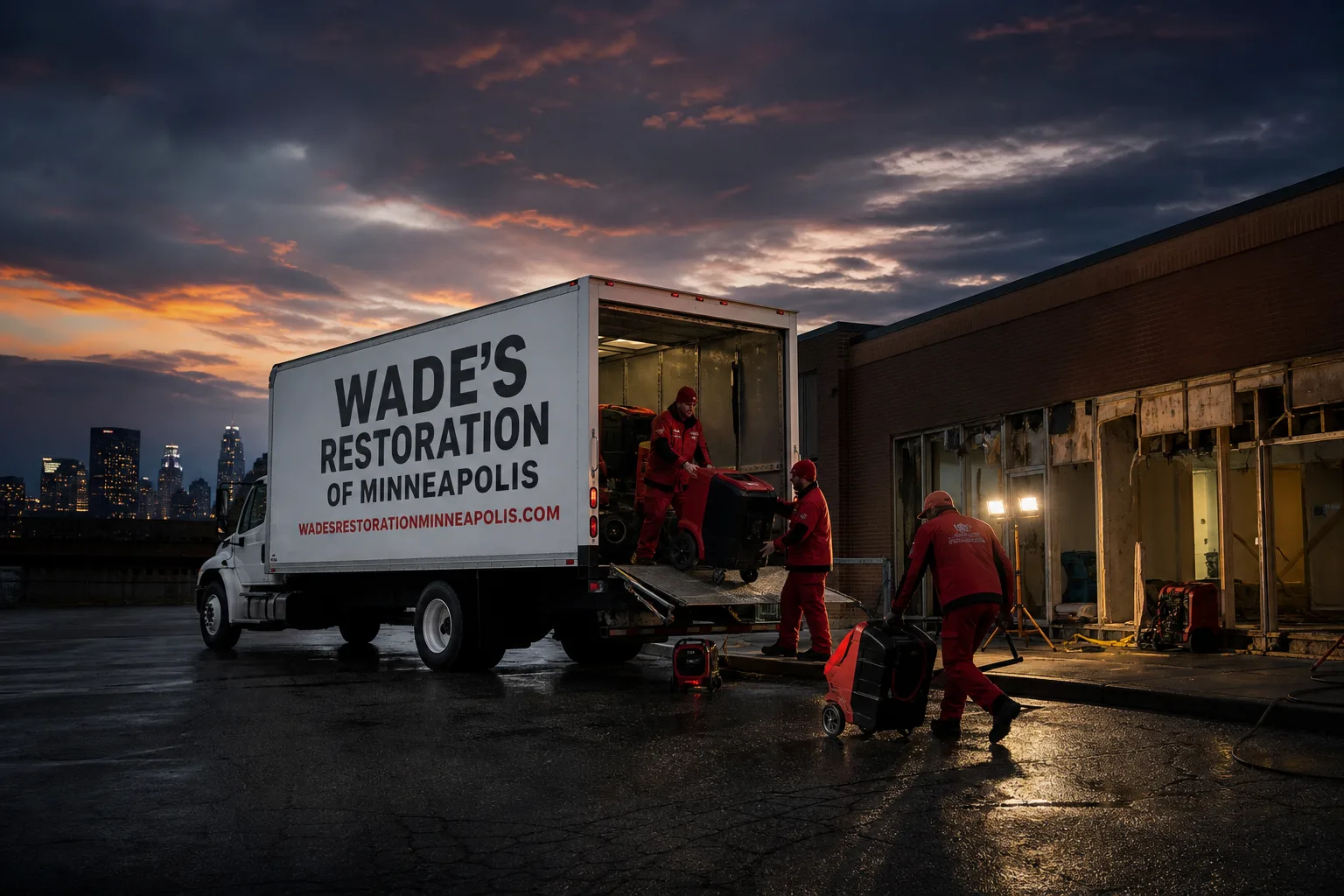
Fast, Reliable Mold Remediation Across Brooklyn Park
Mold remediation in Brooklyn Park typically runs $1,800 to $6,500 depending on how far the growth has spread, and in most cases we can be walking your basement with a moisture meter the same day you call. If you’re seeing dark staining along a block wall off 73rd Avenue, or you’ve caught that musty smell coming from a split-level’s lower bath near Zane, don’t wait it out. The longer spores sit in the wall cavity, the bigger the job gets. Call Wade Ferris at (888) 690-6095 and he’ll tell you straight what you’re looking at, over the phone, before anyone ever sets foot in your house.
We work in Brooklyn Park constantly. We know these 1960s and 70s ramblers, the way moisture moves through block walls on glacial clay, and the specific reasons mold keeps coming back in the 55443 even after someone already “cleaned it up” once. That local knowledge isn’t a marketing line. It’s what tells us where to look before we cut drywall.
Key Takeaways
- Most Brooklyn Park mold jobs fall between $1,800 and $6,500, with black mold containment on the higher end.
- Mold growth becomes visible within 48 to 72 hours after water intrusion in a closed-up basement.
- The recurring mold problem in Brooklyn Park stems from block foundations on clay soils, not just the one-time water event.
- You get a written scope and price before work starts, plus the 90-Day Done Right Promise in writing.
Why Wade’s Restoration of Minneapolis Is Brooklyn Park’s Preferred Mold Remediation Company
Wade Ferris founded this company in 2007 and still answers the phone himself. In a city the size of Brooklyn Park, that matters. You’re not getting a rotating crew from a national franchise that quoted you one number on the phone and a different one at the door. You get Wade, his published address, his license number, and a crew that’s been background-checked and shows up in uniform with equipment names you can actually read: Dri-Eaz, Phoenix, and B-Air.
Brooklyn Park homeowners have seen enough. We know because they call us after other outfits have already “finished” the job and the smell came back in six weeks. That’s the worst position to be in, and it’s the one we fix most often. Our Mold Remediation team documents everything with daily moisture readings, hands you the full log at the end, and if it’s not done right, the 90-Day Done Right Promise means Wade comes back and makes it right. In writing.
Response time to Brooklyn Park is usually same-day for assessment and within 24 hours for containment setup. For a house backing up to Shingle Creek or down around 73rd and Zane where water pools after a heavy spring thaw, that speed makes the difference between treating a wall cavity and gutting a finished room.
Our Mold Remediation Services in Brooklyn Park
Mold Inspection & Testing
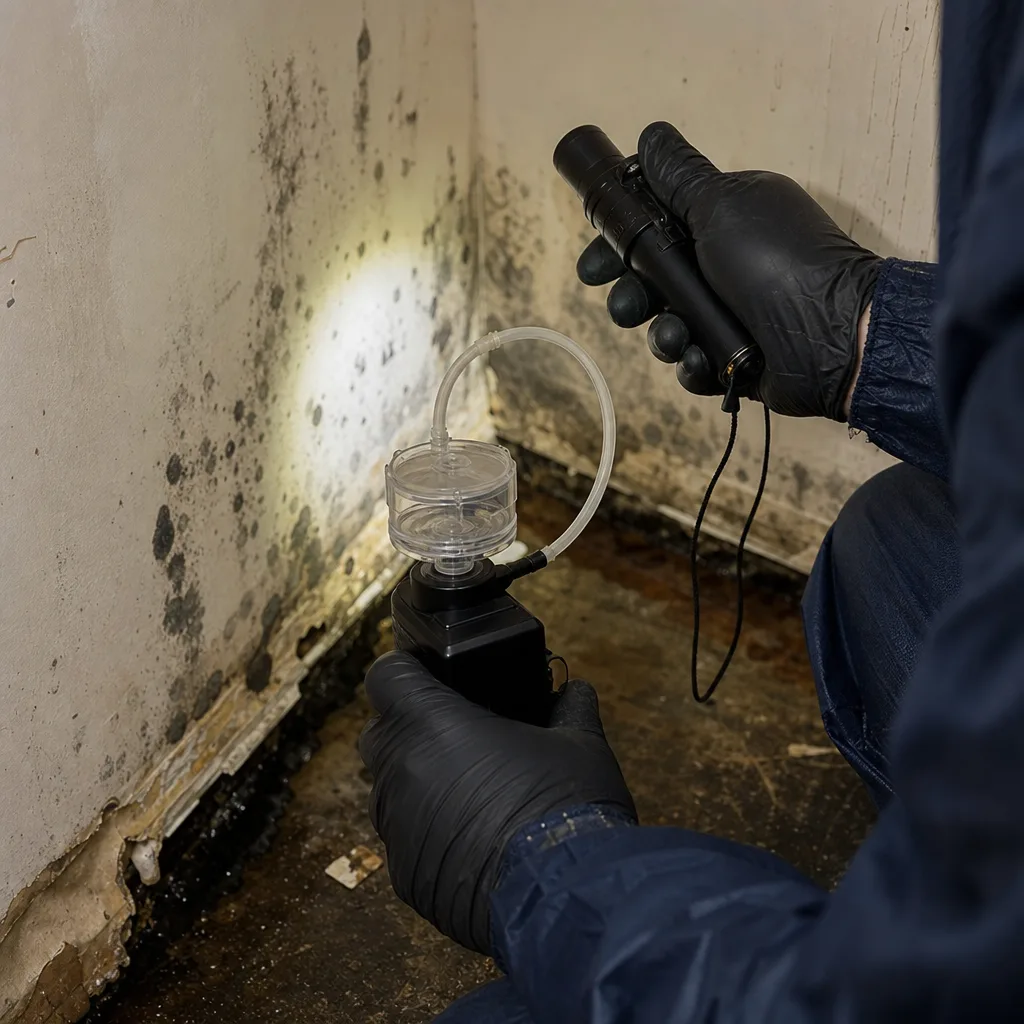
Before we touch anything, we inspect. In Brooklyn Park that means checking the east foundation wall first in 1960s ramblers, because that’s where the snowmelt comes down off the roof and saturates the clay against the block. Our inspection includes relative humidity readings, moisture meter probing behind baseboards where drywall meets the slab, and surface sampling when we need to know what we’re dealing with. You get the findings in plain language before any remediation quote.
Mold Removal
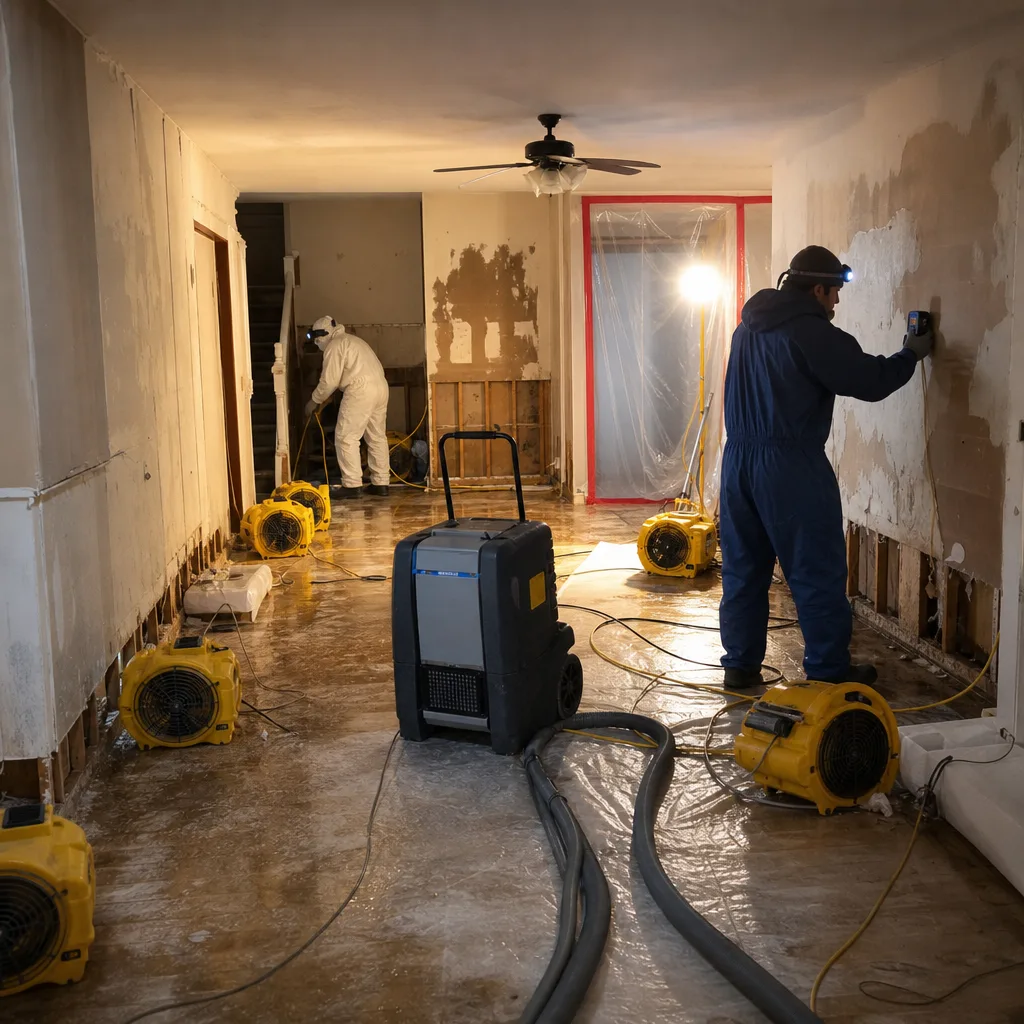
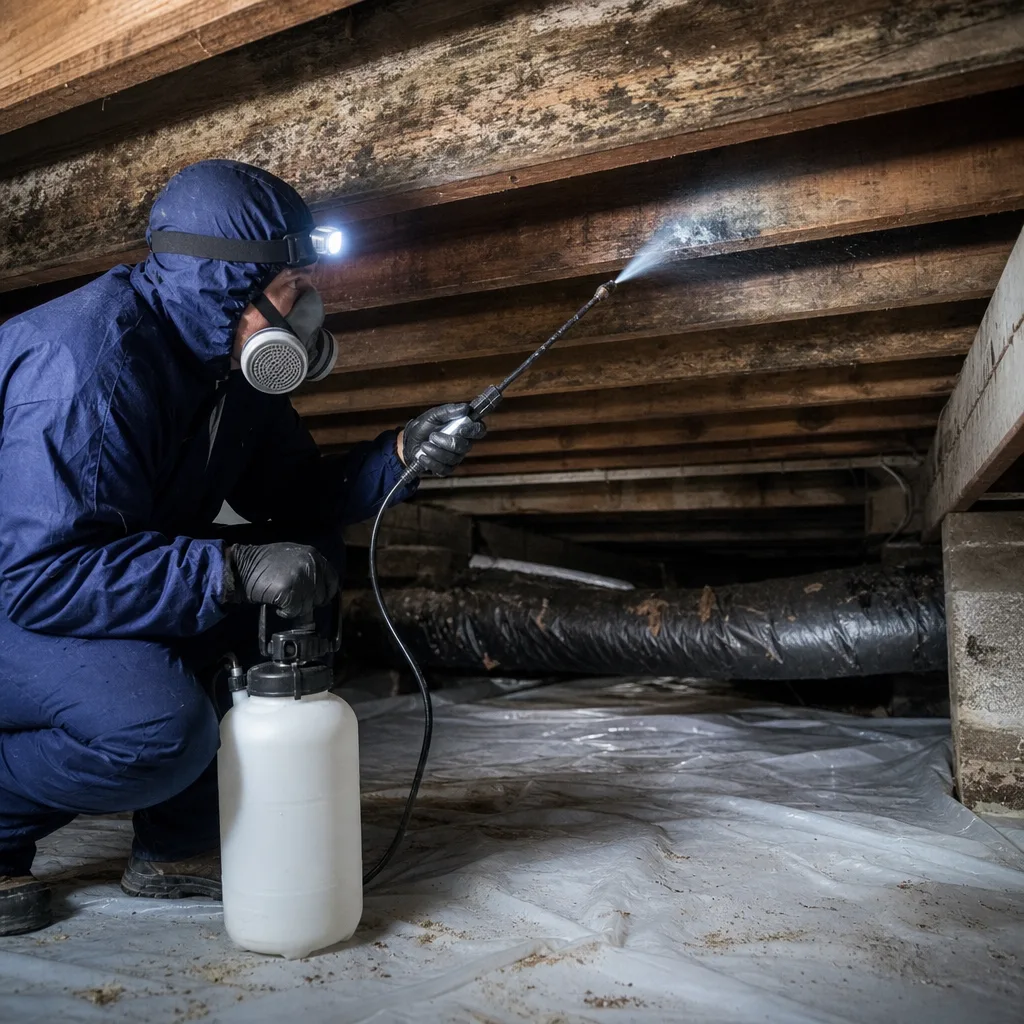
Removal in a Brooklyn Park split-level usually means the lower level got wet through the block wall, whether from a failed sump or spring thaw pressure, and the framing behind the drywall started feeding mold within a couple of days. We contain the affected area with negative air pressure, cut out the damaged drywall, treat the framing and block, and dry the whole assembly down before anything goes back. You’ll know exactly what was cut, what was treated, and what it cost.
Black Mold Remediation
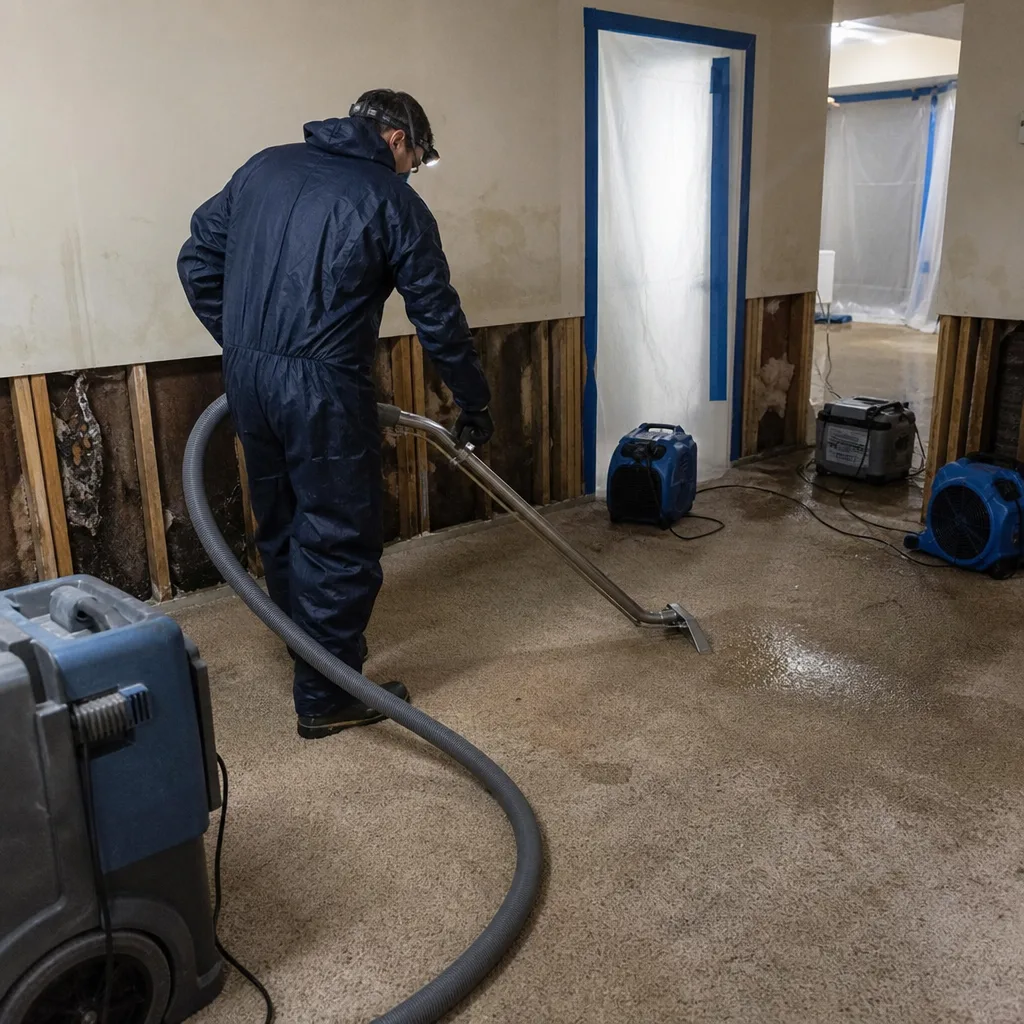
Black mold, the stuff that shows up as dark greenish-black patches that smell like wet dirt, gets a different level of containment. We use full HEPA containment, sealed doorways, and dedicated air scrubbing so spores don’t migrate through the rest of your home while we work. In Brooklyn Park, black mold almost always traces back to a water source that never got fully dried: a slow sump crock leak, a crack in the block wall behind paneling, a window well that holds snowmelt. We find the source or the treatment doesn’t stick.
Air Quality Restoration
Once the surface is clean, the air is what’s left. Mold spores hang around in a closed-up basement long after the visible growth is gone. We run B-Air and XPOWER air scrubbers and dehumidifiers until the air inside the affected space reads close to the air outside. For Brooklyn Park homes with forced-air systems, the ductwork can hold spores too. We check it, and when needed, we clean it. This is the step most “handyman” jobs skip and the reason mold comes back.
What happens when you call
- 1
A real person answersNo phone trees - you reach a local pro.
- 2
You get an upfront price rangeHonest numbers before anyone is dispatched.
- 3
A background-checked tech heads outLicensed & insured, dispatched right away.
- 4
You approve before work beginsNothing starts until you say go.
Trusted Brands We Service in Brooklyn Park
We run professional equipment from B-Air and XPOWER on Brooklyn Park jobs, with IICRC-certified protocols backing every setup. Injectidry systems get used for the wall cavities and under-floor drying where bulk dehumidifiers can’t reach. We don’t rely on rental shop gear. The equipment is ours, it’s serviced, and it’s sized for the square footage of a 1970s rambler basement, not a one-size-fits-all fan blowout. When a Brooklyn Park customer needs something fast, we have it running that day.
Common Mold Remediation Problems We See in Brooklyn Park Homes
- Mold regrowth after surface cleaning: Someone strips the wall, sprays a biocide, paints it back, and calls it done. But the backside of the drywall never got dried and the block behind it never got treated. The mold just works its way back through the paper face. We dry the wall cavity itself before we treat, and that’s the part people miss.
- Failed sump crocks and finished basements: A corroded sump crock in a 1980s split-level on the south side of 85th Ave gives out during a heavy rain, the basement takes two inches of water, and within 48 hours the drywall wicks it up and starts growing mold. Finished basements hide the damage longer because the wall is covered.
- Hydrostatic pressure through block walls: The clay soils around Brooklyn Park hold water. When the water table rises in spring, that pressure pushes moisture through block walls that were never waterproofed on the exterior. Efflorescence, damp framing, and a persistent musty smell are the early signs. Mold follows within a season.
- Older drain tile that was enough in 1975 and isn’t now: The original clay tile around a 1968 rambler on the north side wasn’t designed for today’s freeze-thaw cycles. When it fails, water doesn’t leave the foundation. It sits, the wall stays wet, and the mold in the framing never actually gets a chance to dry, no matter how many times you clean the face of the drywall.
Pricing for Mold Remediation in Brooklyn Park, MN
Here’s the straight answer for Brooklyn Park’s market. A basic mold inspection with moisture mapping runs $250 to $450. A small containment job, like a closet wall or a five-by-eight section of a basement wall, typically lands between $1,200 and $2,400. A full black mold containment in a finished lower level of a split-level, with drywall removal, framing treatment, air scrubbing, and rebuild prep, usually comes in $4,000 to $6,500. Crawl space treatment in a 1970s rambler on the west side runs $1,800 to $3,200, depending on access and vapor barrier replacement. The single biggest factor on any Brooklyn Park job is whether the water source is fixed, or whether it’s still actively wet when we start. A wet wall costs more than a dry one. We give you a written scope and a firm number before we cut anything. Call (888) 690-6095 and get a free estimate, no trip charge inside our own county.
We Also Serve Cities Near Brooklyn Park
Beyond Brooklyn Park proper, we regularly work in Brooklyn Park‘s surrounding communities: Coon Rapids, West Coon Rapids, Brooklyn Center, and Champlin. The same 1960s and 70s block foundation stock runs through the whole northwest metro, and the same clay soils sitting under them keep the work steady every spring thaw.
Serving Brooklyn Park, MN - Our Local Coverage Area
We’re based in the Brooklyn Park area and know this community well. Use the map below to see our service coverage - if you’re nearby, we can almost certainly help.
FAQs - Mold Remediation in Brooklyn Park
Because the water source behind the wall never got fixed. In Brooklyn Park, that almost always means hydrostatic pressure pushing moisture through a block wall into the backside of the framing. You can scrub the face of the drywall a dozen times, but if the block is still wet and the wall cavity never got dried, the mold regrows from the backside within weeks. We treat the block, dry the cavity, and fix or flag the drainage issue so the cycle actually stops. Call (888) 690-6095 for an inspection and a written plan.
Within 48 hours, visible mold starts forming on wet drywall in a dark, closed basement. In a finished split-level with carpet pad and paneling, the clock starts the moment the water comes in. By the time you smell it, the backside of the drywall is usually already growing. If your sump crock has failed or is making noise it didn’t make before, especially in an older home off 73rd Avenue or Zane, call us before the wall stays wet any longer. Free estimate, no trip charge in the county.
Yes, and especially in Brooklyn Park, because a musty smell in a 1960s or 70s rambler with block walls usually means moisture is moving through the wall even though no standing water ever appeared. The block wicks moisture out of the surrounding clay, the framing next to it stays damp, and mold grows inside the wall cavity where you can’t see it. An inspection with a moisture meter and relative humidity readings tells you if it’s a ventilation issue or a wall cavity problem before you spend money on anything else.
In most Brooklyn Park ramblers, yes. We can often treat the band joist area, remove the moisture source, and run drying equipment without pulling every batt of insulation out. What decides it is how long the insulation has been wet and whether the vapor barrier underneath is intact. On the west side near 169, crawl spaces in these 1970s houses tend to run humid because of the crawl space soil and closed vents. We’ll tell you after inspection what has to come out and what can stay, and the quote is itemized so you can see it.
The houses. Maple Grove has poured-concrete foundations, engineered drainage, and 1990s or newer water management systems. Brooklyn Park’s 1960s to 1980s block foundations sit on clay that holds water, with original drain tile that’s often collapsed or undersized. That means water doesn’t drain away from the foundation the way it does in Maple Grove. It sits against the block, pushes through as vapor or liquid, and keeps the wall assembly wet long after the visible water is gone. Remediation here is less about a single flood event and more about correcting an ongoing moisture condition. That changes how we dry, what we treat, and how the repair gets scoped.
Call Wade’s Restoration for Mold Remediation in Brooklyn Park, MN
If you’re in Brooklyn Park and you’ve got a wall that won’t stop smelling, staining that’s spreading, or a basement that floods every spring thaw and never fully dries, call (888) 690-6095. Wade Ferris answers his own phone. He’ll ask you questions you haven’t thought of yet and tell you straight whether you need a full remediation or a good inspection first. No trip charge inside our own county, free second opinion on any written estimate, and a standing 10% discount for seniors and veterans. Ask anyone on your street about us. Somebody’s already got our number.
Written by Wade Ferris, Owner at Wade’s Restoration of Minneapolis, serving Brooklyn Park with mold remediation and water damage restoration since 2007.