
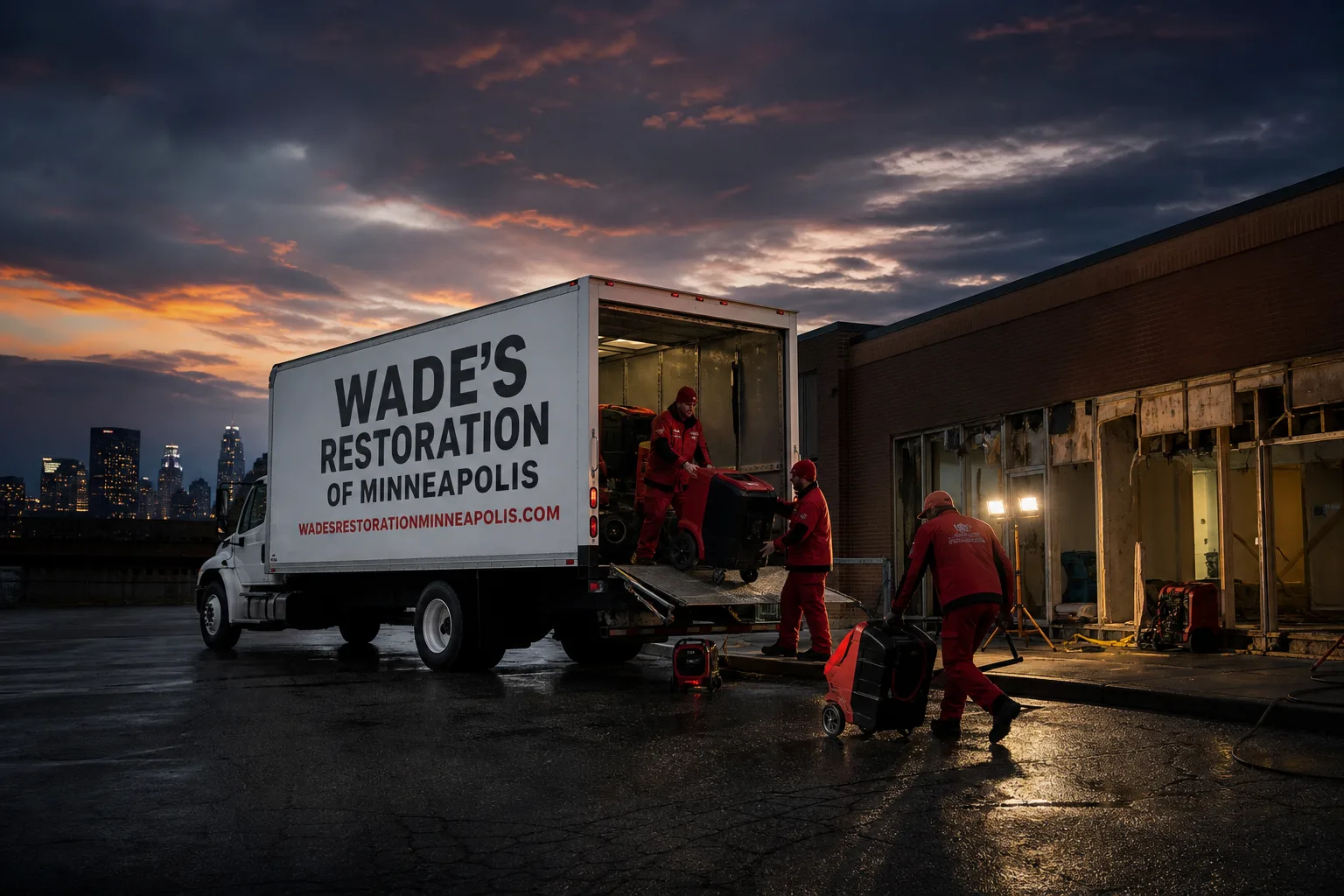
Fast, Reliable Mold Remediation Across Big Lake
Mold remediation in Big Lake typically costs $1,800 to $6,500 depending on how far the colony has spread and what’s feeding it. Most jobs in the 55309 zip code can be started within 24 to 48 hours of the first call. If you’ve spotted black staining on drywall, caught that musty smell in a basement, or had water sit anywhere in your home, call Wade’s Restoration at (888) 690-6095. Wade answers the phone himself.
We work throughout Big Lake regularly, from the older homes near the original townsite to the 2000s subdivisions along County Road 43 and the neighborhoods east of Lake Street. Mold doesn’t announce itself politely. It starts inside wall cavities, under carpet pad, behind baseboards. By the time you see it, the colony has usually been growing for weeks. That’s why we don’t do phone estimates for mold. We come out, take moisture readings with professional meters, and figure out what’s actually going on before anyone quotes a number.
As part of our Mold Remediation work across the metro, we’ve learned that Big Lake presents a specific set of problems other communities don’t. More on that below.
Key Takeaways
- Big Lake sits between the Mississippi River and Big Lake itself, so water-table pressure and spring flooding both drive mold here in ways landlocked suburbs never see.
- Two homes on the same street can have completely different moisture problems depending on whether the builder sat the foundation on sandy outwash or a clay lens. We diagnose before we treat.
- Free estimates are always offered in writing, and the 90-Day Done Right Promise applies to every mold job we take on in Big Lake.
- Call (888) 690-6095 and you’ll reach Wade, not a call center. He heads out to Big Lake himself.
Why Wade’s Restoration of Minneapolis Is Big Lake’s Preferred Mold Remediation Company
Wade Ferris started this company in 2007 and his name is on the truck. That’s not marketing. That’s how he built the business, by being the guy who shows up, takes the readings himself, and hands you a written scope before any work begins. Big Lake homeowners tend to appreciate that. So do the folks in Big Lake who have dealt with national chains that quote one number on the phone and another at the door.
We’re not a franchise. We don’t have a rotating cast of subcontractors. Wade runs a background-checked, uniformed crew that answers to him directly. When you call about mold in your Big Lake basement, the person who picks up is either Wade or someone on his team who has already been told exactly what you told us.
We’re fully IICRC-certified, RIA-affiliated, and IFA-recognized. The equipment we run is what the industry uses for professional restoration: Phoenix desiccant dehumidifiers, XPOWER air movers, B-Air negative-air machines, and Injectidry systems for drying wall cavities without tearing out drywall unnecessarily. We bring those tools to Big Lake on every job, not just the big ones.
Response time to Big Lake from our metro dispatch office is typically under an hour for emergency water that’s feeding mold, and same-day or next-day for scheduled inspection and testing. Wade answers his own phone around the clock, so if you find a wet wall at 11 p.m., you’re talking to the owner, not a voicemail tree.
Our Mold Remediation Services in Big Lake
Mold Inspection & Testing in Big Lake
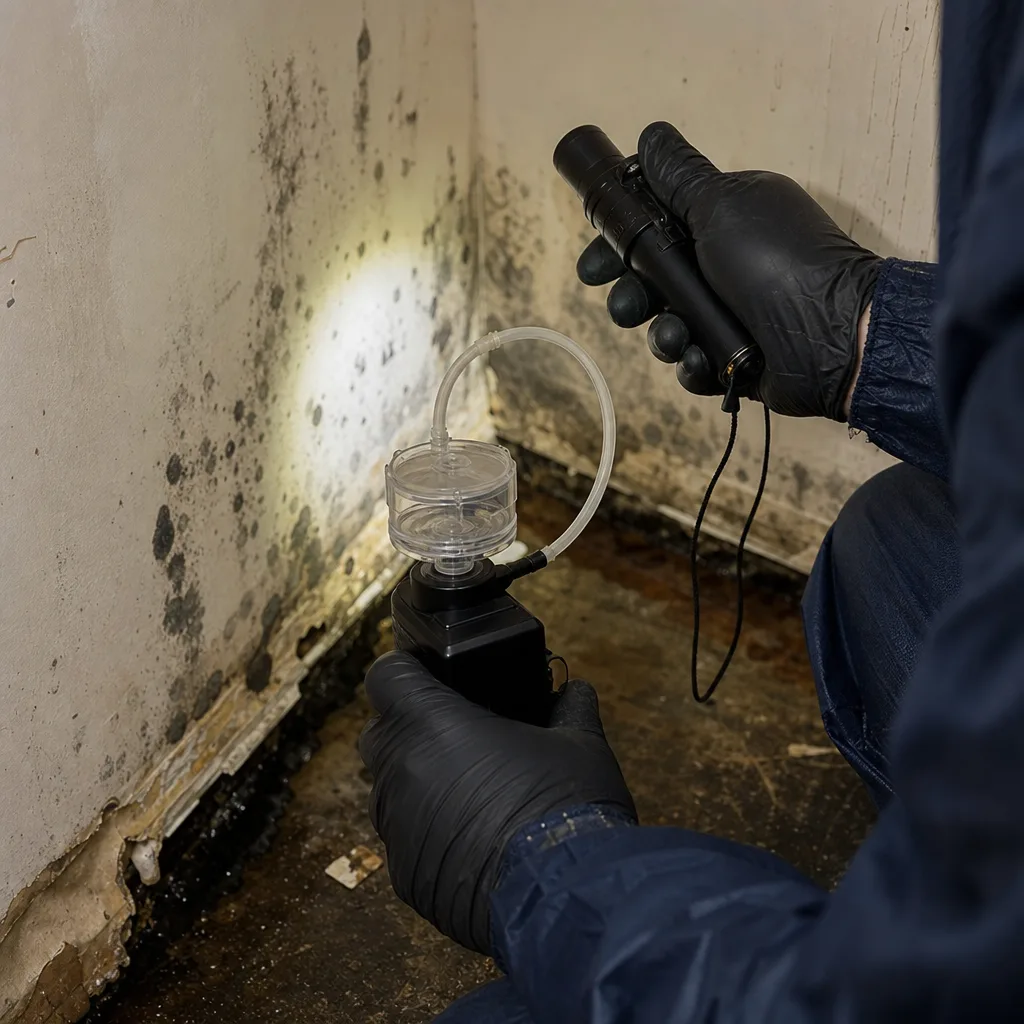
Before anyone tears out drywall or runs a fogger, you need to know what you’re dealing with and where the moisture is coming from. Big Lake’s mix of glacial soils means the water wicking into your basement could be coming from a high water table, a clay lens trapping runoff, or surface grading that’s pushing snowmelt against the foundation. We test for mold type, measure moisture throughout the affected area, and write up our findings in a report you keep. No scare tactics. Just numbers and a plan.
Mold Removal in Big Lake
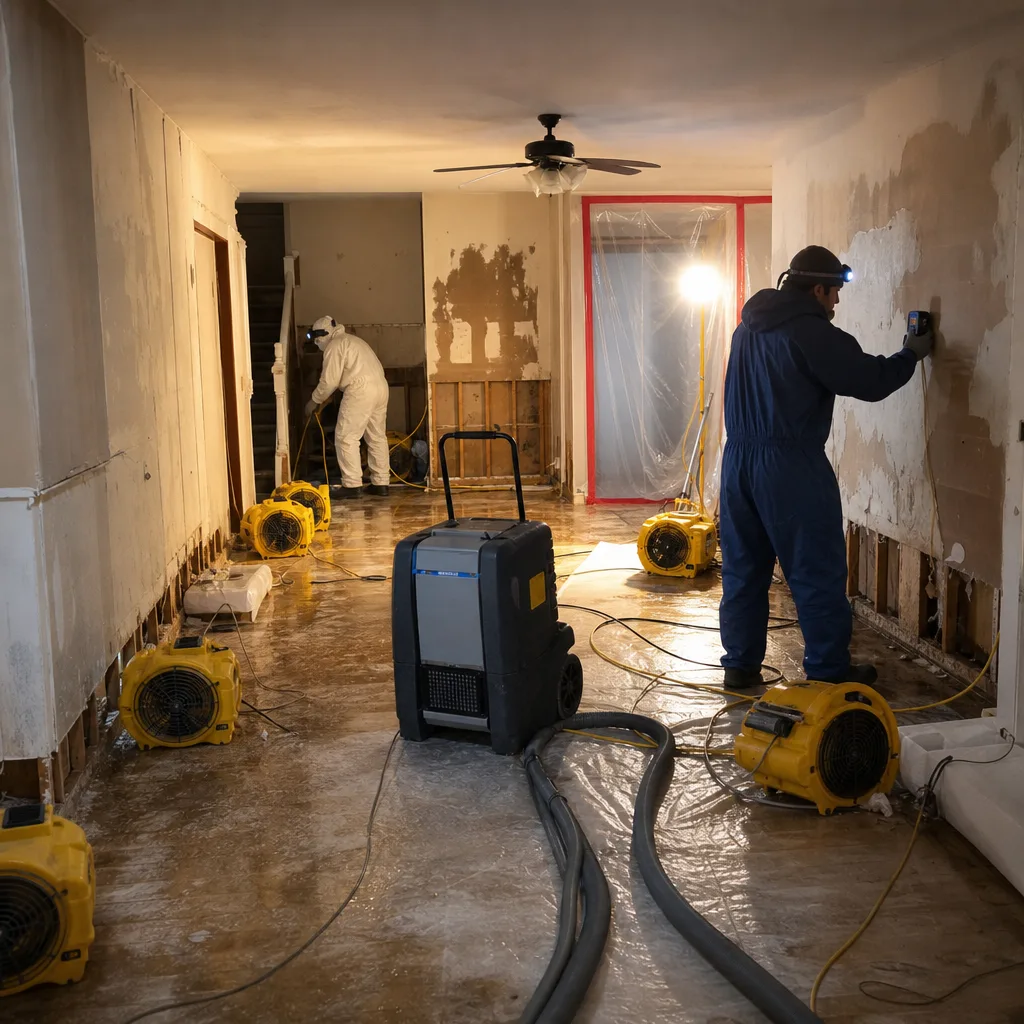
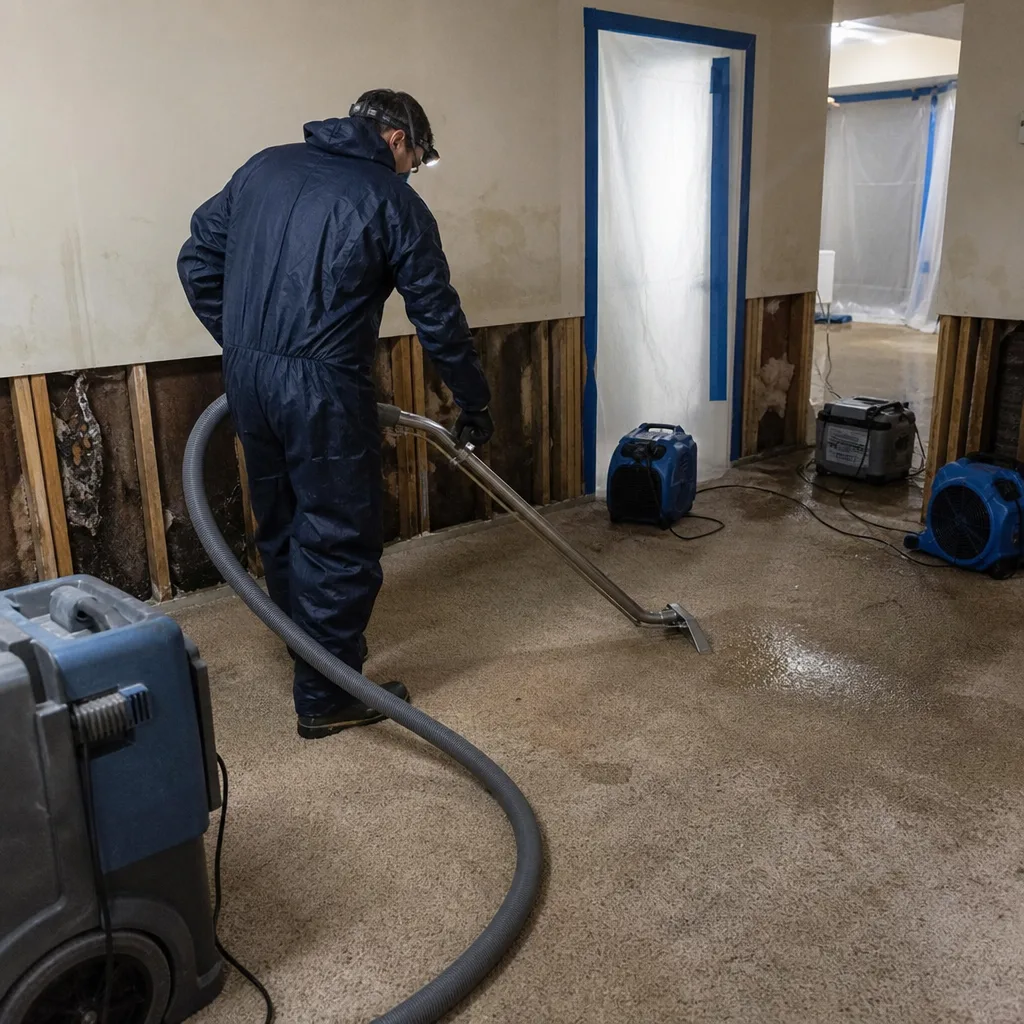
Removing mold means more than spraying bleach on the visible spot. In Big Lake homes built during the 1990s and 2000s boom, the wall cavities are often OSB-sheathed and framed with engineered lumber that soaks up water and holds it. We contain the affected area, run negative air pressure so spores don’t spread to the rest of the house, and remove contaminated material down to clean structure. Then we dry it to the moisture standard the IICRC requires, not just until it feels dry.
Black Mold Remediation in Big Lake
“Black mold” usually refers to Stachybotrys chartarum, and it’s the one people are most afraid of. Fair enough. It shouldn’t be wiped by hand. We set up full containment, HEPA-filter the air, remove affected materials, and clean surfaces with antimicrobial treatments that are registered for the specific mold species present. After remediation, we run clearance testing so you have documentation that the spore counts are back to normal. Insurance companies like that documentation. So should you.
Air Quality Restoration in Big Lake
Mold spores don’t stay where the mold is. They ride the air currents through your HVAC system, into bedrooms, into closets. In a Big Lake winter, when the house is sealed tight against the cold, indoor spore counts can climb fast. We run air scrubbers during remediation and can clean duct surfaces after. We also check humidity levels, because in Big Lake the real issue is often the humidity that never leaves. Open water to the north and west, freeze-thaw cycles pushing moisture into the air, and tightly built 2000s homes that don’t breathe. That combination is what makes air quality restoration a bigger deal here than in drier communities to the south.
What happens when you call
- 1
A real person answersNo phone trees - you reach a local pro.
- 2
You get an upfront price rangeHonest numbers before anyone is dispatched.
- 3
A background-checked tech heads outLicensed & insured, dispatched right away.
- 4
You approve before work beginsNothing starts until you say go.
Trusted Brands We Service in Big Lake
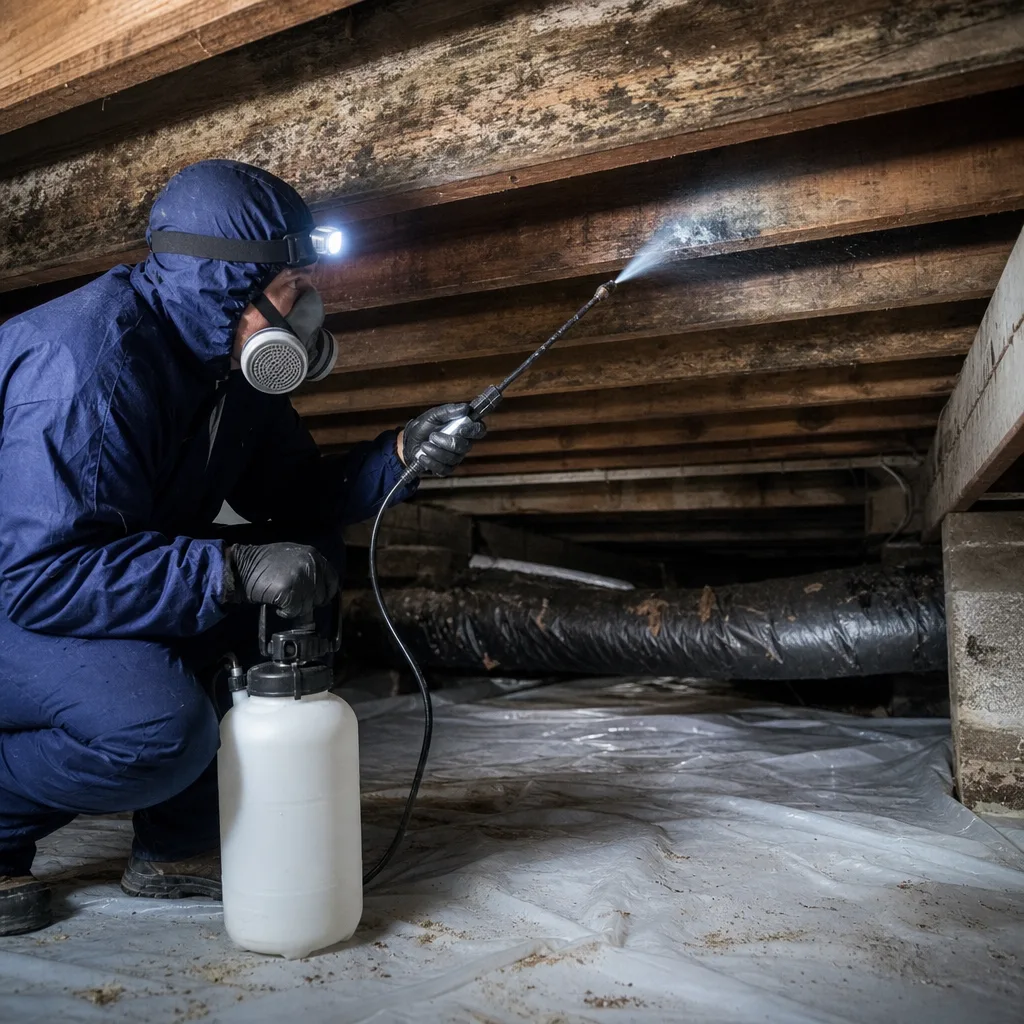
Over the years we’ve restored homes in Big Lake that sit near the Northstar Commuter Rail corridor, out along County Road 43, and in the subdivisions west of Lake Street. Regardless of who built the house or what era it’s from, the drying equipment matters. We run Phoenix and XPOWER units for air movement, and B-Air negative-air scrubbers for containment. We keep these units stocked and ready to roll to Big Lake, so you’re not waiting on a rental shop in St. Cloud to open. If your home has been hit by ice dams, spring flooding, or a long-running basement seep problem, we’re familiar with the housing stock here and what it takes to dry it properly. That includes the crawlspace work that many mold companies won’t touch.
Common Mold Remediation Problems We See in Big Lake Homes
- Surface mold that returns in weeks because nobody found the source. Big Lake’s glacial soils alternate between sandy outwash and heavy clay lenses. If your home sits on clay, water gets trapped against the foundation and keeps feeding mold after someone’s already “cleaned” it.
- OSB sheathing that looks dry on the outside and is wet inside. Homes built with oriented strand board behind the drywall can hide moisture for months. One late-winter ice dam on a low-slope roof is enough to soak a wall cavity. Big Lake’s open water keeps humidity high enough that standard drying protocols stall out without desiccant dehumidification.
- Runoff pooling against foundation walls on 2000s lots. Many Big Lake subdivisions were built fast on lots with minimal finish grading. That means spring snowmelt pools where it shouldn’t, soaks the sill plate, and wicks into the home. We see this constantly in the neighborhoods east of County Road 43.
- Crawl spaces that never dry out. When the Mississippi is running high or Big Lake itself swells in spring, the water table rises. Homes with dirt crawl spaces breathe that moisture all summer. We treat the crawl space, not just the floor above it.
Pricing for Mold Remediation in Big Lake, MN
A small contained mold removal in a single room of a Big Lake home runs roughly $1,800 to $3,200. That covers containment, material removal, antimicrobial treatment, and drying equipment. A whole-basement remediation with crawl space involvement runs $4,500 to $8,500 depending on square footage and how far the moisture has traveled. Mold inspection and testing alone is typically $350 to $650. Crawl space treatment with vapor barrier installation usually lands between $2,800 and $5,500. Ice-dam-related wall cavity mold, where we have to dry and possibly rebuild sections of wall, tends to fall between $3,000 and $6,500. These are Big Lake numbers, not national averages. We give you a written estimate before any work starts, and the 90-Day Done Right Promise means if the mold comes back in 90 days, Wade comes back at no charge to make it right. Call (888) 690-6095 and we’ll come take a look. The estimate is free, and there’s no trip charge inside our own county.
We Also Serve Cities Near Big Lake
When we’re not in Big Lake, you’ll find our trucks in the surrounding communities. We regularly run jobs in Monticello, Albertville, Elk River, and Otsego. If you’re in one of those towns and dealing with mold, water, or fire damage, the same crew and the same written promise apply. You can read more about what we do for the wider area on our Mold Remediation service page.
Serving Big Lake, MN - Our Local Coverage Area
We’re based in the Big Lake area and know this community well. Use the map below to see our service coverage - if you’re nearby, we can almost certainly help.
FAQs - Mold Remediation in Big Lake
Because the glacial soils under Big Lake are uneven. One lot sits on sandy outwash that drains freely, while the neighbor’s sits on a clay lens that holds water against the foundation. The sandy lot might show mold only around a leaky window. The clay lot shows mold along the entire baseboard line. It’s not a coincidence. It’s subsurface geology. That’s why we always diagnose the moisture source before we set a drying protocol.
The rail line itself isn’t pushing mold into homes. But the housing boom that followed the Northstar extension in the late 2000s means a high concentration of quickly built tract homes with grade lines that were never properly finished and soil compaction that was never fully tested. Those homes are now 15 to 20 years old, which is right when OSB sheathing and builder-grade vapor barriers start to fail if they’ve been wet. Homes near the corridor tend to be those homes. That’s why we see more mold calls in those neighborhoods than in the older townsite.
Yes. Big Lake’s open water keeps winter humidity higher than inland communities, which accelerates ice dam formation at eaves. When water backs up under shingles, it travels down inside the wall. The OSB sheathing stays wet for months because the home is sealed tight and outdoor temperatures stay low. Mold grows in the wall cavity long before you see it on the drywall. We’ve opened walls in Big Lake where the backside of the OSB was black with mold while the front side looked brand new.
Almost always because the previous company treated the visible mold but never stopped the water. In Big Lake, that water often comes from a clay lens trapping runoff, a high water table during spring, or grade that slopes toward the house. If the source isn’t fixed, the mold returns in six to eight weeks, no matter what chemical was applied. We trace the moisture first.
Before, yes, if you don’t know what you’re dealing with. Testing identifies the species and tells us whether it’s a common allergenic mold or something more serious like Stachybotrys. After, we recommend clearance testing so you have a written record that spore counts are back to background levels. It’s the difference between “looks clean” and “is clean.” In Big Lake, where the water table moves all spring, that documentation matters for insurance and resale. Call (888) 690-6095 and Wade will walk you through it. The inspection is free.
We’ll Come Out to Big Lake and Figure It Out
Mold in your home is frustrating and a little frightening. Wade gets that. He’s been doing this since 2007 and he still answers his own phone. Call (888) 690-6095 today and tell us what you’re seeing. We’ll send someone to Big Lake, take real moisture readings, hand you a written scope, and explain exactly what we’d do and what it costs before you spend a dollar. No pressure. No scare tactics. Just a neighbor who knows how to fix what water does to a house.
Written by Wade Ferris, Owner at Wade’s Restoration, serving Big Lake and the surrounding area since 2007.