
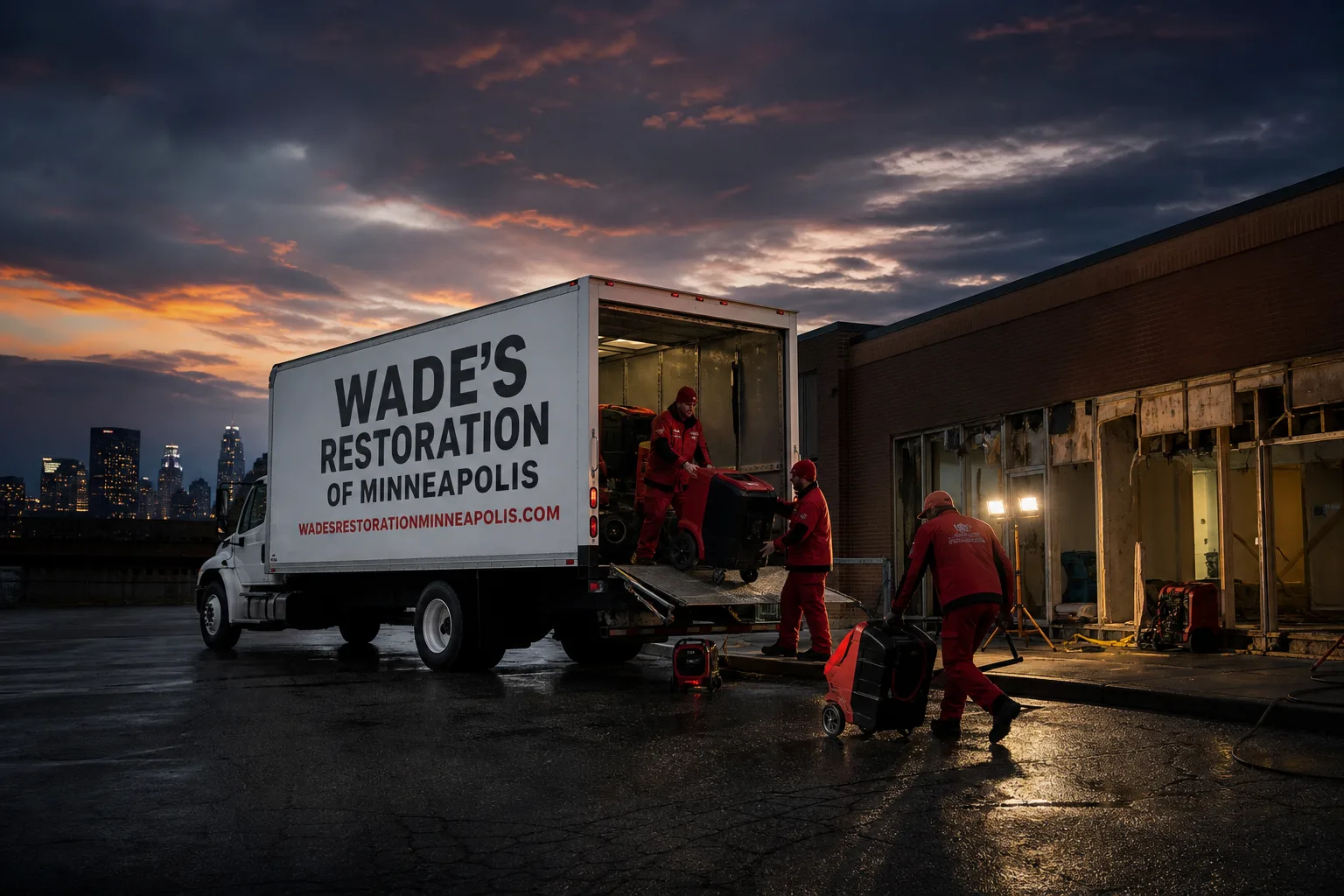
Fast, Reliable Fire & Smoke Damage Restoration Across Little Canada
Fire damage in Little Canada doesn’t wait, and neither do we. A house fire leaves behind smoke, soot, and water from the fire department, and every hour that passes pushes soot deeper into drywall, ductwork, and framing. Most smoke and soot removal in Little Canada runs $1,800-$4,200 depending on square footage and how far the smoke traveled through the home. Call (888) 690-6095 and Wade’s Restoration of Minneapolis serves Little Canada with crews who know the lake-adjacent lots and older foundation quirks here. We’ll be on the road fast and give you a straight answer before anyone touches a wall.
Key takeaways:
- Smoke odor near Gervais Lake and Little Canada Lake lingers longer because ground moisture keeps reactivating soot trapped in porous 1950s-70s concrete block.
- Board-up and tarping on low-pitched ranch roofs has to account for ice damming that follows a fire in winter.
- You get a written scope before work starts, direct adjuster communication, and Wade’s 90-Day Done Right Promise in writing.
Why Wade’s Restoration of Minneapolis Is Little Canada’s Preferred Fire & Smoke Damage Restoration Company
Wade Ferris started this company in 2007 and put his own name on the truck. Ask anyone on your street. The older neighborhoods around Little Canada Lake, the split-levels off Rice Street, the ranches west of 35E. When fire damage hits one of these homes, people want a real person who picks up the phone, not a call center three states away. That’s Wade. He answers his own phone, 24/7, and he shows up himself.
Older homeowners in Little Canada have been burned before, sometimes literally, sometimes by a national outfit that quoted one price on the phone and a different one at the door. That doesn’t happen here. Wade gives you a written estimate before the work begins. His crews are background-checked and uniformed. The equipment on your job comes from brands we actually run: Phoenix, XPOWER, B-Air, Injectidry. And every fire job carries the 90-Day Done Right Promise, stamped in writing. If it’s not right, Wade makes it right.
There’s no trip charge inside our own county, and seniors and veterans always get 10% off. That’s not a promotion. It’s a standing policy.
Our Fire & Smoke Damage Restoration Services in Little Canada
Fire damage in Little Canada homes is rarely just char and soot. The city’s lake-heavy geography and older housing stock mean we’re usually dealing with water intrusion from firefighting, duct contamination, and basement moisture all at once. Here’s how we handle the four most common jobs.
Fire Damage Cleanup
We remove charred drywall, insulation, and flooring, then run professional-grade drying equipment so what didn’t burn doesn’t rot. In Little Canada, where homes sit close to Gervais Lake and the water table stays high even in winter, drying is different. A basement that feels dry to the touch is often still holding moisture in the concrete block. We take moisture readings every single day and hand you the full log at the end, something almost nobody else does.
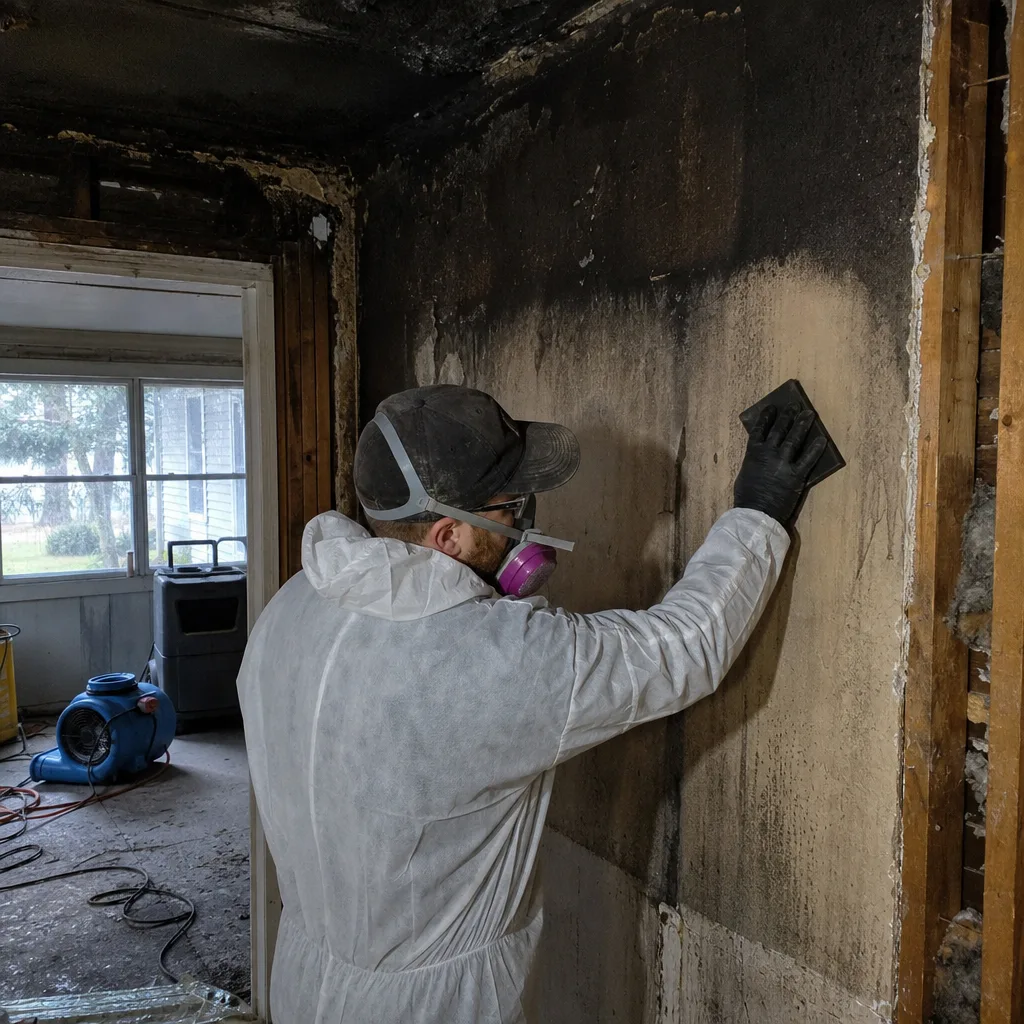
Smoke & Soot Removal
Soot is acidic and it keeps eating surfaces long after the flames are out. In Little Canada’s 1950s to 1970s ranch and split-level homes, smoke moves through forced-air ducts and typically settles in cold spots: basement corners, closets, behind trim. We clean every surface with the right chemistry for the material, not one spray for everything. That matters in older homes where woodwork and plaster require different handling than modern drywall.
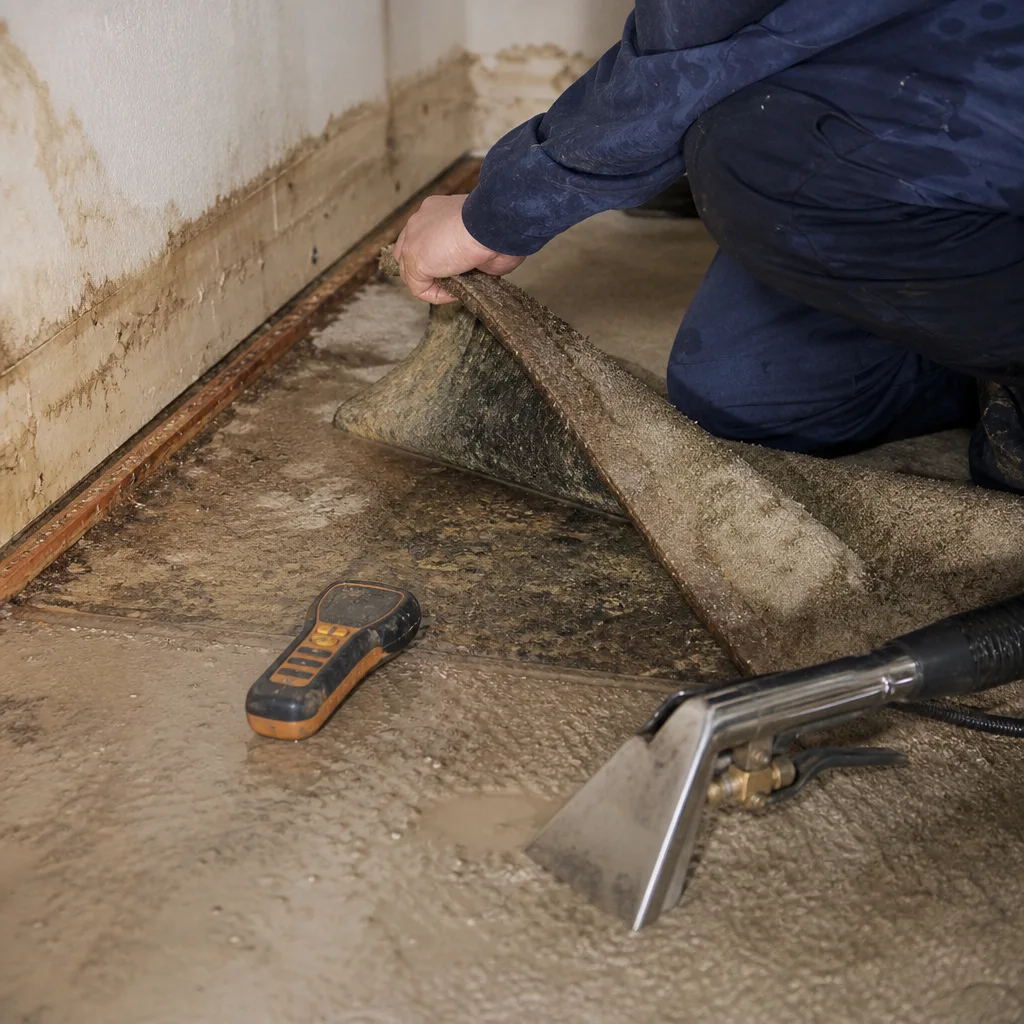
Odor Removal & Deodorization
This is where Little Canada’s geography makes the work different. Smoke odor trapped in porous concrete-block foundations reacts to moisture. Near Gervais Lake and Little Canada Lake, the ground moisture never fully stops, even in January. If we deodorize without addressing what’s feeding the moisture, the smell comes back after the first heavy snowmelt. Wade’s crew uses thermal fogging, hydroxyl generators, and Injectidry drying systems together, because that’s what actually holds up here.
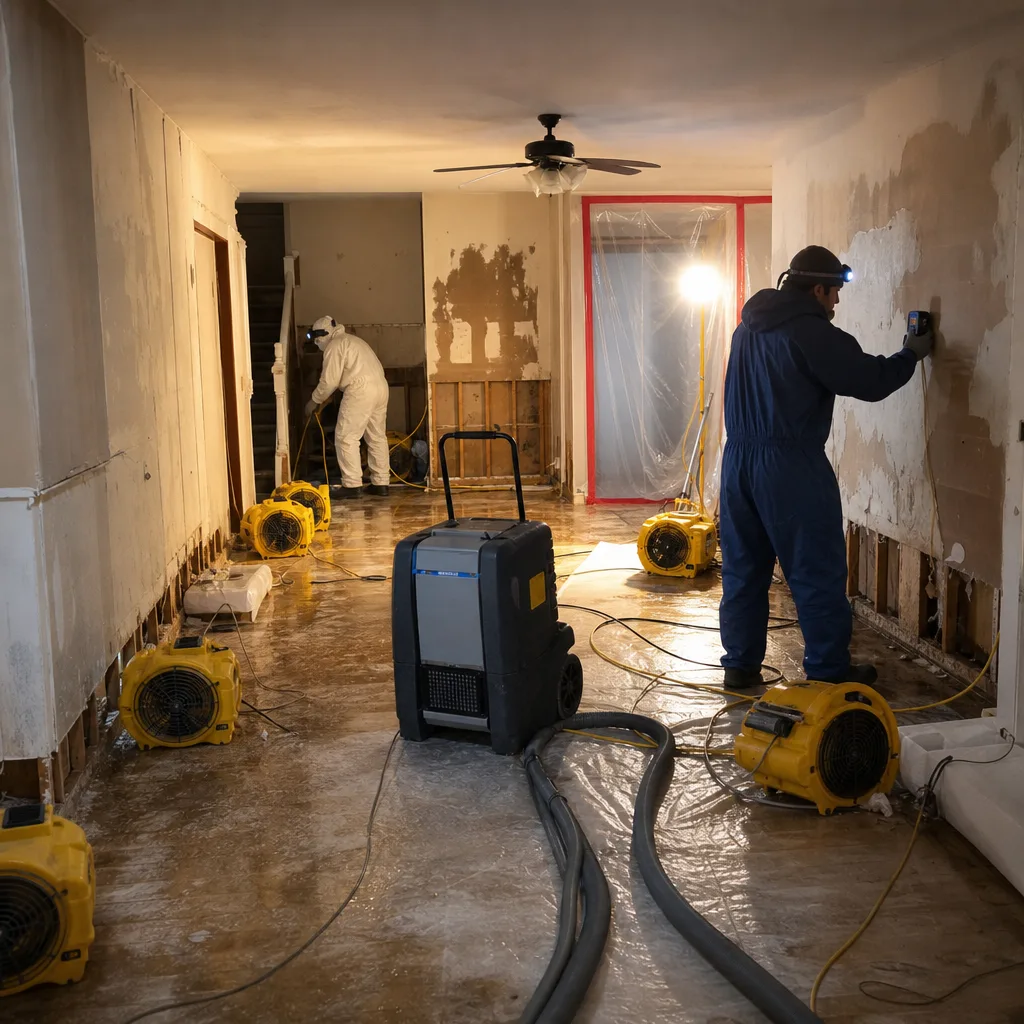
Contents Cleaning & Pack-Out
We inventory, pack, and clean your salvageable belongings off-site when the damage is severe, or in place when it isn’t. For homes near the lakes, we’re careful about what we pack into basement storage. Sustained humidity in finished basements around Little Canada Lake means that textiles and papers absorb smoke differently than they would in, say, a drier suburb west of town. We catalog everything with photos so your insurance adjuster can see exactly what was lost and what we’re restoring.
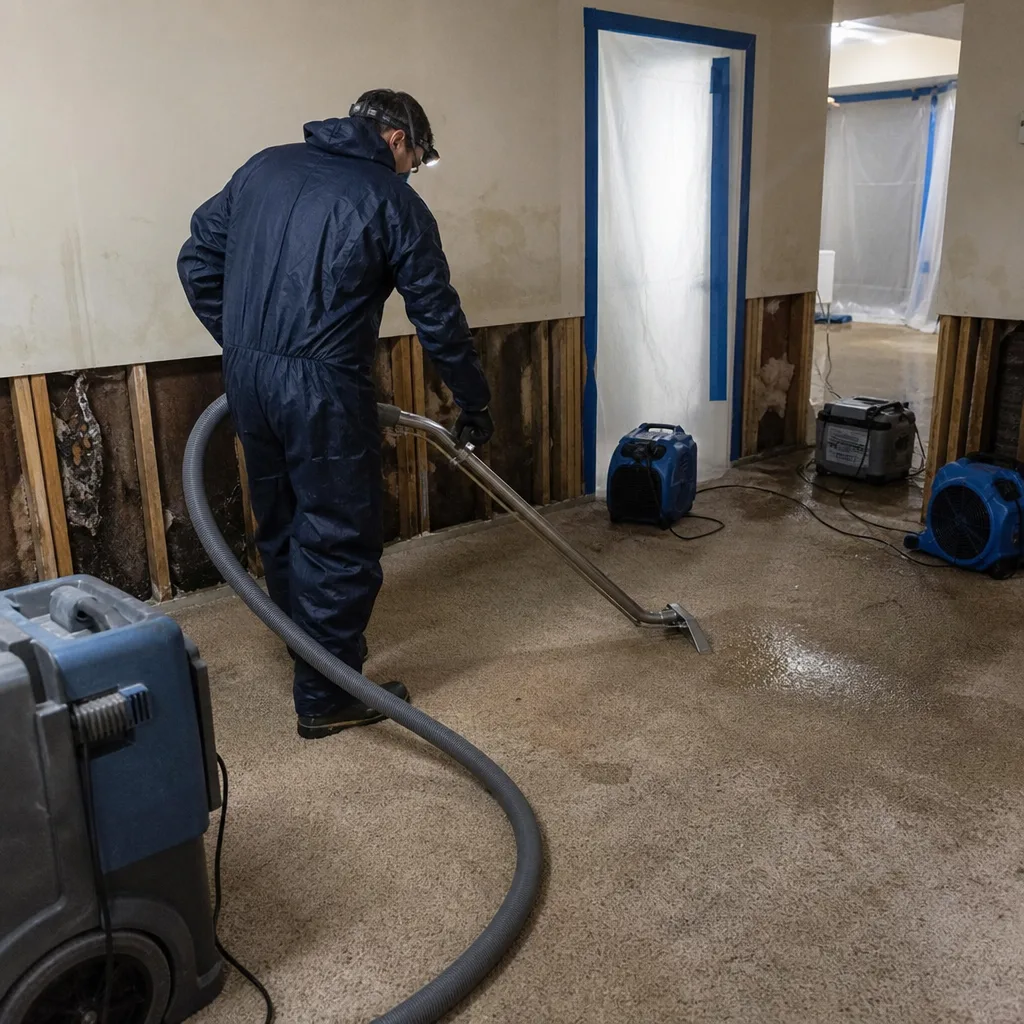
Emergency Board-Up & Tarping
A fire leaves holes in the roof, broken windows, and open doors. In Little Canada, where low-pitched ranch roofs from the 1960s and 70s dominate, winter brings ice damming. If the fire damaged your roof in January and we board or tarp it wrong, the first warm day melts snow into the attic. We board and tarp with that in mind, sealing the vulnerable spots and anchoring tarps to hold through Minnesota wind.
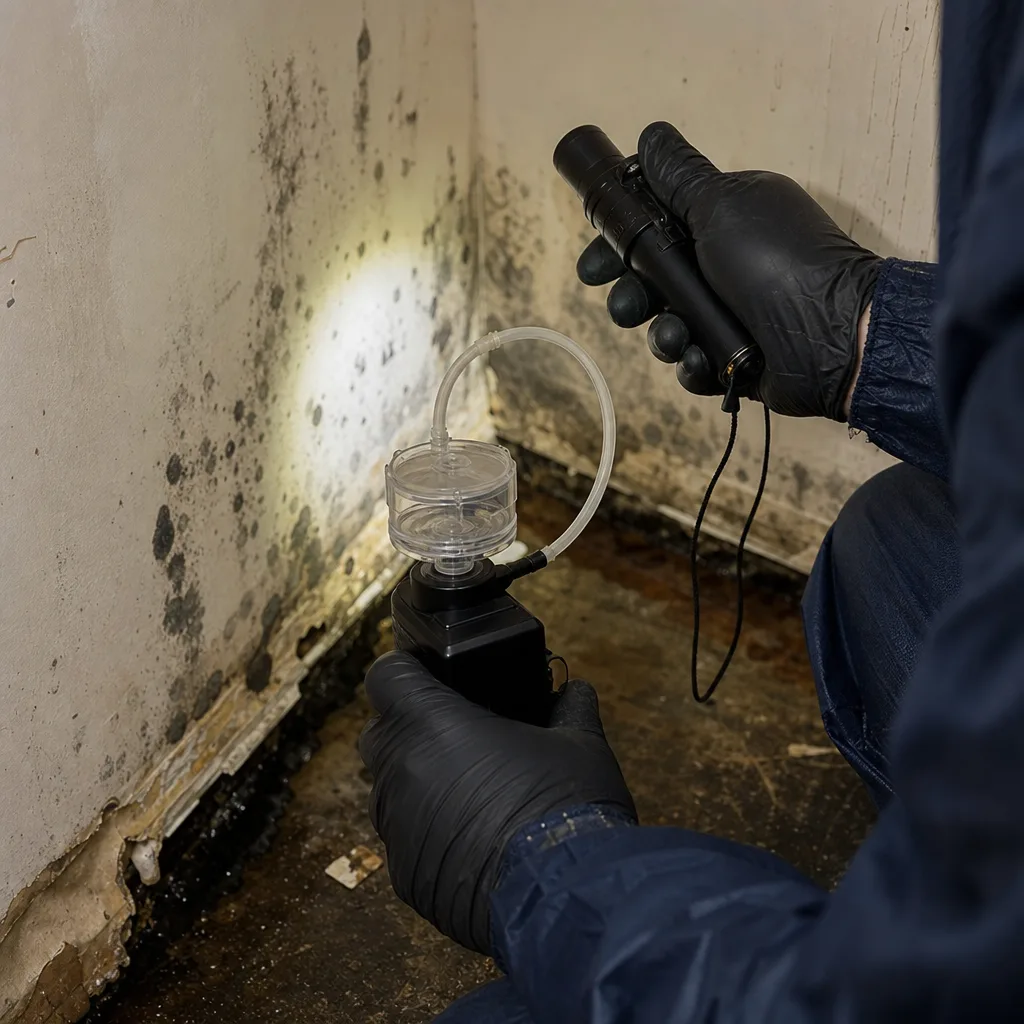
Structural Fire Repair
Once the scene is clean and dry, we rebuild: framing, drywall, flooring, trim, paint. In Little Canada, we look for frost heave cracks in lake-adjacent foundations before we close up walls. A fire-damaged wall rebuilt over a cracked, damp foundation traps humid air in the cavity and recontaminates it with whatever odor survived. Better to fix the crack now than open the wall again in May. That’s the kind of thing you learn doing this work here for years, not reading a franchise manual.
What happens when you call
- 1
A real person answersNo phone trees - you reach a local pro.
- 2
You get an upfront price rangeHonest numbers before anyone is dispatched.
- 3
A background-checked tech heads outLicensed & insured, dispatched right away.
- 4
You approve before work beginsNothing starts until you say go.
Trusted Brands We Service in Little Canada
We run Phoenix, XPOWER, B-Air, and Injectidry equipment on our jobs around Little Canada, and we know these machines under real conditions. Frozen basements in January, humid lakeside summers, the whole range. Because we’re local, we keep the parts and consumables stocked for what these homes need, so you’re not waiting on a shipment from a regional hub while soot keeps working into your walls. Faster turnaround means less secondary damage.
Common Fire & Smoke Damage Restoration Problems We See in Little Canada Homes
- Recurring smoke odor after standard deodorization. Homes near Gervais Lake and Little Canada Lake sit over a water table that stays high all year, so concrete-block basements keep absorbing ground moisture, which reactivates soot trapped in the block. If the deodorization didn’t account for that, the smell returns within a single wet season.
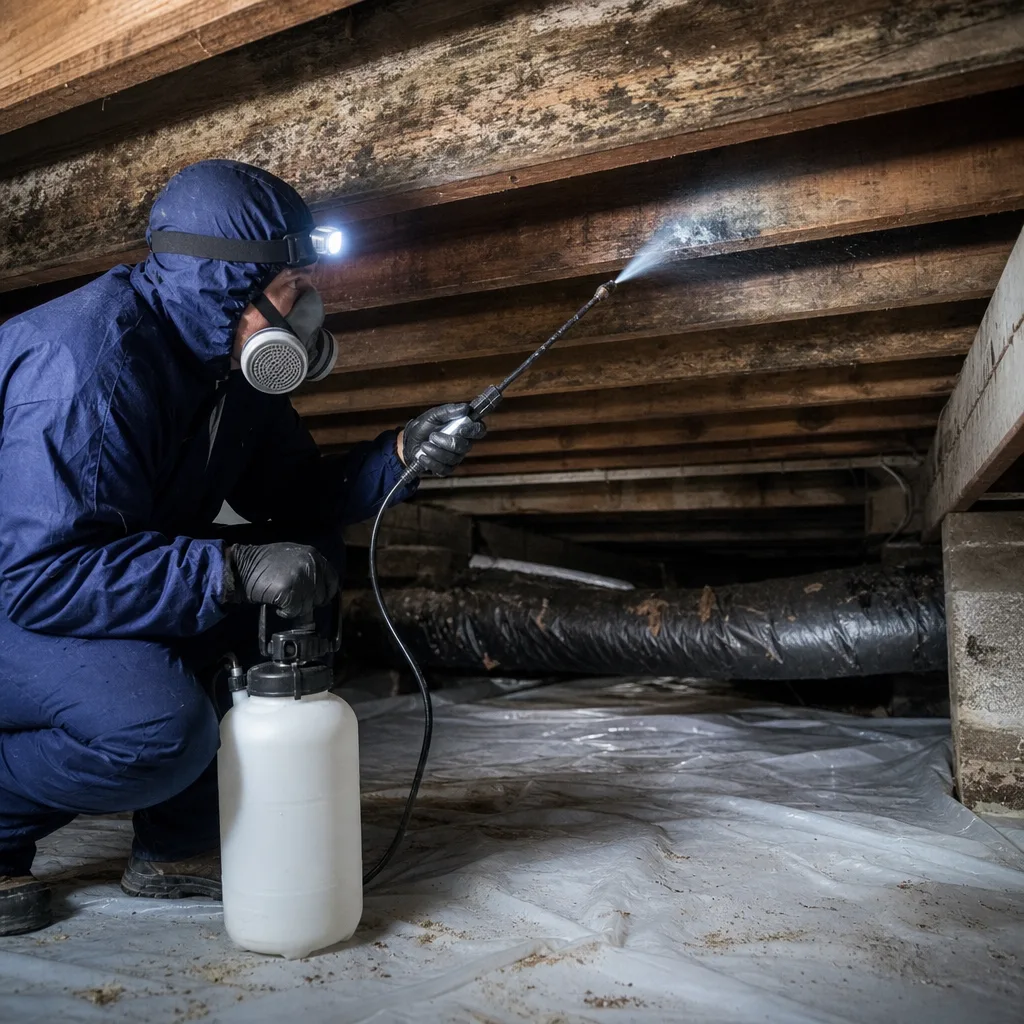
- Mold behind smoke-damaged walls. Firefighters put a lot of water into a structure fast. In Little Canada’s older basements, that water soaks into 1950s-70s concrete block and does not leave on its own. We regularly open smoke-damaged walls near the lakes and find mold that bloomed in the weeks after the fire.
- Ice damming after a fire-damaged roof repair. Low-pitched ranch roofs all over Little Canada were already prone to ice dams. When fire damage changes the roofline or we have to tarp through a Minnesota winter, the freeze-thaw cycle makes a bad roof worse. Board-up and tarping have to be done with snowmelt in mind, not just security.
- Frost heave cracks that let odor back in. Extreme freeze-thaw swings from below zero to 90°F summers crack lake-adjacent foundations. Repair fire-damaged drywall over those cracks without sealing them and humid air reenters the wall cavity every spring.
Pricing for Fire & Smoke Damage Restoration in Little Canada, MN
Here are straight numbers for Little Canada, what we’ve seen on jobs over the years. Emergency board-up and tarping runs $600-$1,500 depending on the number of openings and the roof condition. Smoke and soot removal for a single room starts around $900 and typically lands between $1,800 and $3,400 for a full main floor. Odor removal and deodorization with hydroxyl or thermal fogging runs $1,200-$3,000. Full contents pack-out, cleaning, and storage usually falls between $2,500 and $7,000 depending on what you own and how badly it’s affected. Structural fire repair is scoped like a remodel: written, itemized, and priced before any work starts.
What moves the number: how far soot traveled through the ductwork, whether the basement holds groundwater near the lakes, and whether we’re deodorizing finished or unfinished spaces. Insurance almost always covers fire restoration. We work directly with your adjuster, photograph everything, and hand over a written scope before we start. Call (888) 690-6095 for a free estimate.
We Also Serve Cities Near Little Canada
We work regularly in Roseville, Falcon Heights, Saint Paul, and Arden Hills. Each area has its own housing stock and soil conditions, but the same straight-dealing approach applies. If you’re just over the border in any of these towns, call the same number: (888) 690-6095.
Serving Little Canada, MN - Our Local Coverage Area
We’re based in the Little Canada area and know this community well. Use the map below to see our service coverage - if you’re nearby, we can almost certainly help.
FAQs - Fire & Smoke Damage Restoration in Little Canada
Because the water table stays high around Gervais Lake and Little Canada Lake, and the moisture keeps reactivating soot trapped inside porous concrete-block foundation walls from the 1950s through 1970s. Standard deodorization without drying the block first fails here. That’s why we run Injectidry drying before fogging or hydroxyl treatment. Call (888) 690-6095 and we’ll walk the house with you.
Those cracks let humid air move into wall cavities, so any smoke odor or soot left behind inside the wall reactivates every spring. If we rebuild fire-damaged drywall without sealing the foundation crack first, you’ll smell smoke again after the first thaw. We check for frost heave before framing in Little Canada.
Yes, and it’s a sign the water table around your home is high enough to matter for restoration. Near the lakes, sump pumps cycling in winter is normal for the area but means we need to sequence the job differently: dry what the firefighting water soaked, measure the moisture in the concrete block, and address any hydrostatic entry points before deodorization. Otherwise the smoke odor returns within months.
Low-pitched ranch roofs from the 1960s and 70s need tarps anchored for snowmelt and ice damming, not just security. We seal the edges so meltwater can’t run back into the fire-damaged openings, and we board windows with materials rated to hold through Minnesota wind. The wrong tarp job in February means a soaked attic by March.
Humidity near the lakes means smoke penetrates textiles and paper differently. We inventory and photograph everything before it leaves your home, and we’re careful with what gets stored in basement spaces that may hold ground moisture. Your adjuster gets the full list with photos so nothing gets argued about later. Call (888) 690-6095 to start the process today.
Written by Wade Ferris, Owner at Wade’s Restoration, serving Little Canada since 2007.