
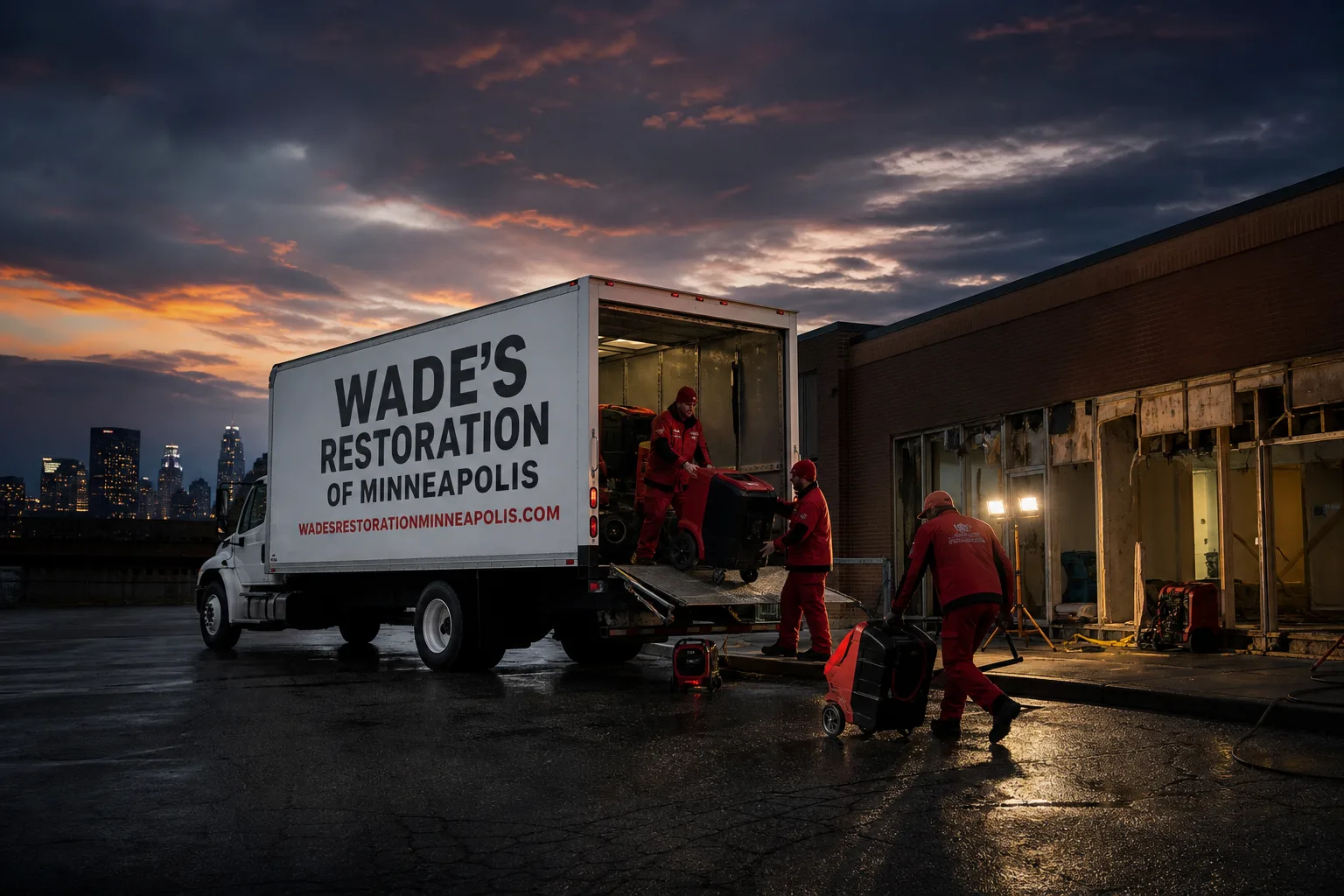
Fast, Reliable Fire & Smoke Damage Restoration Across Buffalo
When a fire hits your home in Buffalo, the clock starts immediately. Smoke keeps seeping into drywall, soot corrodes metal fixtures, and the water used to put out the fire is already soaking into subfloors. Wade Ferris and his crew answer calls from Buffalo homeowners 24 hours a day, and we can typically have a crew on site within the hour. Call (888) 690-6095 and you’ll get a live person, not a recording. We know Buffalo’s housing stock, we know how Buffalo Lake affects moisture, and we know what a 2004-built home on Pulaski Lake needs that a 1950s house near downtown doesn’t.
Why Wade’s Restoration of Minneapolis Is Buffalo’s Preferred Fire & Smoke Damage Restoration Company
Wade started this company in 2007 and put his name on the truck. That makes a difference in a town like Buffalo, where people still ask their neighbor who to call before hiring anyone. When you call, you get Wade. Not a call center. He’s the one who shows up, walks the damage with you, and tells you straight what needs to happen and what doesn’t. If the job isn’t done right within 90 days, he makes it right. In writing. No fine print.
Buffalo homeowners keep our number because we show up fast and we don’t oversell. The fire department leaves, the smoke clears, and then you’re standing in a wet, blackened kitchen trying to figure out who actually knows what they’re doing. We do. We’re IICRC-certified and RIA-affiliated, and Wade’s crew uses professional-grade Dri-Eaz dehumidifiers, XPOWER air movers, and Injectidry systems on every job. We also deal with your insurance adjuster directly, so you’re not the one stuck relaying information between two sides. Photo documentation, written scope, direct billing. Ask anyone on your street.
Our Fire & Smoke Damage Restoration Services in Buffalo
Every fire is different, but the work follows the same pattern in Buffalo homes: stop the ongoing damage, get the water out, remove the smoke and soot, then rebuild. Here’s what that looks like for the jobs we handle most often in Buffalo.
Fire Damage Cleanup
After a kitchen fire or furnace fire, Buffalo homes have a mix of charred framing, waterlogged drywall, and smoke residue driven into every surface. We remove the unsalvageable material, assess what’s still structurally sound, and document everything for your adjuster. In Buffalo’s 1990s-era houses, the builder-grade drywall behind cabinets often soaks through completely from suppression water, and that material has to come out fast or the framing behind it starts swelling.
Smoke & Soot Removal
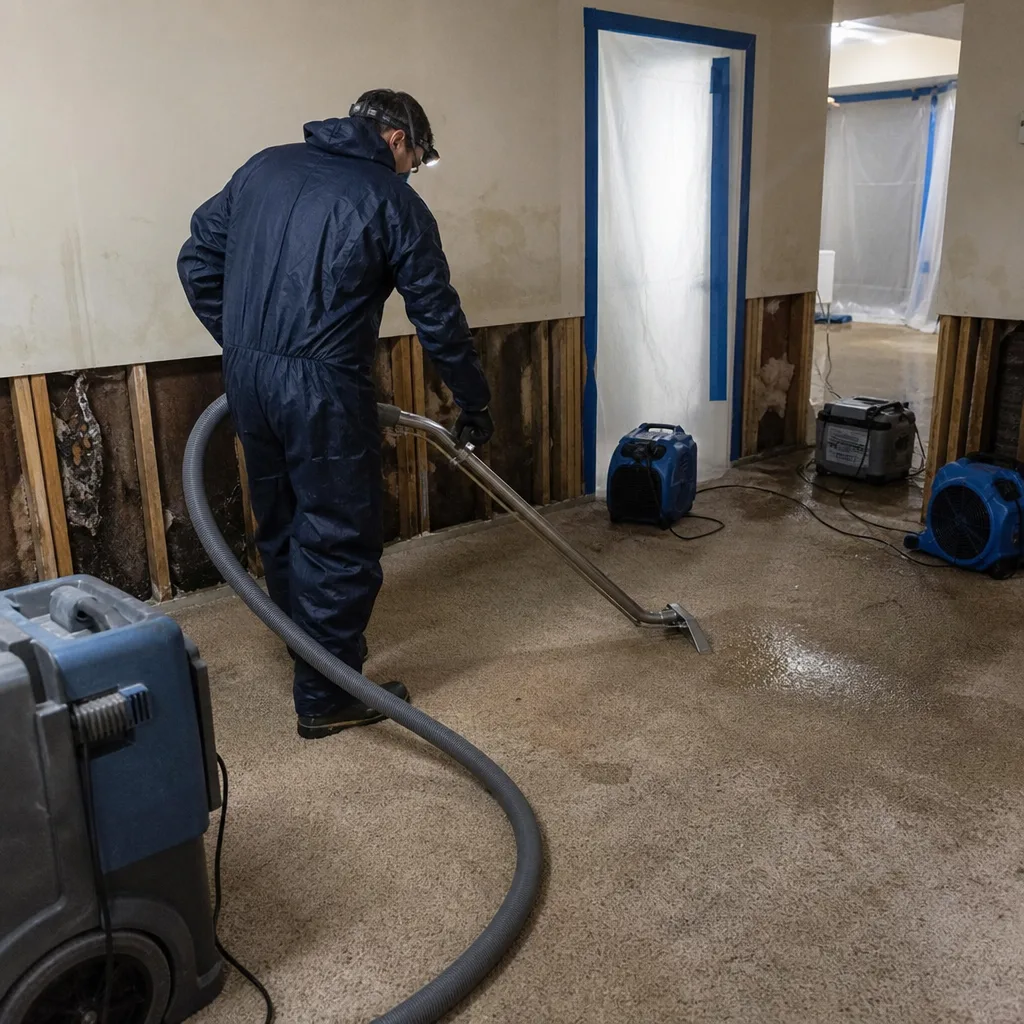
Soot is acidic. Left alone it etches glass, corrodes metal fixtures, and permanently stains paint. In Buffalo’s newer homes from the 1990s and 2000s boom, the open floor plans mean smoke travels fast from the kitchen into living rooms and upstairs bedrooms, leaving a fine gray film on everything. We clean walls, ceilings, trim, and hard surfaces with the right chemistry for the surface type, not a one-size-fits-all approach. Getting this done quickly is the difference between wiping down walls and repainting the whole house.
Odor Removal & Deodorization
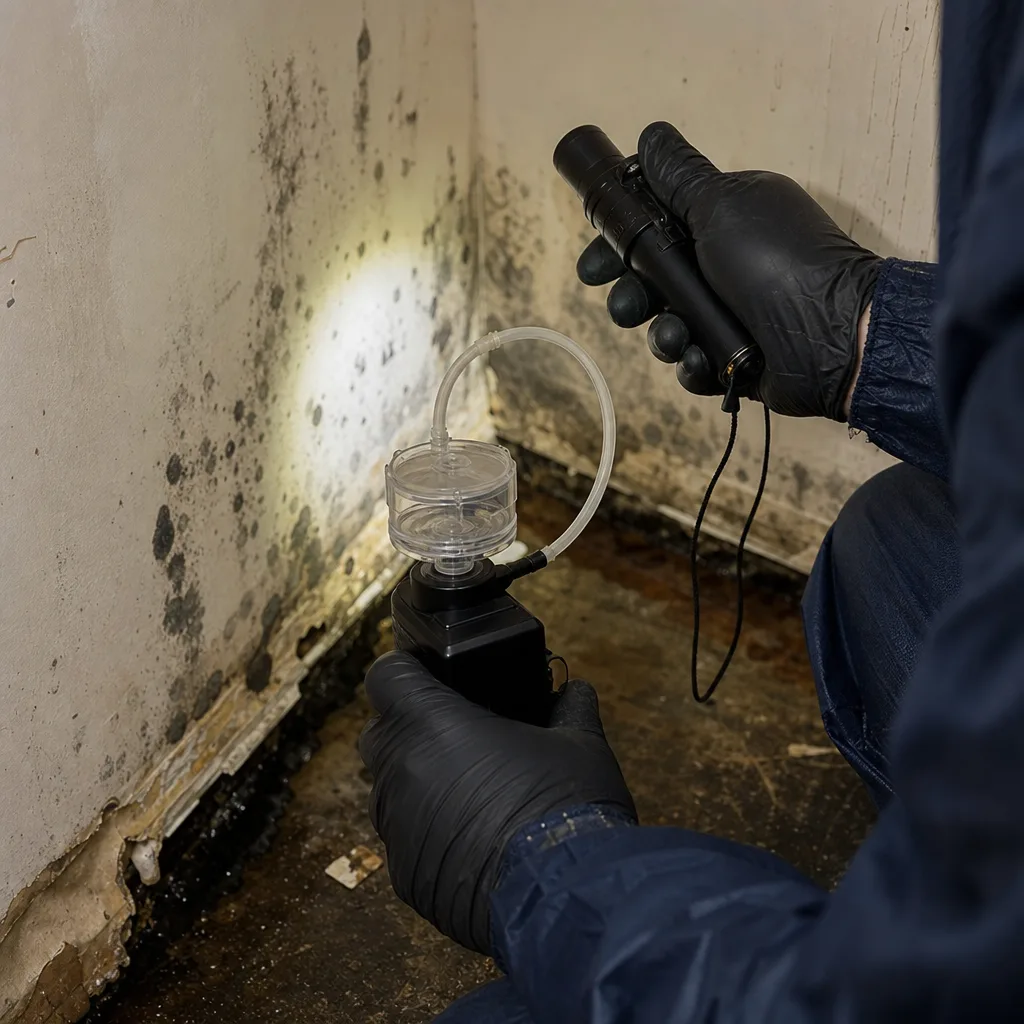
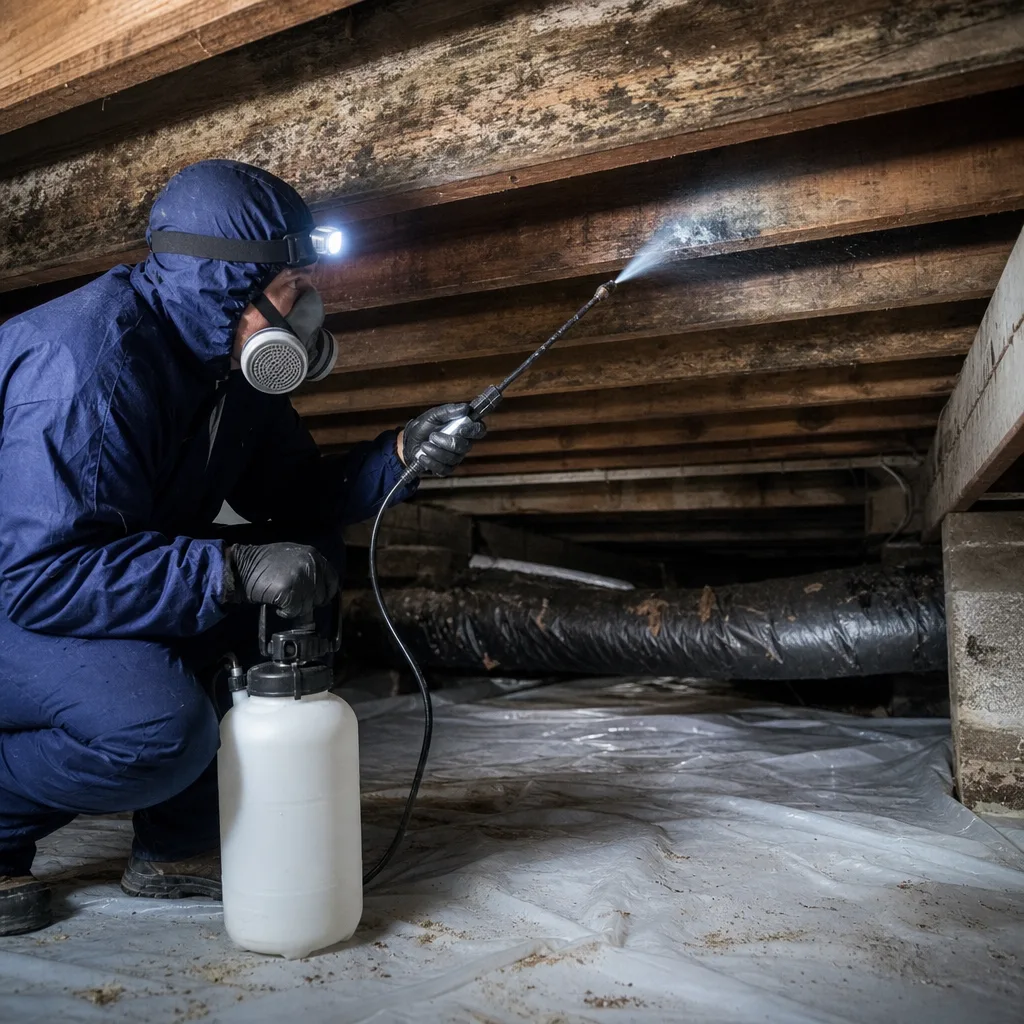
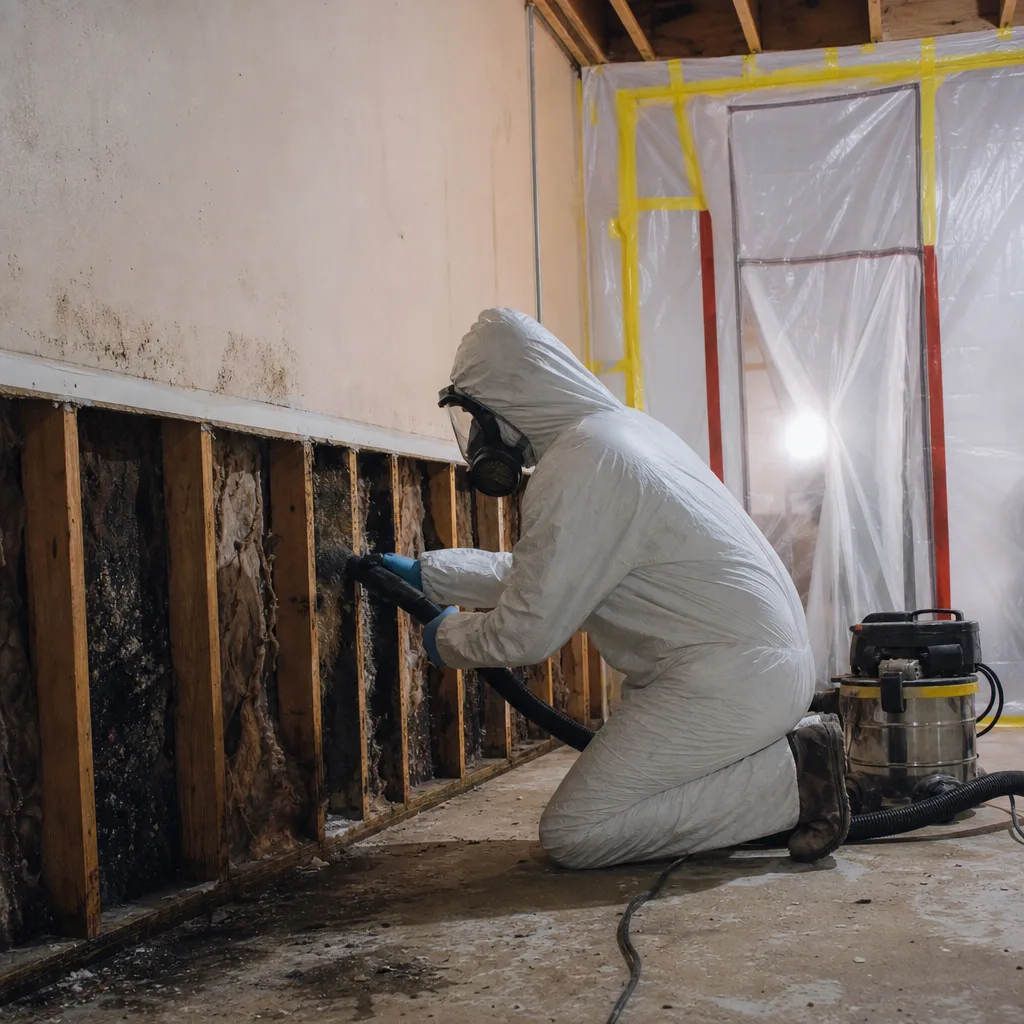
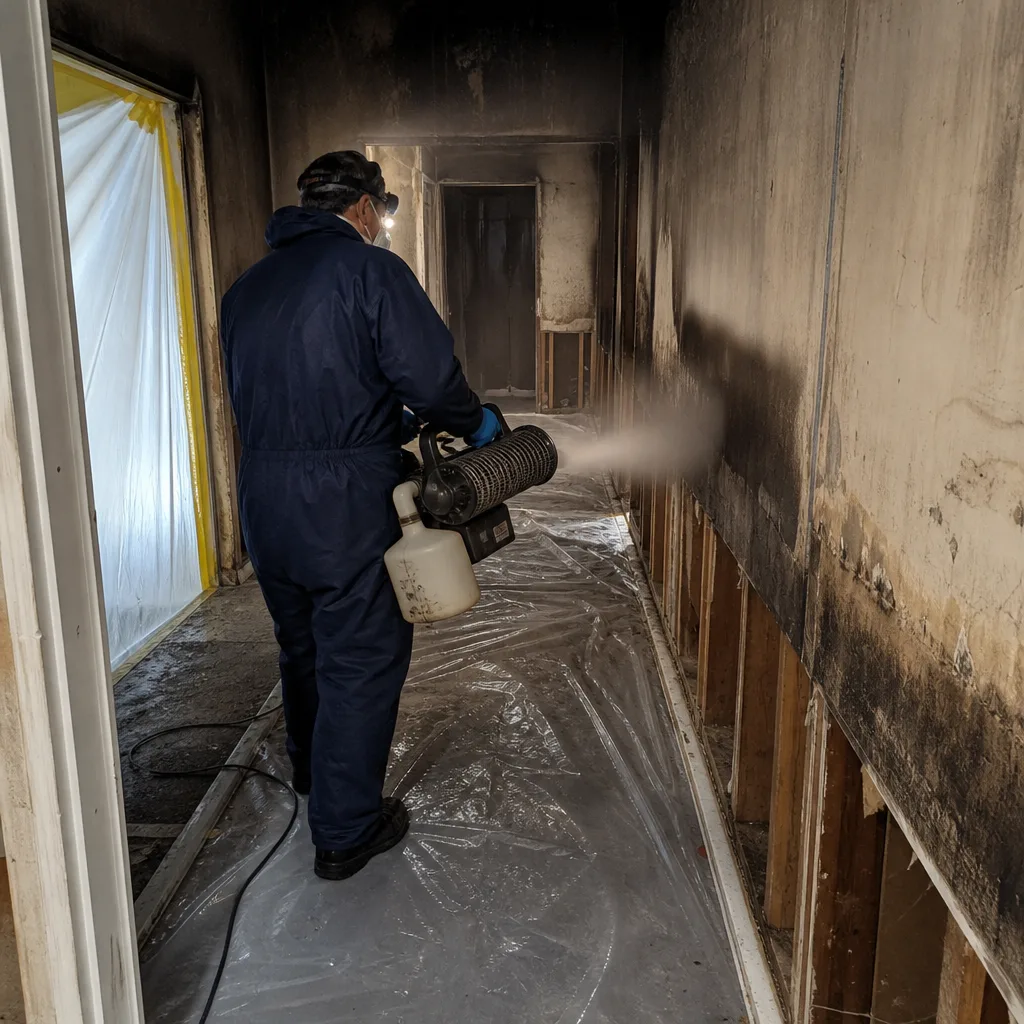
Smoke odor lives in porous materials: drywall, carpet pad, insulation, even the inside of your HVAC ducts. Buffalo’s humid summers make this worse, because smoke particles trapped in building materials re-release odor when moisture levels rise. We don’t mask it with air freshener. We use hydroxyl generators and thermal fogging to neutralize the odor at the source, and we check ductwork because in a forced-air home, that’s where the smell keeps coming back from.
Contents Cleaning & Pack-Out
When a fire affects stored clothing, furniture, books, and kitchen items, we pack out what’s salvageable and clean it off-site. For Buffalo homeowners in the older downtown homes with attics and basements full of stored possessions, this is where a lot of the real loss happens. We inventory everything, clean what we can, and document what can’t be saved. You get a written list of every item, because your insurance company needs that and so do you.
Emergency Board-Up & Tarping
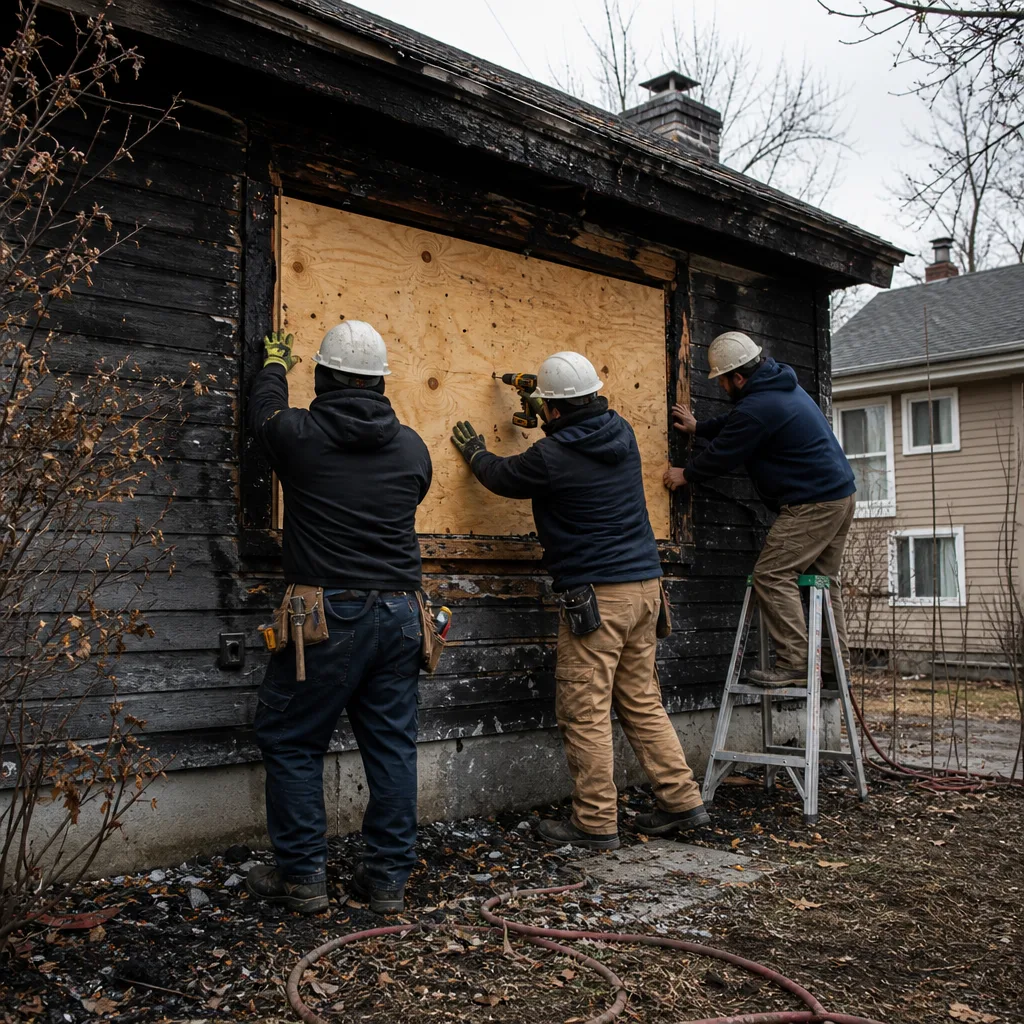
Buffalo’s winter ice-dam season creates a specific fire restoration problem: a fire-damaged roof with open holes becomes an ice-dam amplifier overnight. Melt water runs into the building, freezes, and forces its way under shingles in a matter of hours. We board and tarp immediately, not “sometime this week.” The house needs to be sealed before the next freeze-thaw cycle hits. This is not a job to leave to a handyman.
Structural Fire Repair
Once the demo and drying are done, the rebuild starts. In Buffalo’s newer construction, that often means replacing OSB subfloor panels that swelled past the point of saving, sistering engineered I-joists that started delaminating, and reframing sections of wall that were charred or waterlogged. We write a clear scope before any rebuilding starts, with a price, so there’s no surprise when the drywall comes down. See our full Fire & Smoke Damage Restoration service details for how the process works end to end.
What happens when you call
- 1
A real person answersNo phone trees - you reach a local pro.
- 2
You get an upfront price rangeHonest numbers before anyone is dispatched.
- 3
A background-checked tech heads outLicensed & insured, dispatched right away.
- 4
You approve before work beginsNothing starts until you say go.
Trusted Brands We Service in Buffalo
We run the equipment that actually gets water out of framing and prevents long-term structural loss. On Buffalo fire jobs, that means Dri-Eaz dehumidifiers pulling water from OSB subfloors, XPOWER air movers driving airflow through I-joist cavities, and Injectidry systems for wall-and-cavity drying that standard fans can’t reach. We stock parts and replacement equipment for these systems, so a Buffalo job never waits on a shipment. We’re IICRC-certified and RIA-affiliated, and every fire job is warrantied under the 90-Day Done Right Promise.
Common Fire & Smoke Damage Restoration Problems We See in Buffalo Homes
- OSB subfloor swelling before the fire truck leaves the driveway. Buffalo’s 1990s-2000s housing was built fast with OSB panels that absorb suppression water and swell within 48 hours. If restoration doesn’t start fast, that subfloor has to be replaced instead of dried.
- Engineered I-joists delaminating from hidden moisture pockets. Standard drying equipment misses water trapped between joist webs and subfloor edges. Injectidry systems pull it out before the glue lines fail. In newer Buffalo construction, this is the most common structural loss we prevent.
- Buffalo Lake groundwater compounding fire damage in the April melt window. A fire-damaged foundation with open walls and no vapor barrier becomes an entry point for groundwater when snowmelt raises Buffalo Lake levels. We’ve seen basements that were dry after the fire take on seepage three weeks later when the thaw hit.
- Ice dams turning a small roof fire into a wall-system failure. Buffalo’s continental climate delivers heavy snowpack and repeated melt-refreeze cycles at the eaves each winter. A fire-damaged roof with open holes feeds these ice dams directly, forcing water into wall assemblies before restoration can begin.
Pricing for Fire & Smoke Damage Restoration in Buffalo, MN
Here are straight numbers for Buffalo, not a national average. Smoke and soot removal in a single-room kitchen fire typically runs $2,800 to $5,500, including thermal fogging and duct cleaning. Full contents cleaning and pack-out for a 2,000-square-foot home in Buffalo generally lands between $3,500 and $8,000 depending on how much is salvageable. Odor removal alone usually costs $900 to $2,200. Emergency board-up and tarping runs $500 to $1,500 depending on openings and roof damage. Structural fire repair is the biggest variable, starting around $6,000 for a partial kitchen rebuild and going up from there based on framing replacement, drywall, flooring, and finishes. Every job includes a written scope before work starts. Call (888) 690-6095 and Wade will walk you through it with numbers, not guesswork. And we offer no trip charge inside Wright County, plus a free second opinion on any written estimate.
We Also Serve Cities Near Buffalo
Our crews work throughout the Buffalo area, including Fire & Smoke Damage Restoration in Buffalo and the surrounding towns. If you’re in Monticello, Saint Michael, Delano, or Albertville, we can usually have a crew at your home just as fast as we get to Buffalo addresses. Same equipment, same written scope, same Wade. Call (888) 690-6095 and we’ll head your way.
Serving Buffalo, MN - Our Local Coverage Area
We’re based in the Buffalo area and know this community well. Use the map below to see our service coverage - if you’re nearby, we can almost certainly help.
FAQs - Fire & Smoke Damage Restoration in Buffalo
April in Buffalo is the hardest month for fire restoration drying. When Buffalo Lake breaks up and snowmelt peaks, groundwater pressure against foundations in lakeside and low-street neighborhoods rises sharply while the ground is still frozen and can’t drain. A fire-damaged basement with open framing and no vapor barrier becomes a moisture entry point. We run dehumidifiers longer and take daily moisture readings, and we hand you the full log at the end of the job. If you’re near the lake, expect drying to take an extra two to three days compared to a home on higher ground in St. Michael. Call (888) 690-6095 and we’ll explain what your specific location means for the timeline.
Yes. Buffalo’s rapid exurban growth in the 1990s and 2000s produced a lot of builder-grade homes with OSB sheathing and engineered lumber. That material swells and delaminates far faster under fire suppression water than old dimensional lumber. Open floor plans also mean smoke from a kitchen fire travels to upstairs bedrooms and living spaces within minutes. The faster response is what preserves these homes. Waiting even 48 hours often turns a dry-out job into a subfloor replacement job.
We can, and we do it often. Buffalo’s pre-1960s homes near downtown have attics, basements, and closets full of stored belongings that absorb smoke differently than the open living spaces in newer construction. We inventory everything, separate salvageable from unsalvageable, clean off-site, and store items until the rebuild is done. You get a written list for your adjuster, and nothing gets thrown away without your sign-off. Call (888) 690-6095 to talk through what we can save.
Because a fire-damaged roof with an open hole feeds the exact conditions that create Buffalo’s worst ice dams. Melt water from warm attic air runs to the cold eave, refreezes, and backs up under shingles. In a fire-damaged house, that water gets into wall assemblies within hours. The house has to be sealed before the next freeze-thaw cycle. We board and tarp immediately, not on a schedule. Waiting a day in January can add thousands in secondary damage.
Within 24 to 36 hours. In a 2004-built Buffalo home on Pulaski Lake, we once pulled Dri-Eaz dehumidifiers and XPOWER air movers onto a kitchen fire scene where builder-grade drywall and OSB behind the cabinets had soaked completely from suppression water. We had moisture readings dropping within 36 hours, which saved the I-joists and the subfloor. Delay past 48 hours in Buffalo’s OSB-heavy construction usually means replacing that material instead of drying it. Call (888) 690-6095 and we’ll be on the road fast.
Written by Wade Ferris, Owner at Wade’s Restoration of Minneapolis. Serving Buffalo, MN fire and smoke restoration since 2007.