
Injectidry Water Damage Restoration in Minneapolis: A Homeowner’s Guide
Injectidry systems are only as effective as the moisture readings taken before and after the drying run, and most Minneapolis homeowners never see those numbers. A contractor can place the panels, run the machine for three days, and hand you a bill, but if they never logged grain-per-pound moisture readings at the start and end, you have no proof the cavity is actually dry. That gap is where mold problems start six months later, usually behind a baseboard you’ll never think to check.
If you’d rather skip the science and just get someone who documents everything, call (888) 690-6095. We’ll walk you through what we measure and why.
Key Takeaways
- Injectidry pulls moisture vapor out of closed cavities like wall interiors and under cabinets without tearing them open.
- The system is only as good as the daily moisture readings logged before, during, and after drying.
- Minneapolis winters make drying trickier: cold exterior walls slow evaporation and can fool cheap moisture meters.
- You should expect daily check-ins, written logs, and a final “dry standard” number before anyone signs off.
- If no moisture logs exist, your insurance adjuster has nothing to verify the job was actually done right.
What Injectidry Actually Does, Mechanically Speaking
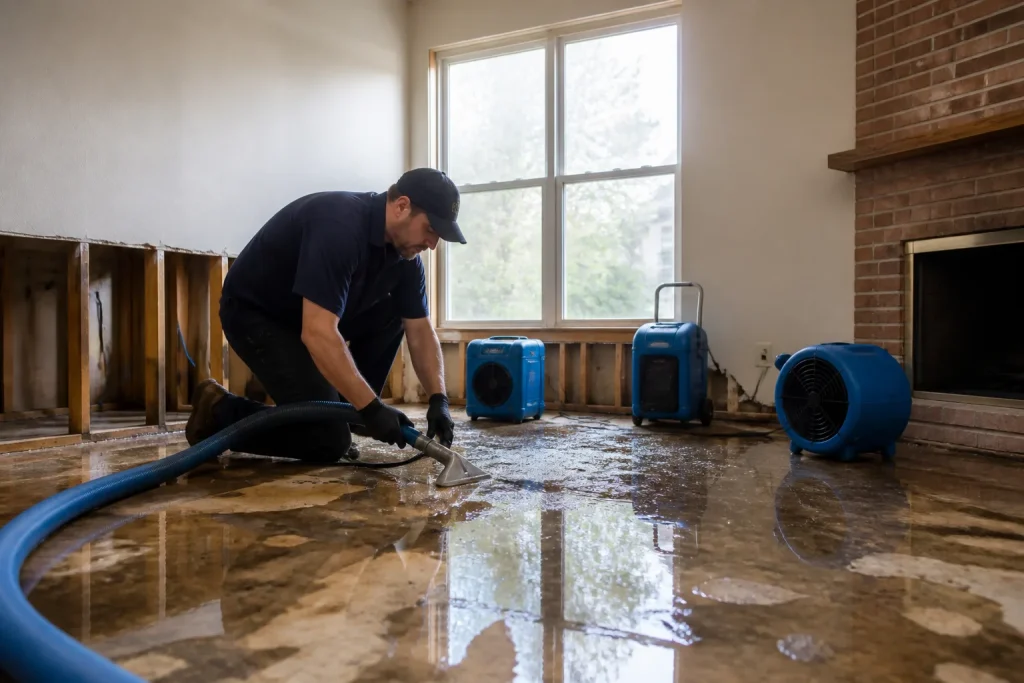
Injectidry is a panel-based drying system that forces warm, dry air through small holes drilled into walls, ceilings, or floors, and pulls moisture vapor out the other side. Think of it like a reverse humidifier: instead of pushing moisture into the air, it pulls moisture out of building materials that would otherwise stay wet for weeks. The machine connects to flexible hoses that mount over the wall cavity, creating a continuous air exchange inside a space you can’t see.
In Minneapolis homes, we use Injectidry panels most often on plaster-over-lath walls in older houses, behind built-in cabinetry, under hardwood floors, and in ceiling cavities after a pipe leak. These are places where ripping everything out would cost more than the water damage itself. Injectidry lets us dry the cavity in place, which means no demolition, no dust, and no three-week rebuild.
The equipment itself is manufactured by Injectidry Systems, and it’s used alongside professional-grade air movers and dehumidifiers from Dri-Eaz, Phoenix, and XPOWER. The brand on the machine matters less than the person running it. A high-end system placed wrong is just a fan in a fancy housing.
The Numbers You Should Actually Ask For
The IICRC S500 is the industry standard for water damage restoration, and it defines “dry” not as “feels dry to the touch” but as a specific moisture content that matches the unaffected materials in your home. For most wood framing and drywall, that’s typically between 6% and 12% moisture content (%MC), measured with a moisture meter. For the air inside the cavity, contractors should also track grains per pound (GPP), which measures how much moisture the air is holding.
Here’s what a Minneapolis homeowner should expect to see documented, in writing, at minimum:
- Initial moisture readings: A baseline %MC and GPP for every affected area, taken before drying equipment goes in.
- Daily readings: The same measurements logged every single day while the Injectidry runs.
- Dry standard comparison: A reading from an unaffected area of the same material, so you can see the affected cavity has returned to normal.
- Final sign-off numbers: The %MC and GPP at job completion, showing the cavity reached the dry standard.
If a contractor can’t produce any of this, they’re guessing. And guessing is how you end up with a wall that looks fine in March and smells like mildew by August. We hand every homeowner a complete moisture log at the end of the job, not because anyone asked us to, but because Wade got tired of hearing “I don’t know, it feels dry to me” from other crews he followed behind.
Why Minneapolis Winters Make Drying Harder
Cold exterior walls change everything about how moisture behaves. When it’s -10°F outside and 70°F inside, the temperature difference pulls warm, moist air toward the cold side of the wall cavity. That means moisture condenses inside the wall long after the visible leak is gone, and it sits there because cold air holds almost no water vapor. A contractor who doesn’t account for this will watch their moisture meter read “dry” on the surface while the cavity behind it is still wet.
We see this constantly in older Minneapolis neighborhoods like Kingfield, Nokomis, and Northeast, where century-old homes have plaster walls and minimal insulation. The Injectidry system works well in these houses, but only when the operator adjusts the system based on daily readings, not on a timer. A cavity that dries in two days during a humid July might take five in a January cold snap, and the only way to know is to keep measuring.
For more on how we handle these situations, see our Water Damage Restoration in Minneapolis page.
How to Tell If Your Contractor Is Using Injectidry Correctly
A common tactic in this trade is to place equipment, take a quick photo for the insurance file, and leave it running until the rental timer runs out. That’s not drying. That’s performance art with extra steps. Real drying requires daily adjustments: moving panels, switching air flow direction, adding or removing dehumidifiers, and changing out the desiccant or filters as the equipment collects moisture.
Here’s what a properly managed Injectidry job looks like:
- Equipment placement with purpose. Panels positioned to create actual airflow through the cavity, not just aimed at the wettest spot on the wall.
- Daily visits with a moisture meter. Not a quick phone call. Someone physically checks the readings, writes them down, and adjusts the system.
- Documented log sheet left on site. You should be able to see the numbers climbing down day by day.
- A final verification against the dry standard. The affected area should read within a couple percentage points of the unaffected baseline.
- Equipment removal only after the numbers say done. Not when the rental period ends, not when the homeowner says it feels fine.
We pulled an Injectidry panel out of a garage wall over in Powderhorn last week where the previous crew had left it running for four days without a single moisture reading. The wall was still at 18% MC. The homeowner had no idea because nobody ever came back to check. If you’re in Minneapolis and you’re not sure whether your contractor is doing the measurements, ask to see the log. If they hesitate, call someone else.
What Happens to Your Insurance Claim Without Moisture Logs
Insurance adjusters work from documentation. If your contractor can’t produce daily moisture readings, the adjuster has no way to verify the drying actually happened, which means they have every reason to push back on the bill. Worse, if mold shows up later and you file a new claim, the insurer may say the original mitigation was incomplete, and now you’re fighting a denial on top of a mold problem.
This is one of the reasons Wade sends moisture logs directly to adjusters as standard practice. The homeowner shouldn’t have to be the middleman relaying numbers between a contractor and an insurance company. If the data is clean, the claim is clean. If there’s no data, the claim is a negotiation, and the homeowner loses.
If you’re in Minneapolis and dealing with an adjuster who’s asking for documentation you don’t have, we’ve helped homeowners sort through that mess. It’s part of what we do. See Wade’s Restoration of Minneapolis home for more on how we approach claims.
Related Services in Minneapolis
Injectidry is one piece of a larger water damage response. Depending on what happened, you might also need mold remediation if the moisture sat long enough to start growing something, or fire and smoke work if the water came from a fire suppression system. We handle all of it in Minneapolis, and Wade is the one who answers the phone. See our Mold Remediation in Minneapolis and Fire & Smoke Damage Restoration in Minneapolis pages if either applies to your situation.
What happens when you call
- 1
A real person answersNo phone trees - you reach a local pro.
- 2
You get an upfront price rangeHonest numbers before anyone is dispatched.
- 3
A background-checked tech heads outLicensed & insured, dispatched right away.
- 4
You approve before work beginsNothing starts until you say go.
The Bottom Line
Injectidry is a legitimate, effective way to dry closed cavities without tearing your house apart, but it works only when the operator verifies the results with daily moisture readings. Minneapolis homeowners should ask for GPP and %MC numbers at the start, during the drying run, and at sign-off, and they should get the full log in writing. Cold winters make this even more important, because surface readings lie and cavities hold moisture longer than anyone expects.
If you’re in Minneapolis and need help with water damage, Wade’s Restoration of Minneapolis offers free estimates. Call (888) 690-6095 and ask for Wade. He’ll bring the moisture meter.
Frequently Asked Questions
In Minneapolis, Injectidry drying typically adds $400 to $900 per affected room to a water damage restoration job, depending on cavity size, material type, and drying time. The total project cost usually lands between $2,000 and $6,000 when combined with extraction, dehumidification, and any necessary repairs. Insurance often covers the drying portion if the water damage is a covered loss and the contractor provides proper documentation. Call (888) 690-6095 for an exact quote on your situation, estimates are free.
Most Minneapolis homeowners insurance policies cover Injectidry drying when the water damage itself is a covered loss, like a burst pipe or a roof leak that wasn’t caused by neglect. The key is documentation: adjusters want to see daily moisture readings and a final dry standard comparison. Without those logs, the drying line item often gets reduced or denied. Wade sends moisture logs directly to adjusters so the claim has what it needs.
In Minneapolis, Injectidry drying typically takes three to seven days, with winter runs stretching longer because cold exterior walls slow evaporation. A small wall cavity from a plumbing leak might dry in three days during summer, while a plaster wall in a century-old Minneapolis house during January could take a week or more. The only way to know is to measure daily, which is why we log readings every single day until the cavity hits the dry standard. Call (888) 690-6095 to have someone check your specific situation.
Fans move air across surfaces, but they can’t pull moisture vapor out of an enclosed wall cavity, which is where water hides after a leak behind drywall or plaster. If the cavity isn’t opened up, a fan is just blowing warm air at a wet wall that’s drying from the outside in, and the inside stays damp for weeks or months. Injectidry forces air through the cavity itself, which is why it works without demolition. If your contractor says fans are enough, ask them to show you the moisture readings inside the cavity, not just on the surface.
Written by Wade Ferris, Owner at Wade’s Restoration of Minneapolis, serving Minneapolis since 2007.
Need Damage Restoration Help?
Call Wade's Restoration of Minneapolis - licensed & insured, here with fast after-hours help in Minneapolis.
(888) 690-6095