
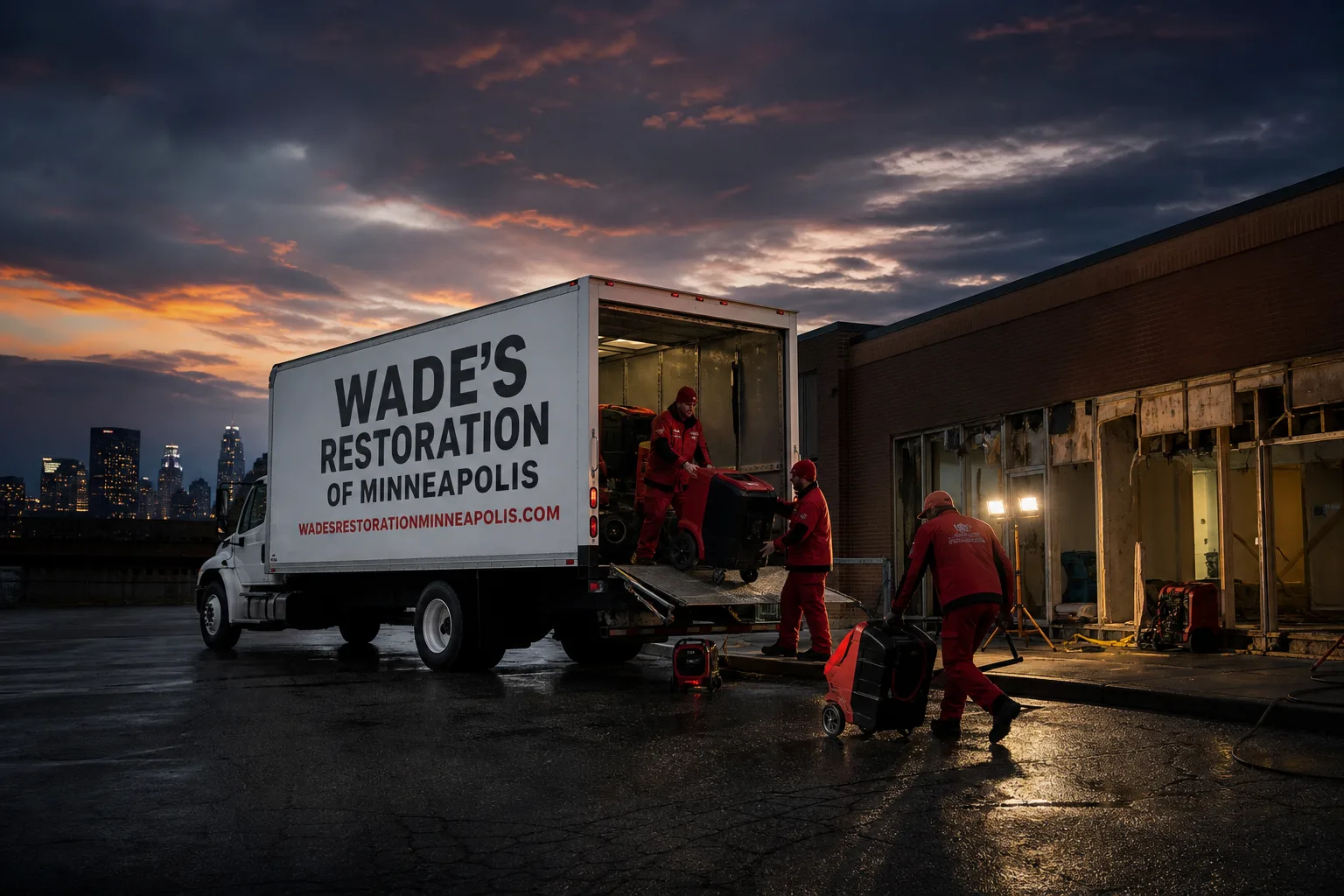
Fast, Reliable Water Damage Restoration Across Saint Louis Park
If you’re standing in a flooded basement in Saint Louis Park right now, here’s the direct answer: a typical emergency water extraction in the 55416 zip code runs $450-$1,200, structural drying adds $1,500-$3,800 depending on square footage and materials, and full basement water removal with mold prevention usually lands between $2,800 and $6,500. We answer the phone 24/7, and Wade Ferris can have a crew running extraction inside the hour. Call (888) 690-6095 now, and someone live picks up.
Saint Louis Park is home turf for us. We know the split-levels off Minnetonka Boulevard, the ramblers in Minikahda Vista, the finished basements along Fern Hill. More than most suburbs, this city has a specific water damage pattern tied to its housing stock and geography, and we’ve spent years learning exactly how to dry these homes out the right way.
Why Wade’s Restoration of Minneapolis Is Saint Louis Park’s Preferred Water Damage Restoration Company
Wade Ferris founded this company in 2007, and his name is on the truck. His address is published. His license number is published. When you call (888) 690-6095 at midnight because a cast-iron waste stack let go and the basement is filling, Wade answers his own phone. Not a call center, not a national chain’s answering service. The owner.
People in Saint Louis Park keep calling us back because we do something almost nobody else in the trade does: we hand you a daily moisture log. Every single day, Wade’s crew takes readings with professional-grade meters and logs them. At the end of the job, you get the full record. You can see the drying curve happen. You’re not taking anyone’s word for it.
And we deal with your insurance adjuster directly. You don’t relay messages between two parties. You don’t chase paperwork. Wade talks to the adjuster, walks them through the documented damage, and gets the scope agreed upon in writing before we do anything beyond the emergency stop. That’s how a neighbor does business.
Every water damage job in Saint Louis Park carries our 90-Day Done Right Promise, stamped in writing on the contract. If it’s not done right, we make it right. Wade comes back himself. No runaround.
Our Water Damage Restoration Services in Saint Louis Park
Emergency Water Extraction
Water in a 1950s finished basement in Saint Louis Park needs to come out fast, not just because of the water itself but because of what’s behind those walls. Wood paneling over concrete block traps moisture and hides it. Within 24 hours, mold starts colonizing the drywall paper and paneling backing. Our extraction crews run B-Air movers and truck-mounted extractors that pull standing water and begin air movement within the hour of arriving in 55416. For homes near Minnehaha Creek, speed matters even more because the sub-slab water table is already high, so capillary action pushes moisture upward into framing even after the visible water is gone.
Structural Drying & Dehumidification
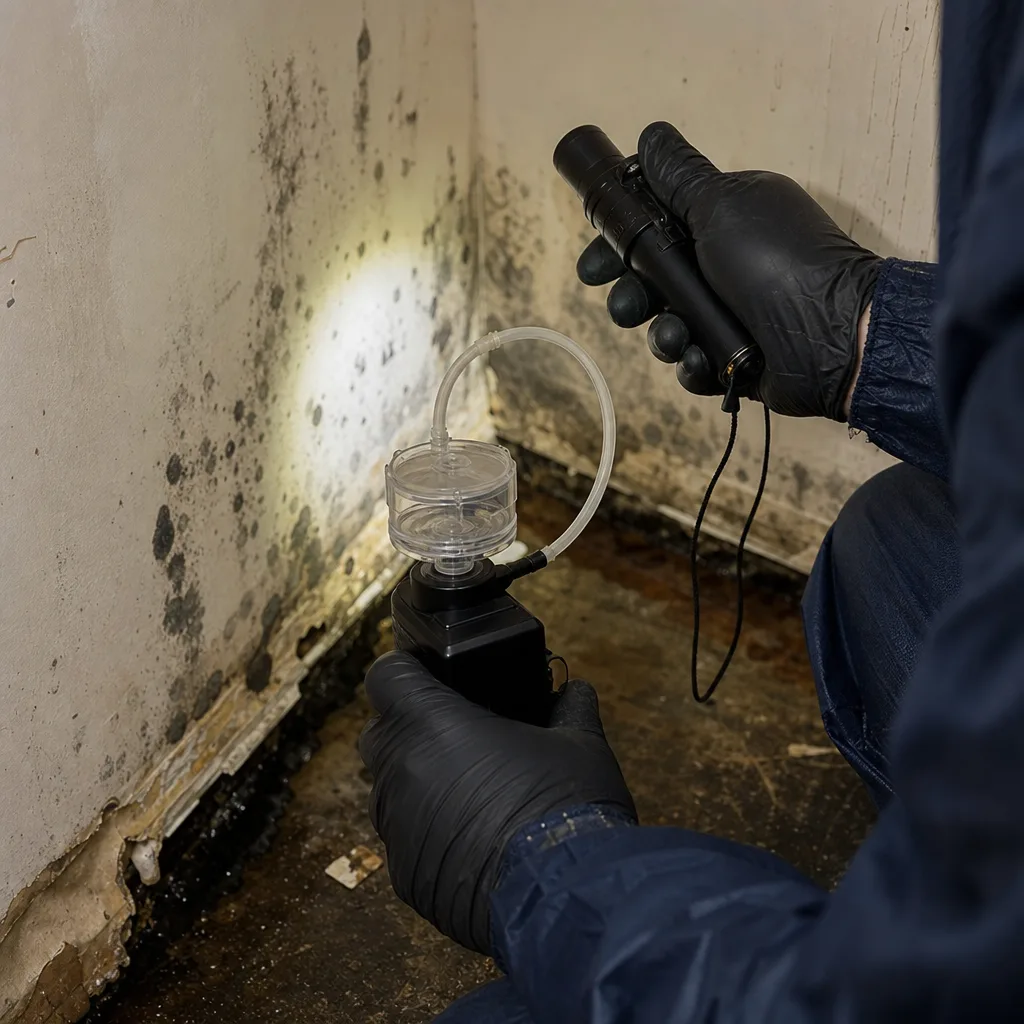
Drying a Saint Louis Park rambler isn’t the same as drying a newer Eden Prairie house. Original 1950s drywall and horsehair plaster dry differently than gypsum board from a 1990s remodel. Concrete block walls wick groundwater through efflorescence and mortar joints, especially after the 50-plus freeze-thaw cycles the metro averages each year. We use Dri-Eaz dehumidifiers and Injectidry floor-drying mats to pull moisture from hardwood floors over concrete slabs, and we monitor daily until the numbers prove the structure is dry to IICRC standards. For old block foundation walls, we don’t just dry the surface. We check the cavity behind the paneling.
Flood Cleanup
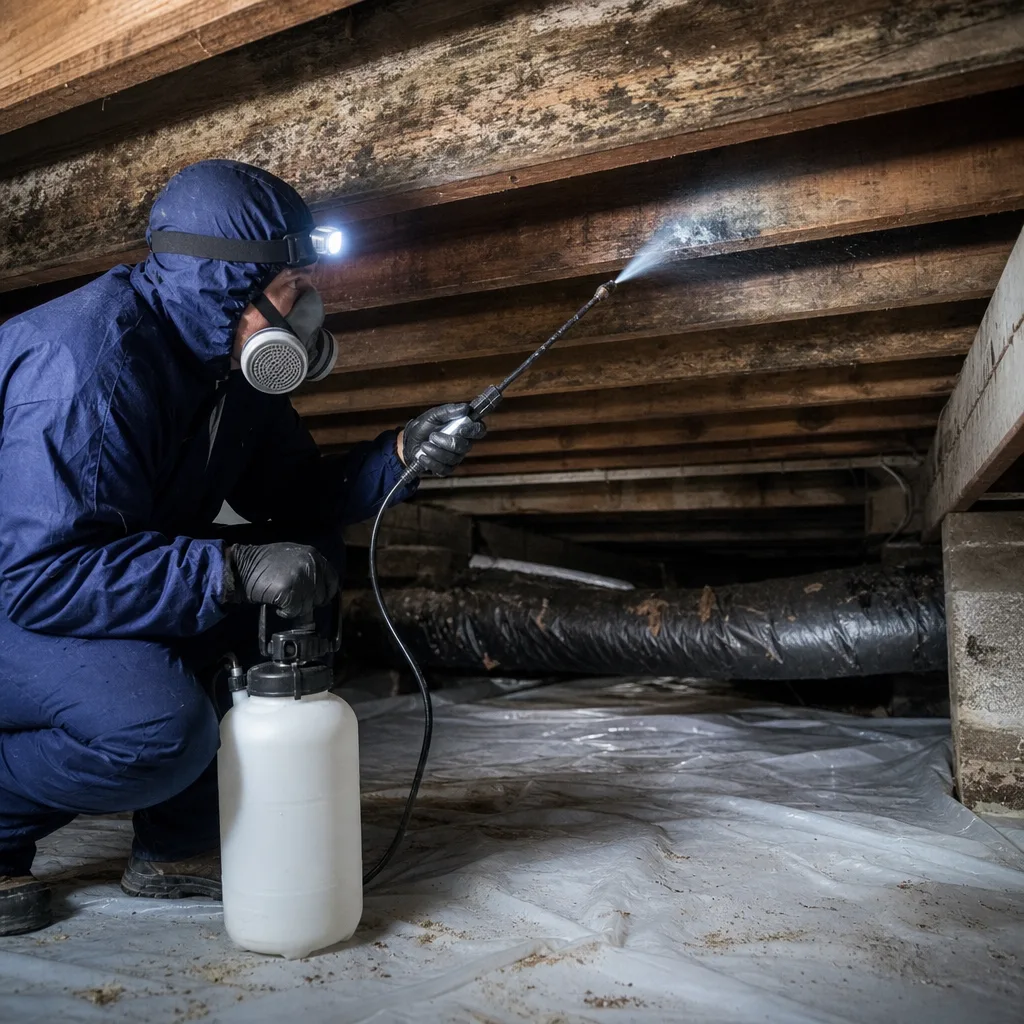
Spring snowmelt in Saint Louis Park often delivers over an inch of water equivalent in 24 hours. Pre-1970s perimeter drainage around original basements overflows, and that water pushes through mortar joints and floor cracks. Flood cleanup on these homes usually means more than water removal. We sanitize the affected area, remove saturated building materials where warranted, and document everything with photos for your adjuster. If your basement flooded because the original clay-tile sewer lateral backed up during a heavy rain event, we photograph the point of failure and coordinate directly with your insurance carrier on coverage for both the cleanup and the scope of repairs.
Burst Pipe Restoration
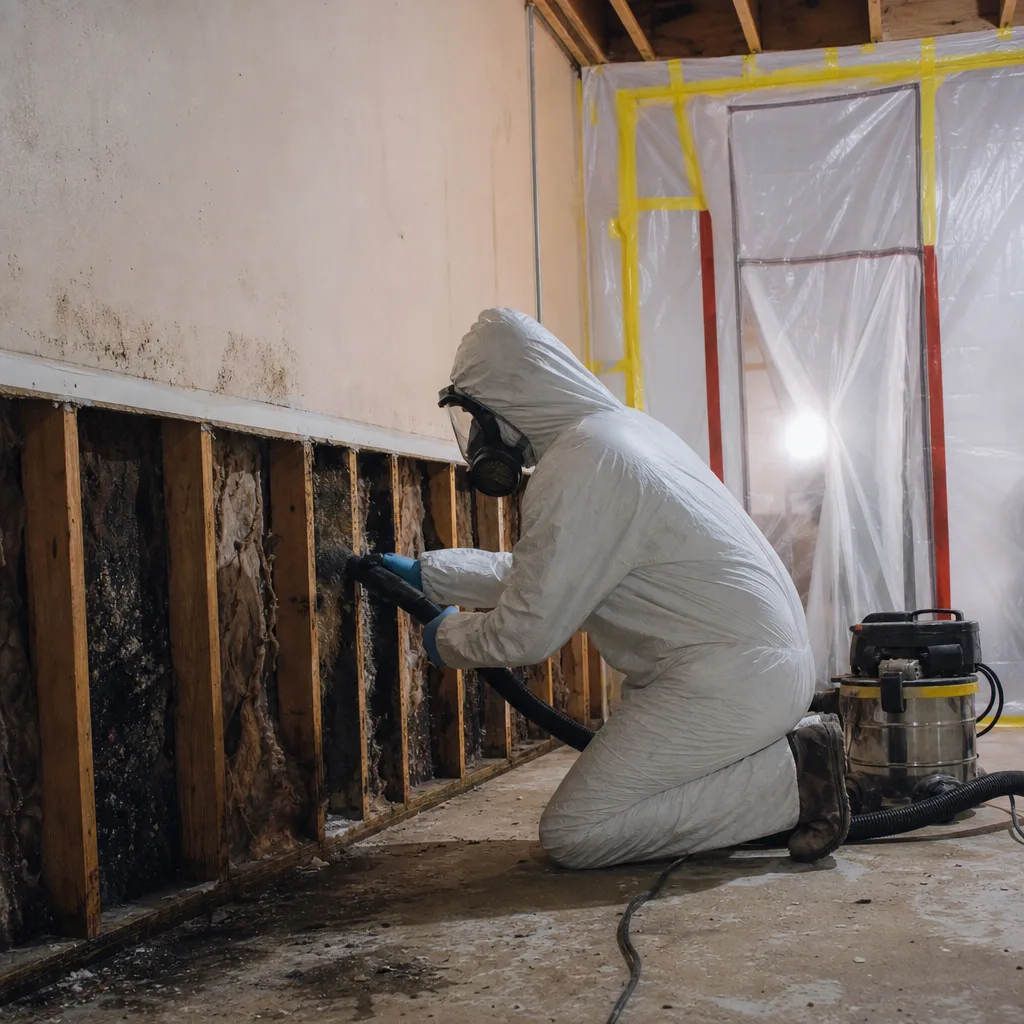
Galvanized supply lines from the original 1945-1968 builds in Saint Louis Park are at the end of their service life. When one fails at a threaded joint, it can release hundreds of gallons into a finished basement rec room in under an hour. We respond with emergency extraction first, then work through the damage assessment. Old cast-iron waste stacks are another common failure point here, especially on second-floor split-level bathrooms where the original 60-year-old stack has been rusting internally for years. We scope the dry-out, handle the structural drying, and can rebuild the damaged areas to original condition. If you want your insurance to cover it, our photo documentation and moisture logs are built for adjuster review.
What happens when you call
- 1
A real person answersNo phone trees - you reach a local pro.
- 2
You get an upfront price rangeHonest numbers before anyone is dispatched.
- 3
A background-checked tech heads outLicensed & insured, dispatched right away.
- 4
You approve before work beginsNothing starts until you say go.
Trusted Brands We Service in Saint Louis Park
We don’t use rental-grade equipment on your home. Our crews run professional equipment from Dri-Eaz, Phoenix, Injectidry, XPOWER, and B-Air because drying a 70-year-old Saint Louis Park basement with original plaster and block walls takes real dehumidification, not box fans from a hardware store. We stock parts and supplies locally for fast turnaround in 55416, and our techs are IICRC-certified and RIA-affiliated. That’s not a marketing line; it means the people in your basement actually know how to dry a structure without tearing out more than necessary.
Common Water Damage Restoration Problems We See in Saint Louis Park Homes
- Buried mold and efflorescence behind re-finished basement walls. In neighborhoods like Minikahda Vista and Fern Hill, original 1950s rec rooms have been re-drywalled or re-paneled multiple times over concrete block. Each layer traps older moisture and mold. You won’t see it until the wall comes open, and if your restorer doesn’t price for that possibility from the first estimate, the scope creeps mid-job and the adjuster fight begins. We price for it up front because we’re familiar with the exact pattern.
- Roof leaks left unrepaired before freeze-up. Summer hailstorms track through the southwest metro corridor and hit Saint Louis Park with notable frequency. Homeowners patch the shingles but delay the interior work. Then water in the ceiling cavity freezes in October or November, expands, and splits drywall seams and plaster keys. By the time the ceiling stains appear, the damage is worse than the original leak. If you had a hailstorm hit your block this season, get the ceiling cavities inspected before the first hard freeze.
- Cast-iron and clay-tile failures during rain events. Original waste stacks and sewer laterals from the 1950s are rusting from the inside and cracking from soil movement. During heavy rain, stormwater infiltration overloads the aging clay-tile laterals, and the finished basement takes the hit. This is not a fixture problem. It’s a infrastructure problem specific to homes of this era, and it’s one of the most common flood calls in 55416.
- High water table and expansive clay soils pressing against foundations. The metro’s clay soils hold groundwater against foundation walls for weeks after snowmelt or heavy rain. Combined with Minnehaha Creek’s flood corridor running through the city, basements in Saint Louis Park stay wet longer than in sandier soil areas. Drying protocols have to account for continuous external moisture pressure, not just the initial event. That means longer dehumidification runs and more aggressive airflow than a generic water damage company might set up.
Pricing for Water Damage Restoration in Saint Louis Park, MN
Here are real numbers for Saint Louis Park, so you know what to expect before anyone shows up. Emergency water extraction in 55416 typically runs $450-$1,200 depending on square footage and water depth. Structural drying and dehumidification runs $1,500-$3,800 for a standard 800-1,200 square foot basement, and higher if multiple rooms or wall cavities require Injectidry mat drying. Basement water removal with sanitization on a finished rec room is usually $2,800-$6,500, and ceiling or roof leak repair with drying lands between $900 and $2,400. These ranges reflect the local reality that older Saint Louis Park homes often hide moisture behind multiple layers of finish material, so we scope accordingly. Every job gets a written estimate before work starts, and we offer no trip charge inside the county. Call (888) 690-6095 for an exact quote, and ask about the free second opinion on any written estimate.
We Also Serve Cities Near Saint Louis Park
Our Water Damage Restoration team covers Saint Louis Park and the surrounding first-ring suburbs every day. If you’re in Minneapolis, Edina, Richfield, or Crystal and you’re dealing with a flooded basement, burst pipe, or storm damage, call us. We run the same documented drying process and insurance coordination everywhere we work. You can also read more about our local work at Water Damage Restoration in Saint Louis Park.
Serving Saint Louis Park, MN - Our Local Coverage Area
We’re based in the Saint Louis Park area and know this community well. Use the map below to see our service coverage - if you’re nearby, we can almost certainly help.
FAQs - Water Damage Restoration in Saint Louis Park
Homes along Minnehaha Creek sit with a higher water table and persistent soil saturation, so drying a basement there typically requires longer dehumidification runs and may warrant exterior drainage improvements before interior work makes sense. Wade deals with your adjuster directly to document the additional scope, because drying those block walls to IICRC standards when groundwater keeps pressing from outside is a different job than drying a house on higher ground. Call (888) 690-6095 and we’ll come take moisture readings and give you a straight answer.
Saint Louis Park sees two distinct flood windows: March through May, when snowmelt delivers over an inch of water equivalent in a day and overwhelms pre-1970s perimeter drainage, and June through August, when heavy rain events flood clay-tile laterals and leak through aging roofs. Basement water removal calls spike in both windows, and homes built between 1945 and 1968 dominate the call list in 55416.
Yes, and it’s one of the most consistent failure patterns in Saint Louis Park. Cast-iron waste stacks rust from the inside and develop cracks along pipe walls, while clay-tile sewer laterals crack at the joints from soil movement and root intrusion. During heavy rain, stormwater overloads these lines and they back up into finished basements. If you own a rambler or split-level from the original build-out, assume your original drain infrastructure is at or past its service life and budget for replacement when you scope any remodel that has the walls open anyway.
The Twin Cities averages over 50 freeze-thaw cycles per year. Each cycle stresses the mortar joints and parging on Saint Louis Park’s concrete-block foundation walls, opening hairline cracks that get wider every winter. When spring melts come, water moves through those joints into the wall cavity and the finished space inside. We dry the structure to IICRC standards after every event, but the real fix for recurring intrusion is often exterior waterproofing and drainage correction, which we can scope as part of your restoration work. The moisture log we keep during drying tells us whether water is actively still moving in while we work or if we’re down to residual moisture.
Shut off electricity to the affected area first if it’s safe to do so, then call (888) 690-6095. Do not open walls yourself. Do not put box fans on it and hope it dries. Older split-levels in Saint Louis Park almost always have moisture trapped behind the paneling or plaster, and visible water is the least of it. We’ll have extraction running inside the hour, and we’ll start the drying log and photo documentation your adjuster will want. The first call is free, and we’ll tell you honestly whether you’re looking at emergency drying only or a full scope that needs insurance involvement.
If water is inside your home in Saint Louis Park right now, don’t wait. Call (888) 690-6095. Live person, 24/7. Free estimate. No trip charge inside the county. And if you want a second opinion on an estimate another outfit gave you, that’s free too.
Written by Wade Ferris, Owner at Wade’s Restoration of Minneapolis, serving Saint Louis Park since 2007.