
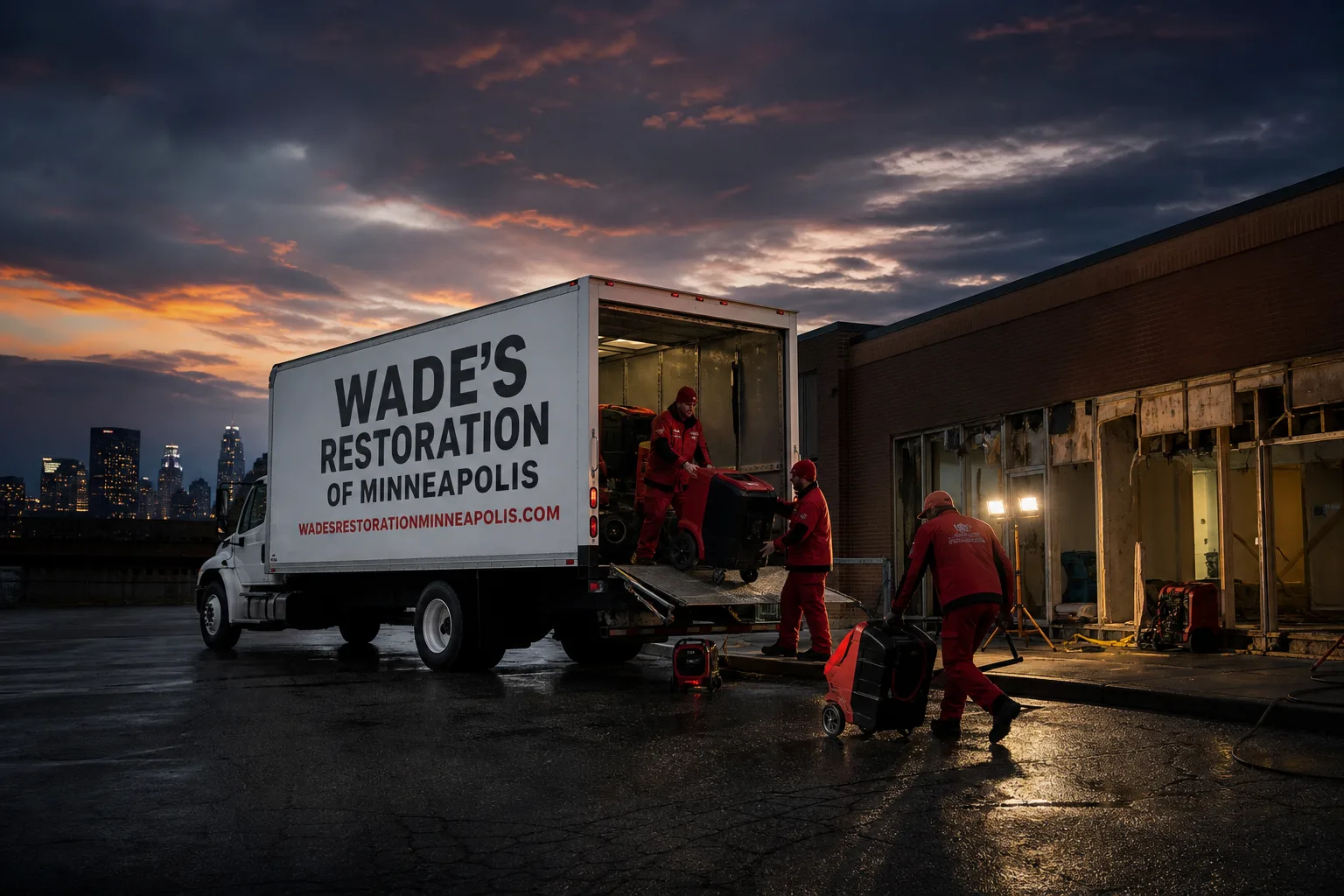
Fast, Reliable Water Damage Restoration Across Columbia Heights
Water damage in Columbia Heights moves fast, and so do we. Whether it’s a burst galvanized pipe in a 1949 Cape Cod on 40th Avenue NE or spring melt pushing groundwater into a 1960s block basement off Central Avenue, the first hours decide how much of your home we can save. Call (888) 690-6095 and Wade Ferris or one of his crew heads to Columbia Heights immediately, usually with extraction running inside the hour. We know these homes, we know this city’s water problems, and we know what Columbia Heights basements hide beneath old carpet and vinyl. That last part matters more than most people realize.
Why Wade’s Restoration of Minneapolis Is Columbia Heights’s Preferred Water Damage Restoration Company
Wade Ferris founded this company in 2007 and still answers his own phone. That’s not a marketing line. When a Columbia Heights homeowner calls at 2 a.m. with water pouring through a basement ceiling, the person who picks up is the same person whose name is on the truck. Ask anyone on your street who’s dealt with a flooded basement. They’ll tell you the national chains quote one number on the phone and a different one at the door. Wade doesn’t work that way. He publishes his address and license number, and he’s going to run into you again at the hardware store on a Saturday. That’s the oldest accountability mechanism there is, and it works.
Our Water Damage Restoration crew has pulled water out of hundreds of Columbia Heights basements. The 55421 zip code is our backyard. We know that a rambler on 41st Avenue has a different floor plan and different drainage than a two-story near Silver Lake. We know which blocks flood first in spring melt and which neighborhoods still have original 1940s plumbing. That local knowledge isn’t something you can train a call-center rep to fake. It comes from nearly two decades of driving these streets and walking these basements.
Response time to Columbia Heights is fast because we’re not coming from across the metro. Scheduling and dispatch run out of our Minneapolis-St Paul office, and crews serve Columbia Heights locally every day. When you call, you’ll talk to a live person, not a voicemail tree. Wade himself often heads out on the call. No trip charge inside our own county, and estimates are free.
Our Water Damage Restoration Services in Columbia Heights
Emergency Water Extraction
The first thing we do is get the water out. In Columbia Heights, that usually means a flooded basement from a burst pipe, a failed sump pump, or a sewer backup. We bring professional-grade extraction equipment from Dri-Eaz and XPOWER, and we run it hard until the standing water is gone. But extraction is only step one. A saturated 1960s concrete slab in Columbia Heights holds water differently than a newer slab in Blaine, and if you don’t dry it right, you’ll be dealing with mold and must within weeks. We take moisture readings every single day and hand you the full log at the end of the job. Almost nobody in this trade does that. We do.
Structural Drying & Dehumidification
Once the water is out, the real work starts. Columbia Heights homes from the 1940s through the 1970s almost always have full poured or block basements, required by Minnesota’s deep frost line. That’s good for structural stability but bad for drying time. Those walls hold moisture. We set up Phoenix dehumidifiers and B-Air air movers positioned to push dry air into the exact spots where water wicked up. But here’s the thing generic restoration guides miss: if hydrostatic pressure from Columbia Heights’s flat terrain is still rising, high-pressure drying can crack a saturated block foundation. We monitor pressure and moisture readings daily and adjust equipment as the ground settles. You get the full log, not a vague “we think it’s dry.”
Flood Cleanup
Flood cleanup in Columbia Heights means spring melt, and spring melt means the aging municipal storm sewer backs up on the flat, fully built-out 2-square-mile footprint this city sits on. Water comes up through floor drains, around sump crocks, and through cove joints in block walls. We remove the water, remove the affected materials, sanitize, and dry. But before we tear out anything, we test. More on that below, because it’s the single biggest difference between us and everyone else working this city.
Burst Pipe Restoration
Columbia Heights still has a lot of original galvanized supply lines in homes built before 1970. Those pipes rust from the inside out, and when they let go, they let go hard. A burst pipe can dump dozens of gallons into a basement in under an hour. We shut off the main, extract, dry, and repair the damage. Then we have an honest conversation with you about whether the rest of the galvanized lines are a ticking clock. Sometimes the right answer is repair the break and move on. Sometimes the right answer is replace every old line while the walls are already open. Wade will tell you straight which one he’d do if it were his house, and he’ll put the scope in writing before any work starts.
What happens when you call
- 1
A real person answersNo phone trees - you reach a local pro.
- 2
You get an upfront price rangeHonest numbers before anyone is dispatched.
- 3
A background-checked tech heads outLicensed & insured, dispatched right away.
- 4
You approve before work beginsNothing starts until you say go.
Trusted Brands We Service in Columbia Heights
We stock parts for the equipment brands Columbia Heights homeowners already run. XPOWER sump pump systems and utility pumps are common in these older basements, and we carry replacement parts and full units so we’re not sitting around waiting on a distributor when your basement is full of water. Same goes for B-Air and Phoenix drying equipment if we need to swap a unit mid-job. When you call us to a flooded basement on 42nd or 40th Avenue, we show up with what we need, not with a promise to order it.
Common Water Damage Restoration Problems We See in Columbia Heights Homes
- Asbestos-era materials under the water line. The 9×9 floor tiles in your 1950s basement are asbestos-positive more often than not. The pipe wrap around old plumbing lines is too. So is the joint compound in some of these era’s drywall. If a crew tears into that without testing, they can release fibers into the air and force a full shutdown and air clearance before any drying can continue.
- Spring sewer backups from the aging municipal system. Columbia Heights’s flat topography combined with storm sewer capacity built for a smaller city means certain blocks flood routinely during heavy snowmelt. We know which neighborhoods hit first because we’ve run calls there every March and April for years.
- Galvanized supply line failures in post-war homes. Original galvanized pipes installed in the late 1940s and 1950s are now 70-plus years old. They corrode from inside, thinning until they split. The failure often happens in a wall or slab, not at a visible joint, which makes the damage worse before anyone notices.
- Hydrostatic pressure pushing water through block foundations. Columbia Heights sits on flat terrain with a high water table in spring. When the ground saturates, water pushes against foundation walls and up through the slab. The right solution isn’t always a bigger dehumidifier. Sometimes it’s grading, sometimes it’s a properly sized sump system, sometimes it’s both.
Pricing for Water Damage Restoration in Columbia Heights, MN
We Also Serve Cities Near Columbia Heights
Our crews work regularly in Saint Anthony, Fridley, Mounds View, and Spring Lake Park, and we know those cities’ housing stock and water problems as well as we know Columbia Heights. If you’re just over the line in any of them, the same team, the same equipment, and the same written-scope-before-work approach apply. For a full look at our local coverage, see our Columbia Heights service area page.
Serving Columbia Heights, MN - Our Local Coverage Area
We’re based in the Columbia Heights area and know this community well. Use the map below to see our service coverage - if you’re nearby, we can almost certainly help.
FAQs - Water Damage Restoration in Columbia Heights
Why does my 1950s Columbia Heights basement flood every spring even though my sump pump works?
The pump is working, but it’s probably undersized for what Columbia Heights’s aging storm sewer sends your way during spring melt. The city is flat, fully built out, and the municipal system backs up when snowmelt hits all at once. That water rises through floor drains and cove joints faster than an original or too-small sump can discharge it. The fix is often a properly sized pump matched to your basement’s actual inflow, not a same-horsepower swap. Call (888) 690-6095 and we’ll come take a look.
My 1960s rambler has original asbestos floor tiles in the basement. Can you still dry the space after a water leak?
Yes. We stop, seal the area, and test materials before any demo or removal. The 9×9 tiles common in 1960s Columbia Heights ramblers are frequently asbestos-positive, but drying can proceed safely once we know what we’re working with. If abatement is required, we bring in a certified team and coordinate the whole sequence so your drying timeline stays on track.
The galvanized water supply line burst in my 1949 Cape Cod in Columbia Heights. Should I replace all the old pipes or just repair the break?
If the rest of the galvanized lines are original, they’re in the same condition the burst section was. Galvanized pipe fails from internal corrosion, so the damage is hidden until it splits. If walls and ceilings are already open, replacing all accessible lines is usually the smarter long-term decision. But it’s your call, and Wade will give you a straight price for both options before any work begins.
How do you handle water damage in a Columbia Heights basement with asbestos drywall mud from the 1950s?
We test before we demo, always. Older joint compound in mid-century Columbia Heights homes can contain asbestos, and cutting into wet drywall without testing can release fibers into your home. Our process is simple: seal, test, dry what’s safe to dry, and abate what needs abatement before any controlled demolition starts. No shortcuts.
What’s the most common water damage call in Columbia Heights during Minnesota’s winter vs. spring?
In winter, it’s frozen pipes and ice dams on low-pitched mid-century rooflines. In spring, it’s groundwater intrusion and storm sewer backups. Frost depths exceed 42 inches here, and the freeze-thaw cycle is brutal on old supply lines and foundation walls. Every Columbia Heights homeowner should know where their main shutoff is and test their sump pump before March. If you’re not sure, call us at (888) 690-6095 and we’ll walk you through it.
Call for a Free Water Damage Estimate in Columbia Heights
If you’ve got water where it shouldn’t be, call (888) 690-6095 right now. You’ll reach a live person, probably Wade himself. He’ll tell you what to do in the next five minutes, give you a straight answer about whether we need to come out, and if we do, he or his crew will be on the road to Columbia Heights immediately. Free estimates, no trip charge inside the county, and a written scope before any work starts. And every water restoration job carries the 90-Day Done Right Promise in writing: if it’s not done right, we make it right.
Written by Wade Ferris, Owner at Wade’s Restoration of Minneapolis, serving Columbia Heights since 2007.