

Fast, Reliable Storm & Disaster Restoration Across Victoria
Storm damage in Victoria rarely shows up as one problem. It shows up as two: ice dams forcing meltwater behind your fascia while the lake-driven water table pushes groundwater against your basement walls at the same time. Wade’s Restoration handles both. We’ve been running storm calls in Victoria and Carver County for years, and our crews know exactly what a spring storm does to the walk-out and look-out basement homes built here during the 2000s and 2010s boom. When you call (888) 690-6095, you get Wade himself, not an answering service. He’ll tell you straight what needs to happen and how fast.
Why Wade’s Restoration of Minneapolis Is Victoria’s Preferred Storm & Disaster Restoration Company
Wade Ferris founded this company in 2007 and he still answers his own phone. That matters in Victoria, where a lot of homeowners have been through the national-chain experience: a quote on the phone, a different number at the door, and a crew you’ll never see again. Wade’s name is on the truck and his address is published. You’ll run into him at the hardware store. That’s the accountability mechanism that a call center can’t replicate.
When storm damage hits a home off Bavaria Road or near Lake Wassermann, Wade heads out himself. He’s not dispatching a stranger. His crew shows up in uniforms, background-checked, carrying Dri-Eaz, Phoenix, and Injectidry equipment that actually dries a house instead of pretending to. And every restoration job comes with the 90-Day Done Right Promise in writing. If it’s not done right, he makes it right. That’s the whole deal.
The reviews from Victoria customers say the same thing: someone showed up fast, someone documented everything, and someone dealt with the insurance adjuster directly so the homeowner wasn’t stuck relaying messages between two parties. That last part matters more than most people realize when a storm has torn up a roof and flooded a basement in the same week.
Our Storm & Disaster Restoration Services in Victoria
Our full Storm & Disaster Restoration team covers the range of what a Carver County storm throws at a house. Here’s what that looks like on the ground in Victoria.
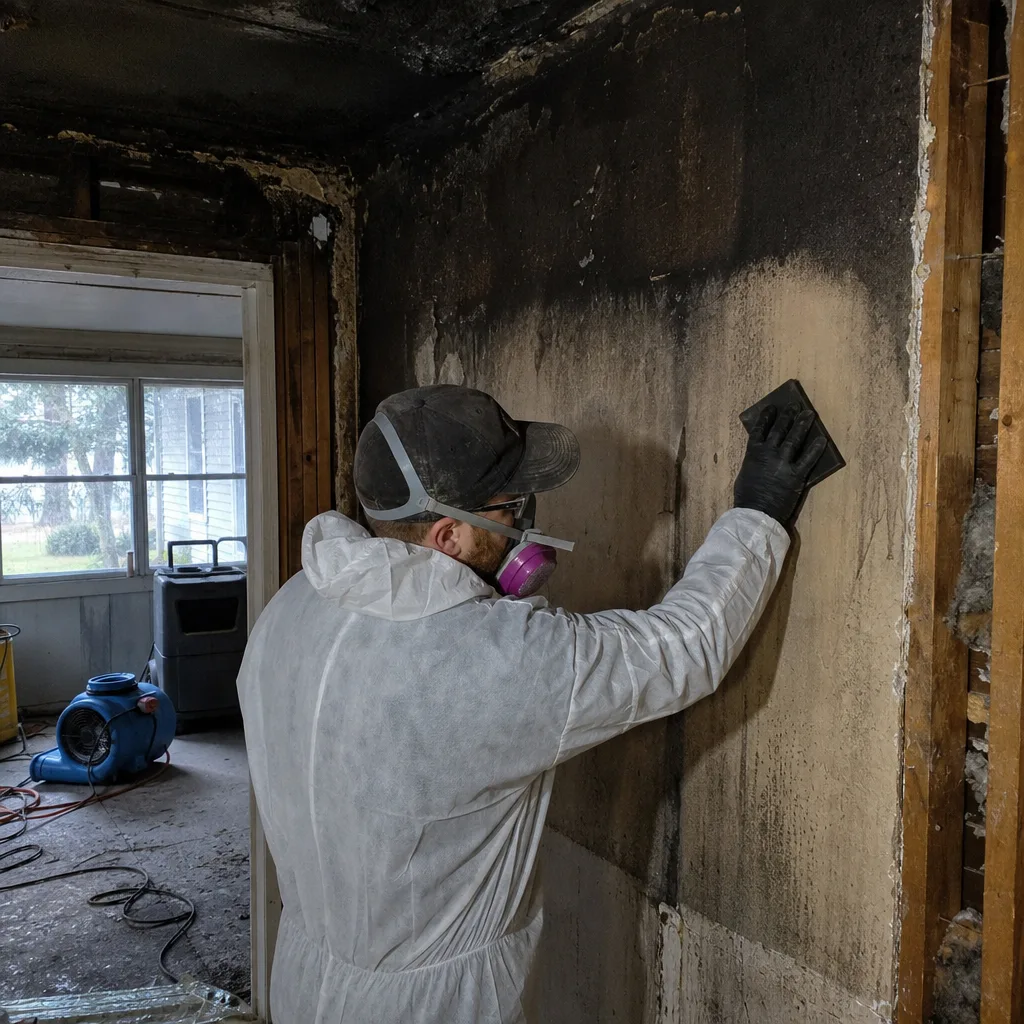
Storm Damage Cleanup
A Victoria storm leaves more than a wet carpet. Hail splits builder-grade OSB roof sheathing. Wind-driven rain finds every gap in the siding. Tree debris blocks drainage and sends water where it doesn’t belong. We handle the extraction first, then the demolition decisions. With the engineered I-joists and OSB common in Victoria’s newer homes, you have about 48 hours before swelling and delamination start. Waiting costs real money.
Flood Damage Restoration
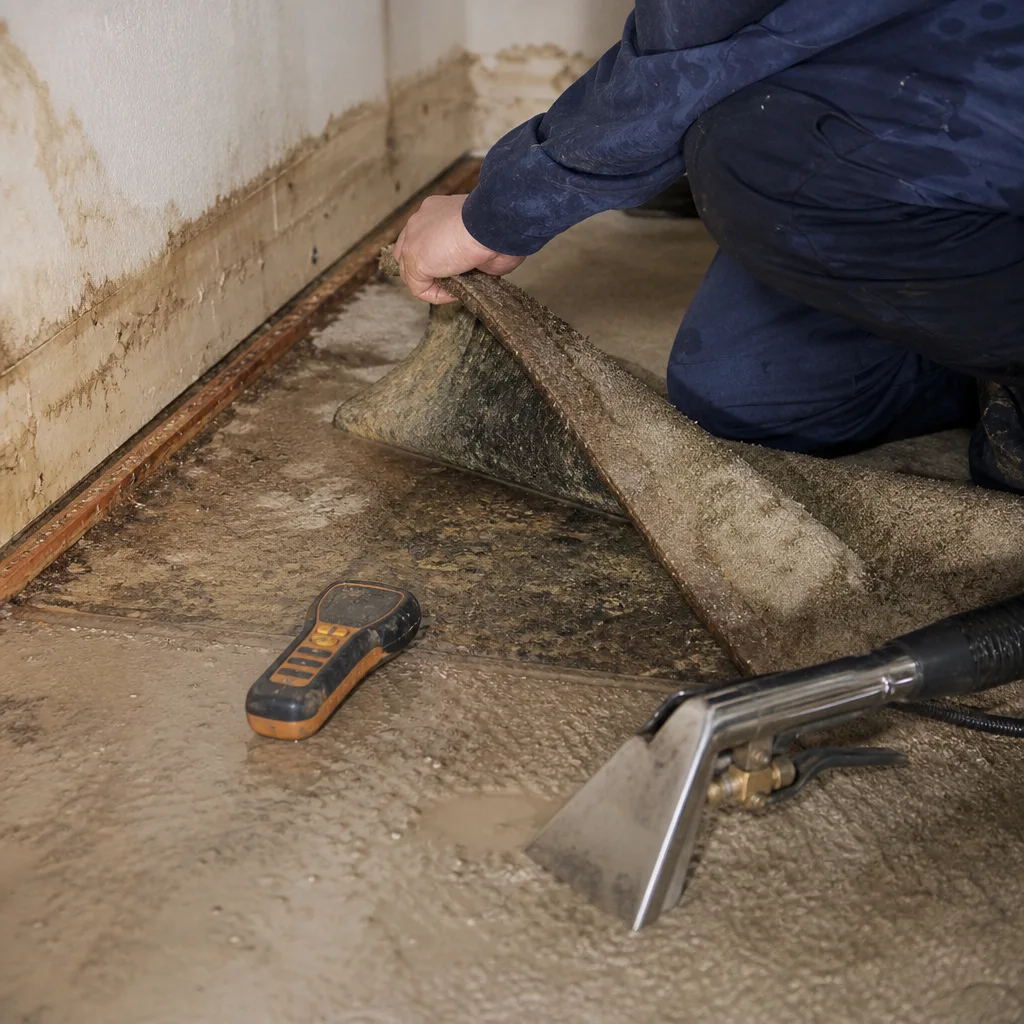
Floodwater in Victoria isn’t always from a pipe break. Lake Victoria and Lake Wassermann rise each spring, and when snowmelt hits, groundwater pushes up against below-grade walls in the lake-adjacent lots. That’s hydrostatic pressure, and it forces water through cove joints and wall cracks that looked fine in November. We extract, dry, and monitor moisture levels every single day until the structure is actually dry, not just surface-dry. Wade hands you the full moisture log when the job is done.
Emergency Board-Up
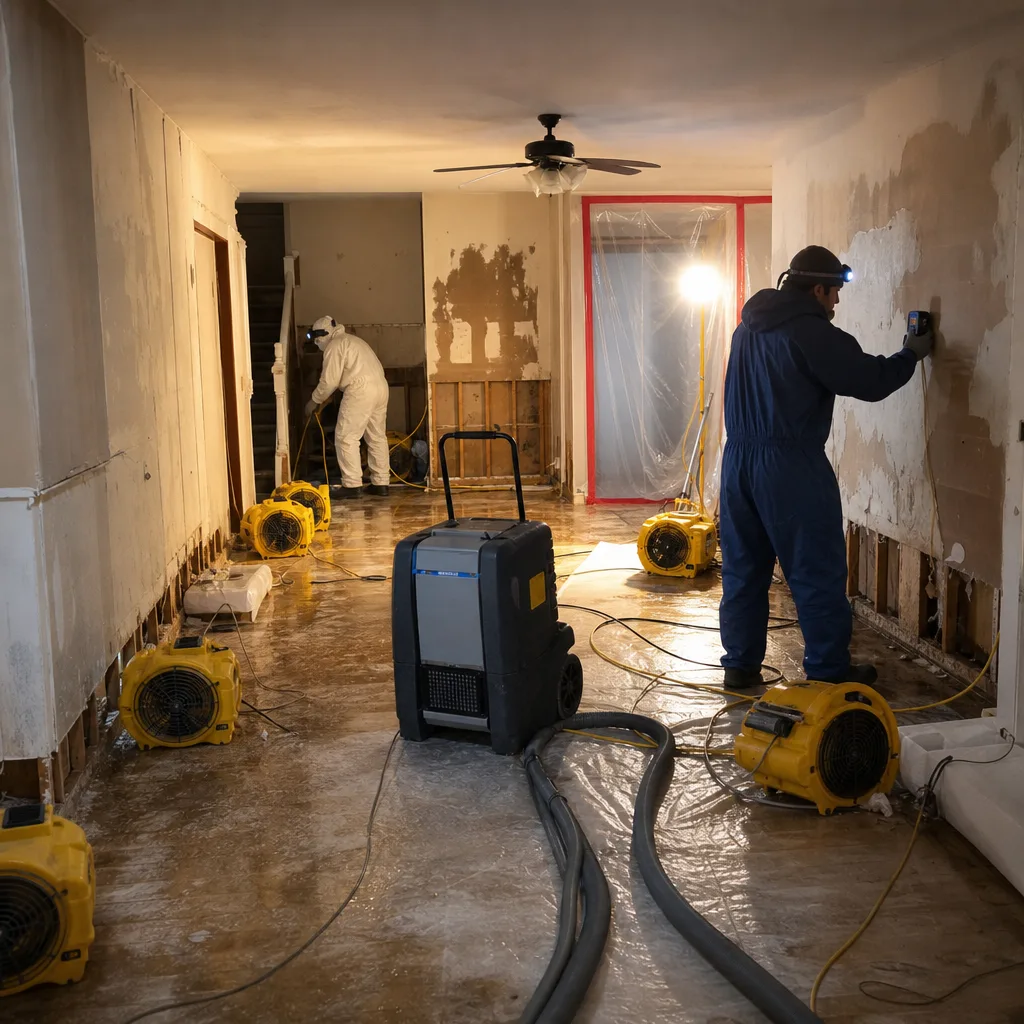
When wind damage blows out a window or a tree limb comes through a wall in a development off Baylor Avenue, your house is open to the next storm and every animal in Carver County. We board up the opening the same day we get the call. No waiting until Monday. No plywood that looks like plywood. We secure the structure so insurance documentation can happen and the real repair can be scheduled properly.
Roof Tarping
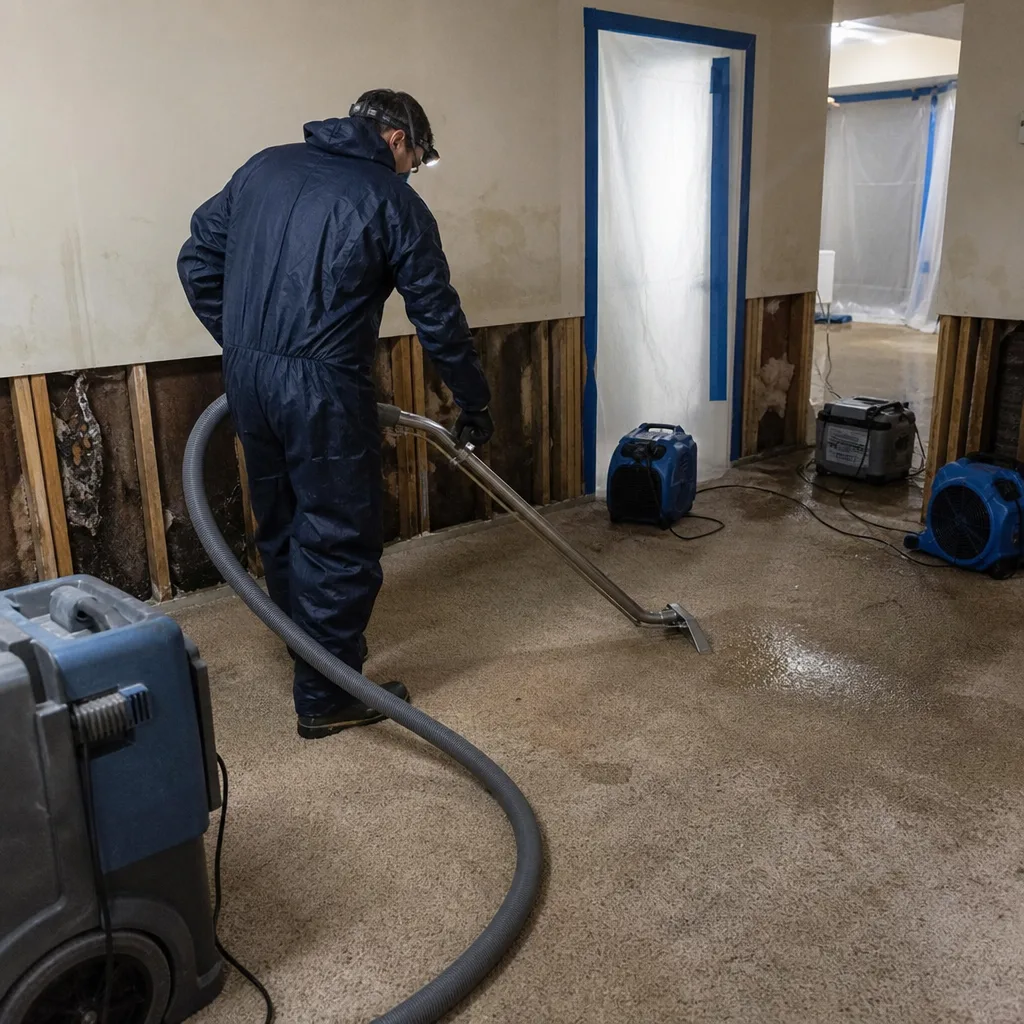
Roof tarping after a Victoria storm is not optional. The steep-pitched roofs common in the city’s newer subdivisions are exactly the profile that produces ice dams, and once water is getting behind the fascia, every hour matters. We tarp the damaged section, secure it against wind, and document the condition for your adjuster. If there’s an ice dam feeding the leak, we find it and stop it at the source, because a tarp alone just moves the water somewhere else.
What happens when you call
- 1
A real person answersNo phone trees - you reach a local pro.
- 2
You get an upfront price rangeHonest numbers before anyone is dispatched.
- 3
A background-checked tech heads outLicensed & insured, dispatched right away.
- 4
You approve before work beginsNothing starts until you say go.
Trusted Brands We Service in Victoria
We run professional-grade drying equipment from Phoenix, Dri-Eaz, and Injectidry, and Wade’s crews know how to use it properly. That’s not a small thing. A lot of restoration work fails because someone set up fans and walked away. Wade takes moisture readings every day and adjusts the drying plan based on what the numbers say, not what the clock says. For Victoria homeowners with water moving through engineered lumber, that daily attention is the difference between a dry house and a mold problem six months from now.
Common Storm & Disaster Restoration Problems We See in Victoria Homes
- Ice dams on steep-pitched roofs. Carver County winters dump enough snow to build serious ice dams on the roof profiles common in Victoria’s 2000s-era subdivisions. Meltwater backs up behind the dam, works under the shingles, and soaks the OSB sheathing beneath.
- Sump pumps running constantly in spring. Homes platted near the lakes sit on a seasonally high water table. When snowmelt pushes lake levels up, sump pumps cycle every 20 minutes or less. If the discharge is routed wrong or the pump is marginal, the next rain overwhelms it and the basement floods.
- Engineered lumber swelling after a leak. Victoria’s newer housing stock uses I-joists, LVLs, and OSB sheathing. Those materials delaminate and grow mold faster than the solid-lumber framing in older suburbs. Two days of moisture is enough to start structural damage.
- Wind-driven rain through builder-grade flashing. The 2008-era construction boom in Victoria favored speed over waterproofing detail. Roof-to-wall intersections and window flashing are common entry points during the kind of wind storms that roll across the lakes in spring and summer.
Pricing for Storm & Disaster Restoration in Victoria, MN
Emergency board-up in Victoria typically runs $400 to $1,200 depending on openings and materials. Roof tarping after wind or hail damage lands between $350 and $900 for a standard residential section, more if multiple planes are involved. Full storm damage cleanup with water extraction and drying equipment runs $2,800 to $8,500 depending on square footage and how long the water has been sitting. Flood damage restoration that involves engineered lumber drying and possible replacement starts around $4,000 and goes up from there. Wade gives you a written scope before work starts, so the number on the estimate is the number you pay. Call (888) 690-6095 and he’ll price it honestly.
We Also Serve Cities Near Victoria
Wade’s crew runs calls throughout the western metro. If you’re in Chaska, Shorewood, Mound, or Minnetrista, the same owner-operated crew handles your storm damage with the same 90-Day Done Right Promise. No subcontractor roulette. No voicemail. One number: (888) 690-6095.
Serving Victoria, MN - Our Local Coverage Area
We’re based in the Victoria area and know this community well. Use the map below to see our service coverage - if you’re nearby, we can almost certainly help.
FAQs - Storm & Disaster Restoration in Victoria
Victoria’s steep-pitched roof profiles, combined with Carver County’s heavy snowfall and repeated freeze-thaw cycles, create the exact conditions for ice dams. Warm attic air melts the snow at the ridge, water runs to the cold eaves, and it refreezes into a dam that backs meltwater under the shingles. Homes built before Victoria adopted 2012 energy codes often lack the attic air-sealing that would prevent the warm-air leak in the first place. So the ice dam is a roof problem, but the cause is usually in the attic. Call (888) 690-6095 and Wade will trace it to the source.
Yes, and it’s a warning sign. Victoria developments platted near Lake Victoria, Lake Wassermann, and the area’s wetlands sit on a seasonally high water table. Snowmelt pushes lake levels and groundwater up, and your sump pump is the only thing standing between that water and your basement floor. If the pump cycles constantly in spring, it’s working against real hydrostatic pressure. If it fails or the discharge line is routed wrong, you get a flooded basement within hours. Have it checked before the next storm hits.
Yes. We handle storm floodwater, groundwater seepage, and lake overflow. The source matters for drying strategy and for insurance coverage, but the extraction process starts the same way: get the water out, get air moving, and start the drying log. Wade documents everything and coordinates directly with your adjuster, including the distinction between storm floodwater and sewer backup, which matters for your claim. Call (888) 690-6095 and we’ll walk you through it.
You have roughly 48 hours before builder-grade OSB sheathing starts to swell, delaminate, and support mold growth. Homes built during Victoria’s 2000s growth boom used OSB and engineered lumber throughout, and those materials absorb water differently than solid lumber. They don’t just get wet; they start coming apart. If you know water is getting in, don’t wait to see what happens. Call (888) 690-6095 and Wade will have extraction running inside the hour.
Most homeowner policies cover emergency tarping as part of the storm damage claim, because it’s considered reasonable mitigation to prevent further damage. The key is documentation. Take photos before anyone touches the roof, save the tarping invoice, and let Wade coordinate with your adjuster directly. He’s been doing this since 2007 and he deals with the insurance side so you don’t have to. Call (888) 690-6095 for a free estimate and straight answers.
Written by Wade Ferris, Owner at Wade’s Restoration of Minneapolis, serving Victoria since 2007.