

Fast, Reliable Storm & Disaster Restoration Across Minneapolis
When a storm tears through Minneapolis, the damage doesn’t wait for a convenient time. A 1920s bungalow in Powderhorn with water running down inside its plaster walls at 2 a.m. needs someone who knows those walls. Someone who has pulled wet horsehair insulation out of a Longfellow foursquare and knows what ice dam water does to old-growth fir floors before the adjuster ever shows up. That’s what we do. Wade’s Restoration of Minneapolis has been answering calls from Minneapolis homeowners since 2007, and Wade Ferris still answers his own phone. Call (888) 690-6095 right now, 24/7, and you’ll get a real person. Not a queue, not a call center in another state. Us.
Why Wade’s Restoration of Minneapolis Is Minneapolis’s Preferred Storm & Disaster Restoration Company
We’re not a national franchise with a rotating crew nobody recognizes at the door. We’re Wade Ferris and his crew, and we live and work right here in Minneapolis. Wade’s name is on the truck, his address is published, and you’ll run into him at the hardware store in Northeast on a Saturday. That’s the oldest accountability mechanism there is, and in this trade it matters more than any slogan. When you call at midnight during a spring melt, Wade heads out himself. Not a stranger. The owner.
Minneapolis homeowners tell us the same thing again and again: a national outfit quoted one price on the phone and another at the door, then handed the job to a subcontractor they never saw again. We don’t work that way. Our pricing is upfront, our technicians are background-checked and uniformed, and every storm, flood, or fire restoration job comes with our 90-Day Done Right Promise in writing. If it’s not done right, Wade makes it right. You have his word on paper, and you have his cell number.
We also handle insurance the way it should be handled. Wade deals with the adjuster directly. You’re not stuck in the middle relaying information between two parties who never seem to talk to each other. We photo-document everything, we take daily moisture readings with Dri-Eaz and Phoenix equipment, and we hand you the full moisture log at the end of the job. Almost nobody in this trade does that. It’s not a gimmick. It’s the documentation your adjuster actually respects, and it’s your proof the job was done right.
Our Storm & Disaster Restoration Services in Minneapolis
Flood Damage Restoration
Minneapolis gets around 54 inches of snow a year, and when it melts fast in March or April, finished basements in South Minneapolis and North Minneapolis take the hit. That silty meltwater saturates rim joists, wicks up drywall, and sits in low spots under flooring. We get extraction running inside the hour, run XPOWER air movers and B-Air dehumidifiers around the clock, and take moisture readings daily so you can watch the structure actually dry, not just look dry. A basement that feels dry to the touch can still be holding 20% moisture in the rim joist. That’s how mold gets a head start while everyone thinks the job’s done.
Roof Tarping
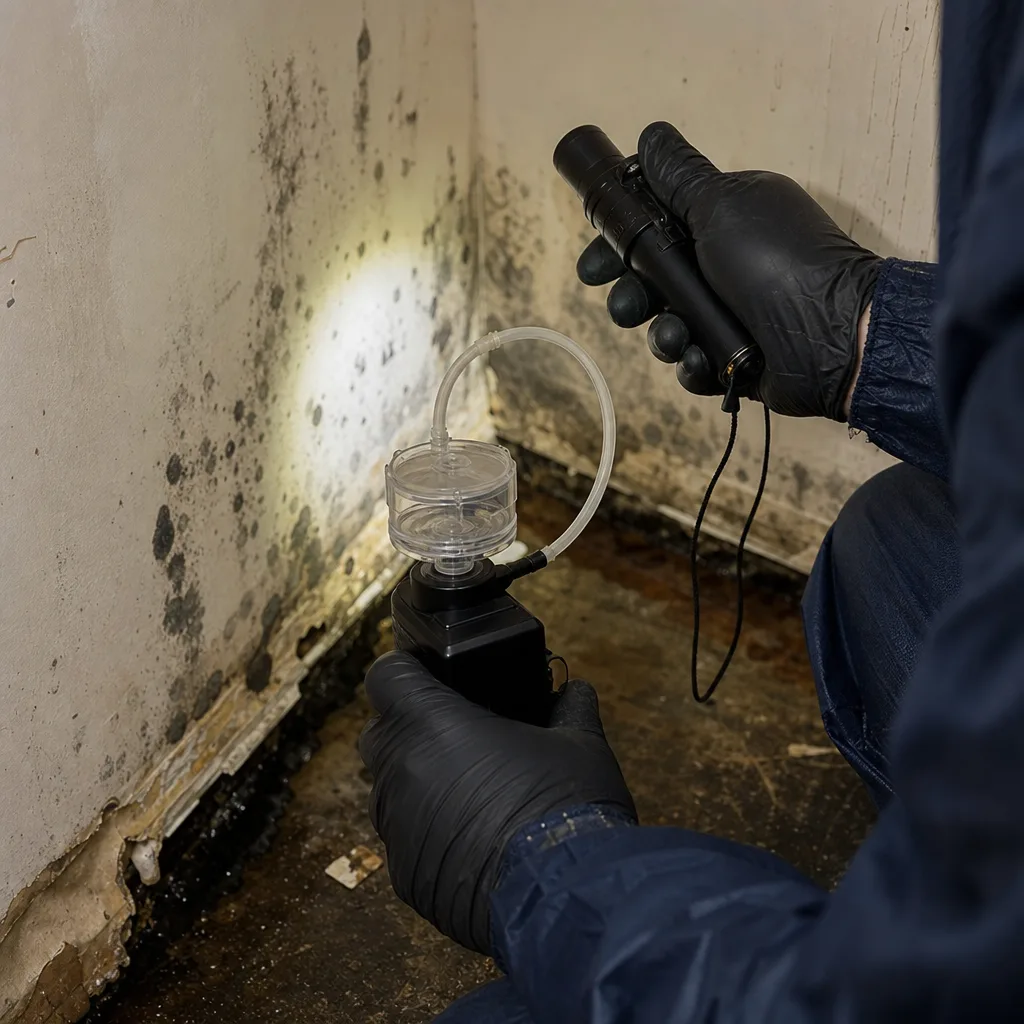
After a Minneapolis winter storm, roof tarping is a race against time. A blown-off shingle tab, a wind-lifted edge, or an ice dam that opened a seam will pull water into the attic the next time it snows or rains. And in Minneapolis, the next time is rarely far off. We tarp the same day you call when weather allows. A proper tarp, properly secured, buys you the window you need to get a roofing contractor out for permanent repairs without your ceilings collapsing in the meantime. We’ll also document the damage for your insurance claim while we’re up there.
Emergency Board-Up
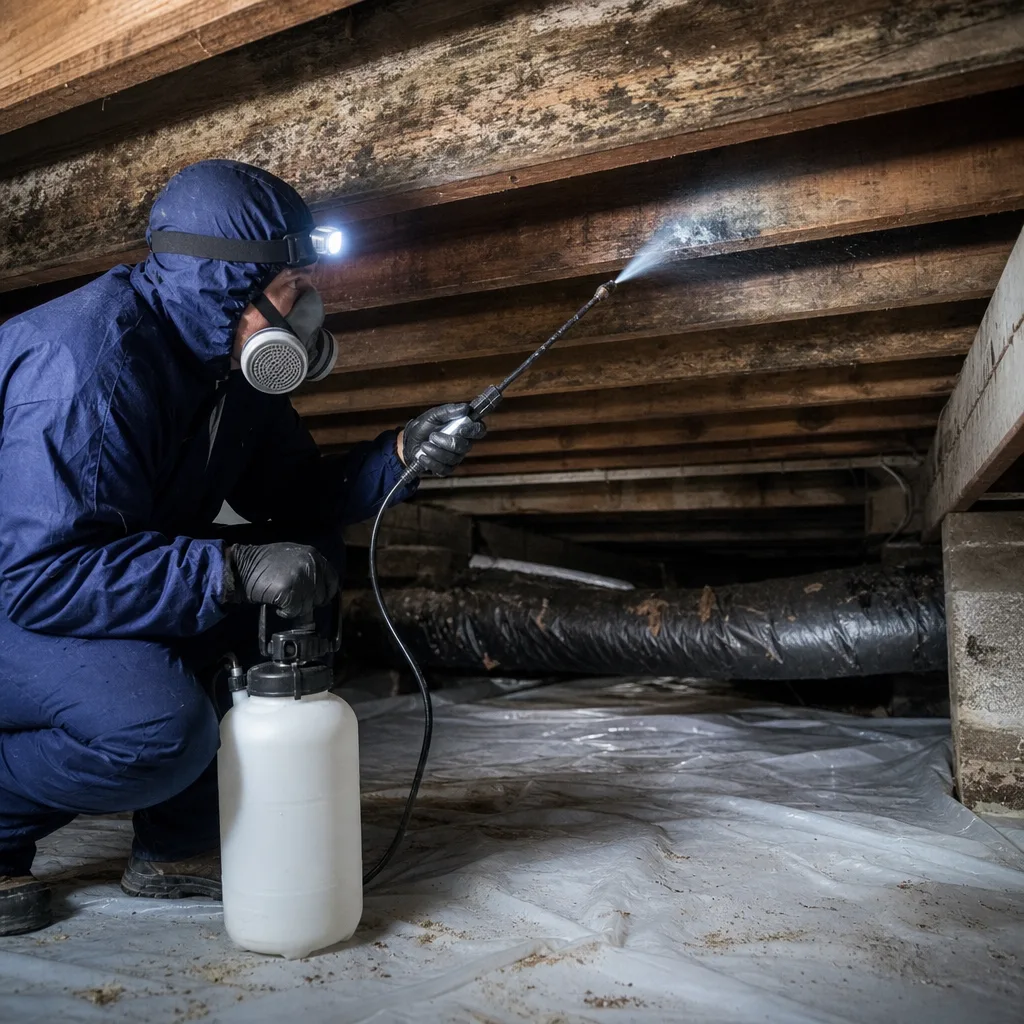
A tree limb through a window in a Richfield-adjacent Minneapolis neighborhood, a storm-blown patio door, a fire that compromised the back wall of a Northeast duplex. An unsecured opening is an invitation: rain in, heat out, animals in, copper thieves in. We board up fast and we do it right, with cut-to-fit plywood anchored properly, not a couple of loose screws somebody will have to rip out later. If the board-up is part of a larger restoration job, it’s a line item on a written scope, not a surprise add-on when the bill arrives.
Storm Damage Cleanup
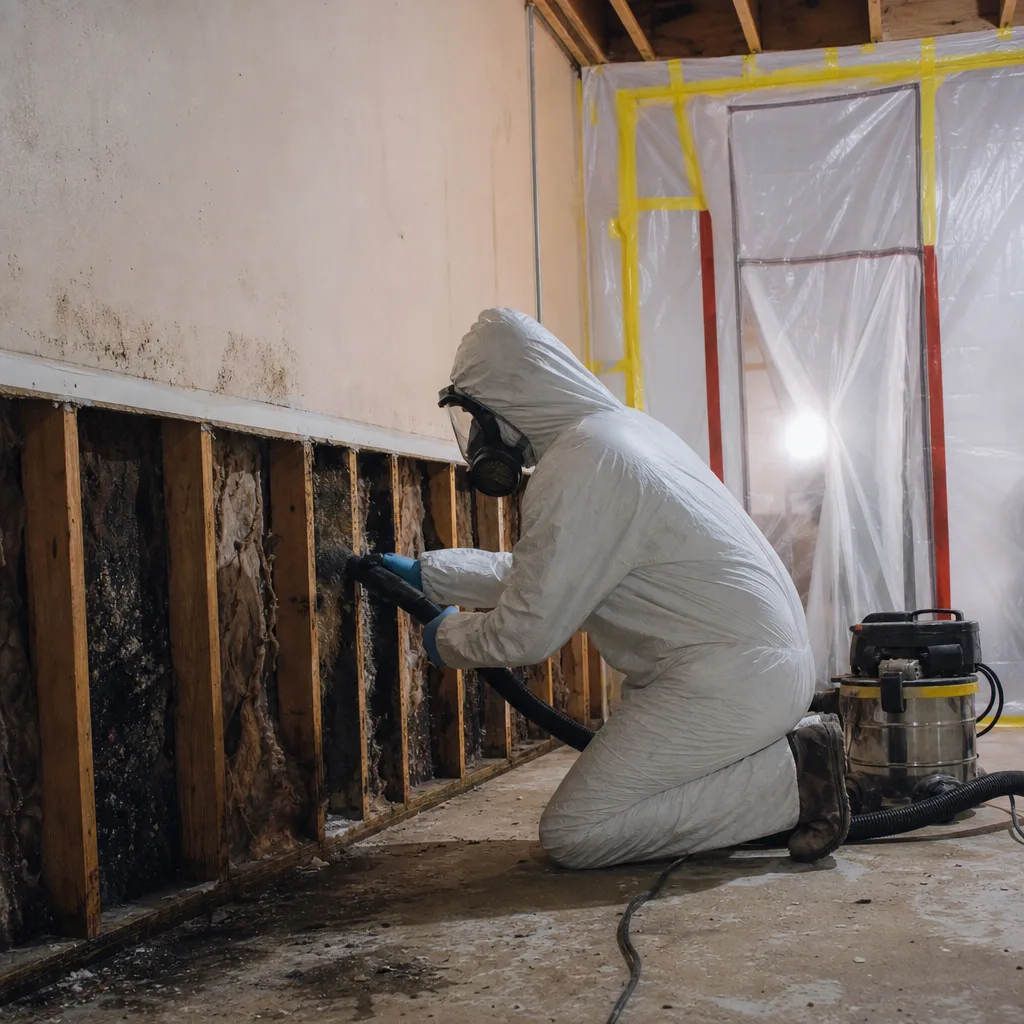
Wind-driven debris scattered across a yard, waterlogged carpet and padding, a collapsed garage roof in an Edina-adjacent alley. Storm damage cleanup in Minneapolis often means separating what’s salvageable from what’s already saturated past the point of saving. We’re honest about that line because we’ve been doing this since 2007 and we’ve seen what happens when someone promises to “save” a carpet that’s been wicking meltwater for three days. It doesn’t save. It grows mold. We’ll tell you straight, and we’ll put our recommendation in writing.
What happens when you call
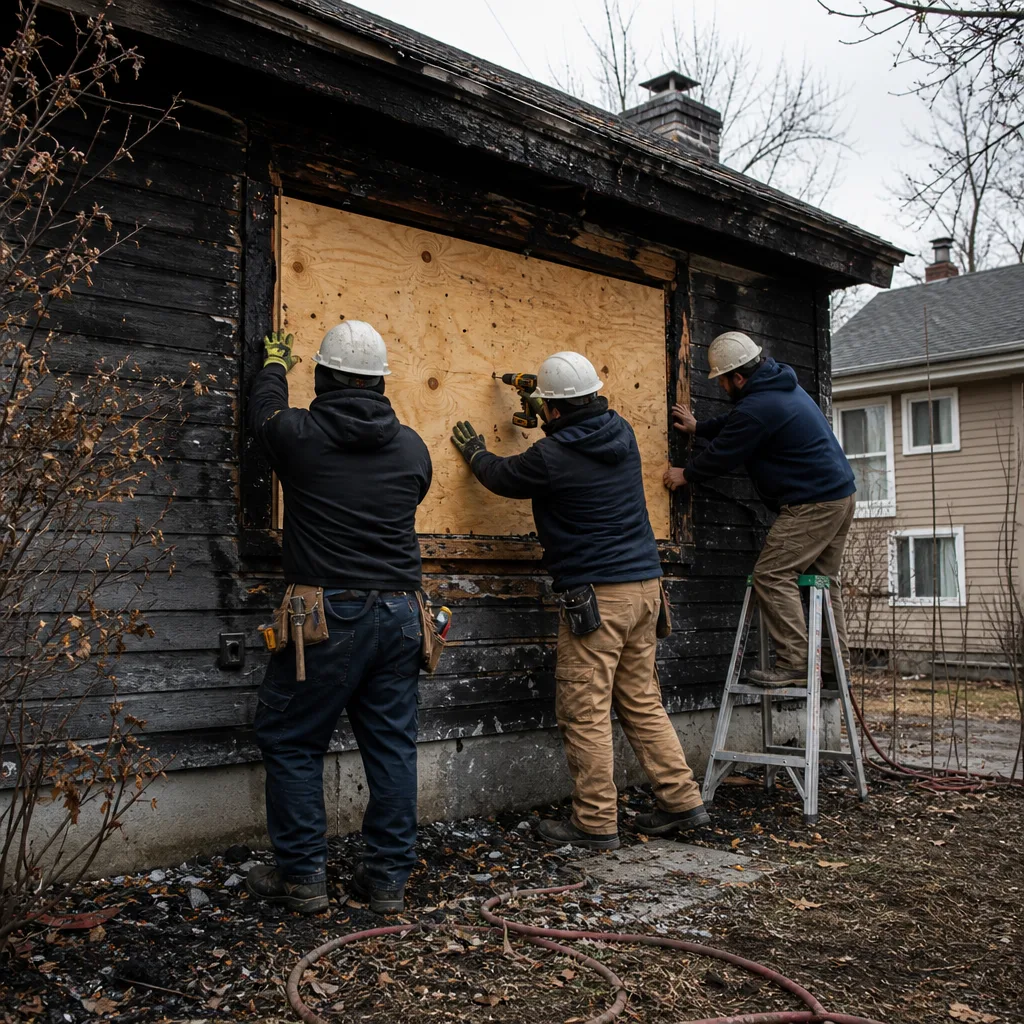
- 1
A real person answersNo phone trees - you reach a local pro.
- 2
You get an upfront price rangeHonest numbers before anyone is dispatched.
- 3
A background-checked tech heads outLicensed & insured, dispatched right away.
- 4
You approve before work beginsNothing starts until you say go.
Common Storm & Disaster Restoration Problems We See in Minneapolis Homes
- Ice dam water hiding for weeks. Minneapolis’s pre-1950 housing stock, especially the Craftsman bungalows and American foursquares in South Minneapolis and Northeast, often has minimal attic insulation. Heat escapes, melts rooftop snow, and the water refreezes at the cold eave, backing up under shingles into wall cavities. Homeowners don’t notice for weeks because there’s no visible leak on the ceiling. By the time we open the wall, mold is already established in the cavity.
- Asbestos hidden in legacy materials. A lot of Minneapolis storm and flood work involves homes built before 1980. That means floor tile mastic, pipe insulation, and even some plaster textures can contain asbestos. A simple dry-out suddenly becomes a hazmat-regulated abatement with containment and negative air. Out-of-market adjusters get sticker shock. We expect it, we plan for it, and we tell you before we start, not after.
- Sump pump failure during spring snowmelt. Minneapolis frost depth exceeds 42 inches, so every home here has a deep basement and nearly every one has a sump pump. When rapid warming dumps several inches of water equivalent in just a few days, pumps fail from overload, age, or power outages that hit during the same storm. A finished basement in a 1950s-70s Minneapolis home becomes a floodplain in an afternoon.
- Lead paint complications in plaster-and-lath homes. In the 1910s-1930s bungalow corridors of Longfellow, Powderhorn, and Northeast Minneapolis, interior walls are frequently plaster with lead-based paint. When ice dam water migrates down inside those walls, you’re not looking at a simple drywall patch. You’re looking at lead abatement and full plaster demolition. It’s a cost multiplier that catches out-of-market adjusters off guard, but it’s routine for any Minneapolis restoration crew that actually knows this city.
Pricing for Storm & Disaster Restoration in Minneapolis, MN
Let’s talk real numbers, because you deserve them before you let anyone inside your house. Roof tarping in Minneapolis typically runs $350 to $900 depending on roof pitch, height, and the size of the damaged area. A one-story bungalow in Powderhorn is a different job than a three-story turn-of-the-century home in the Wedge. Emergency board-up runs $200 to $600 per opening, with better rates when it’s part of a full restoration package rather than a standalone service call. Flood damage restoration after a sump failure or ice dam is the biggest variable: a small contained leak might run $1,800 to $4,500, while a full finished-basement flood with asbestos abatement and lead protocols can run $8,000 to $25,000 or more depending on the legacy materials in the house. We do free estimates, we give you a written scope before any work starts, and we honor our no-trip-charge policy inside our own county. Seniors and veterans always get 10% off. Call (888) 690-6095 and you’ll get an honest number, not a phone pitch.
Trusted Brands We Service in Minneapolis
When we arrive at a Minneapolis home, we’re not hauling rental equipment from a national chain. Wade’s Restoration runs professional-grade gear that the industry itself trusts: Phoenix and Dri-Eaz for drying and dehumidification, Injectidry for targeted floor and wall cavity drying, XPOWER and B-Air for air movement. We keep parts and supplies stocked for Minneapolis customers, which means we don’t lose a day waiting on a shipment from Ohio when your basement is wet. The right equipment, in the right hands, makes the difference between a rough dry and a full restoration. We bring both.
We Also Serve Cities Near Minneapolis
While this page is about Storm & Disaster Restoration in Minneapolis, our crews regularly cross city limits for jobs in Saint Louis Park, Richfield, Edina, and Saint Anthony. If your home is in one of those communities and you need the same level of service Minneapolis homeowners get from our Storm & Disaster Restoration division, call us. We treat the whole metro with the same written-scope, documented-moisture-readings approach.
Serving Minneapolis, MN - Our Local Coverage Area
We’re based in the Minneapolis area and know this community well. Use the map below to see our service coverage - if you’re nearby, we can almost certainly help.
FAQs - Storm & Disaster Restoration in Minneapolis
Because many Minneapolis homes built before 1940 have plaster-and-lath walls finished with lead-based paint, and ice dam water that migrates down interior wall cavities saturates that plaster and the paint on it. When the plaster has to come out because it’s waterlogged and mold-contaminated, the lead paint comes with it, which triggers lead abatement regulations under EPA renovation rules. In the Powderhorn, Longfellow, and Northeast bungalow corridors, we see this on a regular basis. It’s not an upsell. It’s the law, and it’s what a full restoration in a pre-1950 Minneapolis home actually involves. Call (888) 690-6095 and we’ll walk you through what applies to your specific house.
Mold can establish in a wet wall cavity within 48 to 72 hours, but ice dam intrusion in Minneapolis often goes undetected for two to four weeks because there’s no visible ceiling stain until the water has migrated far enough to show. By the time a homeowner notices the tell-tale bubbling paint or a musty smell, mold has typically already colonized the rim joist cavities and the back side of the plaster. That’s why daily moisture readings matter. We document the actual moisture content of the cavity, not just what you can see on the surface. Call (888) 690-6095 if you smell something off in your Minneapolis home, especially after a thaw.
Yes, frequently. Minneapolis’s housing stock includes a large percentage of pre-1980 construction, and that means legacy floor tile mastic, pipe insulation, popcorn ceiling texture, and some plaster compounds contain asbestos. If the water damage requires removing those materials, the crew must follow hazmat containment protocols: plastic sheeting, negative air machines, HEPA filtration, proper disposal manifests. A crew that skips this is not doing you a favor. They’re creating a bigger liability and a bigger expense down the road. We plan for asbestos from the first assessment, not as a surprise mid-job. Call (888) 690-6095 and we’ll tell you what your house’s age tells us before we cut anything open.
When rapid warming melts several inches of water-equivalent snow in days, a sump pump that can’t keep up or dies from age or power outage lets the water rise in the sump pit and then across the basement floor. In a finished basement, that means carpet and padding get saturated, drywall wicks water up from the base, and the rim joists along the top of the foundation wall soak up moisture that most people never even check. If the water sits for more than two days, mold starts in those rim joists. We extract, we dry, and we document moisture levels until the structure is actually dry. Call (888) 690-6095 and we can have extraction running inside the hour if you’re in Minneapolis.
Because Minneapolis winters don’t give you a dry week to schedule repairs. A small opening in the roof membrane will take on water with every subsequent snow, and that water migrates into insulation, drywall, and eventually your living space. The cold also makes roof repairs harder and more dangerous for the next few days, which is exactly when the next storm often arrives. Tarping the same day, properly secured against Minneapolis wind, stops the bleeding. We’ll document everything for your insurance claim while we’re up there. Call (888) 690-6095 and Wade will tell you if it’s safe to ladder up or if you should stay off entirely until we arrive.
Written by Wade Ferris, Owner at Wade’s Restoration of Minneapolis, serving Minneapolis and the surrounding metro since 2007.