
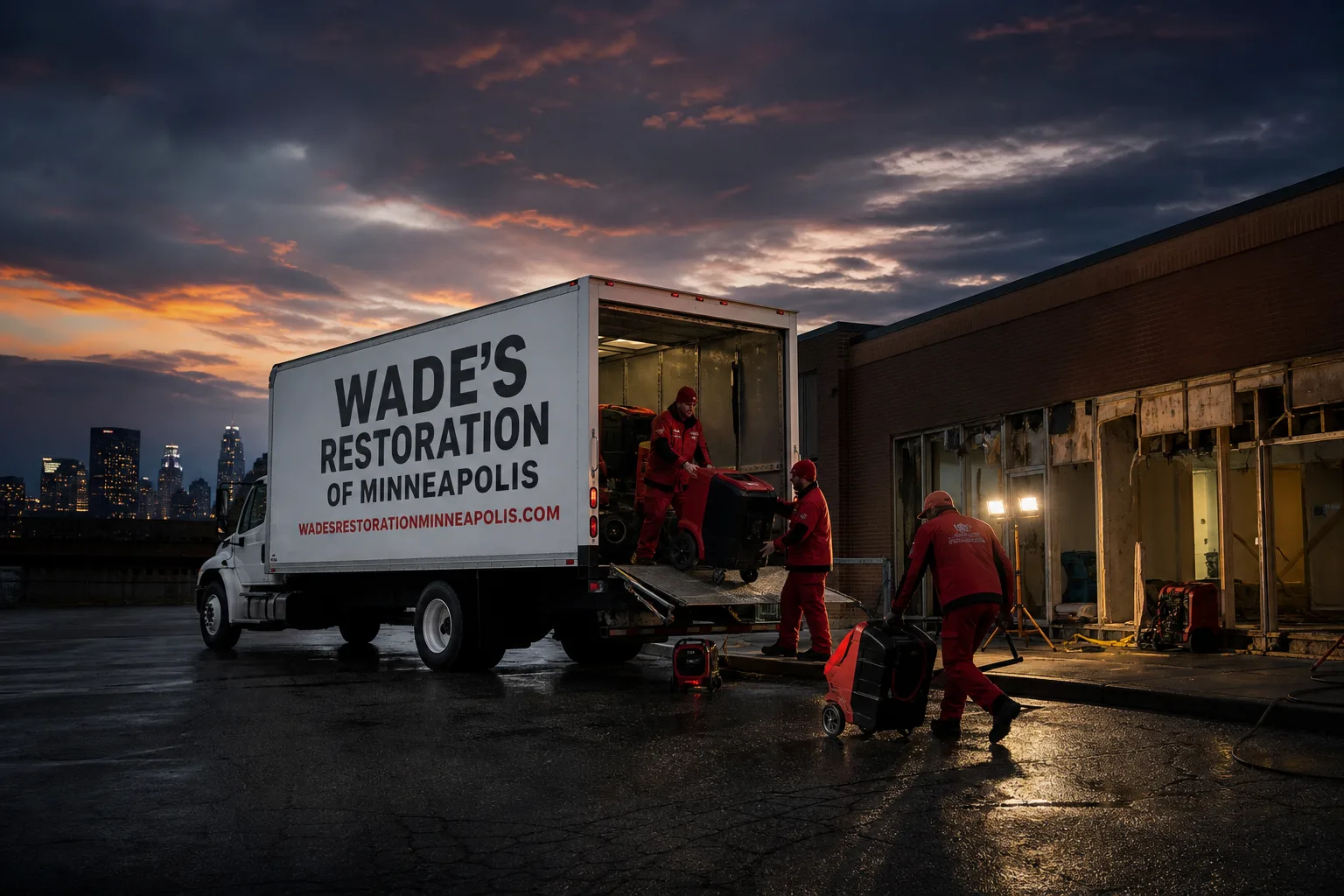
Fast, Reliable Storm & Disaster Restoration Across Dayton
When a storm tears through Dayton, the damage doesn’t wait for business hours. Wade’s Restoration of Minneapolis has crews serving Dayton around the clock, and Wade answers his own phone. Flood damage from the Crow River and Mississippi confluence, wind damage to doors and roofs, and storm debris piled against foundations all need to be addressed quickly. Waiting means mold takes hold in soaked drywall and water spreads further into framing. Call (888) 690-6095 and Wade can have extraction running inside the hour, because in Dayton the window between the first river crest and the second is often only days, not weeks.
Dayton sits where the Crow River meets the Mississippi, which means storm and flood calls here involve a different triage than neighboring towns. We know the subdivisions off South Diamond Lake Road, the older farmsteads along Territorial Road, and the newer platted blocks east of Highway 101. We know which lots fall inside FEMA’s Crown River backwater flood zone before we ever pull up to the curb. That local knowledge changes the order of operations on every Storm & Disaster Restoration job we run here, and it’s why Dayton homeowners call us first.
Why Wade’s Restoration of Minneapolis Is Dayton’s Preferred Storm & Disaster Restoration Company
Wade Ferris started this company in 2007, and his name is still the one on the truck. He is not a franchise operator. He publishes his address and license number, and when you call the number on this page, you get a live person, often Wade himself, twenty-four hours a day. That matters in Dayton, where a storm that floods your basement at 2 a.m. on a Tuesday doesn’t politely wait for a call center to open.
Storm & Disaster Restoration in Dayton is not a side line for us. We’ve handled finished-basement floods in neighborhoods east of Highway 101, wind-torn overhead doors on newer construction, and roof tarping after spring thunderstorms that rolled through in under an hour. The feedback we hear most from Dayton customers is that we show up when we say we will, we document everything in writing, and the price we quote is the price on the invoice. Wade’s 90-Day Done Right Promise covers every water, fire, and mold restoration job in Dayton, stamped in writing on the contract. If it’s not done right, Wade makes it right. Ask anyone on your street.
Our Storm & Disaster Restoration Services in Dayton
Flood Damage Restoration
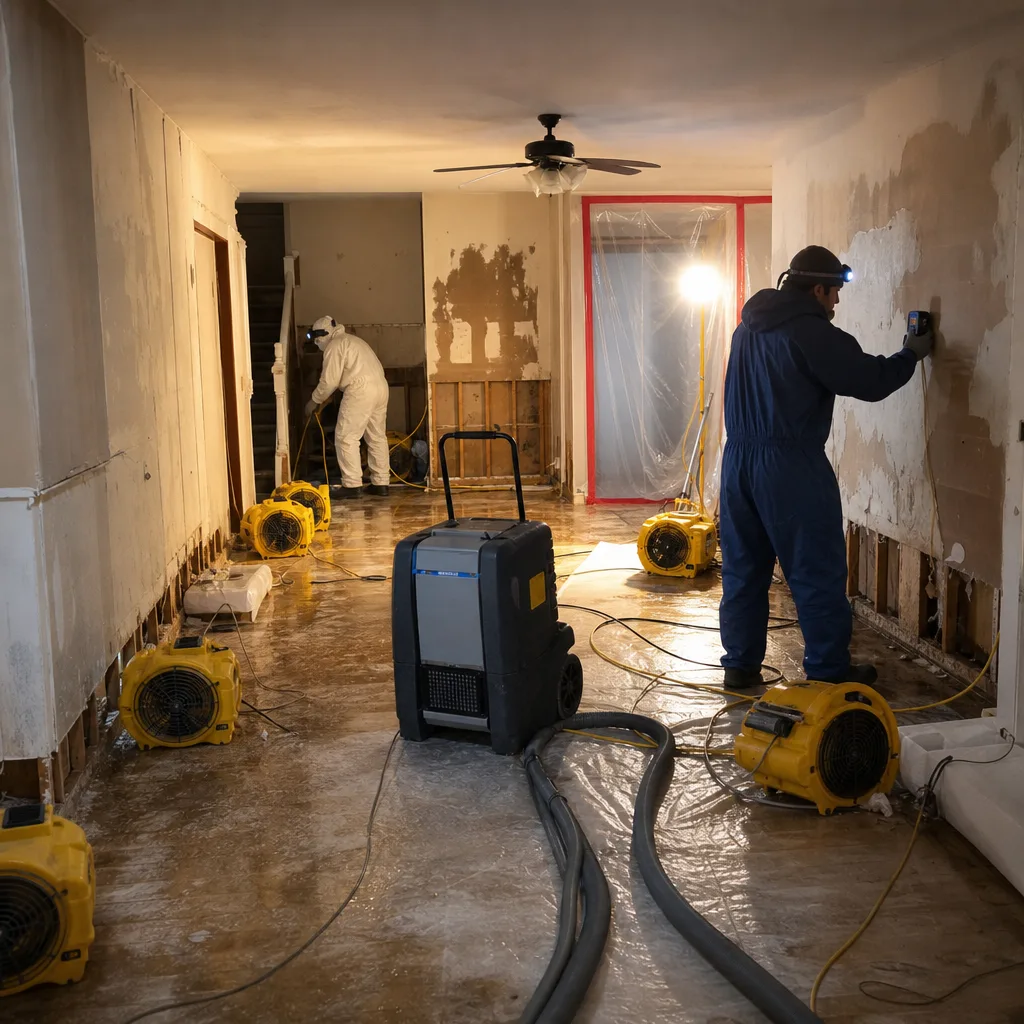
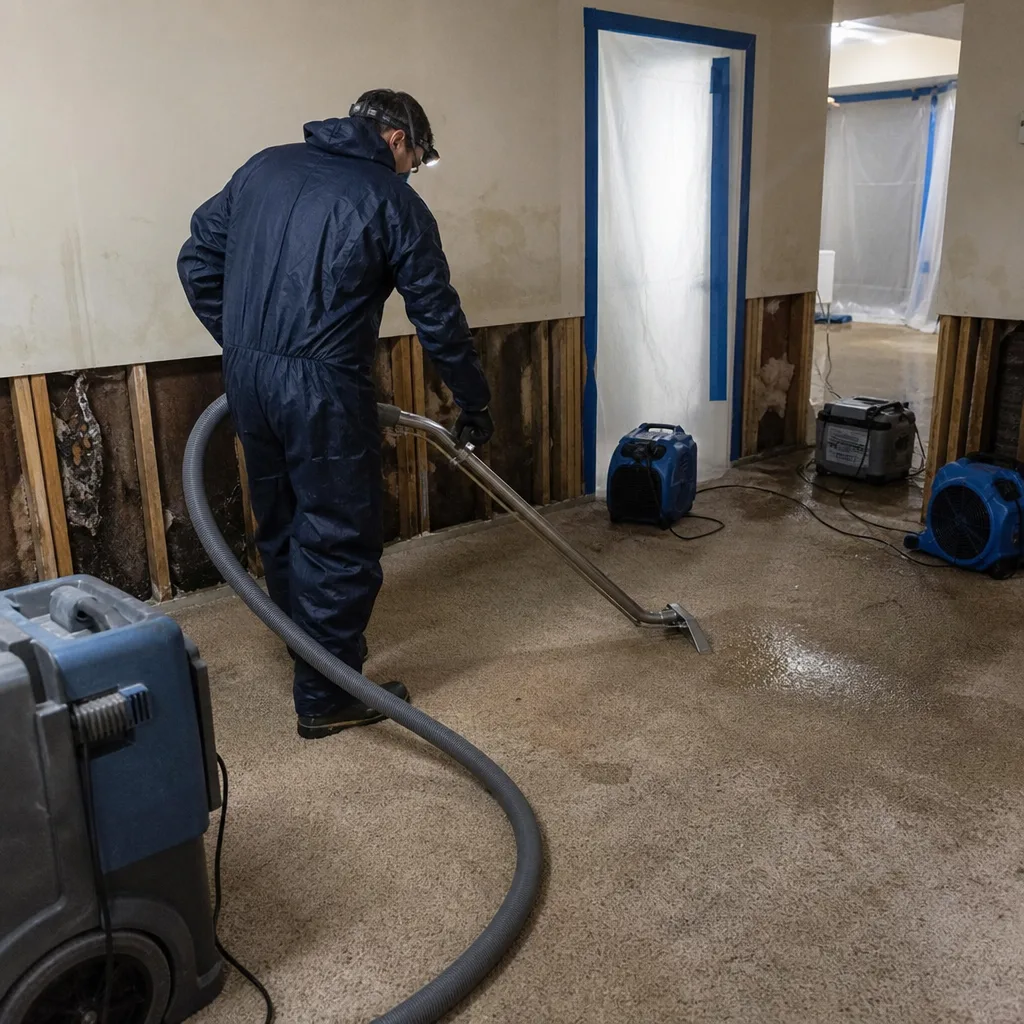
Dayton’s flood risk is different from Rogers or Champlin because of the two-river crest pattern. When spring snowmelt swells both the Crow and the Mississippi at once, water can come at a property from two directions. Our flood restoration work in Dayton starts with mapping the source and checking the FEMA panel before any demolition begins. Then we extract standing water, cut soaked drywall, and set professional-grade drying equipment: XPOWER air movers, Dri-Eaz dehumidifiers, Injectidry floor systems. Wade’s crew takes moisture readings every single day and hands you the full log at the end of the job. Almost nobody in the trade does that. It holds us accountable and gives your adjuster clear evidence of what was wet, how wet, and how we dried it.
Storm Damage Cleanup
High winds and heavy rains leave Dayton homes with downed branches, torn shingles, and debris pushed against foundations and window wells. We handle the full cleanup: structural debris removal, wet building material removal, and safety cordoning of damaged areas. When a storm leaves your property exposed, the first job is to stop the bleeding: clearing paths, securing openings, and getting the wet stuff out before the next band of weather arrives. Dayton’s rapid residential build-out since the 2000s means many homes have finished basements with drywall that wicks water fast. We cut only what’s wet, document everything, and keep the scope in writing before we take out a single stud.
Emergency Board-Up
When wind throws a tree limb through a window or tears a door off its track, your home is open to weather, animals, and people. Our emergency board-up service for Dayton gets a crew to your property fast, with plywood, fasteners, and the tools to secure every opening correctly. We’re also watching the rivers. If the Crow is nearing flood stage and your property sits in the backwater flood zone, we recommend board-up and flood skirt placement earlier than we would in Anoka, because the water in Dayton moves on its own calendar.
Roof Tarping
A windstorm that peels back shingles or removes a section of roof sheathing leaves a hole that the next rainfall will exploit. We tarp roofs in Dayton to cover exposed areas, overlapping generously and fastening so the wind doesn’t tear the tarp off before repairs start. Roof tarping is not a repair; it’s a holding action. But a good tarp buys you the time to get a written repair scope and an adjuster decision without a wet interior compounding the damage every time it rains. In Dayton’s spring, when the thaw is already saturating the ground and the rivers are rising, a dry interior is the only thing standing between a roof repair and a full basement mold remediation.
What happens when you call
- 1
A real person answersNo phone trees - you reach a local pro.
- 2
You get an upfront price rangeHonest numbers before anyone is dispatched.
- 3
A background-checked tech heads outLicensed & insured, dispatched right away.
- 4
You approve before work beginsNothing starts until you say go.
Trusted Brands We Service in Dayton
Dayton homeowners have every major door, window, and roof system in service, and we work with all of them. Our crews are IICRC-certified and RIA-affiliated, trained on professional-grade equipment like Dri-Eaz dehumidifiers, XPOWER air movers, Injectidry floor drying, and B-Air duct and structural drying systems. We stock common parts and materials locally so we’re not waiting days for anything when a Dayton job is open to the weather. If your storm damage involves a specific manufacturer’s door track or a custom panel, we’ll source it fast and install it to spec, not with whatever commodity panel is sitting on the shelf.
Common Storm & Disaster Restoration Problems We See in Dayton Homes
- Finished basements flooded from Crow River backwater, not from rainfall. The water comes up through floor drains and sump pits, not through windows, because the water table rises around the foundation. That changes where we cut and how we dry.
- Wind-rated overhead doors replaced with commodity panels. A garage door that was rated for wind load before a storm is not automatically rated after someone slaps in a generic panel. If the track and panel system aren’t matched, the next wind event can tear the whole assembly and let floodwater pour into the garage and the finished space above or beside it.
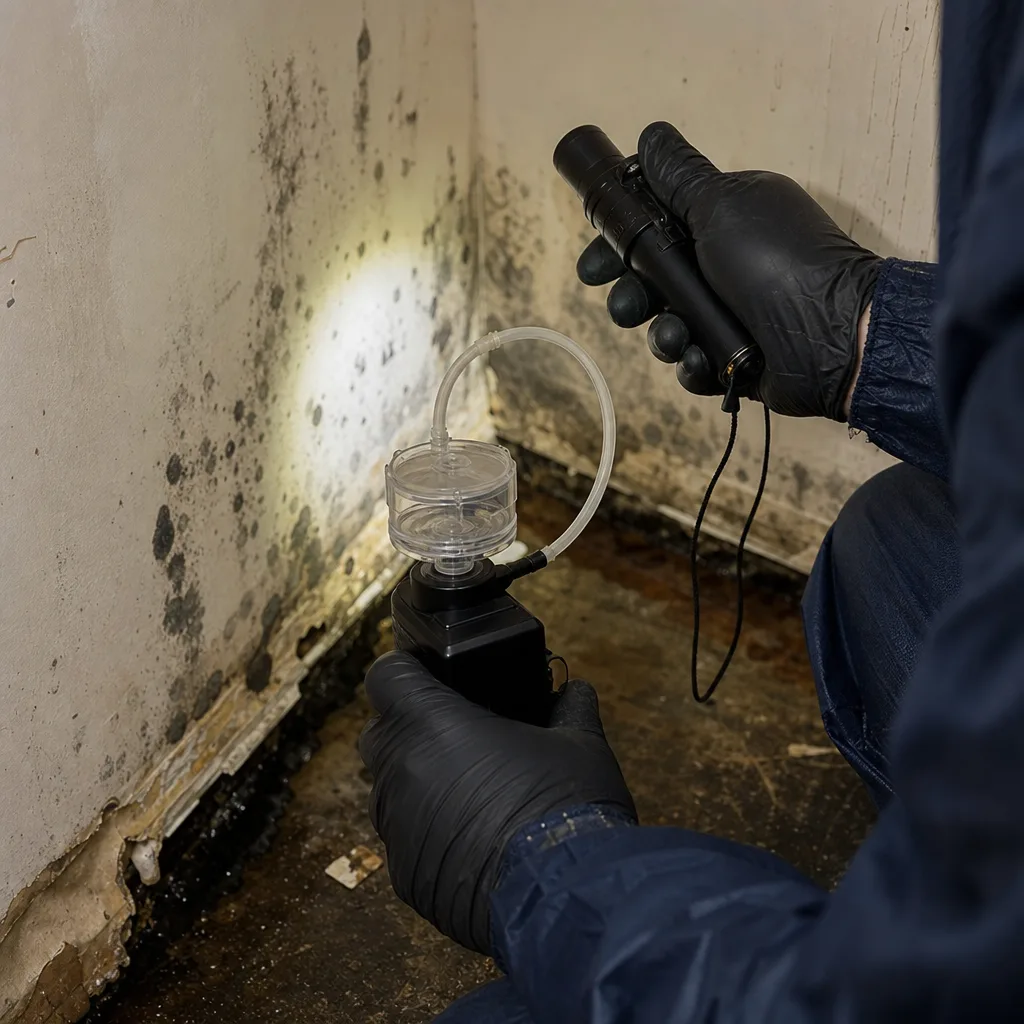
- Too-slow drying in high-humidity spring conditions. Dayton’s spring thaw air is humid, and the second Mississippi crest often follows the first by days, not weeks. That means the drying window is short and the mold window is long. Standard airflow calculations without taking that humidity into account will leave a wet envelope that smells like basement in two weeks.
- Claims rejected because the FEMA panel was never pulled. Homeowners in Dayton’s platted subdivisions often discover after a flood that their lot sits within a FEMA-mapped Special Flood Hazard Area tied to the Crow River backwater. If demolition starts before that determination is documented, adjusters can push back and the homeowner is left holding the invoice. We pull the panel before we pull drywall.
Pricing for Storm & Disaster Restoration in Dayton, MN
A typical flood damage restoration in a Dayton finished basement runs $3,800 to $12,000 depending on square footage, water depth, and how long it sat. Storm debris cleanup and board-up usually runs $900 to $2,500. Roof tarping on a single-family home in Dayton ranges from $650 to $1,800, depending on roof pitch, access, and the size of the damaged area. Emergency board-up of broken windows or doors runs $350 to $1,100 per opening. If you need wind-rated door panel replacement rather than a full door replacement, that’s most often $500 to $2,200 for the panel plus installation, dependent on the manufacturer and wind-rating spec. Every job includes a written scope before work starts, free second opinions on any written estimate, no trip charge inside our own county, and the Senior and Veteran 10% discount, always. Call (888) 690-6095 for an exact quote.
One note on the price: in Dayton, flood-zone documentation and adjuster coordination add a step that Champlin or Rogers jobs don’t always have. We don’t charge extra for that. Wade deals with the adjuster directly, so you’re never the one stuck relaying information between two sides. That’s part of the quote.
We Also Serve Cities Near Dayton
In addition to our work throughout Dayton, we run storm and disaster restoration calls in Champlin, Rogers, Anoka, and Ramsey. If you’re just across the river or the county line, the same writer’s phone, the same live answer, and the same 90-Day Done Right Promise apply. Call (888) 690-6095 and tell us where you are.
Serving Dayton, MN - Our Local Coverage Area
We’re based in the Dayton area and know this community well. Use the map below to see our service coverage - if you’re nearby, we can almost certainly help.
FAQs - Storm & Disaster Restoration in Dayton
Because if the property is in the Crow River backwater Special Flood Hazard Area, the insurance claim requires flood-zone documentation before demolition or drying can be submitted. Skipping that step means the adjuster can reject the claim and the homeowner pays out of pocket. We check the panel first, every time. If you’ve never looked at your FEMA panel, call (888) 690-6095 and we’ll walk you through what it says.
We inspect the track, the panel, the mounting points, and the fasteners, and we verify the panel’s wind-rating spec against what the door originally had. A wind-rated door that is repaired with a commodity panel will likely be the next failure point. In Dayton, where windstorms hit on the same days as heavy rain, a failed garage door means interior floodwater entry. If you’re not sure your door is still wind-rated, one call brings Wade out to check it.
Yes, and often it’s the only thing that does. A tarped roof keeps rain out of the upper structure, which keeps water from migrating down through wall cavities and into the basement. In Dayton’s spring, the time between a windstorm and the next Mississippi crest may be a few days. If the interior stays dry, you’re just repairing a roof. If it gets wet, you’re repairing a roof plus a basement mold remediation. Tarp early, call (888) 690-6095.
Newer Dayton subdivisions often have deep, finished basements with drywall and wall-to-wall carpet over concrete slabs, and many sit on low-lying platted lots that were developed after the 2000s build-out. When the water table rises during the Crow River spring crest, water comes up through the slab and into those finished spaces fast. Older homes in Dayton often have unfinished basements or stone foundations that breathe; newer finished basements trap the water and humidity, which is why they mold faster. We cut lower, dry longer, and document more in these houses.
It compresses it. The first crest from the Crow River may damage doors, windows, and the lower floor, and the second crest from the Mississippi can arrive days later. If your property is open to weather during that window, you get wet twice. We recommend board-up the same day the damage happens in Dayton, not the same week. Call (888) 690-6095 and Wade heads out.
Written by Wade Ferris, Owner at Wade’s Restoration of Minneapolis, serving Dayton since 2007.