
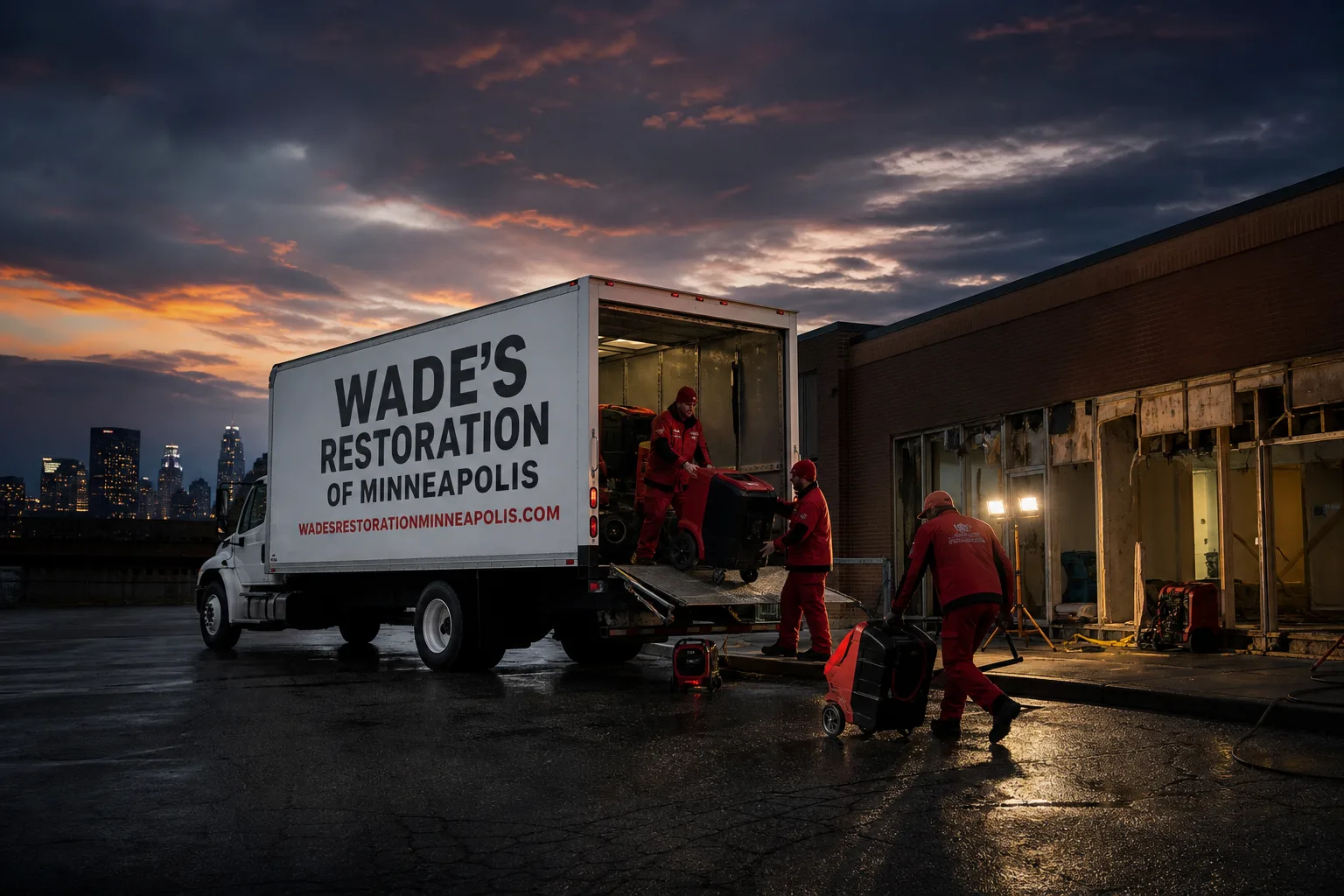
Fast, Reliable Sewage Cleanup Across Stillwater
Sewage backup in Stillwater homes needs immediate attention, and Wade’s crew gets to your door fast. Most sewage cleanup jobs in Stillwater run $900 to $4,200 depending on how far the black water traveled and whether it soaked into old plaster or flooring. Call (888) 690-6095 right now and Wade will answer his own phone. He’s been up at two in the morning with Stillwater homeowners more times than either of us can count, and he knows exactly what those 1880s brick basements do when sewage hits them.
Why Wade’s Restoration of Minneapolis Is Stillwater’s Preferred Sewage Cleanup Company
Ask anyone on a hill in Stillwater about the spring the river came up. Then ask who showed up. Wade has worked the lower downtown blocks, the hillside Victorians, and every crawl space in between. Homeowners in 55082 and 55083 know his truck. They know his phone number. And they know he writes his address and license number on every contract because he’s going to run into you at the hardware store on Saturday, and that matters more than any marketing pitch.
Wade deals with the insurance adjuster directly. You won’t be stuck relaying information between two sides while sewage sits in your basement. He takes moisture readings every single day and hands you the full log when the job’s done. Almost nobody in this trade does that. Every sewage cleanup job carries the 90-Day Done Right Promise in writing: if it’s not done right, Wade makes it right. One call brings him back.
Crews are dispatched from Wade’s Minneapolis-St Paul office, but the people who show up in Stillwater are trained on pre-1900 construction. They’re background-checked, uniformed, and IICRC-certified. They carry Dri-Eaz, Phoenix, and Injectidry equipment, and they’ll tell you straight what needs to happen and what doesn’t. No scare tactics. No upsell. Just the work, documented and photographed before, during, and after.
Our Sewage Cleanup Services in Stillwater
Our Sewage Cleanup team handles every kind of black water mess Stillwater throws at us. If it came from a toilet, a floor drain, a septic tank, or the river itself, we’ve seen it and cleaned it here.
Sewage Backup Cleanup
When the sanitary line backs up into a Stillwater basement, the clock starts immediately. Sewage carries bacteria, viruses, and parasites that soak into whatever it touches. In older homes with original wood floors and plaster walls, the damage zone can extend well beyond what’s visibly wet. We extract the standing water, remove the contaminated material that has to go, and sanitize everything else with proper antimicrobial treatments, not a mop and a prayer. Stillwater’s old construction absorbs sewage differently than the drywall boxes in the suburbs, and we plan the job around that.
Toilet Overflow Cleanup
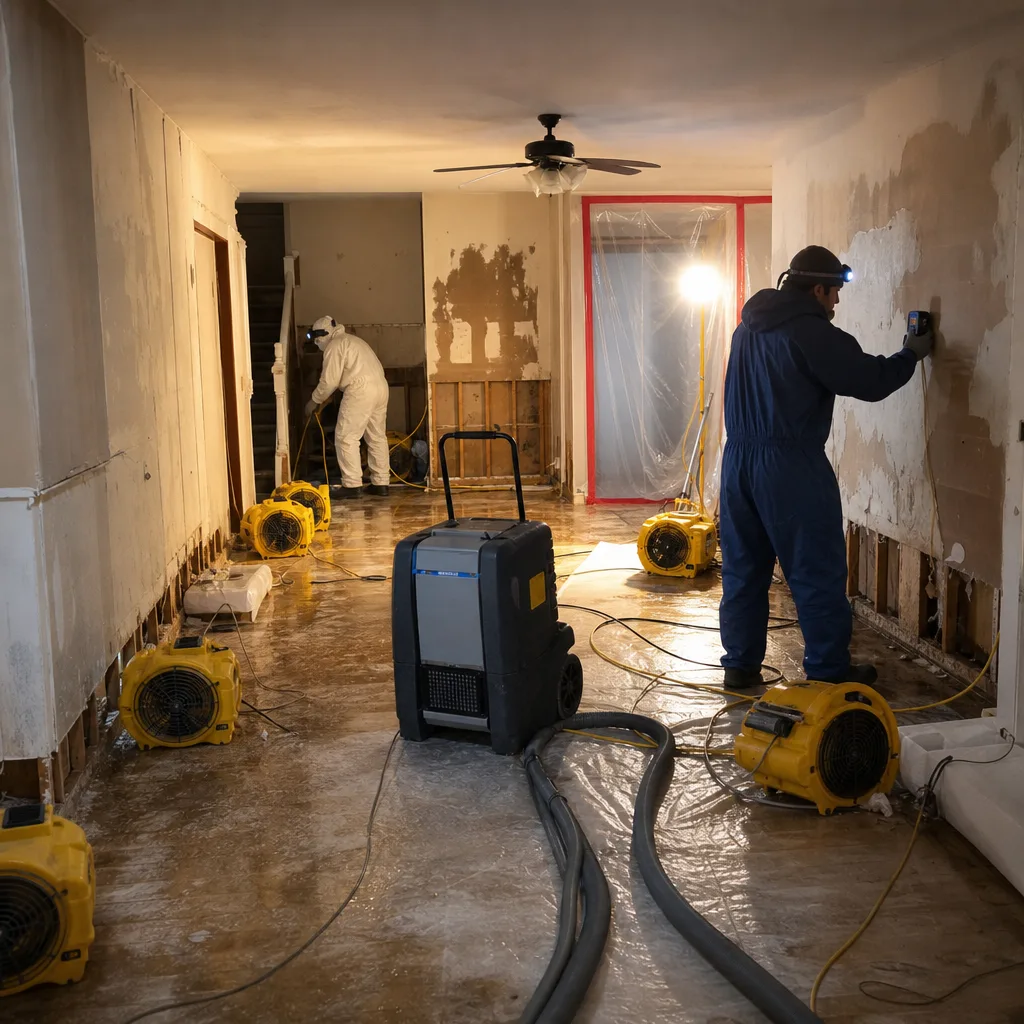
A toilet overflow in a Stillwater bathroom might seem minor until it’s run down through the floor into the basement below. We’ve opened ceilings in 19th-century homes and found sewage pooled in the joist bays. We cut out the contaminated drywall or plaster, treat the framing, and dry it properly before the wood starts to rot. If it happened on the second floor of a hillside Victorian, expect us to check every level below it. Water doesn’t stop at the floor.
Septic Failure Cleanup
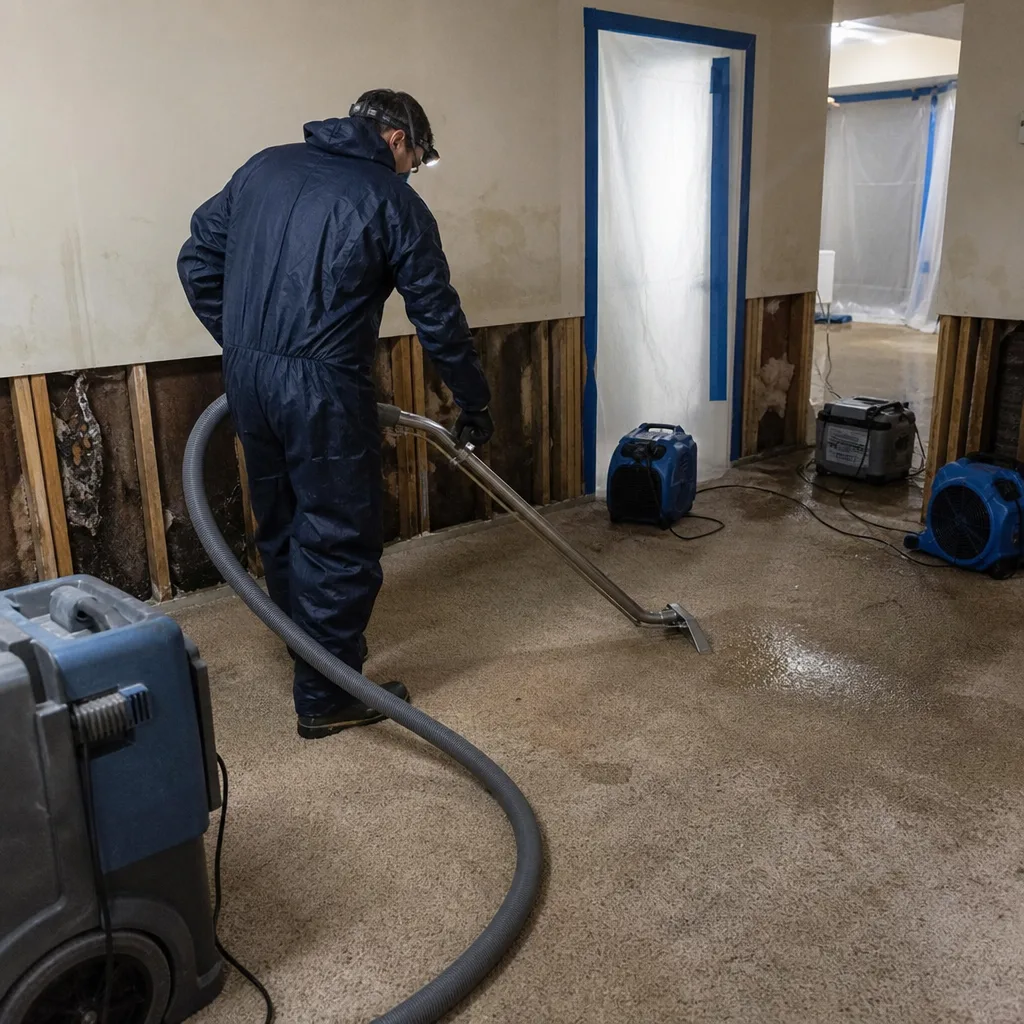
Stillwater has plenty of homes outside the municipal sewer lines that rely on septic systems. When a tank fails or a drainfield saturates, raw sewage can surface in the yard or back up into the house. We pump out what’s accessible, clean the affected areas, and coordinate with your septic contractor so the root problem gets fixed while we handle the contamination. You don’t need two companies pointing fingers while your basement smells like a barn. Wade will be there himself to see the whole picture.
Black Water Extraction
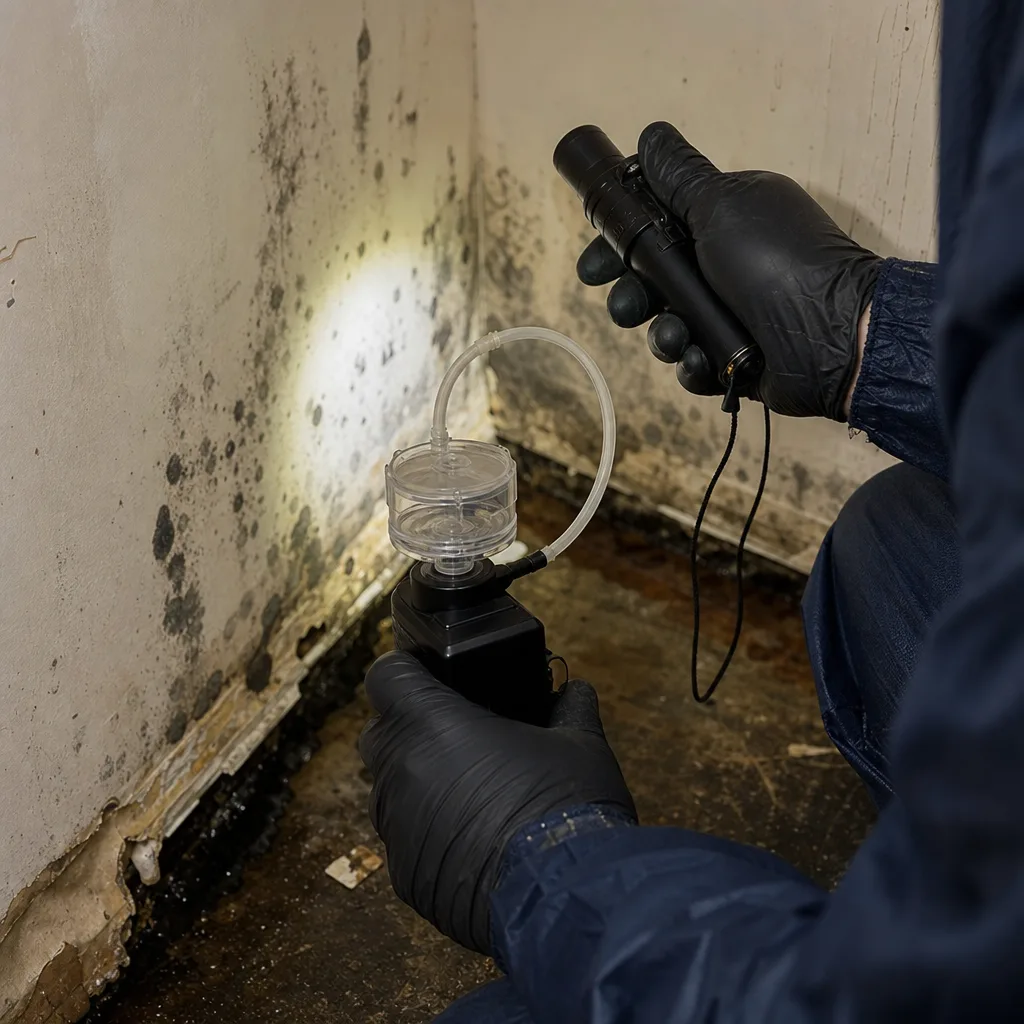
Black water is the term for any water containing human waste. It’s not the same as a gray water leak from a washing machine. It requires full protective gear, proper disposal, and aggressive sanitization. In Stillwater’s lower downtown, black water often arrives with the river itself. When the St. Croix rises and overwhelms floor drains in old commercial basements, the mix is sewage plus silt plus whatever the river picked up upstream. We bring Dri-Eaz extraction equipment rated for this exact scenario and start pulling it out within the hour of the call.
What happens when you call
- 1
A real person answersNo phone trees - you reach a local pro.
- 2
You get an upfront price rangeHonest numbers before anyone is dispatched.
- 3
A background-checked tech heads outLicensed & insured, dispatched right away.
- 4
You approve before work beginsNothing starts until you say go.
Trusted Brands We Service in Stillwater
We don’t run generic equipment on Stillwater’s old buildings. We use Dri-Eaz pumps for heavy extraction, Phoenix dehumidifiers for controlled drying, and Injectidry systems that pull moisture from inside walls and ceilings without tearing them apart. On a job where the plaster is original and the owner wants it saved, Injectidry is the difference between restore and gut. We keep parts and filters stocked for these machines, so a broken belt or a clogged intake doesn’t turn into a day-long delay while your basement stays wet. Fast turnaround matters when you’re dealing with sewage in a home that’s been standing since the 1880s.
Common Sewage Cleanup Problems We See in Stillwater Homes
- Spring ice jams pushing river water and sewage into lower downtown basements. When the St. Croix breaks up, the water has nowhere to go except into the old brick basements along Water Street. The 1880s common brick down there drinks water like a sponge and gives it back slowly. Standard drying schedules won’t work.
- Original horsehair plaster soaking up sewage from a backup. Plaster is porous. Once sewage saturates it, you either treat it in place with a system like Injectidry or you cut it out. Cutting it out means losing material that nobody makes anymore. We try to save it first.
- Knob-and-tube wiring intersecting wet plaster and framing. Sewage plus water plus old electrical systems is a dangerous combination. We never start cutting into a wall in a pre-1920 home until we know what’s behind it. That’s not hesitation, it’s how you avoid a fire.
- Steep bluff lots funneling stormwater into foundations and window wells. The hillside streets of Stillwater send every rainstorm downhill into someone’s basement. When a floor drain backs up at the same time, you get sewage riding the groundwater right into your finished space. We see this cycle every spring and fall.
Pricing for Sewage Cleanup in Stillwater, MN
A small toilet overflow contained to one bathroom in Stillwater typically runs $900 to $1,800. A full basement backup with standing sewage across finished living space runs $2,800 to $4,200. Crawl space sewage removal under an older hillside home runs $1,500 to $3,500 depending on access, contamination depth, and whether we’re treating wood framing or replacing it. If the river came in and mixed with sewer lines, costs climb with the square footage and the amount of demolition required. Wade gives you a written scope and price before work starts. No surprises at the door. Estimates are free, and if you already have a written estimate from another company, Wade will give you a free second opinion on it. He’ll also knock $40 off any repair over $200, and seniors and veterans always get 10% off.
We Also Serve Cities Near Stillwater
Our crews regularly work in Mahtomedi, Lake Elmo, North Saint Paul, and Oakdale, so if you’re just outside Stillwater proper, we still get to you quick. That said, the real depth of our experience is on Sewage Cleanup in Stillwater itself, where the old brick, the river, and the hills make every job different from the last.
Serving Stillwater, MN - Our Local Coverage Area
We’re based in the Stillwater area and know this community well. Use the map below to see our service coverage - if you’re nearby, we can almost certainly help.
FAQs - Sewage Cleanup in Stillwater
Older Stillwater brick buildings need slower, gentler drying. The 1880s common brick in the downtown blocks absorbs sewage water deeply and releases it slowly. If you hit it with aggressive airflow and high heat, the face of the brick can spall or crack. We dial back the air movement, extend the drying timeline, and monitor moisture daily. Modern drywall and OSB can be dried fast and often replaced cheaply. Historic masonry can’t.
Yes, it will. Original horsehair plaster and knob-and-tube wiring are common in Stillwater’s Victorians, and both demand careful handling. We use Injectidry systems to pull moisture from inside plaster walls without ripping them open. Before any demolition, we check for live knob-and-tube wiring in the affected walls and ceilings. Ripping into an old wall without checking is how you start an electrical fire. We move methodically, document everything, and coordinate with your adjuster so the restoration matches what the house actually is.
River-driven backups dominate. When the St. Croix ice jams and snowmelt hits, water rises into the floor drains of the old commercial basements along Water Street. That water brings river silt, sewage from overwhelmed municipal lines, and whatever else was on the street. It’s a full black water event every time. We treat it with full PPE, proper extraction, and sanitization protocols written for Category 3 water.
Yes, in many cases. Stillwater has local historic preservation guidelines that apply to designated structures, especially in the downtown commercial district. If your building is listed or contributing to a historic district, demolition and material removal may require review from the city’s historic preservation officer. We handle that coordination for you. After a spring flood pushed sewage into a Water Street block, our crew coordinated with the city before any demolition, treated the horsehair plaster in place, and protected the old common brick with modified drying. That’s how you work in a town like this.
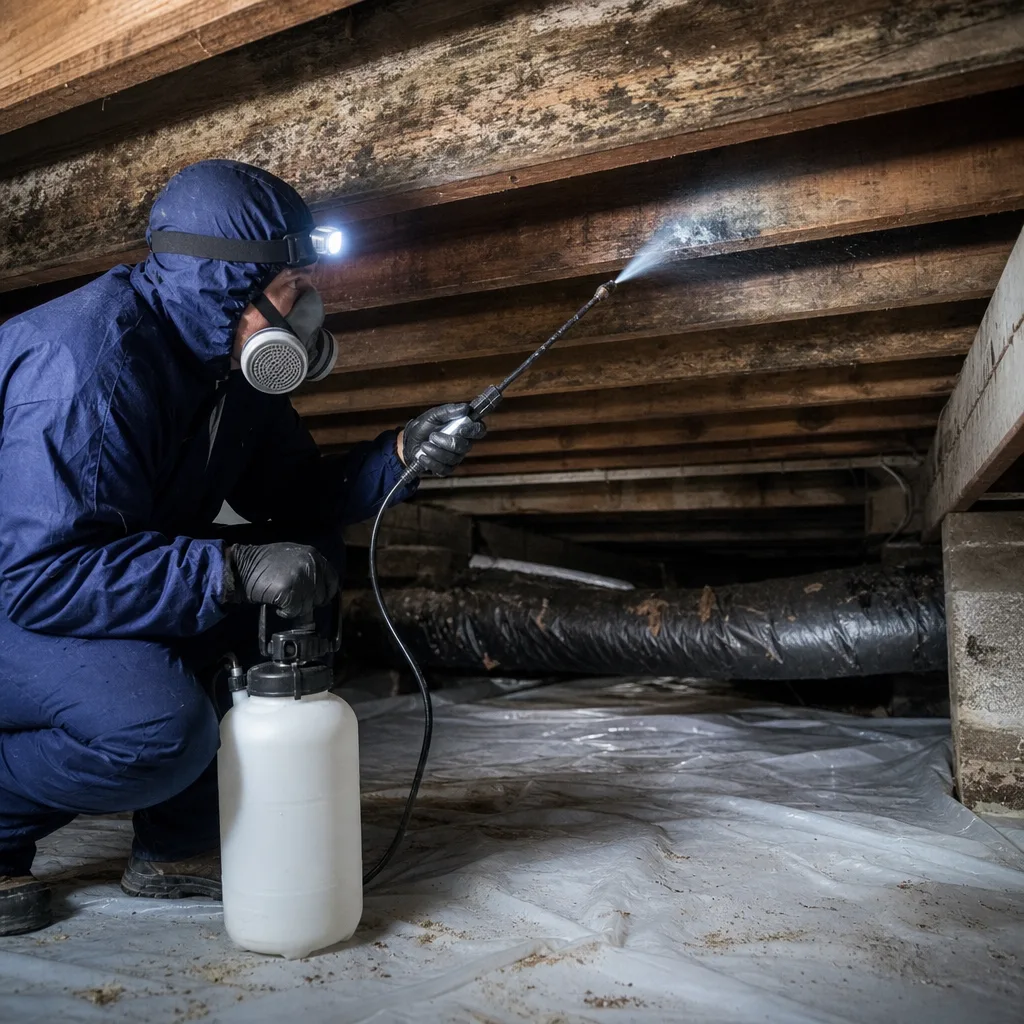
Yes. We extract sewage from crawl spaces under hillside homes without jacking or shifting the foundation. Access is usually through the original hatch or a small access point, and we use low-profile extraction and drying equipment designed for tight spaces. The old limestone and unreinforced brick foundations in Stillwater don’t respond well to heavy machinery or aggressive ground pressure, so we keep the work lightweight and controlled. We’ve done dozens of these on the bluff slopes, and we know how to get in and out without making the problem worse.
Call Wade’s Restoration for Sewage Cleanup in Stillwater
If you have sewage in your Stillwater basement, bathroom, or crawl space right now, call (888) 690-6095. Wade answers. He’ll tell you what he thinks over the phone, and he’ll tell you if he thinks you can wait until morning or if he’s heading out now. You’ll get a written scope before work starts, photos of everything, and a name on the contract you’ll probably recognize from around town. That’s how it’s been since 2007, and that’s how it stays.
Written by Wade Ferris, Owner at Wade’s Restoration of Minneapolis.