
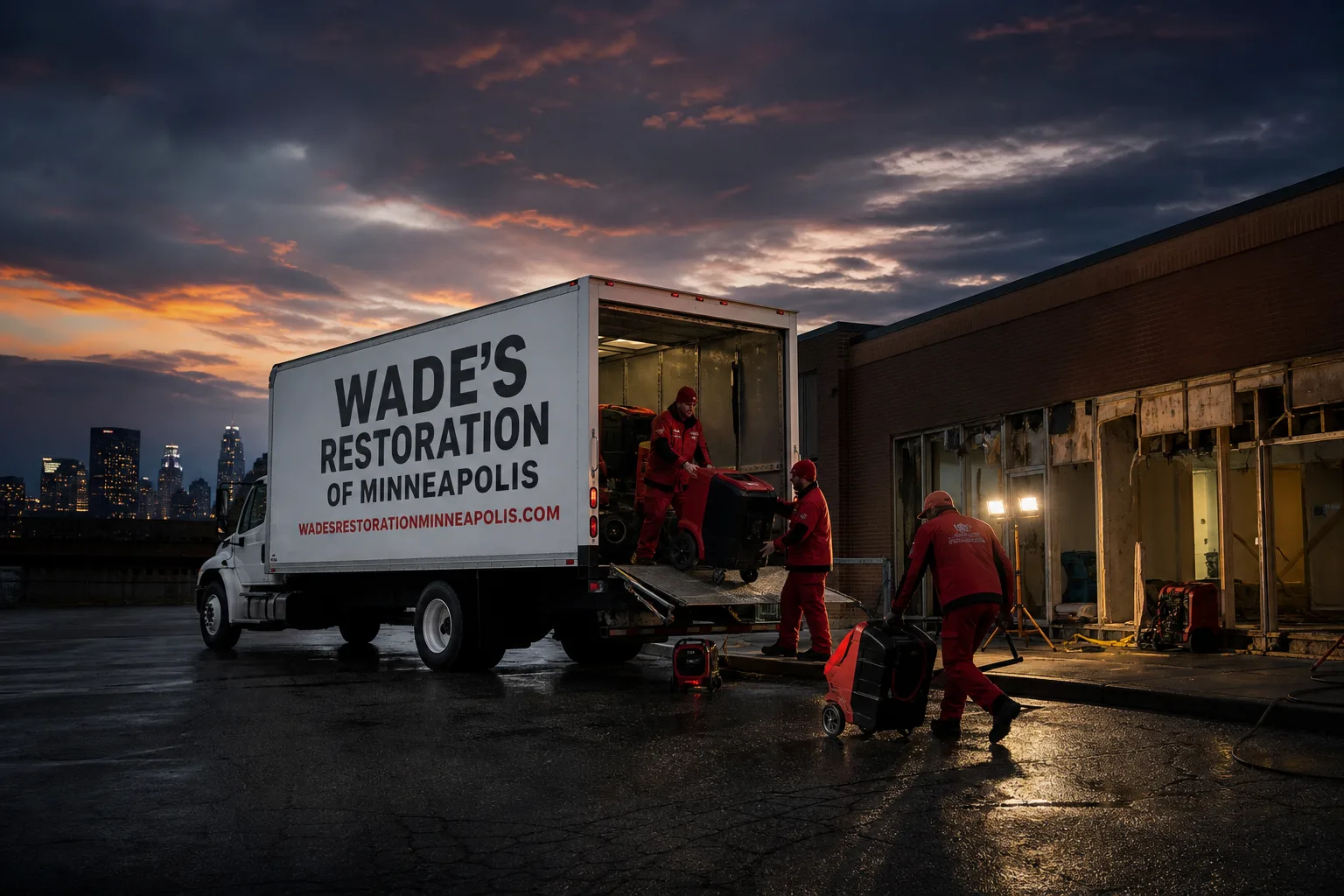
Fast, Reliable Sewage Cleanup Across Saint Paul Park
Sewage backup in a Saint Paul Park home is a health hazard you can’t afford to sit on. When a cast-iron drain line cracks during spring high water or river backflow pushes black water up through a floor drain, the clock starts immediately: contaminated water wicks into block walls, soaks studs, and starts growing bacteria and mold within hours. Wade’s Restoration answers the phone live, 24/7, at (888) 690-6095, and Wade Ferris heads out to Saint Paul Park himself, usually with extraction running inside the hour for emergencies on the river side of 55071.
We know the streets around Pullman Avenue, the blocks off Broadway near the old refinery, and the neighborhoods that climb away from the Mississippi toward I-494. That matters when you’re dealing with sewage in Saint Paul Park, because the contaminant profile here isn’t the same as it is three miles inland in Cottage Grove or Woodbury. River silt, agricultural runoff, and municipal backflow all mix into the water flooding basements in this town, and you need a crew that knows the difference.
Why Wade’s Restoration of Minneapolis Is Saint Paul Park’s Preferred Sewage Cleanup Company
Wade Ferris started this business in 2007 and put his own name on it. That wasn’t a marketing decision. It’s how accountability works in a small town. When you call about sewage in a crawl space off 3rd Street, the person who answers is Wade or somebody who works shoulder-to-shoulder with him. You won’t get a call center, you won’t get a rotating roster of subcontractors, and you won’t get a different price on-site than the one you heard on the phone.
Saint Paul Park homeowners call us because our crew has been through multiple flood seasons on the river-facing blocks and understands what saturated ground does to a 1960s block-wall foundation. We take moisture readings every single day on every job, and you get the full log when we’re done. Almost nobody in this trade hands over that kind of documentation. But Wade’s stance is simple: if you can see the numbers, you know the job was done right. And if it wasn’t, our 90-Day Done Right Promise means we return and make it right, in writing.
We’re IICRC-certified and RIA-affiliated. Our techs are background-checked and uniformed. The equipment on our trucks is professional-grade: Dri-Eaz, Phoenix, XPOWER, B-Air. And when you call at 2 a.m. with sewage backing up into a finished basement near Summit Avenue, you’re going to reach a live person who can get a truck rolling toward Saint Paul Park immediately.
Our service hub page explains the full Sewage Cleanup process from first call to final verification, including how we document everything for your insurance adjuster. We deal with adjusters directly, so you’re not the one stuck relaying information between two sides.
Our Sewage Cleanup Services in Saint Paul Park
Sewage Backup Cleanup
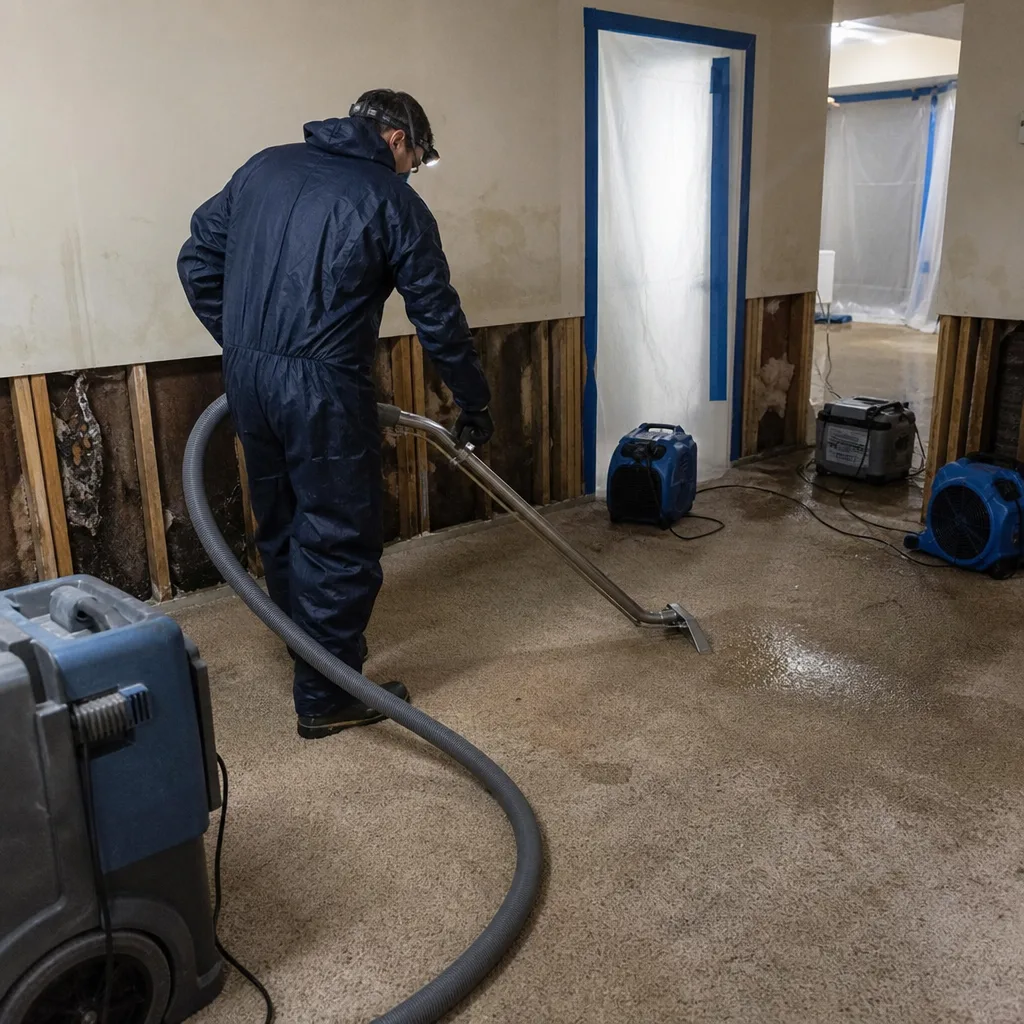
When a main line backs up into a Saint Paul Park basement, you’re dealing with category 3 water, also called black water. It carries pathogens, and it can’t be treated like a clean water leak. We extract it quickly, remove contaminated materials that can’t be sanitized, and dry the structure to verified moisture levels. The 1940s-to-1970s housing stock in Saint Paul Park means we frequently find original cast-iron drain lines that have cracked or been invaded by roots, especially after a wet spring saturates the ground along the river corridor.
Toilet Overflow Cleanup
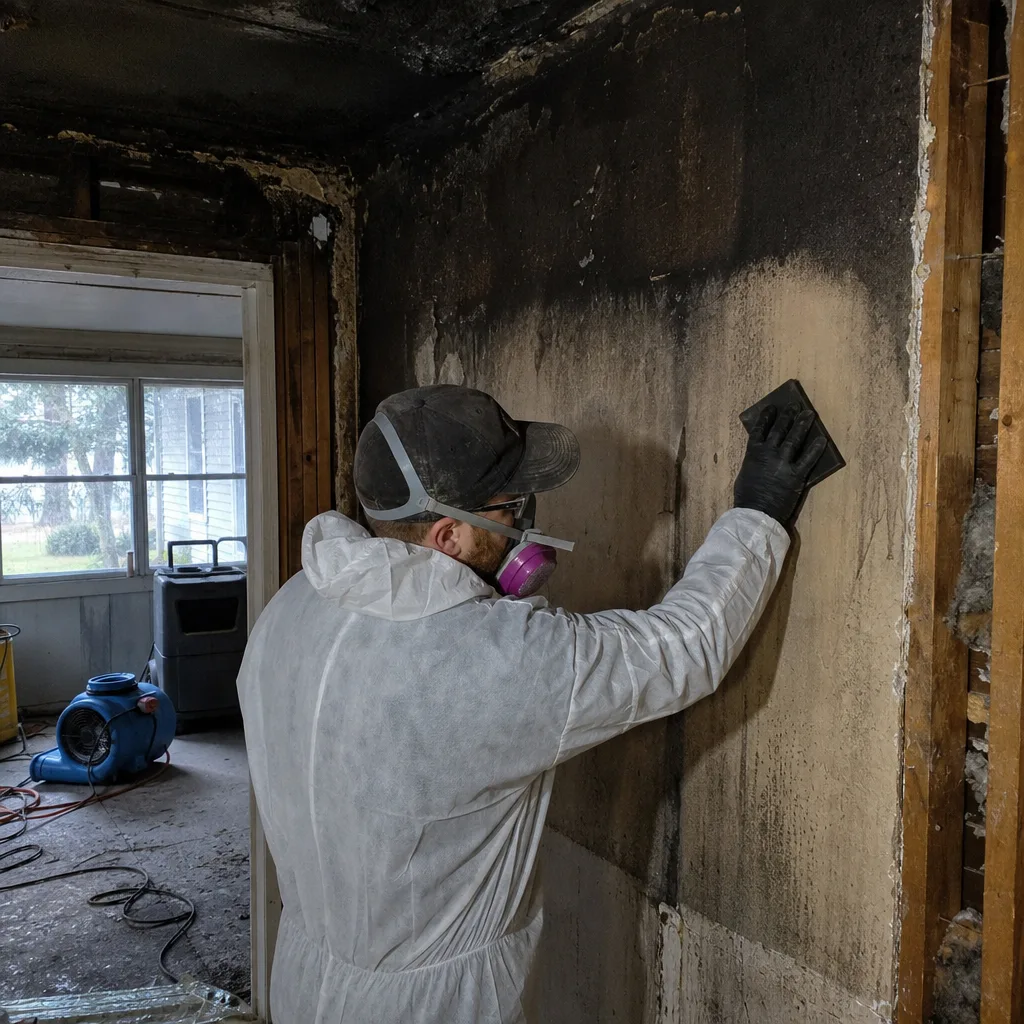
A toilet overflow in a home off Broadway Avenue rarely stays contained to the bathroom. Water runs through floor registers, seeps under baseboards, and works its way into the subfloor. In older Saint Paul Park homes with original hardwood or single-layer plywood subfloors, that water spreads fast. We remove the waste, cut out soaked flooring when necessary, sanitize the affected area, and dry the space with air movers and dehumidifiers until moisture meters confirm the framing is sound.
Septic Failure Cleanup
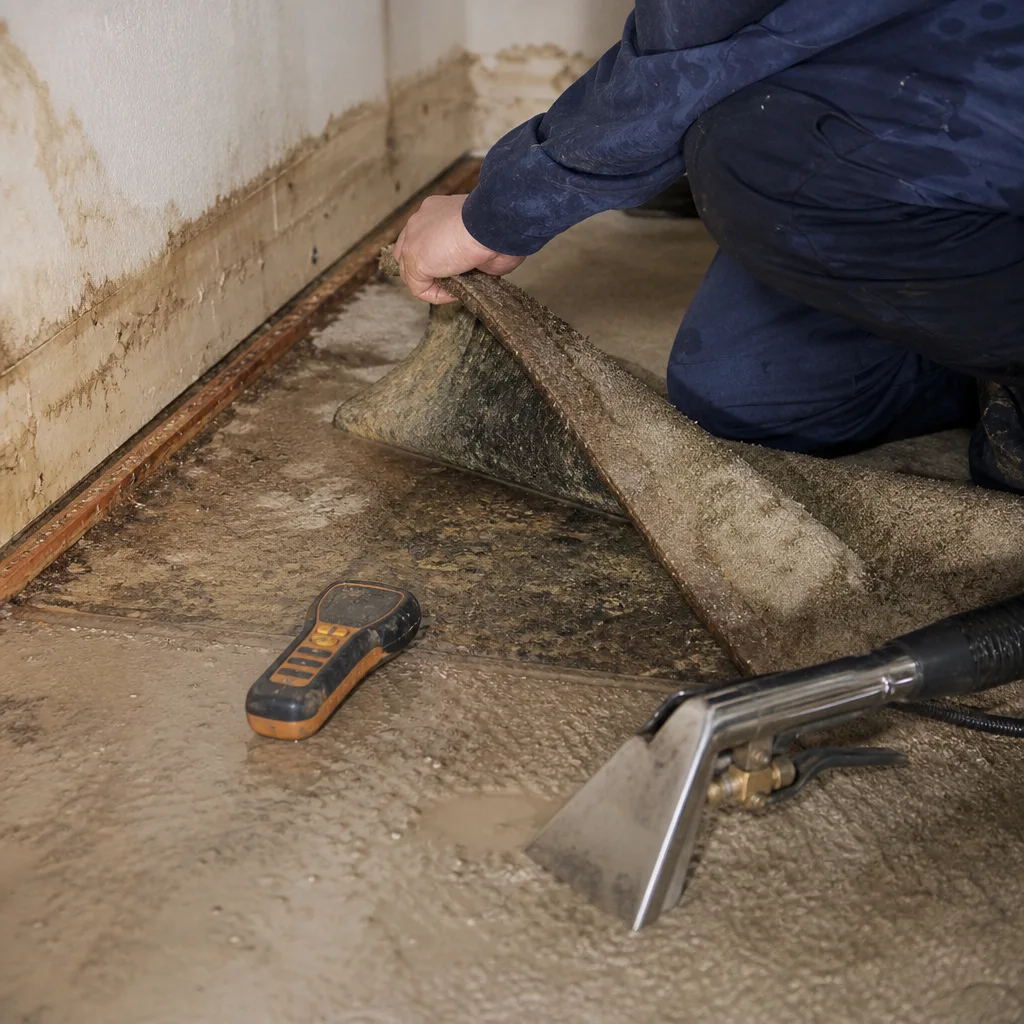
Septic failure is a different animal than a municipal sewer backup. When a septic system fails on a property in Saint Paul Park, raw sewage can surface in the yard or back up into the lowest point of the house, often a crawl space. We’ve handled septic failures on 1960s homes near the original townsite, and the pattern is consistent: the effluent finds the path of least resistance, and in homes with block foundations, that path leads inside. We extract, remove contaminated insulation and vapor barrier, sanitize the space, and dry it to a verified moisture content before closing it up.
Black Water Extraction
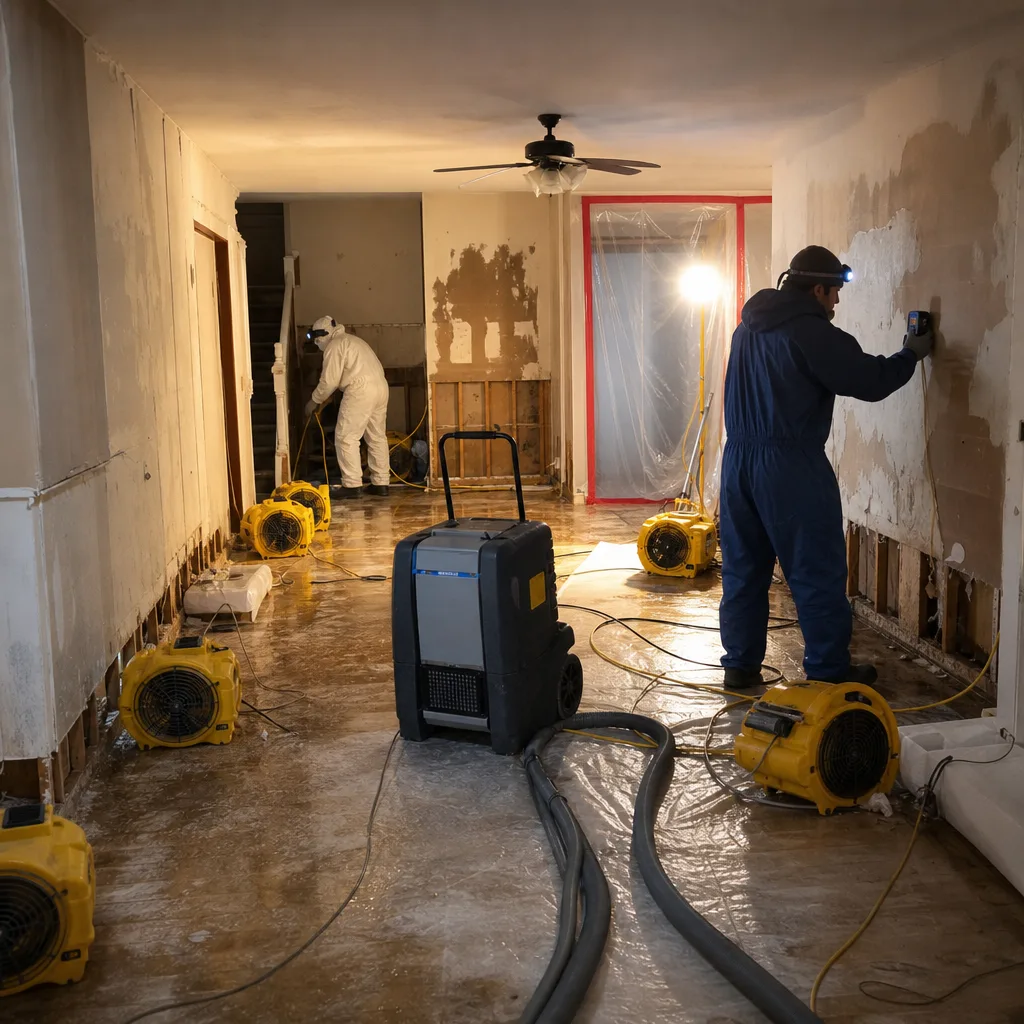
River flooding on the low blocks of Saint Paul Park produces a specific kind of black water: Mississippi River water mixed with agricultural runoff, silt, and municipal sewer backflow. That mineral-heavy contamination accelerates mold colonization faster than clean groundwater intrusion. Our extraction crews run truck-mounted units to pull standing water out fast, then follow with antimicrobial application and structural drying. The goal is to stop the clock before mold gets a foothold in wall cavities.
What happens when you call
- 1
A real person answersNo phone trees - you reach a local pro.
- 2
You get an upfront price rangeHonest numbers before anyone is dispatched.
- 3
A background-checked tech heads outLicensed & insured, dispatched right away.
- 4
You approve before work beginsNothing starts until you say go.
Trusted Brands We Service in Saint Paul Park
The equipment we bring into Saint Paul Park homes is the same professional-grade gear used on commercial restoration sites. Our trucks carry Phoenix dehumidifiers, XPOWER air movers, and B-Air filtration units. When we open a crawl space or unfinished basement, we’re running Dri-Eaz moisture meters to track drying progress every day, not guessing. For Saint Paul Park homeowners, that means the job gets done with tools built for heavy extraction and precise drying, the kind of work that holds up under an insurance adjuster’s scrutiny. We keep our equipment maintained and our supply chain local, so there’s no waiting on parts when you need us the day after a flood.
Common Sewage Cleanup Problems We See in Saint Paul Park Homes
- Cast-iron drain line failures during spring high water. Homes built between the 1940s and 1970s in Saint Paul Park often still have original cast-iron piping. When the Mississippi runs high and the ground saturates, those lines crack, shift, or get invaded by roots, and sewage backs up into basements that were never fitted with backflow preventers.
- River-silt-laden floodwater accelerating mold. The mineral load in Mississippi floodwater is not the same as clean groundwater. Homes on the river-facing blocks that flood during a high-water event see mold colonization start faster inside wall cavities because the silt gives spores a growth medium.
- Prolonged ground saturation slowing structural drying. Basements and crawl spaces along the river corridor in Saint Paul Park sit in ground that stays wet for weeks after a flood. If a crew pulls drying equipment too early, hidden moisture remains in block walls and framing, and the sewage odor returns within a month.
- Unfinished block-wall basements wicking contaminated water upward. Many Saint Paul Park basements are unfinished with exposed block walls. Wet block wicks black water upward like a sponge, and without professional-grade dehumidification and air movement, the interior humidity stays high enough to support mold growth for months.
Pricing for Sewage Cleanup in Saint Paul Park, MN
Sewage cleanup in Saint Paul Park runs on honest, straightforward numbers. A basic toilet overflow cleanup in a single bathroom typically costs $350 to $700. Sewage backup cleanup from a basement floor drain runs $1,200 to $3,500 depending on how far the water traveled and what materials got contaminated. Full crawl space sewage removal, including extraction, removing vapor barrier and insulation, sanitizing, and drying, runs $2,500 to $7,000 depending on the size of the space and how long the sewage sat before we arrived.
Black water extraction after river flooding on the low blocks of Saint Paul Park tends to run higher because the contamination is more complex, the water volume is larger, and we’re often dealing with saturated block walls that need extended drying. $3,000 to $9,000 is a realistic range for a river-flood sewage extraction in a standard Saint Paul Park basement. Every job starts with a free, written estimate. We offer a free second opinion on any written estimate you’ve received, and we never charge a trip fee inside our own county. Senior and veteran customers always get 10% off. Call (888) 690-6095 and Wade will give you the straight numbers before any work begins.
We Also Serve Cities Near Saint Paul Park
While this page focuses on Sewage Cleanup in Saint Paul Park, our crews regularly work in Cottage Grove, Inver Grove Heights, South Saint Paul, and Woodbury. The river-driven flooding patterns shift the moment you move inland, but the same care and documentation standards travel with us to every job in Washington County. Call the main office at (888) 690-6095 and ask for Wade.
Serving Saint Paul Park, MN - Our Local Coverage Area
We’re based in the Saint Paul Park area and know this community well. Use the map below to see our service coverage - if you’re nearby, we can almost certainly help.
FAQs - Sewage Cleanup in Saint Paul Park
River floodwater entering a Saint Paul Park basement is not the same as a backed-up sewer line. Mississippi River water carries silt, agricultural runoff, and municipal sewer backflow, so the contamination profile is more complex and the mineral load feeds mold growth faster than clean groundwater intrusion does. That’s why our crews treat river-flood sewage different: more aggressive extraction, more thorough antimicrobial application, and longer drying verification before we close the job. Call (888) 690-6095 for a free assessment.
Yes. Most homes in Saint Paul Park built between the 1940s and 1970s have original cast-iron drain lines, and those lines are now 50 to 80 years old. When the Mississippi runs high and the ground saturates for weeks, those pipes shift, crack, or get invaded by roots, and sewage backs up into basements. Homes near the original townsite are especially prone. Wade’s crew has seen this pattern for years, and we know what to look for before you’re standing in a flooded basement.
Do not enter the crawl space yourself. Black water carries pathogens that are dangerous to breathe and to touch. Shut off power to the affected area if you can do so safely, keep everyone out of the space, and call (888) 690-6095 right away. The faster we get extraction started, the better chance we have of saving your insulation and vapor barrier, or at minimum, keeping the framing from wicking contamination upward into your floor system. Wade heads out as soon as you call, day or night.
Often, yes. In an unfinished Saint Paul Park basement with exposed block walls, we can typically extract the water, remove contaminated debris and any soaked material like old carpet or cardboard, sanitize the concrete and block, and dry the space to verified moisture levels without tearing out framing or drywall. The block itself is porous, so the key is thorough extraction and continued dehumidification until the moisture content drops below 8%. We’ll show you the daily moisture log so you know the drying was real, not a guess.
For a typical basement sewage backup, extraction and initial sanitization happen on day one, usually within a few hours of our arrival. Structural drying takes another 3 to 5 days, sometimes longer on the river side where the ground stays saturated and the block walls hold moisture. We don’t pull equipment until the numbers say it’s dry. During spring flooding season, when we’re running multiple jobs across Saint Paul Park, we still answer the phone live and get to your house as fast as the roads allow.
Written by Wade Ferris, Owner at Wade’s Restoration of Minneapolis, serving Saint Paul Park since 2007.