

Fast, Reliable Mold Remediation Across White Bear Lake
Mold remediation in White Bear Lake typically costs $1,800-$6,500 depending on how far the growth has spread and whether the moisture source is still active. Most jobs in the 55110 zip code are completed within three to five days, and we can usually have someone at your door within a few hours when you call. If you’ve got musty smells in a converted lakeshore cottage or water staining on a basement wall after spring melt, call (888) 690-6095 and we’ll walk you through what’s happening before anyone steps foot in your house.
White Bear Lake homes fail differently than houses in the western suburbs. The lake, the old cottages, the crawl spaces, the freeze-thaw cycles. Wade Ferris knows these houses because he’s been working on them since 2007. You’ll get the owner on the phone, not a call center. And you’ll get a straight answer about whether you need full Mold Remediation or just targeted treatment.
Why Wade’s Restoration of Minneapolis Is White Bear Lake’s Preferred Mold Remediation Company
We’re not a franchise with a national jingle and a rotating crew of subcontractors. Wade’s Restoration is owned by Wade Ferris, a guy whose name is on the truck and who answers his own phone. When you call about mold in your White Bear Lake basement at 9 p.m., you talk to Wade. Not a dispatcher in another state. Not a voicemail tree. Wade.
The work is backed by the 90-Day Done Right Promise in writing. If the mold comes back or the moisture wasn’t handled right, Wade makes it right. That’s not marketing language. It’s stamped on every contract. Ask anyone on your street who’s dealt with a water or mold problem in White Bear Lake and you’ll hear the same thing: the guy shows up, he documents everything, and he stands behind the work.
Response time matters when mold is spreading. We can typically get a crew to White Bear Lake within 90 minutes for emergency calls. Every day Wade takes moisture readings and hands you the full log at the end of the job. Almost nobody in the restoration trade does that. It means you know exactly what was wet, how wet, and how dry it is now. No guesswork, no “trust us.” The numbers are on paper.
We also deal with your insurance adjuster directly. You shouldn’t have to be the middleman relaying information between your insurance company and a restoration crew. Wade talks to the adjuster, sends the photos, and keeps the paperwork moving. It takes a load off your plate when you’re already dealing with a mold problem in your home.
Our Mold Remediation Services in White Bear Lake
Mold Inspection & Testing
A proper inspection in White Bear Lake homes starts with finding the moisture source, not just the visible mold. In converted cottages and 1970s ranches around the lake, that often means checking crawl spaces, rim joists, and the sill plates where foundation meets framing. We use moisture meters and thermal imaging to find what’s hidden behind original plaster and paneling. Testing of air and surface samples is available, and every inspection includes a written scope of what we found and what needs to happen next.
Mold Removal
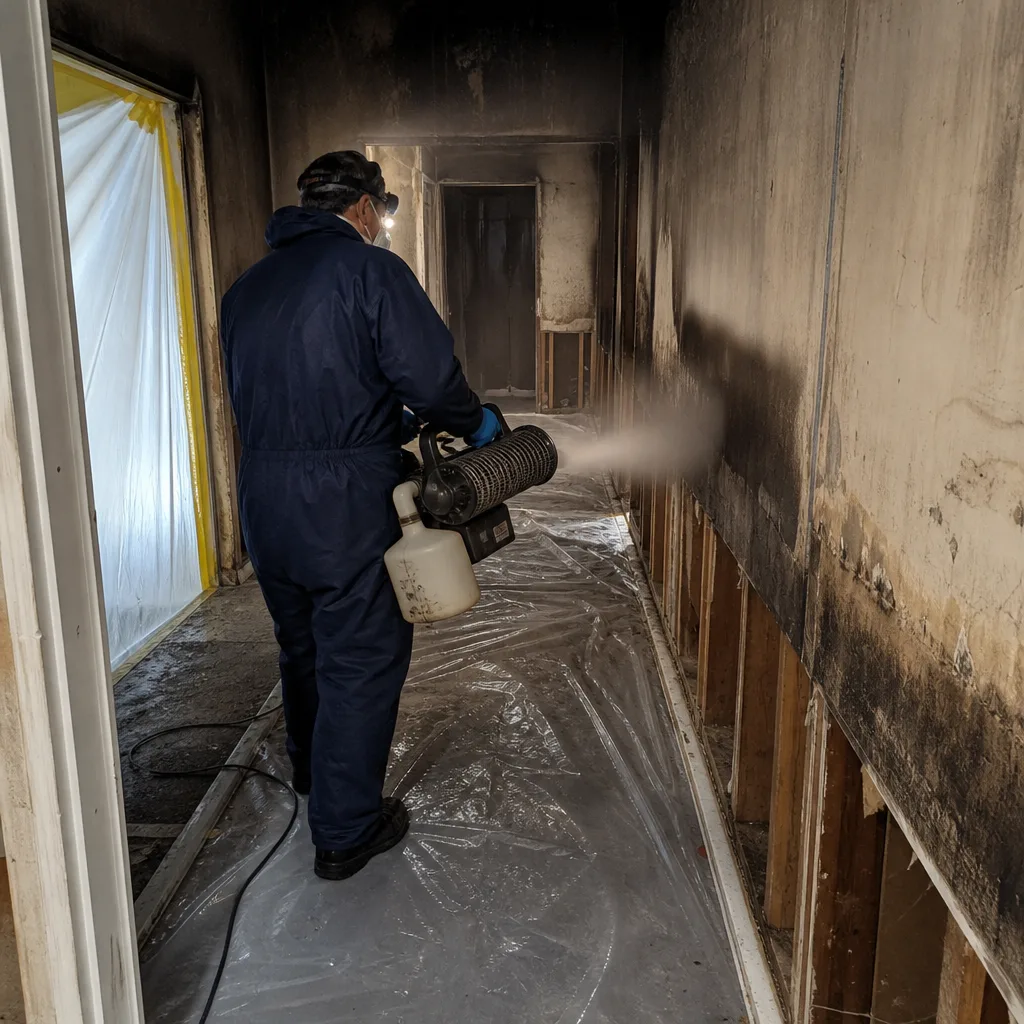
Removing mold is about more than spraying bleach and painting over a stain. We contain the affected area under negative air pressure, remove contaminated materials properly, and clean the surrounding surfaces. In White Bear Lake’s older homes, we frequently find mold on rim joists in crawl spaces, behind baseboards in finished basements, and around window frames where condensation collects during Minnesota winters. Each surface gets treated according to IICRC standards, not shortcuts.
Black Mold Remediation
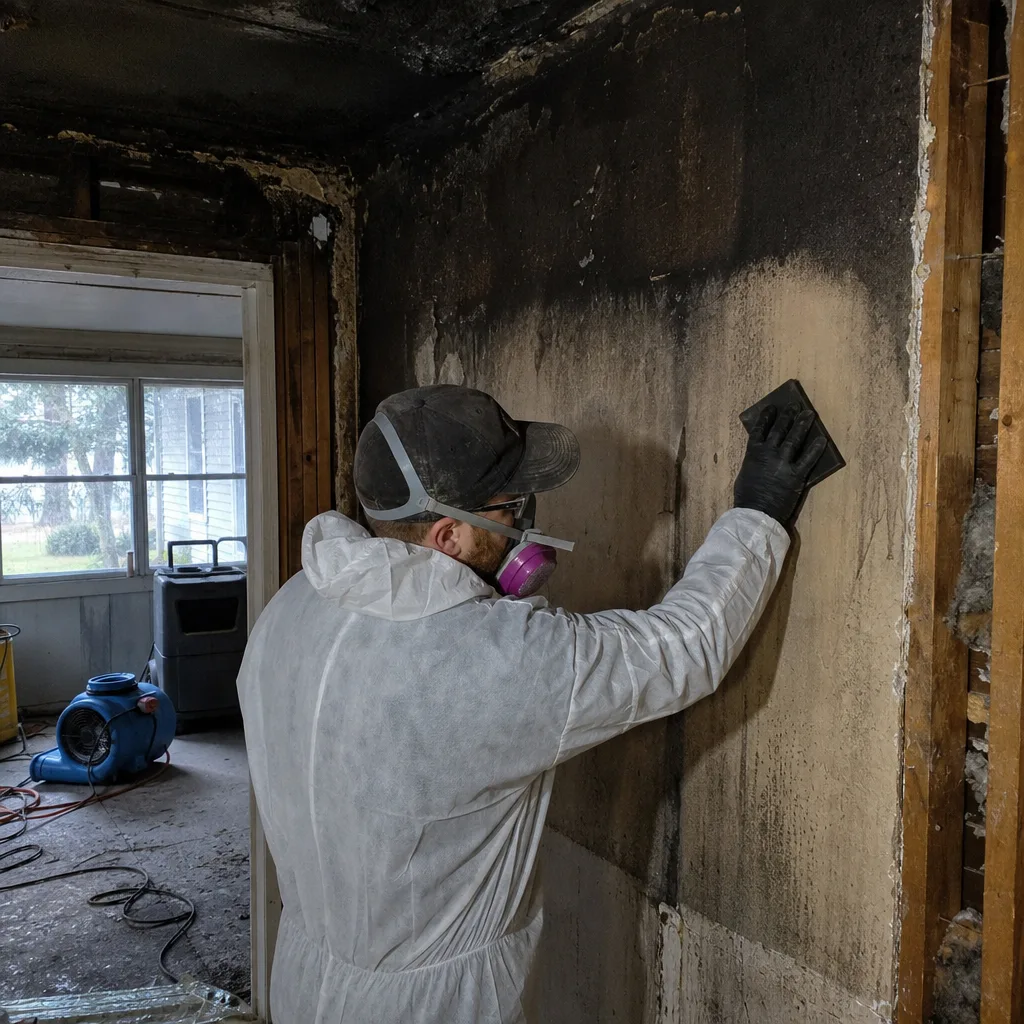
Black mold, or Stachybotrys, is a real concern in White Bear Lake homes with chronic moisture problems. It loves drywall, wood, and anything cellulose-based that stays wet for days or weeks. Lakeshore properties with foundation cracks from the lake-level swings are prime candidates. If you see black or dark green patches that look slimy, don’t disturb them. Disturbing the spores spreads them. Call us and we’ll test, contain, and remove it properly.
Air Quality Restoration
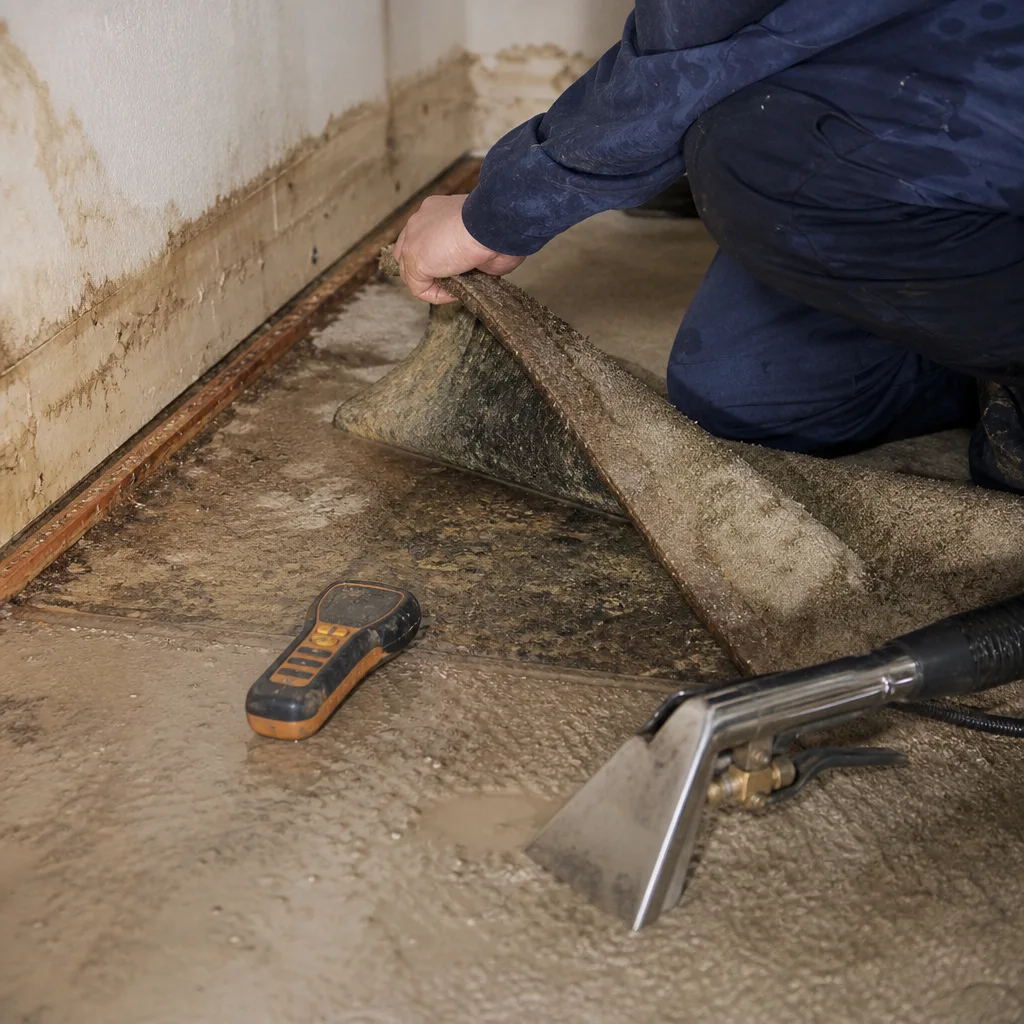
Mold spores don’t stay put. They ride air currents through your ductwork and into every room. After remediation, we run HEPA air scrubbers and can clean your HVAC system to get the spore count back down. For White Bear Lake homeowners with allergies, asthma, or immune issues, this step matters more than people realize. A house can look clean and still have elevated airborne mold levels from a crawl space you never see.
What happens when you call
- 1
A real person answersNo phone trees - you reach a local pro.
- 2
You get an upfront price rangeHonest numbers before anyone is dispatched.
- 3
A background-checked tech heads outLicensed & insured, dispatched right away.
- 4
You approve before work beginsNothing starts until you say go.
Crawl Space Treatment in White Bear Lake
White Bear Lake’s converted cottages almost all have crawl spaces, and those crawl spaces are almost all too shallow, too damp, and too easy to ignore. The lake’s rebound since 2013 means groundwater is pressing on foundations that shifted during the low-water years. Water seeps through hairline cracks that have been there for a decade, humidity climbs, and mold colonizes the rim joists and subfloor.
Our crew recently worked a 1950s converted cottage on Lake Avenue where the homeowner called us for a musty crawl space smell. We traced it to a cracked foundation wall from the low-water years, now weeping groundwater every spring. Black mold had spread across the rim joists from years of elevated humidity. After sealing the crack and installing a crawl space vapor barrier with a Dri-Eaz dehumidifier, we removed the mold and brought the space below 50% RH. The smell was gone within a week. That’s the kind of job we do regularly in this town.
If your crawl space smells musty or you can see water staining on the foundation walls, don’t wait. Crawl space mold spreads to the living space through your floorboards and HVAC. Call (888) 690-6095 and Wade will come look at it himself.
Moisture & Humidity Control for White Bear Lake Homes
Mold remediation without moisture control is just expensive cleaning. White Bear Lake’s position on an open body of water amplifies shoulder-season humidity swings. Spring and fall bring damp air that condenses on cold surfaces in older homes that lack modern vapor control. If you don’t fix the moisture, the mold returns within a season. We install dehumidifiers, vapor barriers, proper ventilation, and drainage corrections specific to lakeshore soil and shoreline foundations.
Trusted Brands We Use in White Bear Lake
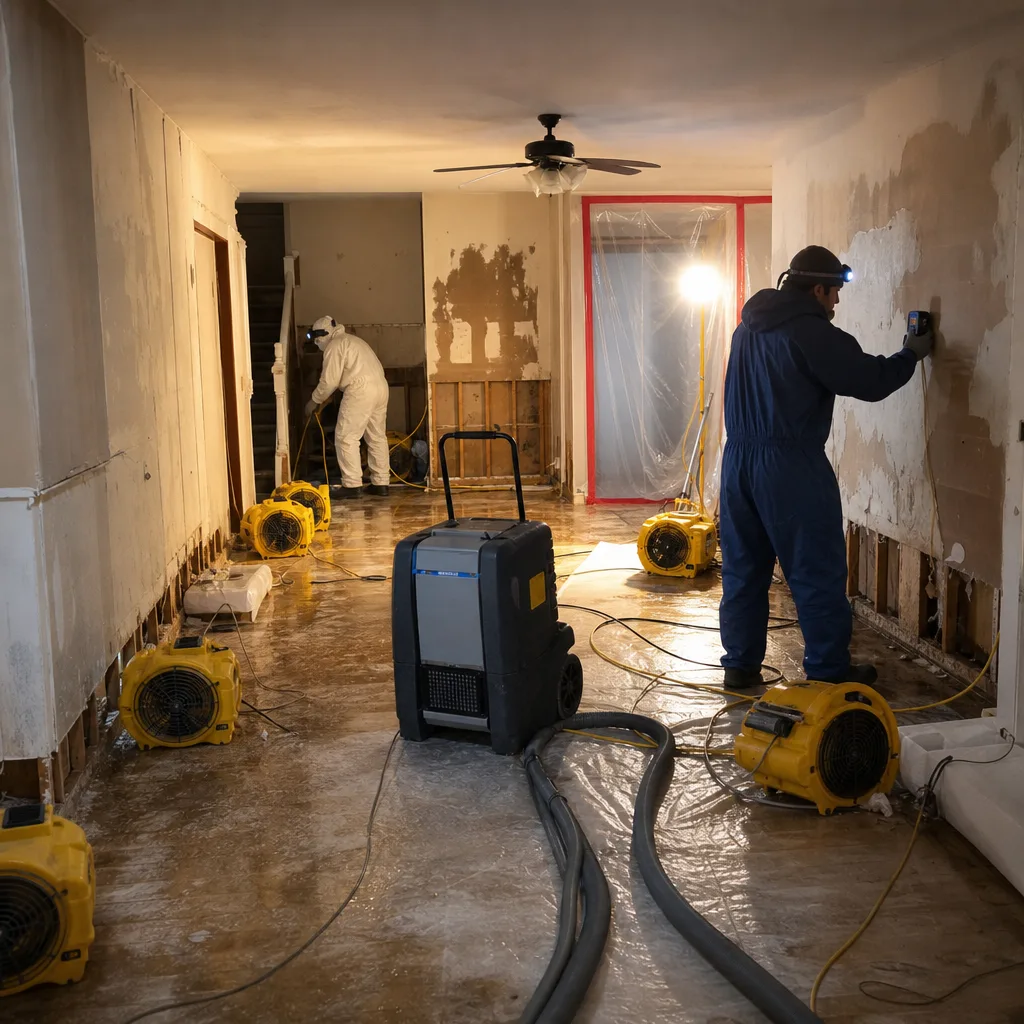
We run professional-grade equipment from brands like Dri-Eaz, B-Air, and Injectidry. These aren’t the units you rent at the hardware store. Dri-Eaz dehumidifiers and HEPA air scrubbers pull gallons of moisture from the air per day, which matters in White Bear Lake’s damp crawl spaces and musty basements. Injectidry systems let us dry wall cavities and under floors without tearing everything apart, saving you thousands in reconstruction costs. Our techs carry IICRC and RIA credentials, and the equipment gets calibrated and maintained so the readings we hand you are accurate.
Common Mold Remediation Problems We See in White Bear Lake Homes
- Recurring crawl space mold in lakeshore cottages: Sealing visible cracks without addressing the lake-level rebound and perimeter drainage means mold returns within a season. The original shallow crawl spaces in converted 1920s-1950s cottages often need more than a sump pump; they need drainage corrections specific to the shoreline soil.
- Hidden mold behind original plaster and paneling: Cottages converted for year-round use still have walls built before modern vapor control. Visible mold on interior surfaces is often just the tip, with colonies spreading behind walls where warm interior air meets cold exterior sheathing.
- Finished basements with weeping foundation cracks: Hairline cracks that opened during the 2003-2013 lake-level drop are now the exact pathways through which recovered groundwater enters every spring. Homeowners see wet carpet and treat the symptoms, but mold is growing inside wall cavities and under floor pads.
- Attic mold from ice dams: Many 1970s-1990s ranch and split-level homes in the 55110 zip code have minimal attic air-sealing. Snow melts, ice dams form, water backs up under shingles, and mold grows on the underside of roof sheathing. It goes unnoticed for years until a home inspection or a renovation exposes it.
Pricing for Mold Remediation in White Bear Lake, MN
Here’s what White Bear Lake homeowners can expect, based on the jobs we’ve done in this market:
- Mold inspection and testing: $350-$750 for a full inspection with moisture mapping and air or surface sampling.
- Small mold removal (single wall or ceiling area): $1,200-$2,800, including containment and cleaning.
- Crawl space mold remediation and vapor barrier: $2,500-$6,000 for most White Bear Lake crawl spaces, depending on size and how much joist cleaning is needed.
- Full basement mold remediation with reconstruction: $5,000-$15,000+ when drywall, insulation, and flooring need replacement.
- Moisture control and dehumidifier installation: $1,500-$4,000 for crawl space encapsulation, grading corrections, and perimeter drainage where needed.
Every job gets a written scope before work starts. No surprises at the door. We also offer a free second opinion on any written estimate from another company, and there’s no trip charge inside Ramsey County. Seniors and veterans get 10% off, always. Call (888) 690-6095 for a free estimate.
We Also Serve Cities Near White Bear Lake
Our crews work throughout the northeast metro. We serve Vadnais Heights, Mahtomedi, North Saint Paul, and Arden Hills with the same owner-operated approach and the same 90-Day Done Right Promise. If you’re in one of those communities and dealing with mold, water damage, or fire cleanup, call (888) 690-6095. Wade heads out from the Minneapolis-St Paul office and covers the whole area.
Serving White Bear Lake, MN - Our Local Coverage Area
We’re based in the White Bear Lake area and know this community well. Use the map below to see our service coverage - if you’re nearby, we can almost certainly help.
FAQs - Mold Remediation in White Bear Lake
Mold returns because the moisture source hasn’t been fixed. In White Bear Lake’s converted cottages, the usual culprit is groundwater entering through foundation cracks that formed during the lake’s low-water years and now weep every spring as lake levels have rebounded. Cleaning the mold without sealing the cracks and installing proper vapor barriers and drainage means the humidity stays high and mold regrows within a season. That’s why our crawl space treatment always addresses both the mold and the water. Call (888) 690-6095 and Wade will explain what’s happening in your specific crawl space.
White Bear Lake dropped roughly five feet between 2003 and 2013, then rebounded. During the low-water period, shoreline soils dried out and shifted, causing foundations to settle and crack. Now that lake levels have recovered, groundwater presses against those cracked foundations and seeps in during spring melt and heavy rain. That standing moisture raises crawl space humidity above 60%, which is exactly where mold thrives. Homes a few blocks inland are less affected, but lakeshore properties deal with this two-stage problem regularly.
Yes, we find black mold, or Stachybotrys, in lakeshore homes more often than in newer construction. The combination of original crawl spaces with no vapor barriers, groundwater intrusion from foundation cracks, and decades of seasonal humidity cycles creates ideal conditions. Black mold typically colonizes rim joists, subflooring, and the back side of drywall. It’s not something to ignore or to try to clean yourself. Disturbing black mold releases spores throughout the house. We contain, remove, and dispose of it properly, then fix the moisture source.
Yes. For any home built before 1980, especially converted cottages near the lake, a mold inspection during the purchase process is worth the $350-$750 it costs. These houses often have hidden mold in crawl spaces, behind original paneling, and around old window frames. A standard home inspection usually flags visible water stains, but it won’t catch what’s growing inside wall cavities. We work with buyers, sellers, and real estate agents throughout the 55110 zip code to document conditions and provide written reports for negotiations.
White Bear Lake’s housing stock is older and built around a lake, and that changes the work. Shoreview has more 1980s-2000s construction with modern vapor barriers and poured foundations. White Bear Lake’s lakeshore cottages from the 1920s-1950s have shallow crawl spaces, fieldstone or block foundations, and decades of accumulated moisture problems. The lake-level swings add a structural component: cracks from the low-water period now admit groundwater, so remediation often requires foundation sealing and drainage corrections that a standard suburban mold job doesn’t need. It’s a different scope of work, and it needs someone who understands the lake.
If you suspect mold in your White Bear Lake home, or you’ve got a musty smell you can’t track down, call (888) 690-6095 today. Wade Ferris will answer the phone himself, talk through what’s going on, and tell you straight whether you need an inspection, a cleanup, or just some advice. Estimates are free. No pressure. A real person who knows these houses and stands behind the work.
Written by Wade Ferris, Owner at Wade’s Restoration, serving White Bear Lake and the northeast metro since 2007.