
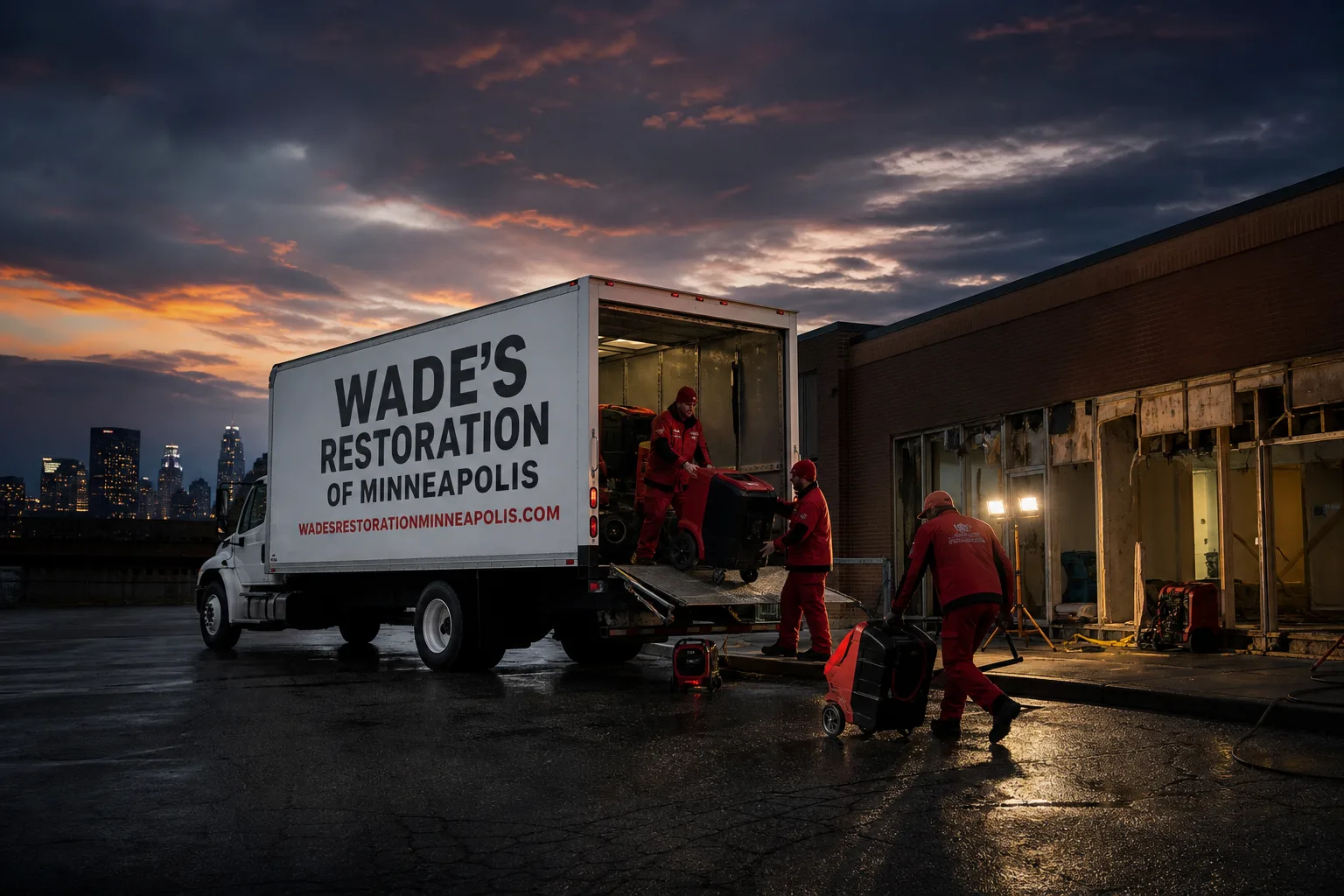
Fast, Reliable Mold Remediation Across Mendota Heights
Mold remediation in Mendota Heights usually costs between $1,800 and $6,500 depending on how far the growth has spread and what is feeding it. Most jobs in this city take two to five days once containment is set. If you have found mold in a Mendota Heights basement, especially in a home built before 1985, the first call should be to someone who understands why this city’s ground behaves the way it does. Call Wade’s Restoration at (888) 690-6095 and Wade Ferris will pick up.
What makes Mendota Heights different from Eagan or Inver Grove Heights is the ground itself. The city sits on limestone bluffs above the confluence of the Minnesota and Mississippi Rivers. Wooded ravines cut through neighborhoods and direct surface water straight toward foundations. When snow melts fast in March, or when a convective storm drops two inches in an hour, that water does not run off into a flat yard and soak away. It piles against basement walls. That is the mold trigger here. Wade knows it, and his crew has been pulling wet drywall and failed drain tile out of Mendota Heights basements long enough to know exactly what a ravine-fed foundation does to indoor air.
Why Wade’s Restoration of Minneapolis Is Mendota Heights’s Preferred Mold Remediation Company
Wade Ferris started Wade’s Restoration in 2007 and has never hidden behind a call center. His name is on the truck. His license number is published. He answers his own phone at midnight, and if you call about mold in your Mendota Heights basement, he will be the one who shows up to look at it, not a crew you have never met. That is the whole business model. Homeowners in their 50s, 60s, and 70s around here have seen the national chains quote one price over the phone and a different one at the door. Wade does not work that way. You get a written scope before anything starts.
Mendota Heights homeowners call Wade because he documents what he finds. Every job includes daily moisture readings, and at the end you get the full log. Almost nobody else in the trade hands over that kind of record. If your insurance adjuster has questions, Wade deals with the adjuster directly, so you are not stuck relaying information between two sides. That matters when the mold in question started with a failed cast-iron drain line or a sump pump that could not keep up with spring melt. The adjuster needs to see the moisture data. Wade gives it to them.
Being locally owned and owner-operated means Wade’s crew is background-checked, uniformed, and trained to IICRC standards. The equipment is professional-grade: Dri-Eaz dehumidifiers, Phoenix air movers, Injectidry containment systems. And every mold job comes with the 90-Day Done Right Promise in writing. If it is not done right, Wade makes it right. One call brings him back.
Our Mold Remediation Services in Mendota Heights
Mold work in Mendota Heights is not one-size-fits-all. The house on a flat lot in 55120 needs a different approach than the house sitting at the bottom of a ravine near Dodge Nature Center. Here is what we do most often:
Mold Inspection & Testing
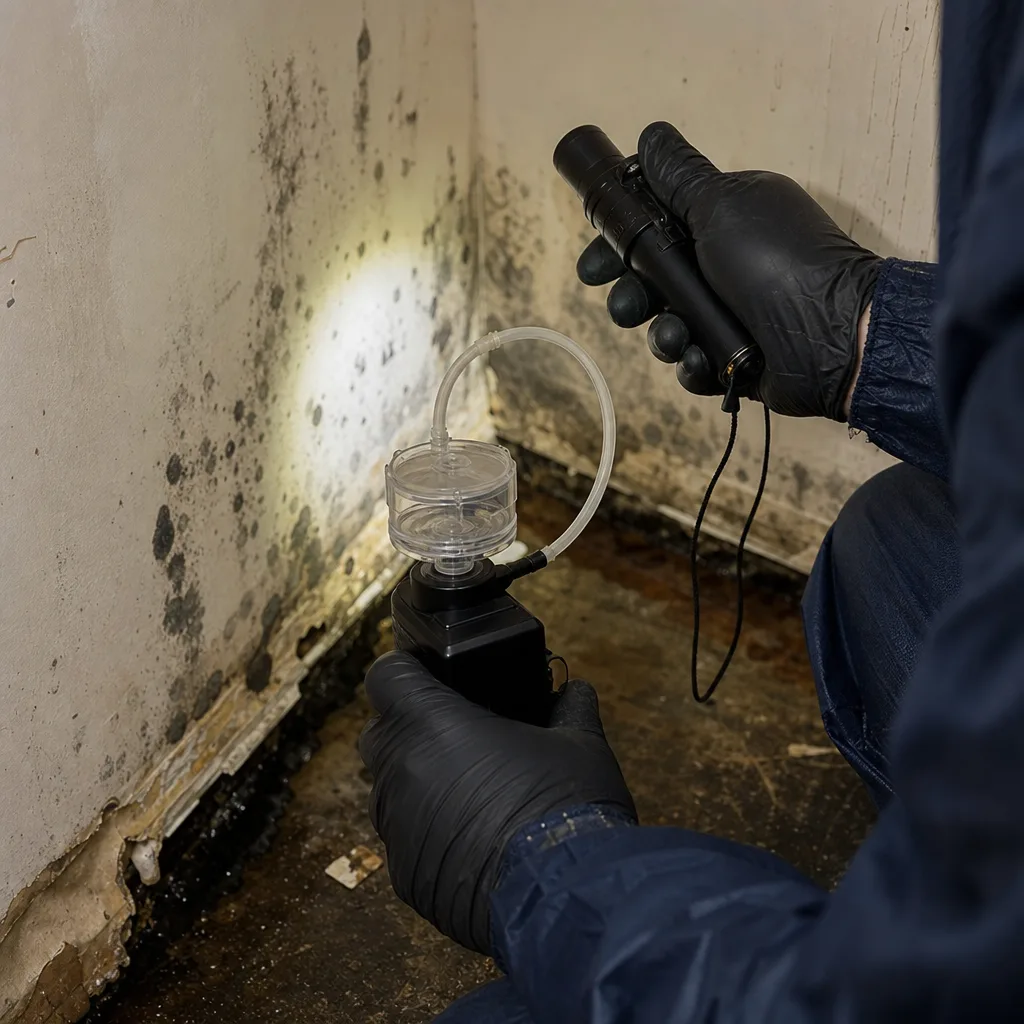
Before we remove anything, we find out what is actually growing and where the moisture is coming from. In Mendota Heights, that second part matters more than the first. We run moisture detection across basement walls, floor slabs, and crawl spaces. If there is white powder on your poured-concrete foundation, we test it. Most of the time it is efflorescence, mineral salts left behind by evaporating water, not mold. But the water that caused it is still a problem. A proper inspection separates mineral staining from actual growth so you are not paying for remediation you do not need, and not skipping remediation you do.
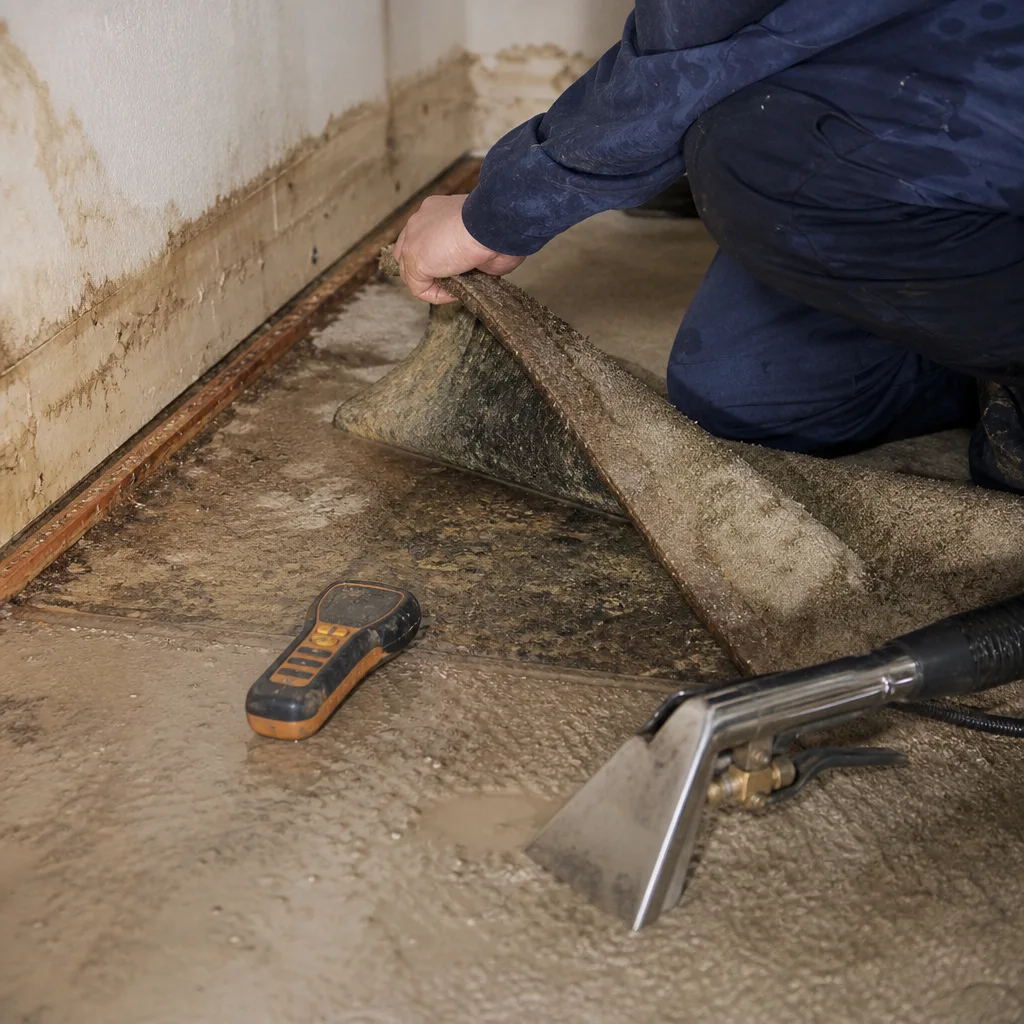
Mold Removal
Once we know the extent, we contain the affected area with negative-air pressure and remove contaminated drywall, insulation, or carpet. Mendota Heights homes from the 1950s through early 1980s often have finished basements built directly against foundation walls with no interior drainage plane. That means water vapor moves through the concrete and soaks the back side of the drywall for years before you see a stain on the front. By the time you see it, the cavity behind it is often fully colonized. We remove all of it, treat the framing and concrete with antimicrobial agents, and dry the space to a moisture content that will not support regrowth.
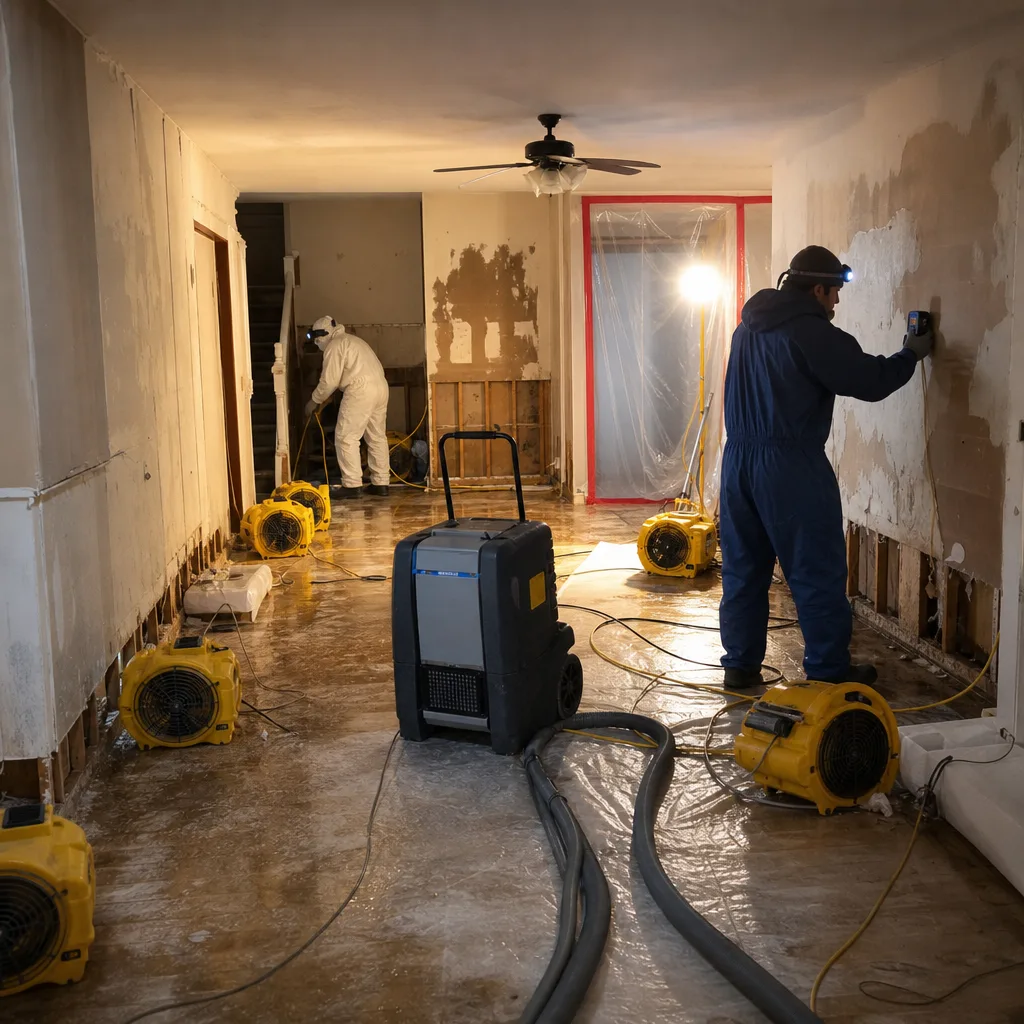
Black Mold Remediation
Stachybotrys, the stuff people call black mold, shows up in Mendota Heights basements when water sits for days instead of hours. Failed drain tile, sewage backup from aging cast-iron lines, and sump pump overload during spring melt all create the standing moisture black mold needs. Our crew recently remediated a ranch-style home on Sibley Memorial Highway where the original cast-iron drain line had failed. Sewage backed into the finished basement and fed black mold across three walls and a ceiling joist bay. We set Injectidry negative-air containment, ran Dri-Eaz dehumidifiers for five days, removed the contaminated drywall, and treated the concrete with antimicrobial. The homeowner retrofitted a sump-pump overflow alarm because the house sits at the bottom of a ravine. That alarm would have caught the problem before the mold ever got started.
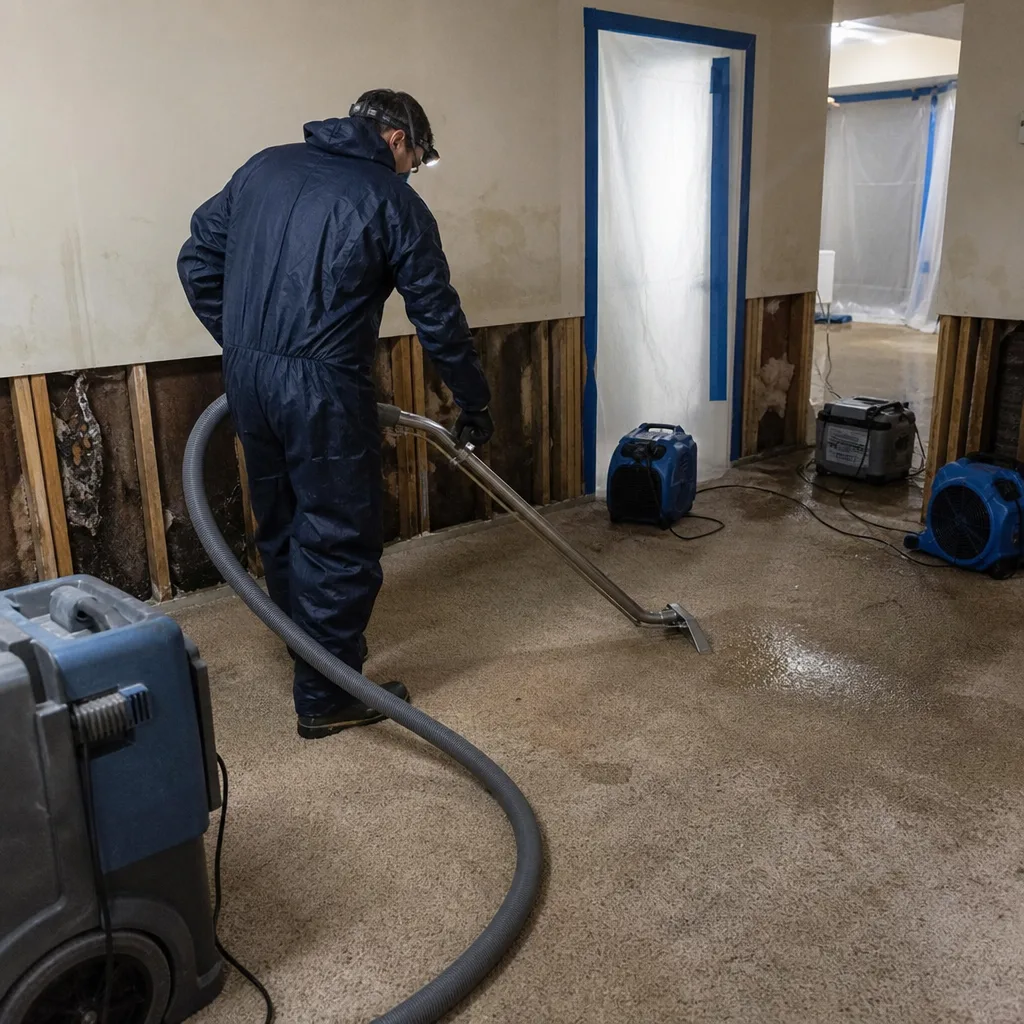
Air Quality Restoration
After physical removal, the air in the house still carries spores. We run HEPA air scrubbers during and after remediation, and we take air samples before we call the job done. In a tight, well-sealed mid-century Mendota Heights home, spore counts can stay elevated for weeks after the visible mold is gone if the air is not actively scrubbed. We do not skip this step. The goal is a basement you can breathe in without wondering what you are inhaling.
What happens when you call
- 1
A real person answersNo phone trees - you reach a local pro.
- 2
You get an upfront price rangeHonest numbers before anyone is dispatched.
- 3
A background-checked tech heads outLicensed & insured, dispatched right away.
- 4
You approve before work beginsNothing starts until you say go.
Trusted Brands We Service in Mendota Heights
Wade’s Restoration runs professional equipment that gets the job done on the first pass, in Mendota Heights homes specifically, that means gear with enough pull to dry a poured-concrete foundation that has been cycling moisture for decades. We use Dri-Eaz dehumidifiers, XPOWER air movers, and Injectidry systems for targeted drying inside wall cavities and under flooring. Being IICRC-certified means we follow the industry standards for mold remediation, not whatever shortcut the national chain sent out this week. When you call, you get the real thing.
Common Mold Remediation Problems We See in Mendota Heights Homes
- Misread efflorescence on concrete. A crew shows up, sees white staining on the basement wall, assumes it is mold, and starts scrubbing. The white powder is mineral salts left by water moving through the concrete. The water source is still there. Mold comes back in a season. We always investigate the moisture source first.
- Water hiding behind brick veneer. Many mid-century Mendota Heights homes have brick or stone veneer over the foundation. Water gets behind the veneer through cracked mortar joints, runs down the drainage plane, and soaks the sheathing. You see mold on the interior wall. The crew that does not correct the exterior drainage plane just bought you a repeat visit.
- Spring snowmelt overwhelming sump pumps. Ravine-adjacent basements near Dodge Nature Center and the bluff edges above Lilydale Regional Park take in runoff from the whole natural drainage corridor. A single heavy rain or a fast melt overloads the sump pump, water sits, and mold grows between visits. We recommend overflow alarms and battery backups for these properties.
- Finished basements with no interior drainage plane. A 1960s split-level in 55120 might have drywall hung directly against the foundation with fiberglass batt insulation. That is a mold farm. The minute water vapor moves through the concrete, the paper backing on the drywall feeds the growth. Remediation on these means pulling the drywall, correcting the drainage, and rebuilding with the right assemblies.
Pricing for Mold Remediation in Mendota Heights, MN
Mold inspection and testing in Mendota Heights typically runs $350 to $700, including lab analysis. Small contained mold removal, like a single wall cavity or a closet, runs $1,200 to $2,500. A full basement remediation with containment, drywall removal, antimicrobial treatment, and air scrubbing runs $3,500 to $6,500 on most Mendota Heights homes. Black mold jobs with sewage backup complications can push past $8,000 when the drain line itself needs repair. Crawl space treatment runs $1,800 to $4,000 depending on square footage and whether vapor barrier replacement is needed. Wade gives you a written scope before work starts, so the number on the estimate is the number you pay. Call (888) 690-6095 for a free estimate. And if you have a written estimate from another company, Wade will give you a free second opinion, no charge.
We Also Serve Cities Near Mendota Heights
Wade’s Restoration covers Mendota Heights and the surrounding Dakota County communities. If you are in Eagan, Inver Grove Heights, Saint Paul, or South Saint Paul and dealing with mold, water damage, or a basement that will not stay dry, the same crew comes out. The same 90-Day Done Right Promise applies. Dispatch and scheduling are coordinated from our Minneapolis-St Paul office, and crews serve Mendota Heights locally. Learn more about our Mold Remediation work across the metro.
Serving Mendota Heights, MN - Our Local Coverage Area
We’re based in the Mendota Heights area and know this community well. Use the map below to see our service coverage - if you’re nearby, we can almost certainly help.
FAQs - Mold Remediation in Mendota Heights
Because the moisture source was never fixed. In Mendota Heights, the usual culprit is hydrostatic pressure from the bluff-and-ravine terrain forcing water through foundation walls, or 40 to 70-year-old drain tile that has collapsed. Cleaning visible mold without correcting the water intrusion means regrowth within a season. The fix starts with finding where the water is entering, not with more bleach. Call (888) 690-6095 and Wade will trace the moisture, not just scrub the stain.
Most of the time in Mendota Heights, white powder on poured-concrete foundation walls is efflorescence, which is mineral salts left behind when water evaporates out of the concrete. It is not mold and it will not hurt you, but it is proof that water is moving through the wall. Mold can grow alongside it where organic material is present. A proper inspection with moisture detection tells you which you have before you spend money on remediation you may not need.
Yes, in almost every case. Category 3 water from a sewage backup contaminates drywall, insulation, and carpet beyond cleaning. The drywall wicks contaminated water upward, and mold begins colonizing the paper facing within 24 to 48 hours. Cut it out, treat the framing and concrete, and rebuild with materials that can handle the basement environment. If the backup came from a failed cast-iron drain line, like the one we found on Sibley Memorial Highway, the line itself needs repair or replacement too.
Look for staining concentrated at the bottom of the basement wall, especially along the cove joint where the wall meets the floor. Water from failed drain tile enters there, not as uniform condensation across the wall. You will also see efflorescence in bands that follow the wall base, and in a Mendota Heights ravine-adjacent home, water may actually seep in during dry weather as the water table stays high. A moisture log taken over several days separates drain tile failure from simple humidity. Wade takes those readings every day and hands you the log.
Yes. A crawl space does not need to be torn apart to be dried properly. We use Injectidry systems to pull moisture from confined spaces, Dri-Eaz dehumidifiers to dry the air, and we address the ground moisture with vapor barrier installation where needed. The key is air sealing and drainage correction, not demolition. Most Mendota Heights crawl space jobs are done in two to three days without removing any flooring above.
Written by Wade Ferris, Owner at Wade’s Restoration, serving Mendota Heights since 2007.
If you have mold in your Mendota Heights home, do not wait. Every day it spreads means more drywall to cut out and more money on the estimate. Call Wade directly at (888) 690-6095. He answers his own phone, 24/7. If you are inside our county, there is no trip charge. If you already have a written estimate from someone else, bring it and get a free second opinion. Seniors and veterans get 10% off, always. Ask anyone on your street about the guy who actually showed up.