
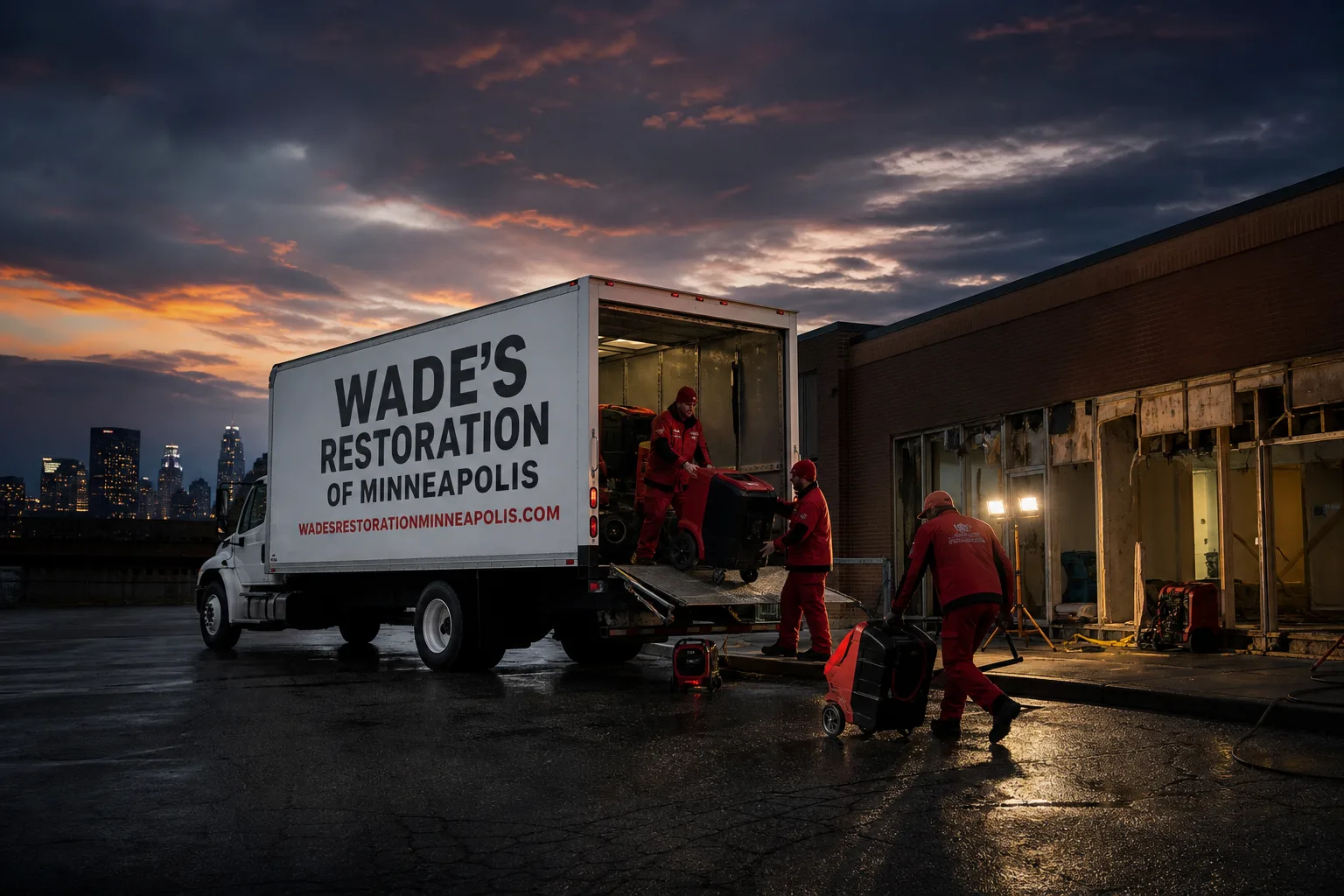
Fast, Reliable Fire & Smoke Damage Restoration Across White Bear Lake
Fire damage in White Bear Lake rarely stops at the flames. Smoke works into the cedar shingles, the plaster walls, and the open-cell insulation in the crawl space of a 1920s lakeside cottage long after the fire is out. Wade’s Restoration answers the phone around the clock and can have a crew on the road to White Bear Lake within the hour. The sooner we start pulling soot from surfaces and running HEPA air scrubbers, the less odor you’ll be living with next month. Call (888) 690-6095 and Wade Ferris will tell you straight what you’re looking at.
Key Takeaways:
- 24/7 live answer, owner-operated since 2007, and Wade heads out to White Bear Lake himself.
- Smoke odor in converted lakeside cottages needs a deeper scope than a standard interior wash down.
- Every job gets the 90-Day Done Right Promise in writing.
- Free estimate, no trip charge in the county, and a Senior & Veteran 10% discount every day.
Why Wade’s Restoration of Minneapolis Is White Bear Lake’s Preferred Fire & Smoke Damage Restoration Company
Because around here, the owner’s name is on the truck, and you’ll see him again at the hardware store on a Saturday. Wade Ferris started Fire & Smoke Damage Restoration work in 2007 because he got tired of national outfits quoting one number over the phone and a different one at the door. His name, address, and license are published. His crew wears uniforms, passes background checks, and runs Dri-Eaz, Phoenix, and XPOWER equipment that actually moves the amount of air a fire job needs. When you call, a person answers. Not a queue.
White Bear Lake homeowners call us after a kitchen fire on Lake Avenue, a furnace puff-back in a 1970s split-level off County Road F, or a garage fire in a detached workshop out on a few acres. We know this city’s houses: the converted mid-century cottages, the ranch homes with galvanized supply lines, the lakeshore foundations that have already told their share of stories. One call brings Wade back. And if it’s not done right, the 90-Day Done Right Promise makes it right. In writing, on every fire job.
Our Fire & Smoke Damage Restoration Services in White Bear Lake
Smoke & Soot Removal
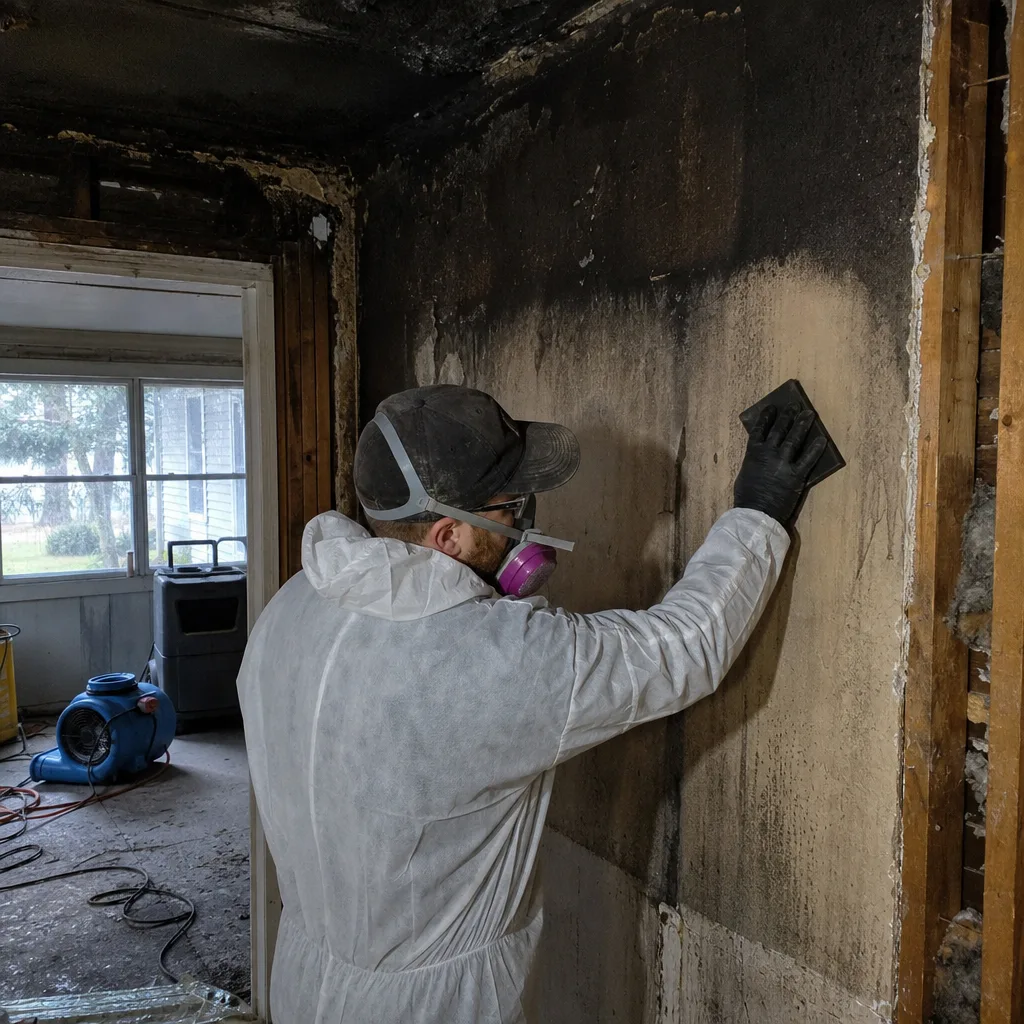
Soot is acidic. Left on a painted wall or a chrome fixture for more than a few days, it etches in and gets irreversibly worse. In White Bear Lake’s older lakeshore cottages, we see soot settle into low-slope rafters and open-cell insulation where ordinary cleaning wipes never reach. We use HEPA-vacuuming followed by chemical sponges and wet cleaning on every hard surface, and we document the whole thing so your adjuster sees the scope in photos.
Odor Removal & Deodorization
Smoke is a gas and it doesn’t respect walls. In a converted 1920s cottage with an unvented crawl space, trapped smoke molecules will off-gas into the living space for months unless the source is physically removed and the remaining air is scrubbed. We run HEPA air scrubbers during the cleanup phase, then seal surfaces with a smoke-specific odor encapsulant and finish with thermal fogging or ozone where the framing allows. This is not a scented spray. It’s a removal process.
Emergency Board-Up & Tarping
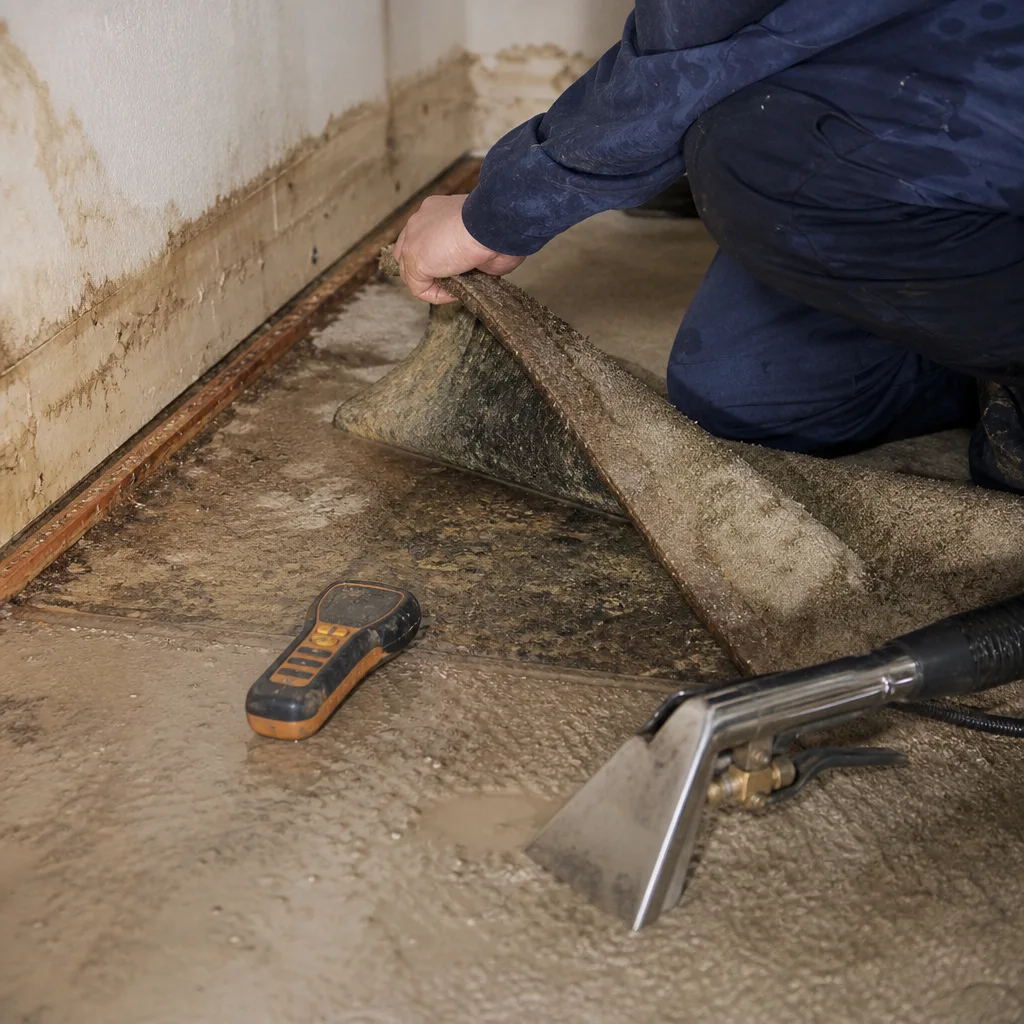
A fire-damaged house in White Bear Lake can’t sit open to Minnesota weather, even for one night. Rain, snow, animals, and curious passersby turn a salvageable house into a tear-out. Wade’s crew boards up windows and doors, tarps damaged roof sections, and secures the structure the same day you call. If the foundation has prior cracking from the lake’s low-water years, we flag it and photograph it before moisture travels the same path back inside. More on that below; it matters more than most people think.
Contents Cleaning & Pack-Out
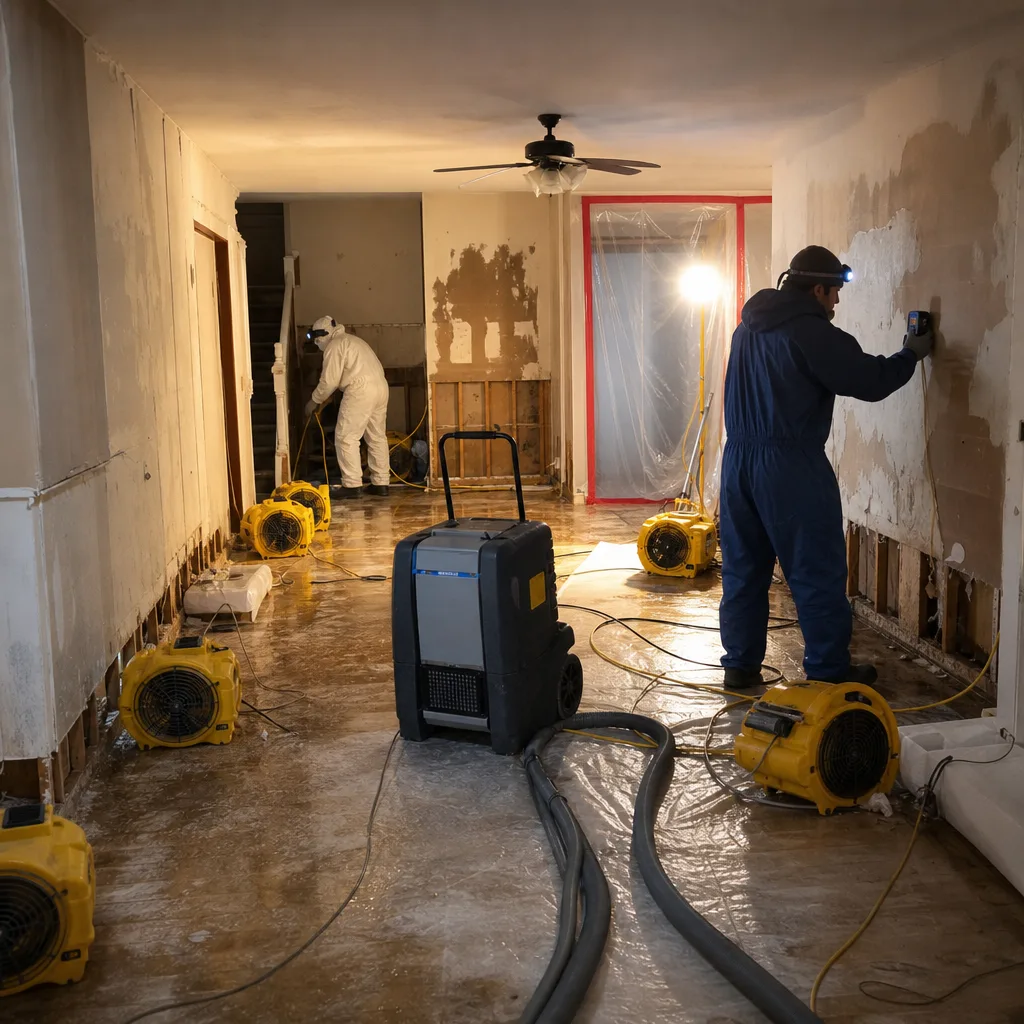
Smoke works into fabric, books, dishes, clothing, and anything porous. We inventory everything, clean what can be salvaged on-site, and pack out what needs specialized treatment. For White Bear Lake families with cabins and heirlooms passed down from the original lake-cottage generation, we take the time to catalog and photograph every item so nothing disappears and the insurance claim is clean from day one.
What happens when you call
- 1
A real person answersNo phone trees - you reach a local pro.
- 2
You get an upfront price rangeHonest numbers before anyone is dispatched.
- 3
A background-checked tech heads outLicensed & insured, dispatched right away.
- 4
You approve before work beginsNothing starts until you say go.
Trusted Brands We Service in White Bear Lake
We don’t cut corners on equipment, because a White Bear Lake home with a shallow crawl space and an open lake breeze doesn’t dry on a box fan. Wade’s crew runs XPOWER air movers, Dri-Eaz dehumidifiers, Injectidry drying panels, and B-Air scrubbers on every job. The equipment matters, but so does the person running it. Every fire and smoke restoration job is handled by a crew that’s IICRC-certified, trained to take daily readings, and backed by an owner who shows up when the phone rings.
Common Fire & Smoke Damage Restoration Problems We See in White Bear Lake Homes
- Smoke in the crawl space of a converted cottage. These houses were seasonal, built over shallow crawl spaces with little thought to vapor control. Smoke settles there and odor rises through the floorboards for months.
- Fire suppression water meeting a shallow water table. In lakeside splits and single-level homes, water applied by the fire department pools in the lower level, and standard drying math underestimates how quickly spring snowmelt re-saturates the materials.
- Galvanized supply lines failing during a fire event. The original plumbing in many 1920s-1950s White Bear Lake cottages has been corroding for decades. A fire event can be the push that makes it let go.
- Pre-existing foundation cracks going unaddressed after board-up. Hairline cracks from the lake’s low-water period are now open channels for recovered groundwater. If the foundation isn’t assessed and the gap addressed, water re-enters and smoke restoration work gets rewound.
Pricing for Fire & Smoke Damage Restoration in White Bear Lake, MN
White Bear Lake’s market reflects the age and mix of its housing. Simple smoke odor removal from a small kitchen fire in a ranch home often runs $1,800-$3,500, including HEPA air scrubbing and sealing. Full soot cleanup across multiple rooms in a converted cottage, with contents cleaning and pack-out, typically falls between $4,000 and $9,000. Deodorization that requires structural sealing and thermal fogging adds $1,500-$3,000. If a detached workshop on an acreage lot is involved, board-up and tarping for that secondary structure usually runs $400-$900 on top of the main claim. Every job gets a written scope before we start, so the price doesn’t move once the crew is inside. Call (888) 690-6095 for a free estimate.
We Also Serve Cities Near White Bear Lake
Our crews regularly run out from White Bear Lake to Vadnais Heights, Mahtomedi, North Saint Paul, and Arden Hills. If you’re a few minutes outside town on an acreage or a lake road, we’re already familiar with the drive. Fire & Smoke Damage Restoration in White Bear Lake is the page with the full local brief; for nearby communities, the same owner-operator and the same written promise show up.
Serving White Bear Lake, MN - Our Local Coverage Area
We’re based in the White Bear Lake area and know this community well. Use the map below to see our service coverage - if you’re nearby, we can almost certainly help.
FAQs - Fire & Smoke Damage Restoration in White Bear Lake
Because your cottage was built before vapor control was understood. The open-cell insulation in an unvented crawl space holds smoke like a sponge, and a standard surface clean never touches it. In White Bear Lake’s converted 1920s-1950s cottages, we always treat the crawl space and rim joist as part of the job, otherwise the odor comes back in three weeks. Call (888) 690-6095 if the smell is already back; we’ll find where it’s hiding.
Yes, and you should. The board-up and the foundation condition are separate but connected. We’ll secure the structure, and while we’re on site we’ll photograph and document every existing crack. Because White Bear Lake’s shoreline foundations have often already shifted during the lake’s dry years, the real danger is recovered groundwater re-entering through those old cracks after firefighting water has soaked the ground. We flag that in the written scope, not after the fact.
It affects it more than a standard drying chart would suggest. The shallow water table near the lake, combined with snowmelt every March and April, means fire-suppression water in a lower level often lingers because the surrounding soil is already saturated. We run daily moisture readings and keep drying equipment in place until the numbers, not a gut feeling, show the structure is dry. That log gets handed to you at the end of the job.
Usually yes, at least the contents from the affected areas. Smoke penetrates upholstery, bedding, books, and clothing, and surface wiping won’t release it. In a split-level near the lake, the HVAC and the shared stairwell mean the smoke traveled farther than what you see. We pack out what needs specialty cleaning, photograph and log every item, and clean the rest on-site. The written scope will tell you exactly what’s moving, where it’s going, and what it costs.
A detached workshop is often more vulnerable than the house. It usually has no monitored alarm, larger vents, and a roll-up or barn door that doesn’t seal well after a fire. We board up the workshop as a separate structure, using materials sized for the bigger openings, and we tarp more aggressively because no one is immediately living in it. If the workshop shares the property’s well and electrical run with the house, we document that together so the claim doesn’t stall. Call (888) 690-6095 for an exact quote; estimates are free.
One Lake, One Particular Kind of Damage
White Bear Lake has a restoration problem you won’t find in inland suburbs. The lake’s water levels swung hard over the years: a prolonged drop, then a rebound. During the dry period, shoreline soil settled, and hairline cracks opened in old foundations. Now that levels are back, that same groundwater is rising through those very cracks. What looks like a recent water intrusion after a fire is often a decade-old structural condition, and if it’s not caught, the smoke restoration work gets undone by water damage the following spring.
That’s why a fire-damaged house on the White Bear Lake shoreline gets a structural assessment before we even open the chemical sponges. We board up a 1930s lakeside cottage on Lake Avenue after a garage fire spread smoke through the crawl space. Our crew runs a Dri-Eaz HEPA 500 to scrub smoke residue from the low-slope rafters, then uses Injectidry panels to dry the shallow crawl space where firefighting water pooled. Because the original galvanized supply line corroded through during the lake’s low-water years, we replace it with PEX before odor sealing the rim joist. One trip, no callbacks. Most inland crews would never think to look for that crack, and that’s exactly why this page exists.
Call Wade’s Restoration for Fire & Smoke Damage in White Bear Lake
Wade Ferris has been climbing into crawl spaces and walking lakeside roofs since 2007. He’ll answer the phone himself, tell you what he can do, and show up when he says he will. The number is (888) 690-6095. Estimates are free, there’s no trip charge in the county, and if you’re a senior or a veteran, the 10% discount is automatic. Ask anyone on your street.
Written by Wade Ferris, Owner at Wade’s Restoration, serving White Bear Lake and the north metro since 2007.