
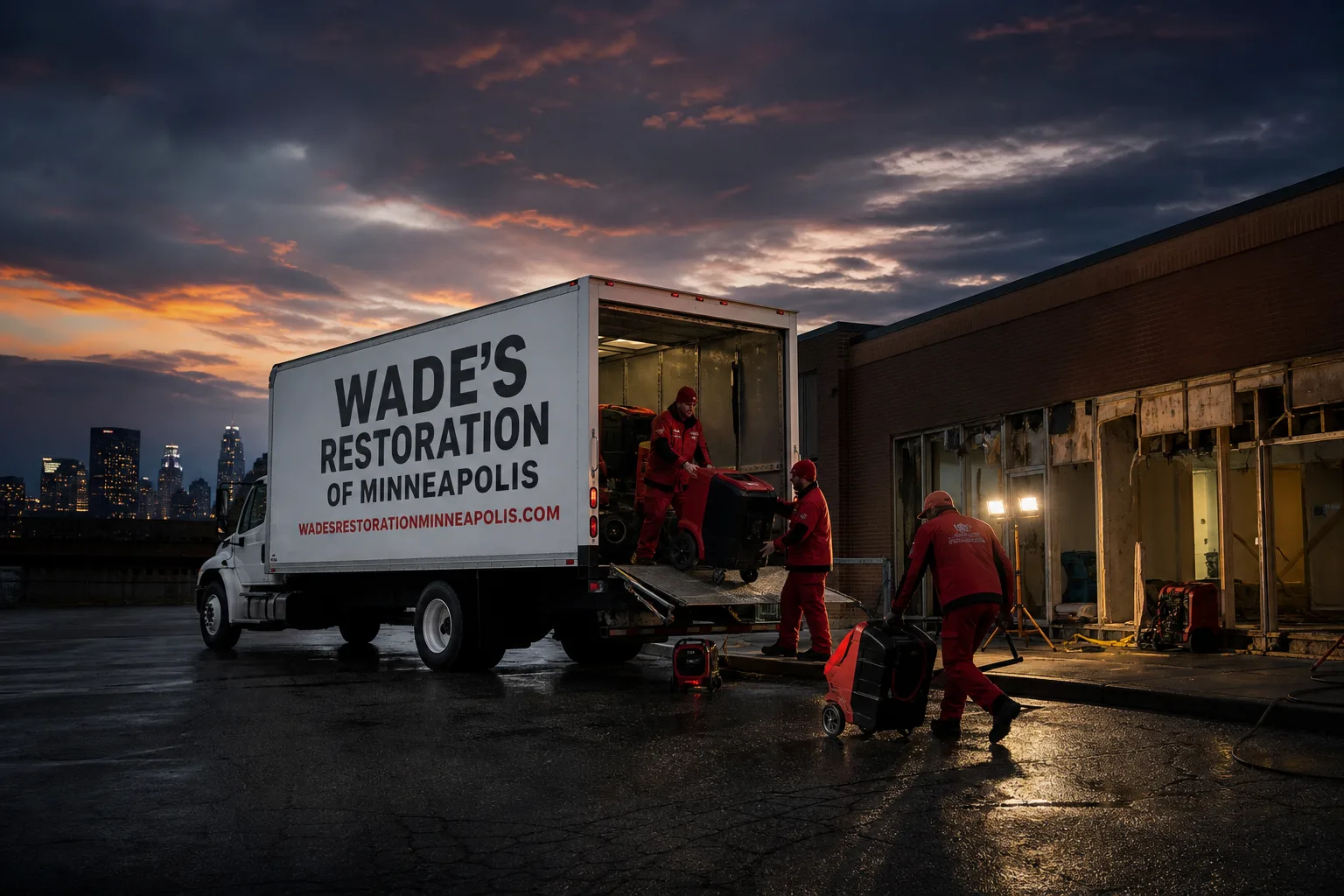
Fast, Reliable Biohazard & Crime Scene Cleanup Across Dayton
Crime scene and biohazard cleanup in Dayton, MN typically runs $1,800-$5,000 depending on the extent of contamination, and most jobs can be started within hours of your call. Wade Ferris answers his own phone at (888) 690-6095, and he’ll tell you straight what needs to happen and what it’ll cost before anyone steps foot in your house. When a trauma, unattended death, or sewage-tainted flood leaves biological material behind, you need someone who knows Dayton’s flood dynamics as well as the cleanup protocols. That’s us.
Why Wade’s Restoration of Minneapolis Is Dayton’s Preferred Biohazard & Crime Scene Cleanup Company
Wade Ferris founded this company in 2007 and put his name on the truck. He still answers calls himself. In Dayton, that matters because the work we do here often starts with a flood and ends with biohazard containment that other companies won’t touch. We know the Crow River backwater zones, we know which finished basements off South Diamond Lake Road and along Fernbrook Lane sat in Category 3 water for days, and we know what that means for blood and bodily fluid cleanup when a separate incident has already occurred.
Our Biohazard & Crime Scene Cleanup team has handled unattended deaths in Dayton homes where floodwater masked the original biological contamination. That’s not a scenario a generic restoration crew sees often. It’s one we see regularly. Background-checked, uniformed crew members show up with Dri-Eaz air movers, Phoenix dehumidifiers, and the full bloodborne pathogen kit. We document everything for your adjuster. And every job carries the 90-Day Done Right Promise, in writing. If it’s not done right, Wade comes back and makes it right. No charge for that.
Our Biohazard & Crime Scene Cleanup Services in Dayton
Crime Scene Cleanup
Crime scene cleanup in Dayton requires more than removing what’s visible. Blood can wick into subflooring, behind baseboards, and into stud cavities before anyone notices. In Dayton’s post-2000s subdivisions, finished basements with drywall over framing create exactly the kind of hidden voids where biological material travels unnoticed. We remove, contain, and dispose of contaminated materials under OSHA bloodborne pathogen standards, then run an infectious disease disinfection pass over the entire affected space.
Trauma & Unattended Death Cleanup
An unattended death in a Dayton home is often discovered days or weeks later, and decomposition fluids follow gravity. In a finished basement, that means the concrete slab, the bottom plates of interior walls, and any carpet pad beneath. We’ve worked homes off Dayton River Road where a death occurred before a flood, and the floodwater spread biological residue far beyond the original scene. That kind of situation demands containment from the first hour, not just after the water recedes.
Hoarding Cleanup
Hoarding cleanup in Dayton takes two forms. In the newer platted subdivisions, it’s typically accumulated belongings inside a finished home. In the older rural farmsteads with stone or block foundations, hoarding compounds with trapped water and poor ventilation, and mold colonizes blood-soaked or biohazardous materials faster than a standard cleanup schedule allows. We sequence the work: remove the hoard, assess the structural moisture, then remediate what the flood left behind. Crew members are trained to handle the emotional weight of these jobs without judgment.
Blood & Bodily Fluid Cleanup
Blood cleanup in a Dayton basement that has also flooded is a different animal than a standard trauma scene. The water spreads pathogens horizontally across the slab, into drywall wicking zones, and through any seam in the flooring. We don’t just disinfect visible surfaces. We remove saturated materials, dry to IICRC standards, and verify with moisture readings every day until the job is done. Wade hands you the full log at the end. Almost nobody else does that.
What happens when you call
- 1
A real person answersNo phone trees - you reach a local pro.
- 2
You get an upfront price rangeHonest numbers before anyone is dispatched.
- 3
A background-checked tech heads outLicensed & insured, dispatched right away.
- 4
You approve before work beginsNothing starts until you say go.
Trusted Brands We Service in Dayton
We run B-Air and Dri-Eaz air movers, Phoenix dehumidifiers, and XPOWER filtration on Dayton jobs because this climate and this flood profile demand equipment that actually performs in high-humidity, low-ventilation basements. The Injectidry system handles wall cavities and under-cabinet drying that standard equipment can’t reach. Our IICRC and RIA credentials mean the work is done to industry standards, not just to what looks clean. Dayton homeowners don’t need to know the brand names to know the basement dried properly. But Wade will tell you anyway, because he wants you to see what you’re paying for.
Common Biohazard & Crime Scene Cleanup Problems We See in Dayton Homes
– Finished basements in post-2000s subdivisions that hold moisture and hide contamination. Dayton’s rapid build-out means thousands of homes with framed, drywalled basements that sit low relative to the water table. When the Crow River backs up, that finished space becomes a contamination trap.
– Floodwater mixing with sewage before biohazard cleanup even begins. The Crow-Mississippi confluence means spring runoff can push through sanitary laterals and storm drains at once. By the time water reaches a Dayton basement, it’s often Category 3, not clean river water.
– Older farmsteads with stone foundations that never fully dry. Dayton still has a pocket of pre-2000 rural properties. Their foundations wick moisture continuously, which means blood and bodily fluids in a hoard or trauma scene are already in a damp environment and degrade faster.
– Homeowners filing a flood claim first, which delays trauma cleanup. If a death or injury occurred in the same property that later flooded, the biological material gets weeks of extra time to saturate framing and subfloor. That’s a sequencing failure we see constantly in Dayton, and it drives up both cost and health risk.
Pricing for Biohazard & Crime Scene Cleanup in Dayton, MN
We Also Serve Cities Near Dayton
Wade’s Restoration handles biohazard and crime scene cleanup across the northwest metro. We serve Champlin, Rogers, Anoka, and Ramsey with the same response time and the same owner-accountable service we bring to Dayton. Same crew standards, same written promise, same direct phone line to Wade.
Serving Dayton, MN - Our Local Coverage Area
We’re based in the Dayton area and know this community well. Use the map below to see our service coverage - if you’re nearby, we can almost certainly help.
FAQs - Biohazard & Crime Scene Cleanup in Dayton
Does a Crow River flood event in Dayton affect how quickly trauma cleanup should be scheduled after the water recedes?
Yes. A Crow River or Mississippi flood event in Dayton means biological material in a basement is being spread and diluted, but not eliminated, by the water. Once the water recedes, the remaining moisture accelerates bacterial growth and pushes contaminants deeper into porous materials. Cleanup should be scheduled as soon as the water is gone and the space is safe to enter. Waiting weeks for an adjuster only makes the contamination worse. Call (888) 690-6095 and we can start containment before the full claim is settled.
Can our crew start biohazard cleanup in a Dayton basement before the insurance adjuster finishes the flood claim?
Yes, and we do it regularly. We document everything photographically, take daily moisture readings, and keep a chain-of-custody log that adjusters accept. You don’t need to wait for the claim to be settled to begin removing biohazardous materials. In fact, delaying makes the claim worse because the damage spreads.
What extra containment is needed for an unattended death cleanup in one of Dayton’s newer finished basements after a sewer backup?
A finished basement with drywall over framing requires full negative-air containment, not just surface cleaning, because decomposition fluids and sewage pathogens penetrate the wall cavities. We seal off the affected area, run air scrubbers with HEPA filtration, and remove drywall and insulation to at least 12 inches above the contamination line. The goal is to create a contained environment where nothing airborne escapes into the rest of the Dayton home.
Are older farmsteads in Dayton more likely to require hoarding cleanup that includes flood-related biohazards?
Yes. Dayton’s older rural properties, often with stone or block foundations, retain ground moisture year-round. When a hoard sits in that environment and a flood or sewer backup adds water, mold and bacterial growth accelerate within days. Blood-soaked materials, animal waste, and decomposition fluids compound into a cleanup that requires both hoarding removal and biohazard remediation, not one or the other.
Do any Dayton building codes require special disposal verification for crime scene cleanup in flood-prone basements?
Dayton operates under Minnesota’s regulated medical waste and infectious waste disposal rules, but the practical requirement is documentation. We provide disposal manifests and photographic evidence of proper containment for every crime scene or trauma job. If the contamination involved floodwater mixed with sewage, the material is treated as Category 3 and must be handled accordingly. A generic cleanup crew won’t have that paperwork. We do.
If you’re dealing with a biohazard situation in a Dayton home, call Wade Ferris at (888) 690-6095. He’ll answer, listen, and tell you exactly what needs to happen next. Free estimates, no trip charge in the county, and a written promise on every job.
Written by Wade Ferris, Owner at Wade’s Restoration of Minneapolis, serving Dayton since 2007.